
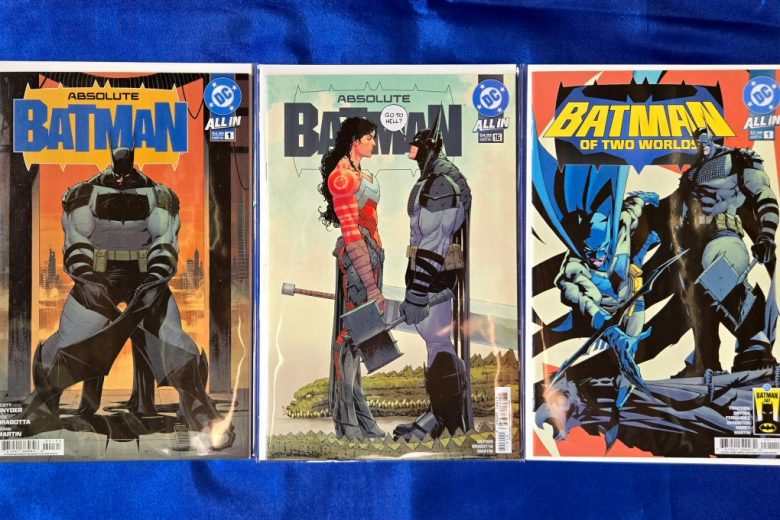
I like to think I have a lot to teach you. But lately, I’m wondering if you don’t have more to teach me, kid. Me, my kind, we went by the old ways, the old rules. But the world has changed. And the things we’re up against now–or rather you are up against–are darker, bigger, more entrenched.
Maybe it’s time for us to let go, or at least move over … and let you build something new.
- Pennyworth narration in Cut Short, Batman of Two Worlds, Vol 1, issue #1, 2026, written by Scott Snyder
In my recent overview of Batman, I covered the main time periods and some of the creative teams involved in the evolution of his normative ethics (moral philosophy) in the comics. Along the way, I briefly mentioned the distinctiveness of Scott Snyder and Nick Dragotta‘s version of the character in the Absolute Universe – Absolute Batman (Vol 1, 2024-Present).
The Absolute Batman series is currently the best-selling comic out there, routinely selling print copies in the several hundreds of thousands each month (exceeding half a million for some issues). This year it also won Best Continuing Series at the 2026 Eisner Awards and Best Series at the 2026 Ringo Awards.
As previously promised, this post will look into Absolute Batman’s ethics in some detail. Although there is much that is distinctive about this version of the character – in terms of his history, perspective, and challenges – much of the core modern Batman ethics are still well represented. But the character has arrived at this point through a very different processes, and it is worth comparing the two.
And the timing couldn’t be better, given the recently released Batman of Two Worlds one-shot comic (which came out on Batman Day 2026 – September 19th this year). This single special issue featured two stories by the current creative teams of the main Batman title (Batman Vol 4, 2025-Present) and Absolute Batman (Vol 1, 2024-Present). In their own words:
“You have two different looks at Batman. The moral structures, the ethical structures, the political structures. A chance to put them side by side and see the similarities and differences.”
- Matt Fraction, writer of Batman Vol 4
“The mission was to show what’s special about each interpretation. The two stories are both about Batman’s form of justice.”
- Scott Snyder, writer of Absolute Batman Vol 1
Now that is right up my alley – a chance to compare their ethical frameworks in one go! It also gives me the chance here to make a prediction about how each Batman will make decisions – based on their respective ethics. I did something similar for the Progenitor in Kieron Gillen‘s A.X.E.: Judgment Day series (see my event conclusion post for a discussion). At least this time I don’t have to summarize the ethics of 30+ characters first!
I will briefly summarize the history and ethics of the main DC comics universe (DCU) Batman below, before jumping into the detailed background and ethics of Absolute Batman. I will argue that it is important to place Absolute Batman in historical context, as there were two distinct eras of Batman over his long run in the comics that Snyder seems to be directly playing off in this latest iteration. I will then end with a look at the Batman of Two Worlds one-shot, to see if my ethical analysis of the two characters holds up.
As an aside, the quote I chose for the top of this page comes from the Batman of Two Worlds, where Absolute Batman’s confidante and would-be mentor Alfred Pennyworth (a very different character in this universe, as I will explain below) is narrating. As we will come to see, his commentary is a pretty apt description for how this darker Absolute Universe differs from the main DCU continuity.
Introduction to the main DC Universe (DCU) Batman character
Batman was created in 1939 by comics artist Bob Kane and writer Bill Finger, first appearing in Detective Comics Vol 1, issue #27. Batman was born Bruce Wayne in Gotham City. The defining trauma of young Bruce’s life was seeing his wealthy parents – physician and philanthropist Dr. Thomas Wayne and socialite Martha Kane – gunned down before him. Orphaned Bruce was then effectively raised by the Wayne family butler, Alfred Pennyworth. Eventually, with the help of Alfred, Bruce takes up the secret identity of Batman – the vigilante protector of Gotham – while also playing the role of billionaire industrialist and playboy Bruce Wayne. As we will see below, this origin is significantly changed in the Absolute Universe.
Bruce has no superhuman powers, but is a master strategist and tactician, with a near-genius intellect. He is in peak physical condition with extensive training in many forms of combat. In the main DCU, his wealth has provided virtually unlimited resources to develop tactical equipment and gear. Absolute Bruce has had to adapt from limited means, as we will come to see.
Batman’s ethics have long shown a mix of the three branches of normative ethics, as the field of moral philosophy is called today. It considers the question of what people should or ought to do.
Deontology is concerned with doing your duty to other people, often through the lens of rights or justice. These theories are often principle- or rule-based and focus on the moral value of the acts themselves (that is, doing the right thing). At the other extreme, consequentialism focuses not on the value of the acts but rather on their outcomes. These theories typically explore the moral burden of making good decisions (that is, doing the good thing). The third branch is virtue ethics, which shifts from the action-based theories above to the actor – being the best person you can be. These actor-centered theories typically involve the practice of virtues that align with your core values and goals (that is, being better).
As I explain on my main Batman ethics overview, in the comics heyday of the 1970s through to the early 1980s, Batman functioned primarily as a deontological hero, with his firm no-kill rule and strong aspects of Kantian ethics. However, the character has always had strong consequentialist leanings as well, and his ends-justify-the-means utilitarianism came to dominate in stories from the late 1980s through to the early 2000s. But beginning with Grant Morrison’s run in 2006-2011, the character shifted to a predominant virtue ethics framing (being better). Ultimately, Snyder continued this ethics tradition in his run of the character (2011-2016) – but in a far more fallible and insecure form.
Significantly, DCU Batman has long had the support of superhero allies he has developed, such as his various Robins over the years (also Batgirls, Batwomen, Nightwing, and a great many others). This extended group of heroes are informally known as the “Batman Family” (or Bat-Family). Police Commissioner Jim Gordon and Alfred have also long played supporting roles to Batman and the larger group. Although we will see the early hints of this in Absolute Batman (and how things differ), we are at a very different moment in time – Absolute Bruce is at the very start of his career, and largely on his own initially (as are all the heroes in the Absolute Universe).
Absolute Batman’s beginning
The Absolute Universe was created by Snyder and Joshua Williamson for the current DC All In initiative that debuted in late 2024. While this universe shares many structural similarities to Earth-0 of the current main DCU, the main difference is that instead of running predominantly on hope (as embodied by Superman energy), this Universe runs mainly on despair (as embodied by Darkseid energy). This has resulted in all the heroes having darker origin stories, making them all underdogs in a darker, more corrupt world.
It’s helpful to start at the beginning, with Absolute Batman Vol 1, issue #1 (2024), by Snyder and Dragotta. This is the first issue of “The Zoo” story arc, and is narrated by this Universe’s version of Alfred, upon his return to Gotham after an extended time away. As I alluded to above, he is a very different character:
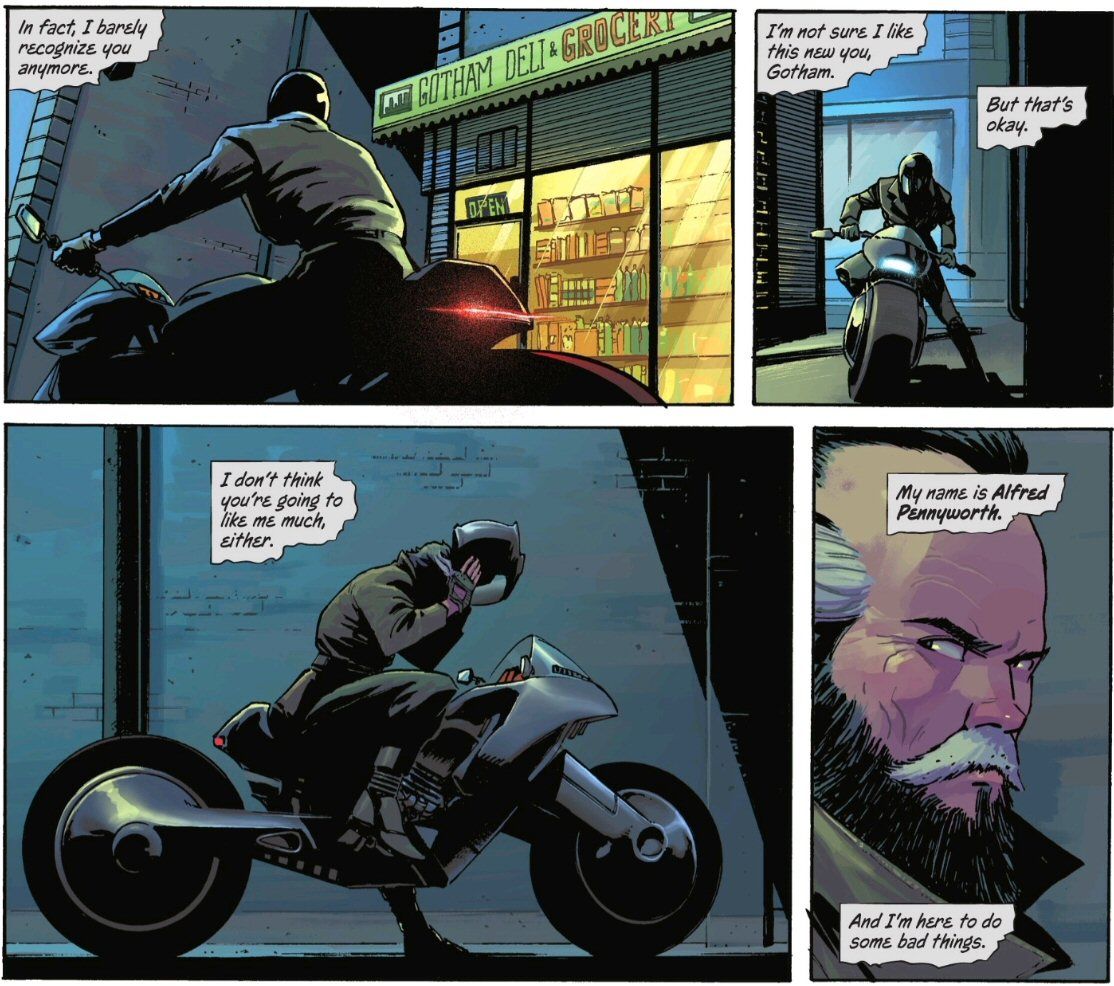
Alfred is a MI6 special operative sent to back to Gotham to observe a terrorist group known as the “Party Animals” – and the new vigilante who has risen up against them, the Batman:

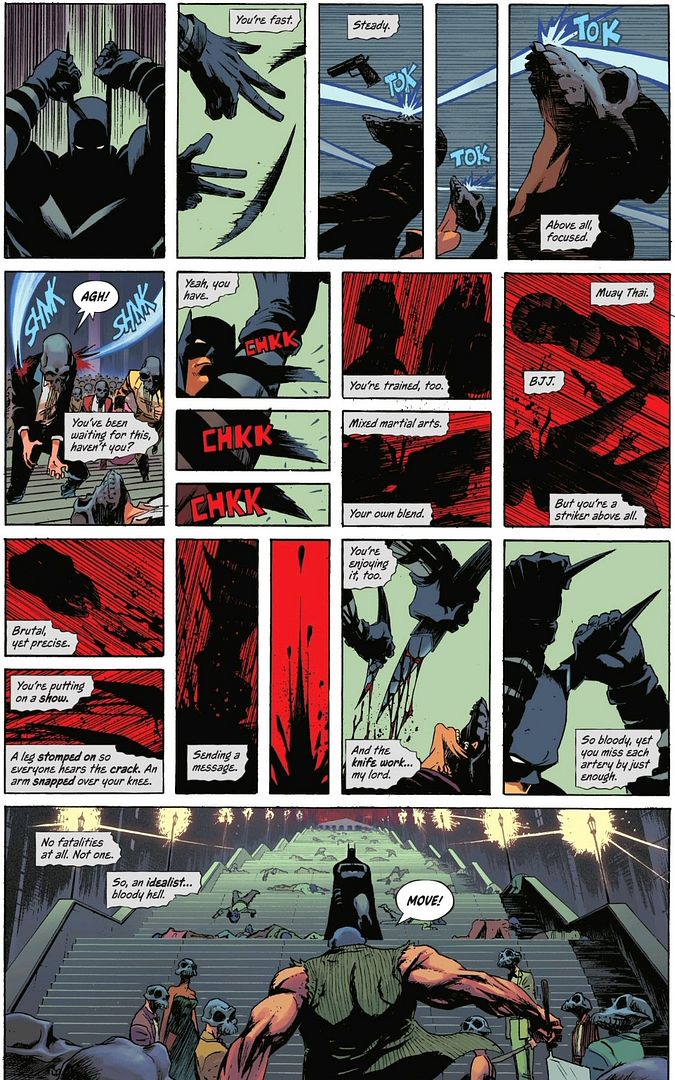
Despite darker Alfred’s assessment of Batman as an “idealist”, this version of the character is far more brutal than the one we are used to:
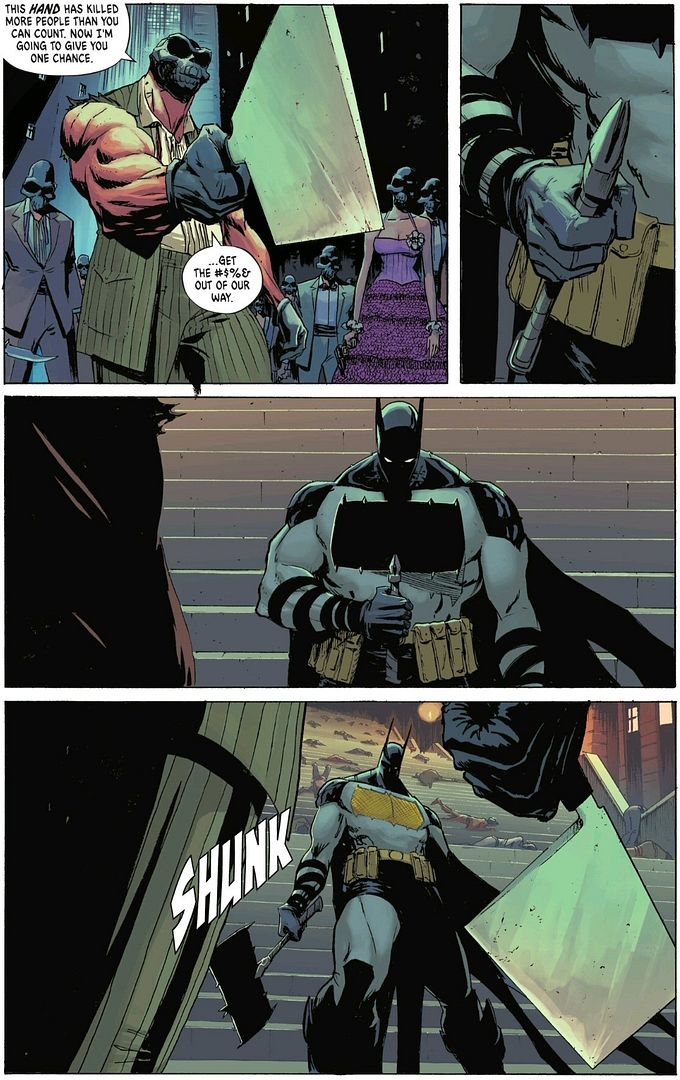
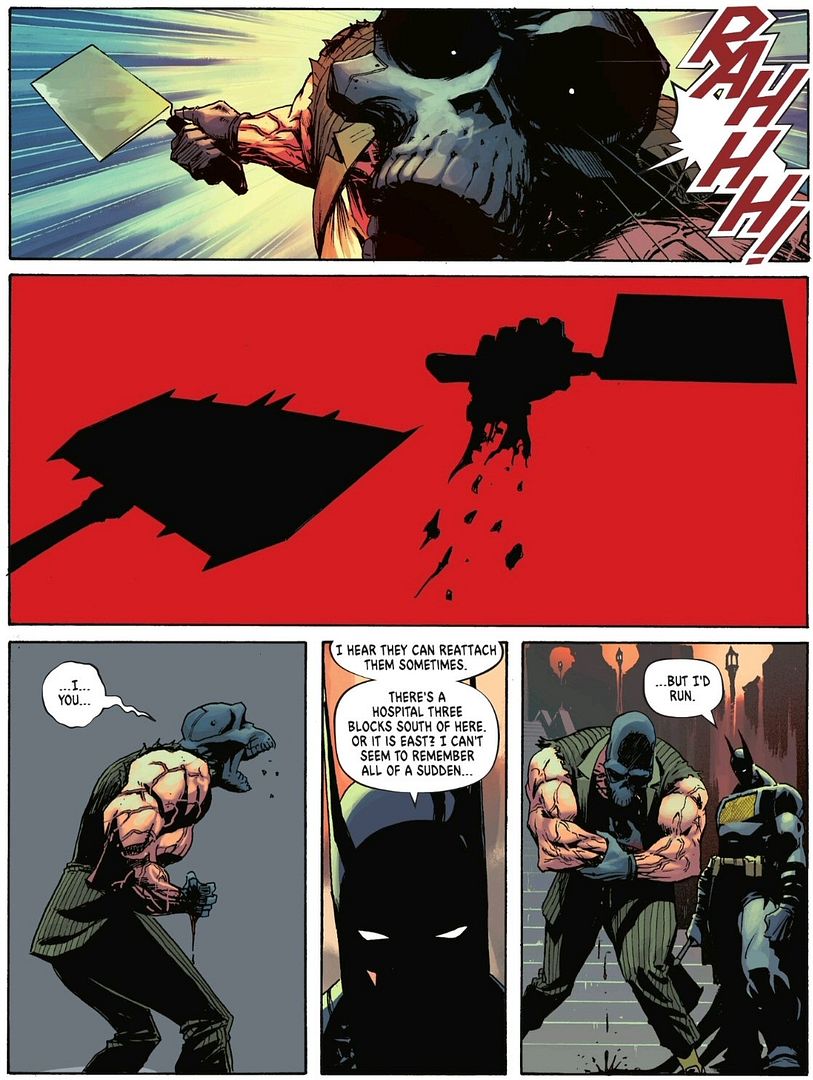
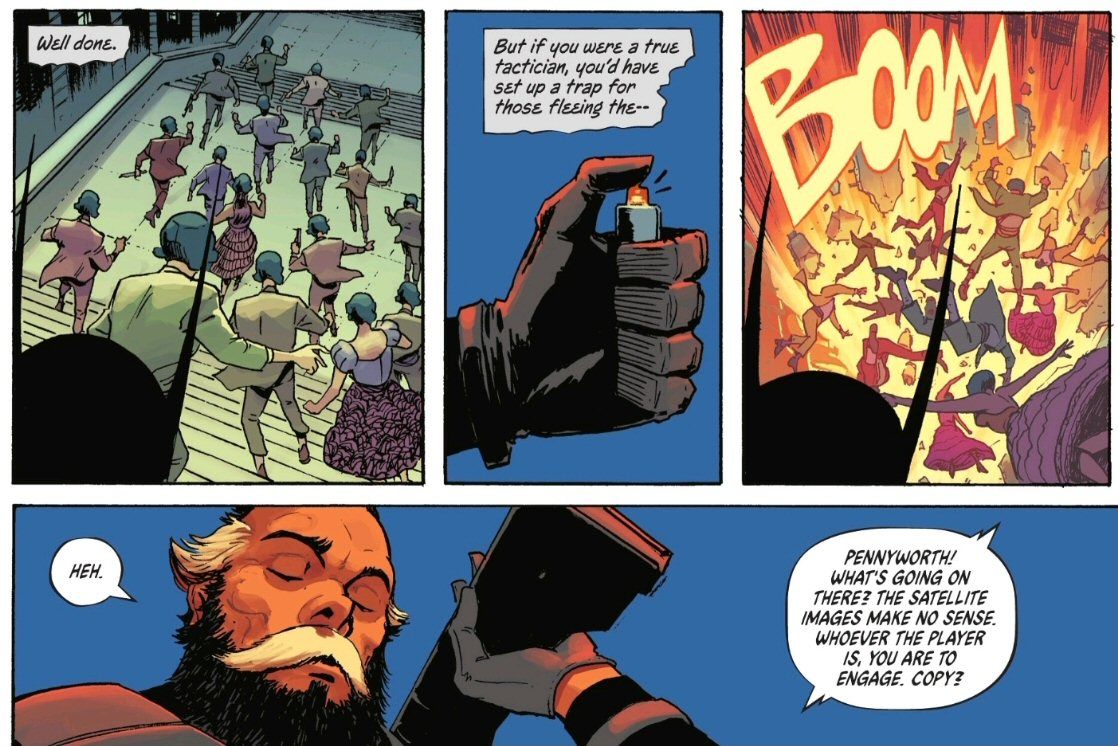
While Absolute Alfred approves, this version of Batman seems much more in keeping with the Dark Knight Returns created by Frank Miller (as described in my main Batman overview, follow the link). This is the first of two versions of Batman that Snyder seems to be responding to in his portrayal here. Note that Miller’s version was also set in an alternate universe, separate from the main DCU at the time – but nevertheless had a great influence on many subsequent main DCU Batman writers.
The main difference is that the Dark Knight Returns was an older and jaded Batman, grown frustrated by the decay and corruption in his Gotham City. In essence, it was a Bruce who had lost his ideals. In contrast, Absolute Bruce is a young man in a much darker time – where systemic corruption underlies everything around him. As a result, Synder’s Absolute Bruce makes much starker choices from a young age – but, crucially, while remaining idealistic and hopeful.
As Alfred continues:
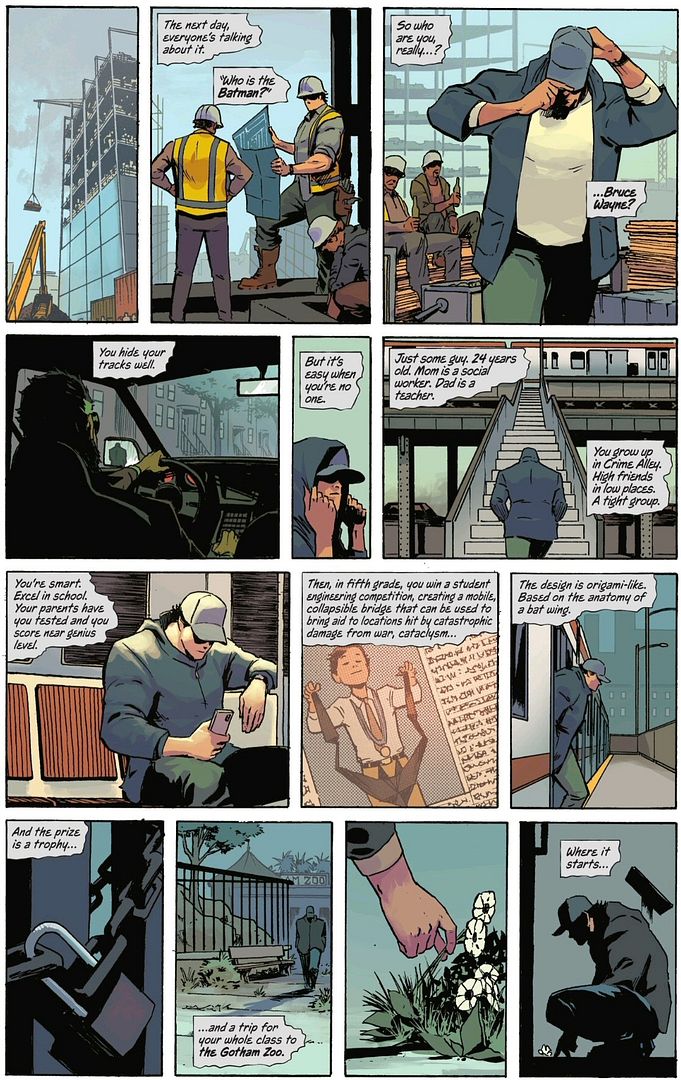
In this Absolute Universe, Bruce’s parents were of modest means. His father was a teacher, who was murdered at a shoot-out at the Gotham Zoo – while trying to protect Bruce and fellow students on the school trip above. Bruce was raised by his widowed mother in a bad part of town – Crime Alley – where he bonded with a specific group of friends we will soon come to know. And significantly, his mother remains alive in this Universe, providing guidance for young Bruce.
Nevertheless, Bruce floundered for a while and was forced to work for organized crime. But eventually, he found his purpose. In Alfred’s words:
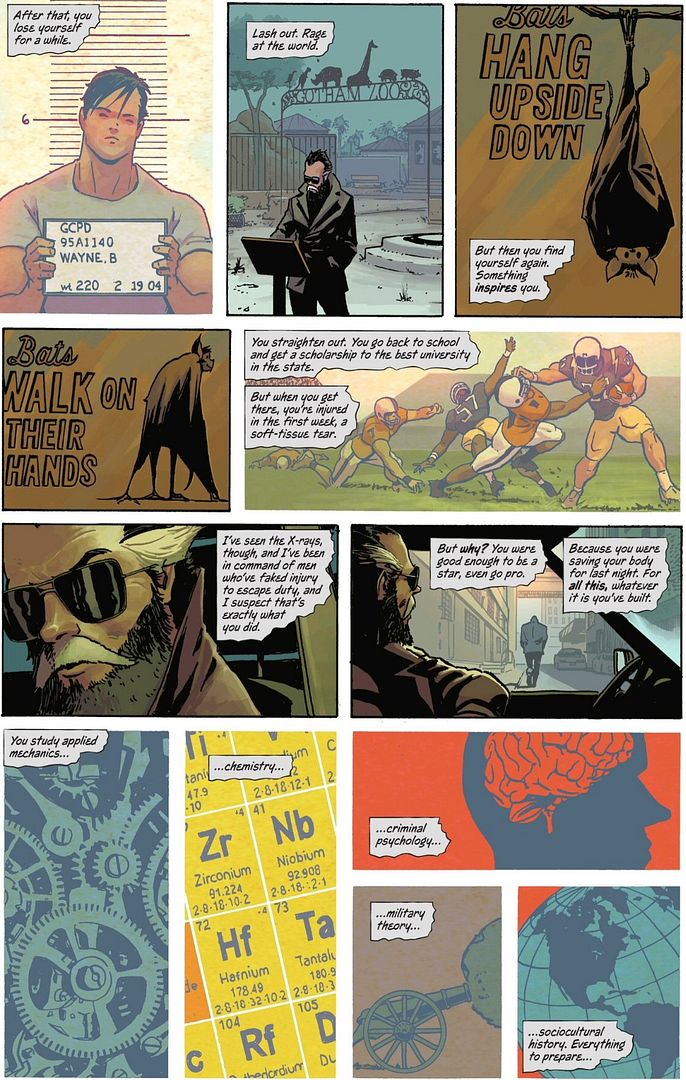
Yes, this version of Bruce is also something of a Renaissance man … a polymath who develops great skills in numerous fields. But to what end?
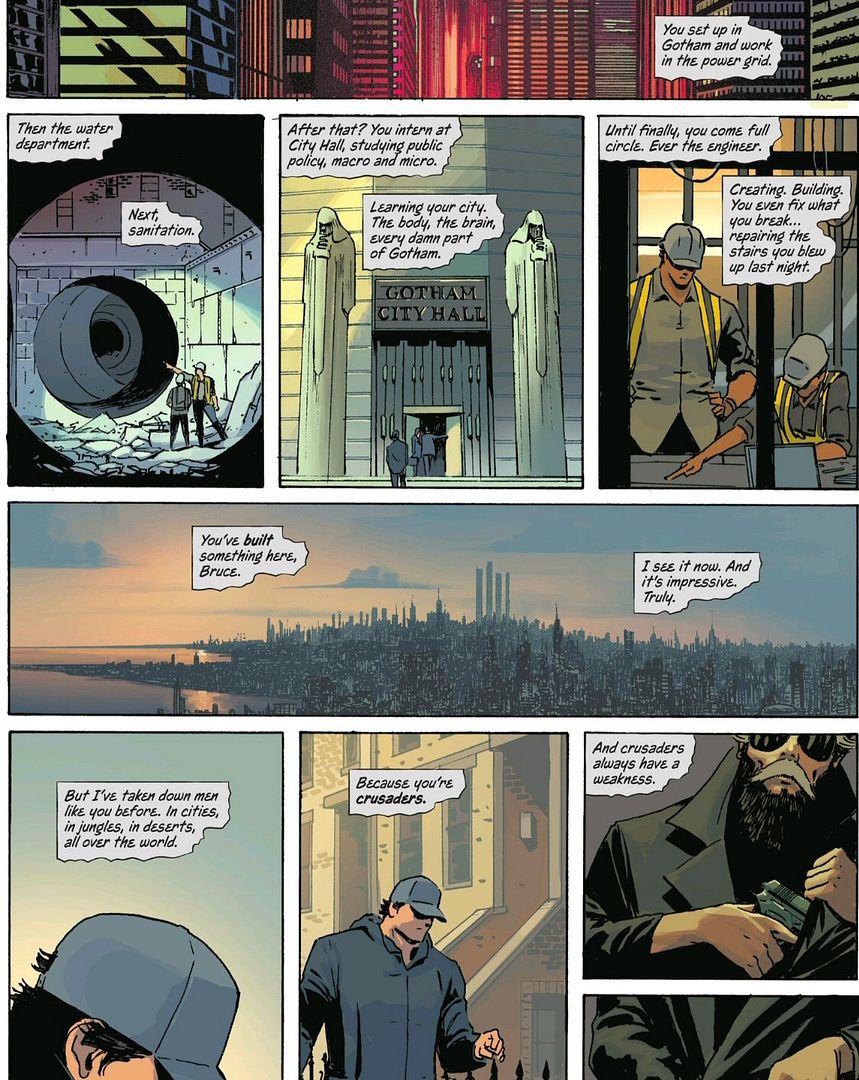
The parallels are obvious above, but this Absolute Bruce lacked most of the resources or support the main DCU Bruce had.
The Absolute Batman series moves on to show this version of Bruce is also unwilling to compromise on his ideals – despite the pragmatic urging of Pennyworth (who becomes something of a partner and mentor, although one Bruce consistently pushes back against).
But to truly understand this version of Bruce/Batman, we need look more closely at his formative trauma – the death of his father. The key issue is #4, where there are a series of flashbacks, by Snyder and Dragotta:

Indeed. We also learn more about his father’s motivation in this life, finding his core:
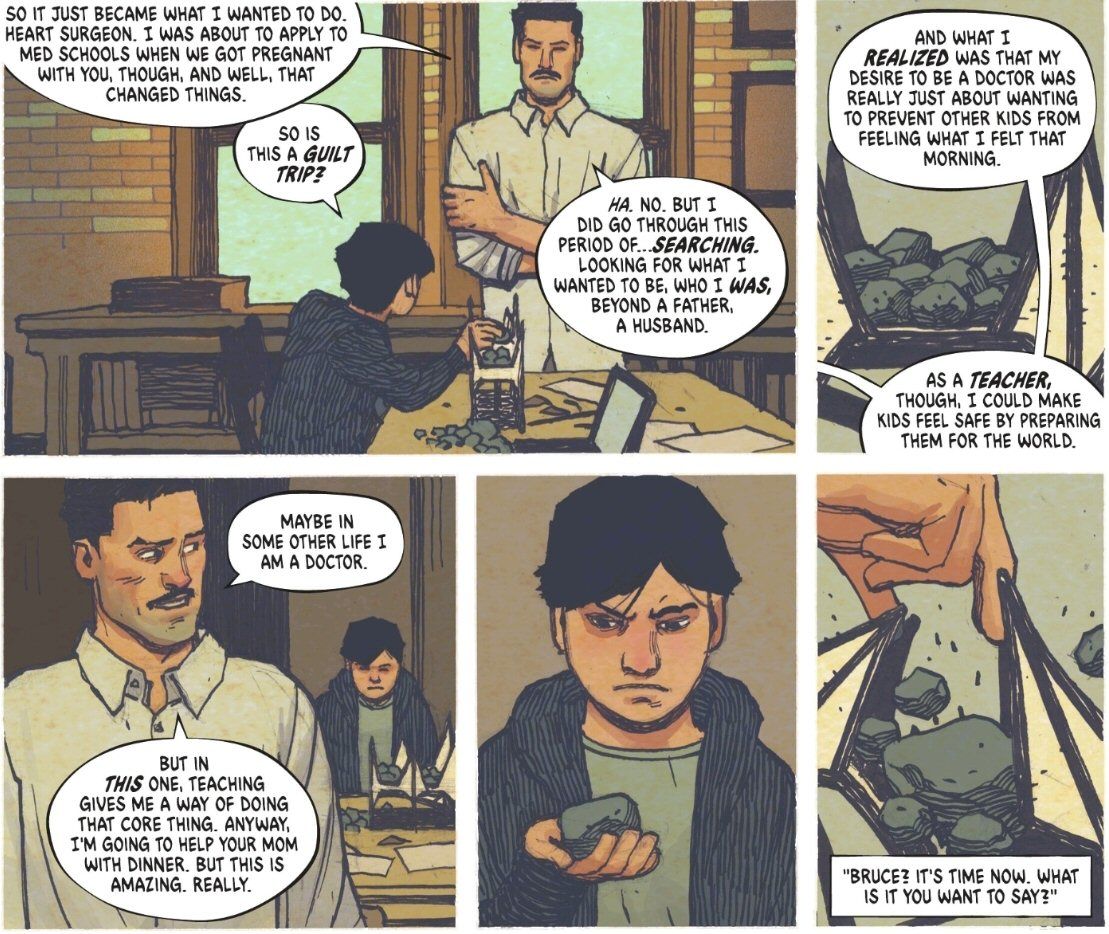
Bruce comes to his own realization over the course of this issue:
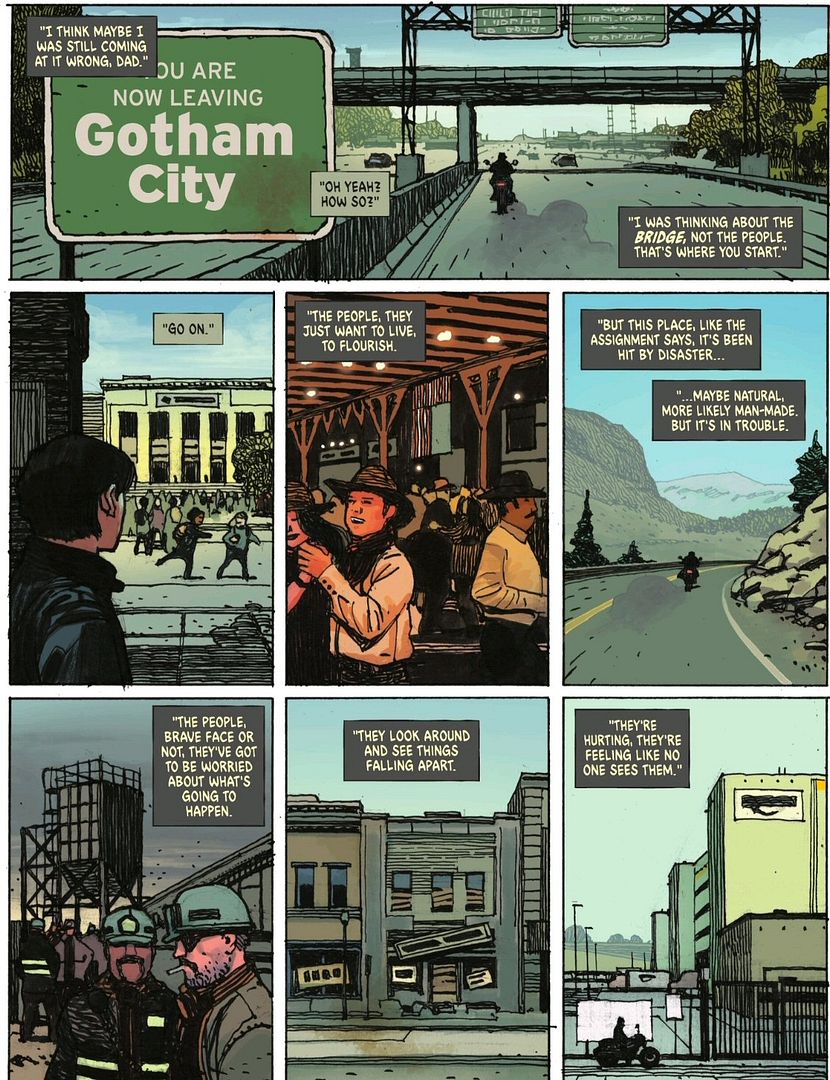
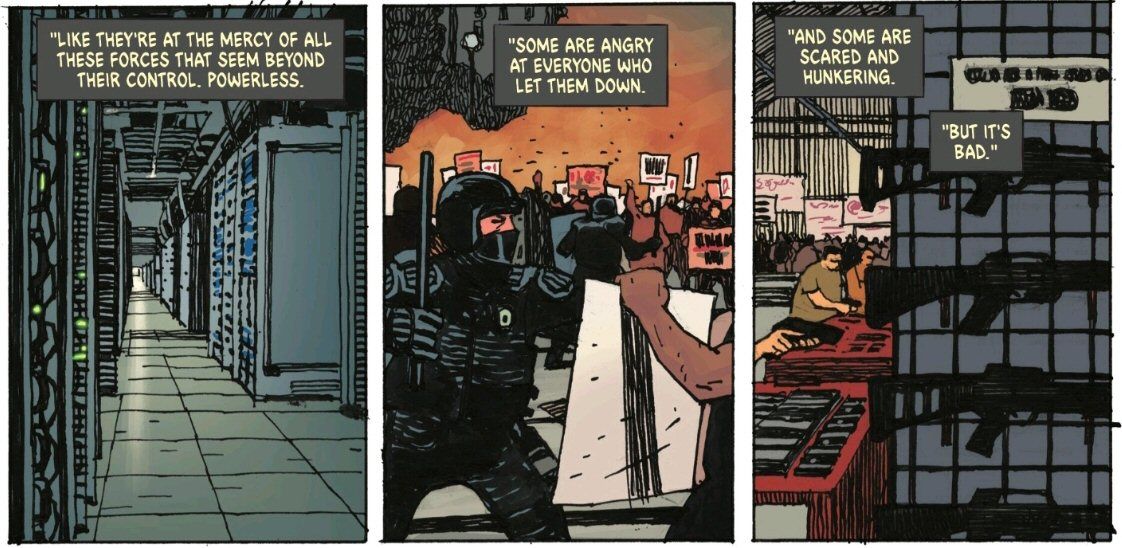
Absolute Bruce observes how much darker his world is, and what that means for his school project – and for his larger life project:
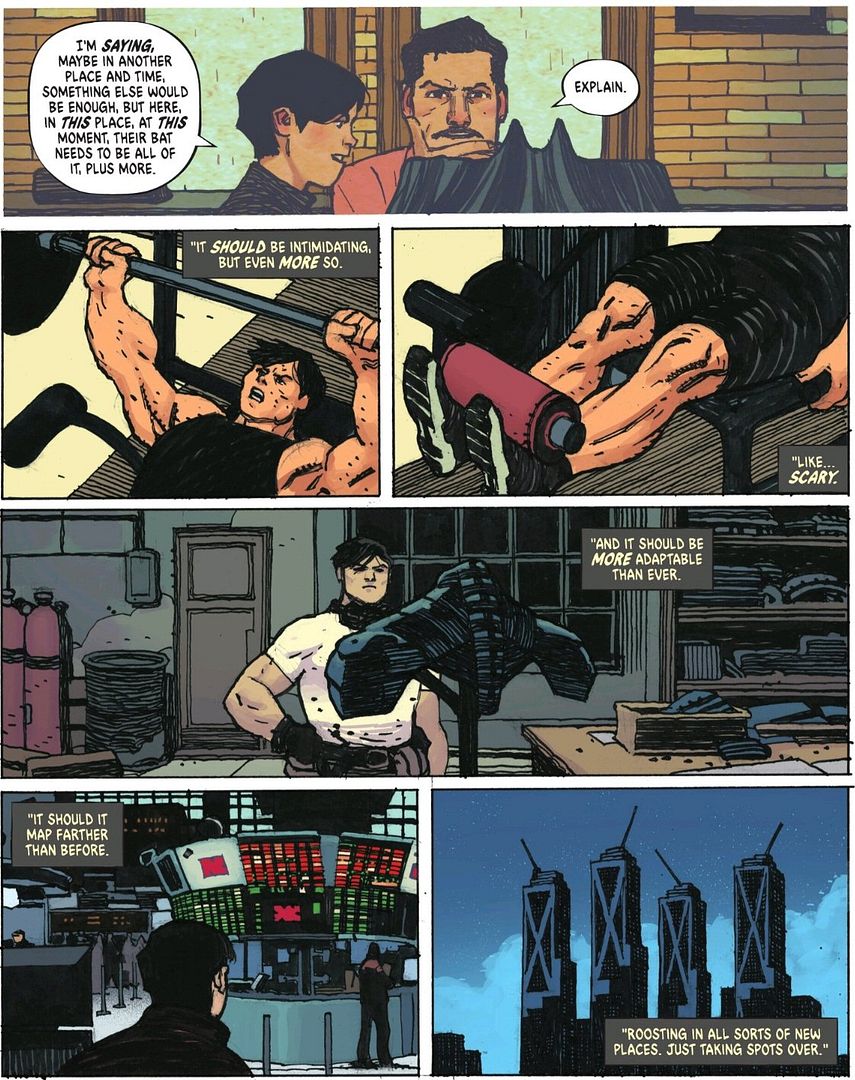
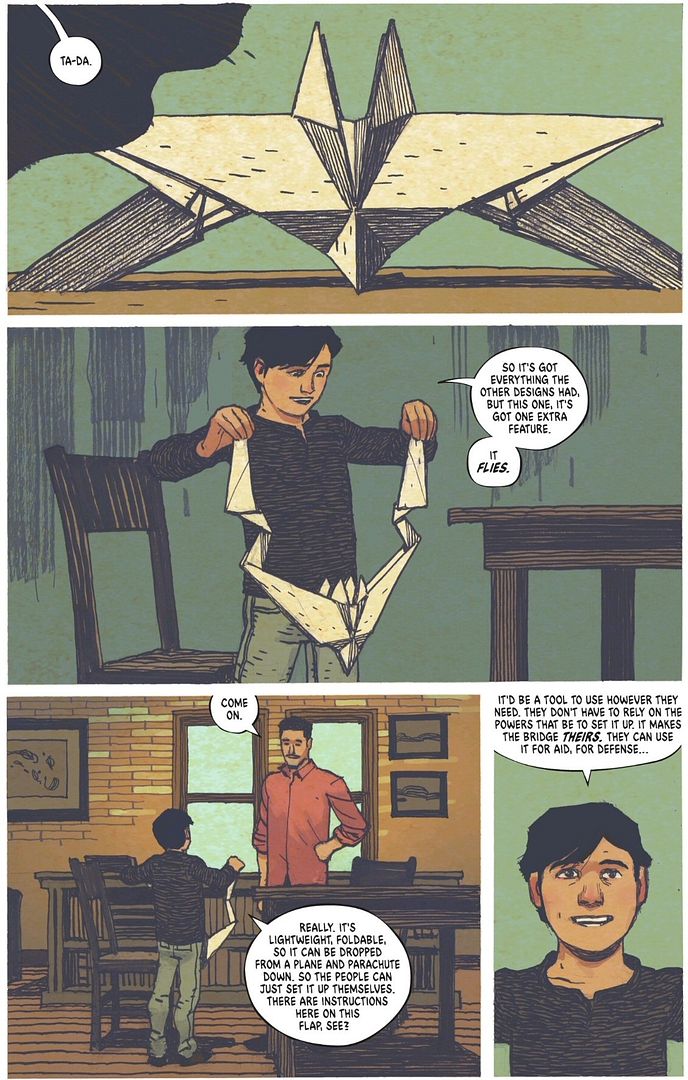
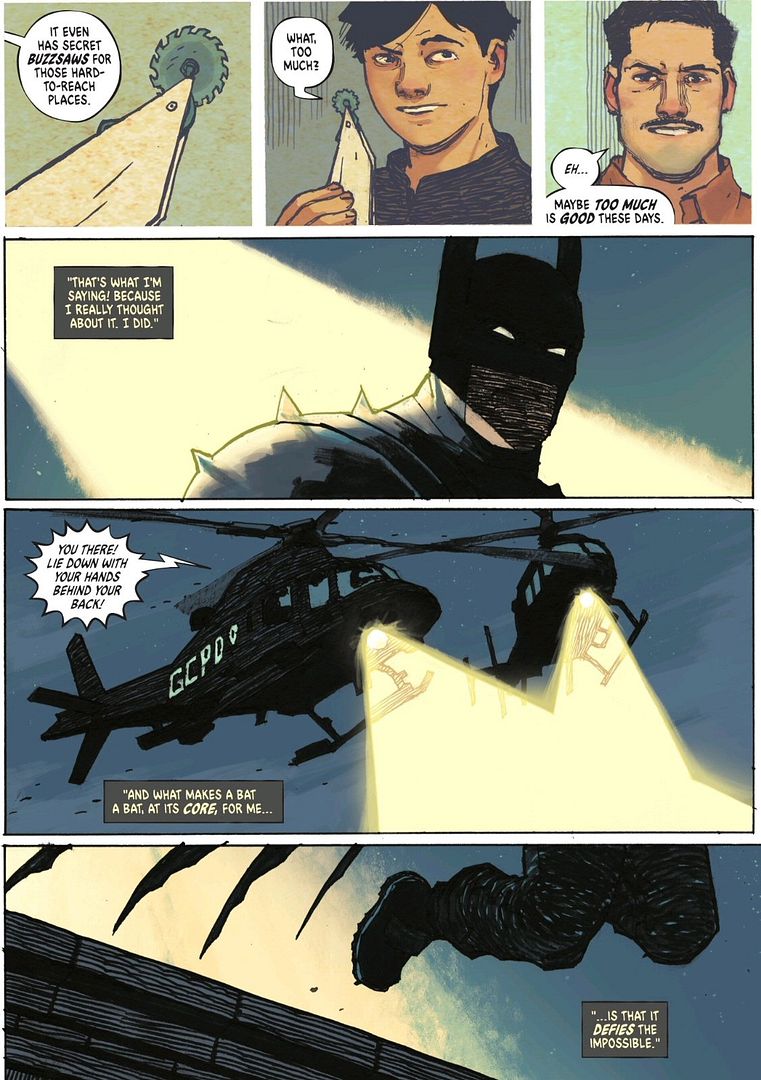
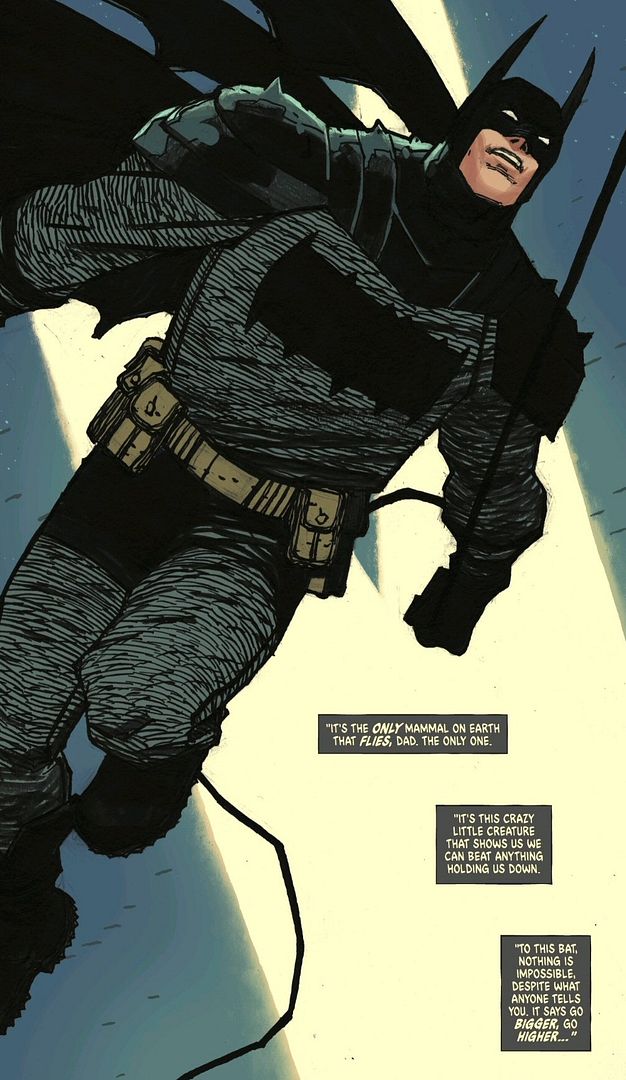
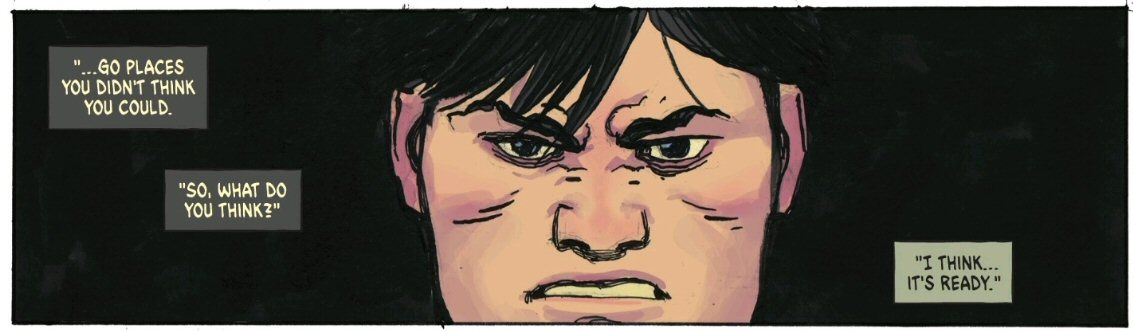
This issue is key to understanding Absolute Bruce/Batman’s ethical core.
As I explain in my ethics overview of FML (follow the link), values are foundational to most forms of virtue ethics. Values represent what we consider important or worthwhile in life. They are ideals or principles that have direct relevance to how we personally make moral decisions – the core beliefs that guide our moral choices. Virtues are the character traits, behaviors, and attitudes that allow us to consistently act in accordance with our values. Basically, values provide the content or direction for moral choices, while virtues provide the means or mechanism for realizing them.
What we are seeing above is young Bruce beginning the process of defining his core values in this darker Universe. These remain to be clearly defined at this point – they are developed over the course of the series just like how they are developed in our real lives, through practice and habits. Key to all forms of virtue ethics is that values and actions cannot be completely in sync without some effort (this is where the practice of virtues comes in).
The scenes above are classic virtue ethics framing – Absolute Batman isn’t going to be about a set of rules or principles to follow (deontology), or a strict calculation of outcomes (consequentialism). This version of Bruce/Batman is being assembled from the ground-up as a character embodying newly defined values (and their corresponding virtues) suited to a specific place and moment in time. I would say Absolute Batman’s virtues lean heavily toward courage, persistence, and protection of the vulnerable.
The series goes on to show instances where Bruce stumbles (especially in his teen years, where he is forced to work for the mob). But this is all part of the hero’s journey – learning what truly matters, to make himself better. Bruce ultimately recovers from his father’s death and maintains his sense of optimism for the future. You see this in the resolution of the “The Zoo” story arc, where Bruce feigns making a lucrative deal with the Party Animal’s leader, only to bring him down publicly. From issue #5:
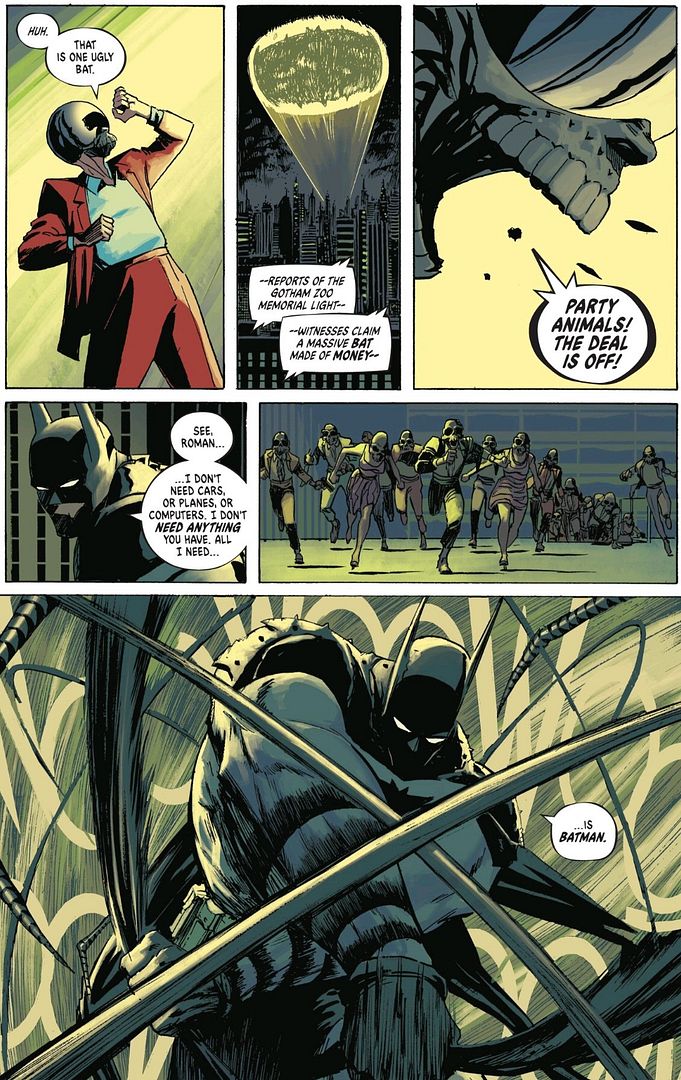
Of course, this being a darker Universe, it doesn’t exactly go to plan:
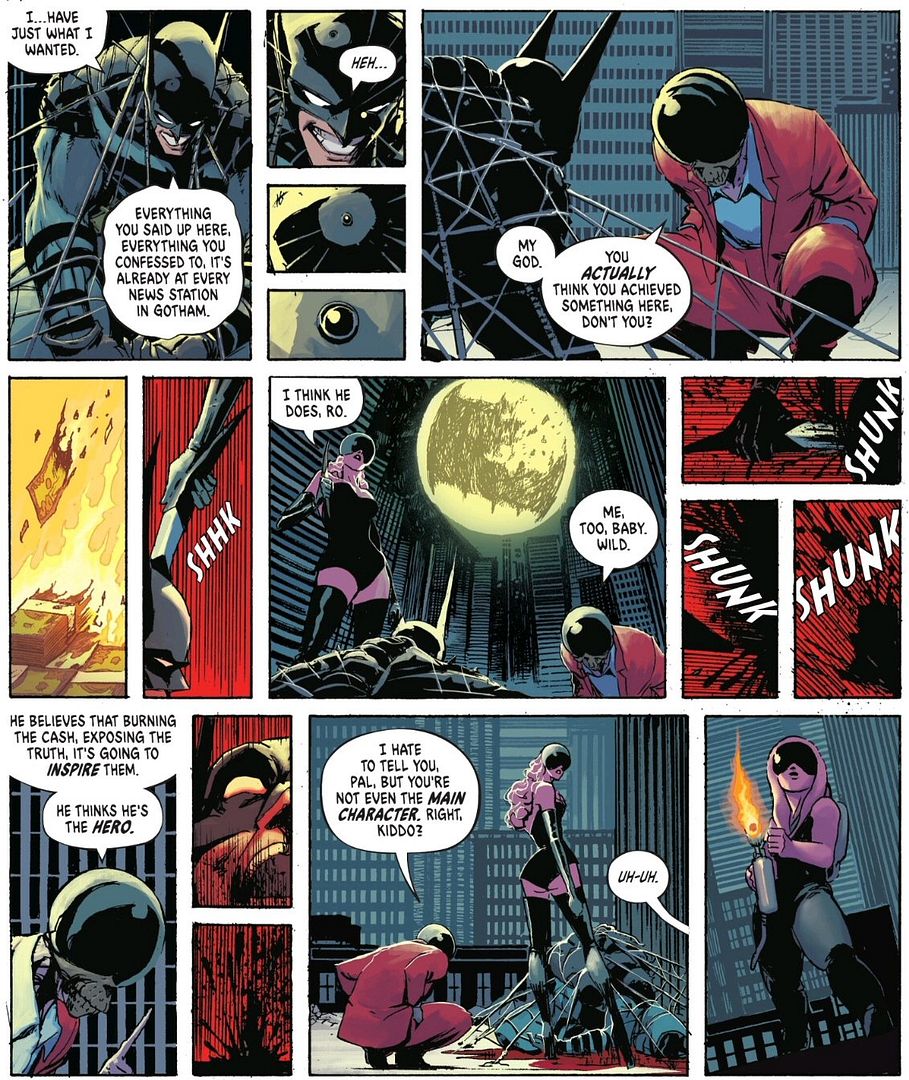
But Bruce bounces back from this temporary defeat and ultimately succeeds in taking down the villain. From issue #6:
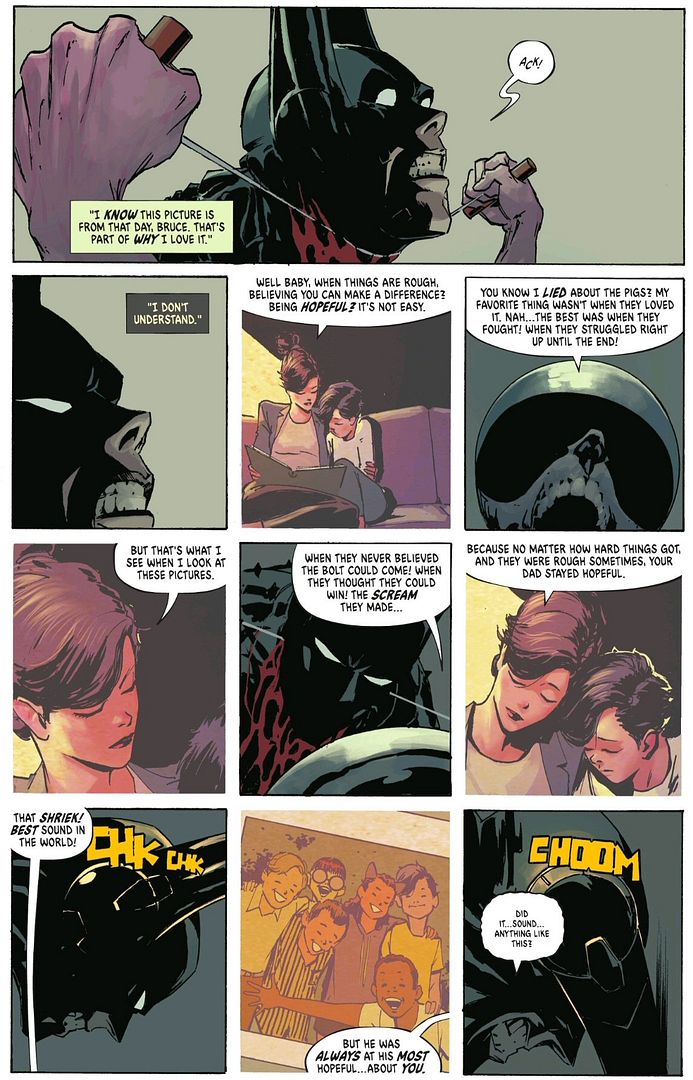
Ironically, this final take-down scene is used to make the juxtaposed key point about remaining hopeful – as further depicted in his mother’s closing narration, where she expresses how proud she is of Bruce:
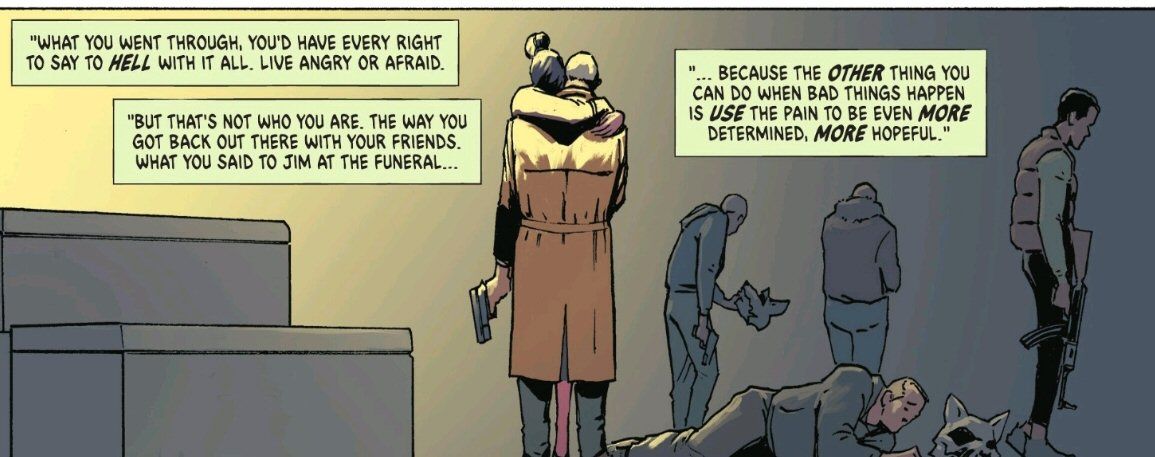
This represents the key departure from the Dark Knight version of the character – Absolute Bruce remains optimistic and hopeful for the future, with his sense of virtue ethics (seeded in his childhood) fully intact. Snyder has thus created an entirely new take on Batman, one exquisitely suited to withstand the punishing despair of the darker Absolute Universe.
There is even a nice father-son sequence in Bruce’s dream in the “other realm” of issue #16, where Absolute Diana helps him on a personal quest. As I will soon explain, Bruce is feeling like he has let his friends down by this point in the series:
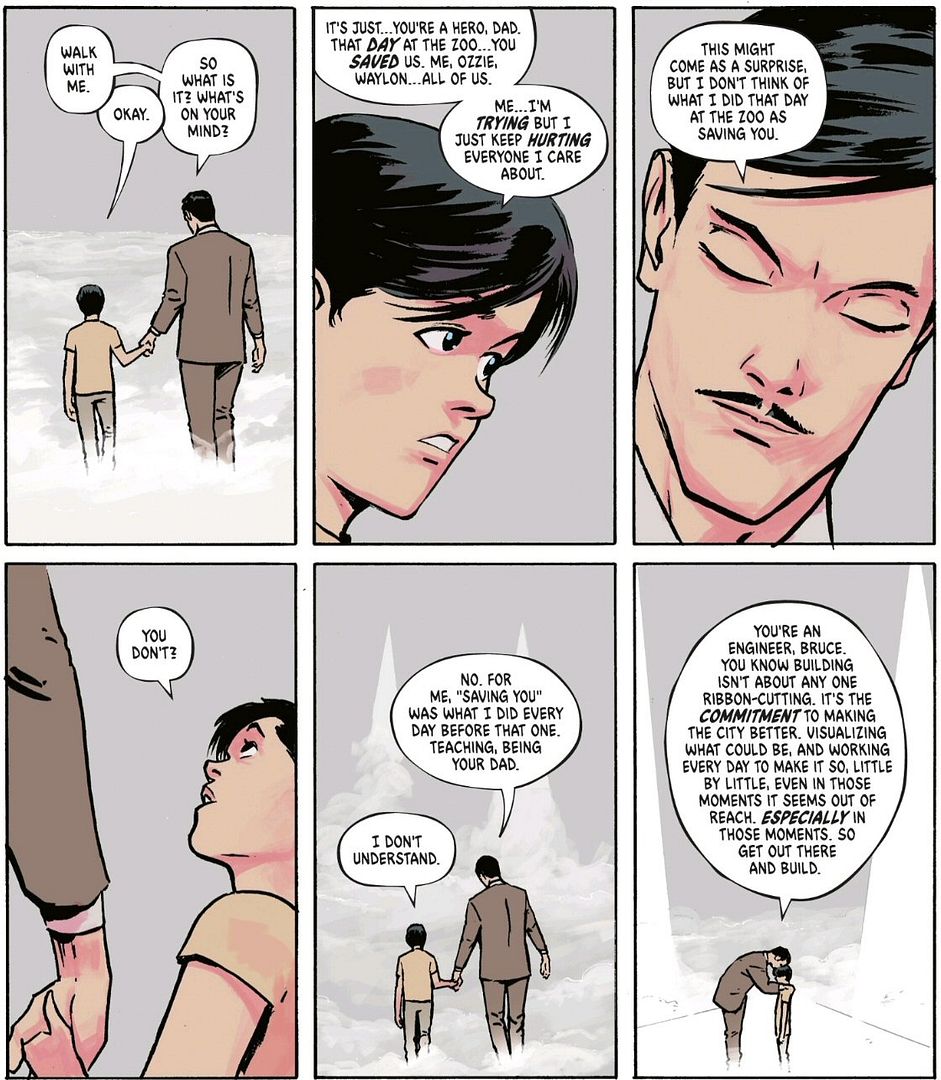
A clear statement of Bruce’s (and his father’s) virtue ethics.
Understanding the context of Absolute Batman’s ethics
To understand why this specific virtue ethics framing was critical for Absolute Batman, I think it is necessary to explore Synder’s own earlier take on Batman – when he first started writing the character for DC in 2011 (as part of the New 52 relaunch). Snyder’s initial version of the main DCU character was in direct contrast to the much more powerful and in-control version of Bruce/Batman developed by Grant Morrison (as I described in my main Batman Ethics post, follow that link).
As I explain on that overview page, Morrison’s take was itself a reaction to the preceding two decades of much grimmer Batman stories. Starting with Frank Miller‘s Dark Knight Returns (1986) and Alan Moore‘s The Killing Joke (1988), Batman descended into a much darker character over time, one that was increasingly barely holding on (always “one bad day” away from turning into what he most feared). Morrison course-corrected this decline, showing us instead a Batman at the height of his powers – a true superhero in a virtue ethics sense, someone who uses his past and ongoing trauma to make himself continuously better.
What I didn’t explain on that page was that Morrison also took it a step further, with a controversial storyline that suggested that the Batman was always inevitable. In his Batman: The Return of Bruce Wayne mini-series (2010), we are treated to various iterations of Batman that appear throughout the ages. The point is that Batman isn’t just one man in the present day, but rather a heroic archetype that has always been present – a mythic idea in the sense of the monomyth, if you will – one that resurfaces whenever the world needs it. Bruce Wayne is just the latest (and most famous) iteration of this mythic inevitability, according to Morrison’s story.
Snyder appeared to be reacting to this take, and its expressed certainty and confidence in Batman’s virtuous character, when he took over from Morrison. Snyder’s debut story arc in Batman Vol 2, “The Court of Owls” (issues #1-11, 2011-2012), began with a confident Bruce insisting that he knew everything about Gotham – that the city was his. To his great surprise, he comes to learn that the Court of Owls – a fabled secret society that he had investigated and dismissed in his youth – are in fact real and have been controlling Gotham from the shadows for centuries. Eventually, drugged and trapped in a labyrinth by the Court, a disoriented Batman becomes stripped of the self-control he has always relied on – and is forced to confront just how fragile his self-image really is.
Ultimately, he escapes – but not before nearly breaking in the process (issue #5 is a particularly dark chapter). It seems to me that the goal of this story arc was to take Bruce down a peg – revealing his personal fallibility and his ignorance and arrogance about Gotham (and his relative place in its story). Over his long run, Synder’s DCU Batman was definitely a much more vulnerable version. While later storylines like The Batman Who Laughs (described on my main Batman ethics page for Snyder) reestablished the virtue ethics core of the character, I can’t help but see a parallel between his original Court of Owls story and the third story arc of Absolute Batman (“Abomination”), where Bruce confronts Bane.
Bane is working for the nefarious forces that rule Gotham, and the world more generally – led by evil mastermind Jack Grimm, aka the Joker. While trying to find out more about their plans for Gotham, Batman is captured by Bane, and Bruce is subjected to extensive torture to break his will. From issue #10, after many days of torture (and full content warning: these scenes get increasing disturbing to view):
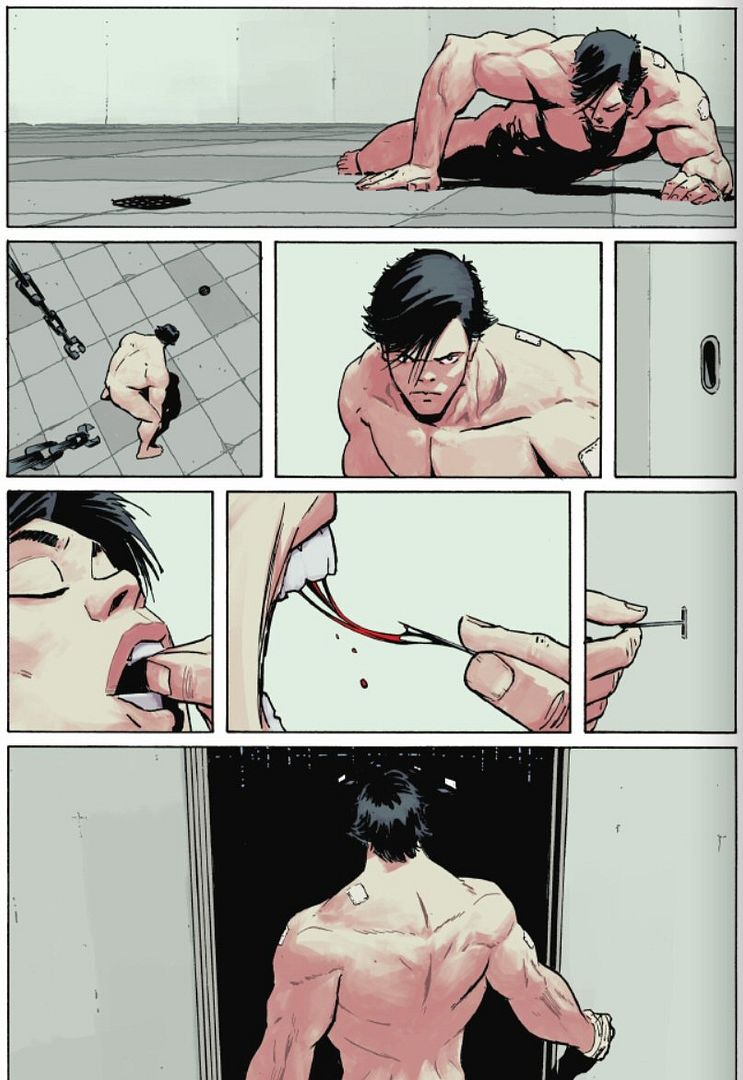
As usual, it seems like Bruce has planned for all eventualities (like fooling their body scans by sequestering a lockpick in his teeth). But he is quickly recaptured. The torture continues, with this interesting narration …
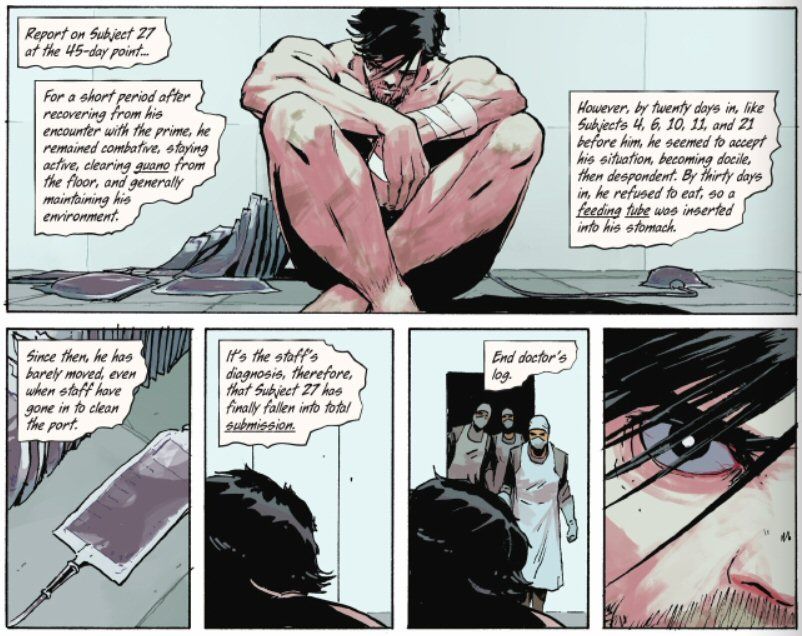
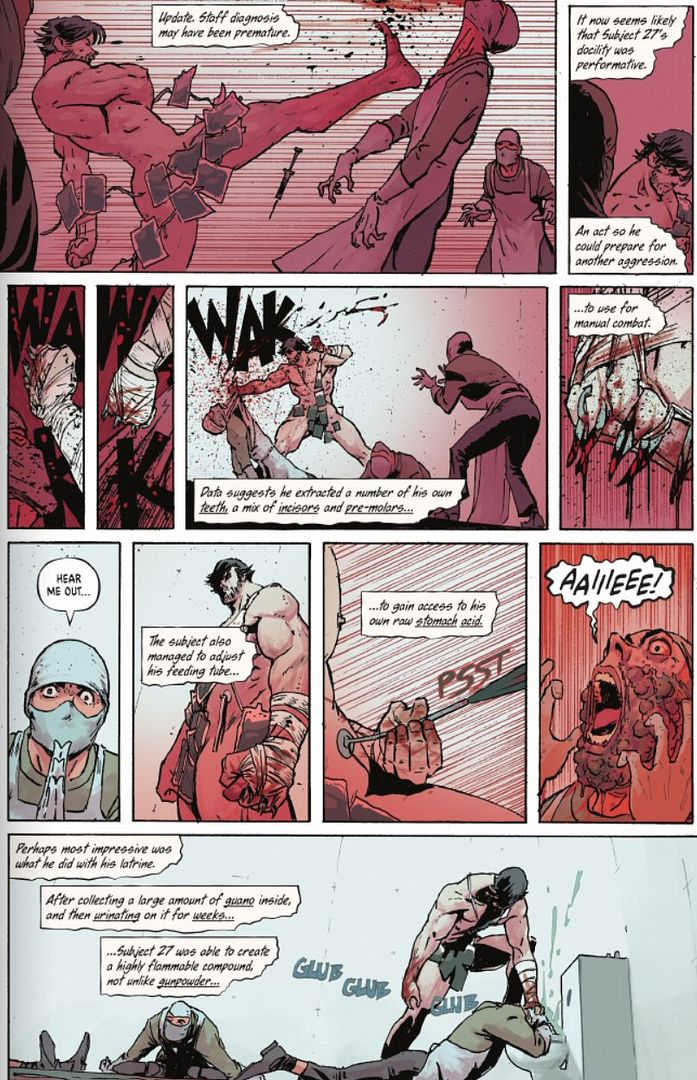
Again, Bruce seems to have outwitted his captors by faking submission … but he soon faces unimaginable horrors, before Bane (the “Prime”) steps in:
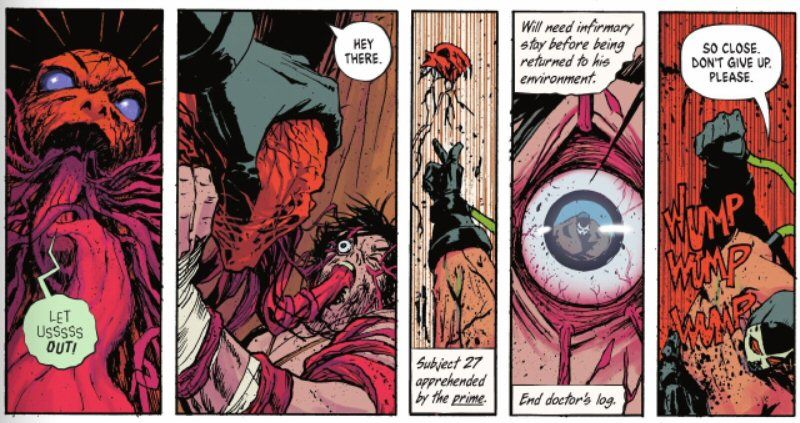
I’m afraid it gets worse, as they physically start to turn him into another version of Bane, with the same supercharged venom running through his body …
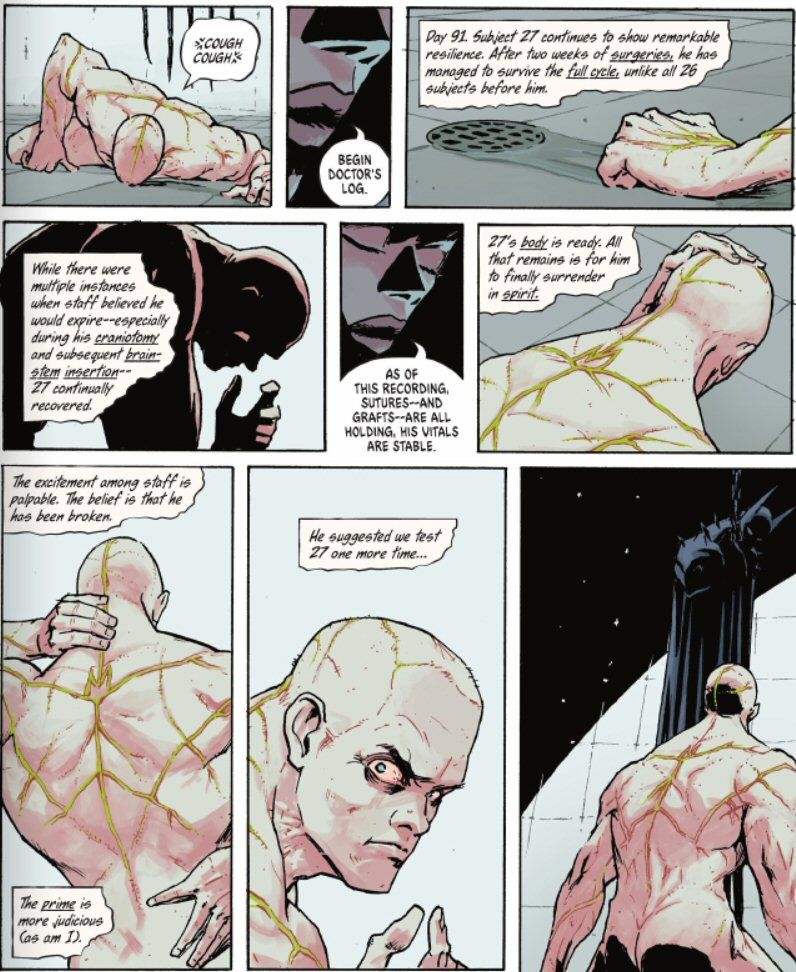
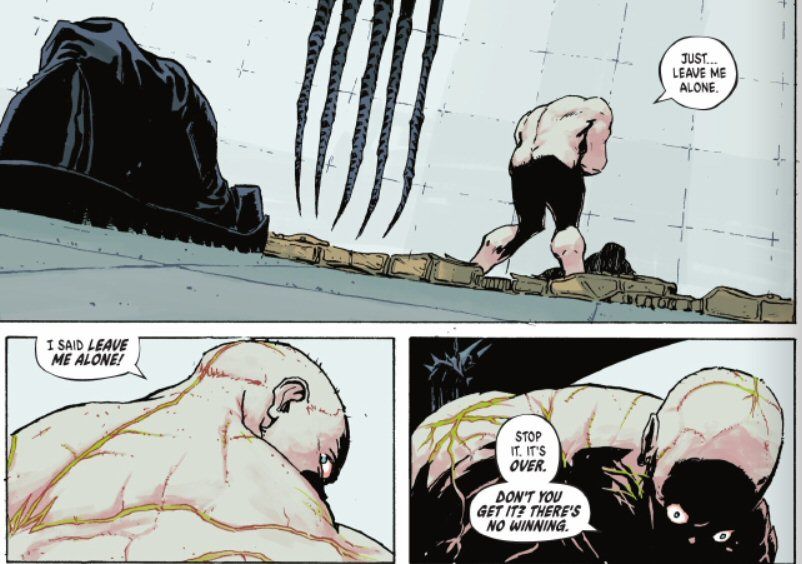
But Bruce dons the costume once more, and tries to escape, only to again be stopped by Bane …
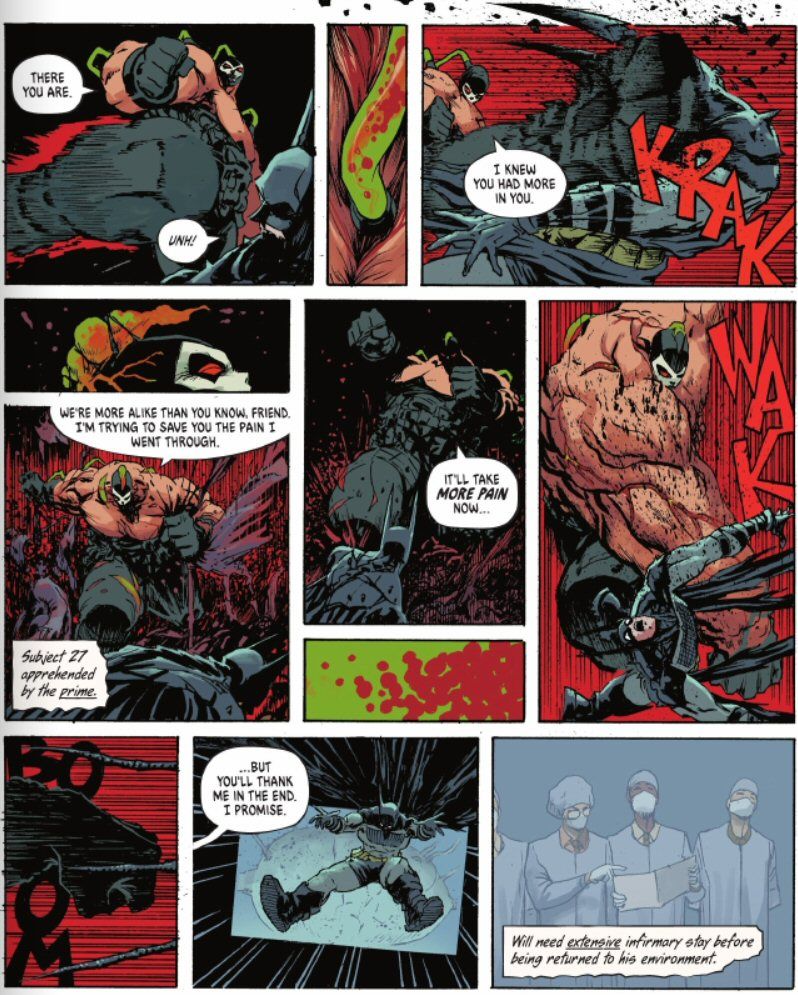
Eventually, Bruce does escape – with some help from an old friend. Which brings me to the even more dispiriting part of this story arc – what Bane does to all of Bruce’s friends.
Those not deeply familiar with the comics may see Batman as something a lone wolf – a solitary genius/billionaire imposing order on a corrupt world through his fists and force of will. While a sense of enlightened individualism does permeate a lot of the main DCU stories, Batman has always been distinguished by his commitment to mentoring up-and-coming heroes (known collectively as the Bat-Family, as I referred to previously). In the main DCU, Batman is never truly alone (unless he chooses to be).
In this Absolute Batman series, Snyder flips that script in more ways than one. Young Bruce’s wealth, resources and privilege are stripped away – leaving young Absolute Bruce poor, orphaned, and mistreated by society. This matters for the evolution of his virtue ethics – Absolute Bruce’s moral sense can’t be a result of noblesse oblige (a wealthy man’s obligation to help the less fortunate) because he is one of the less fortunate. His moral authority instead comes from shared experience, vulnerability, and sense of community – bonding tightly with those he grew up with in Crime Alley.
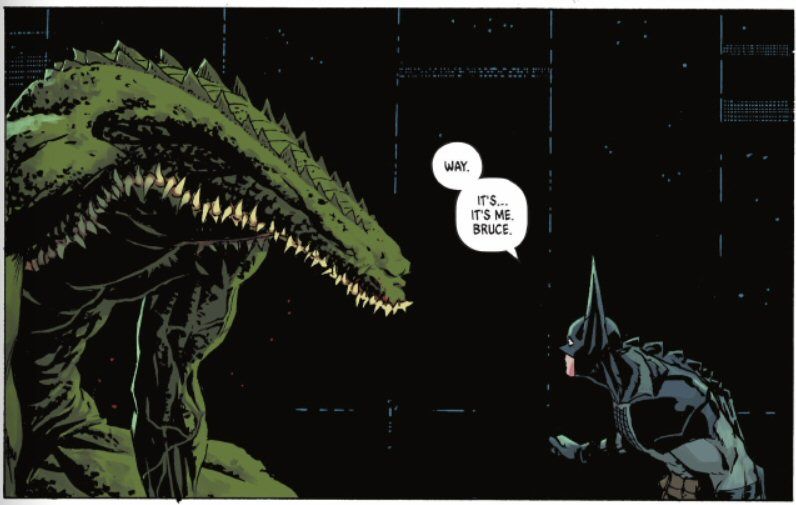
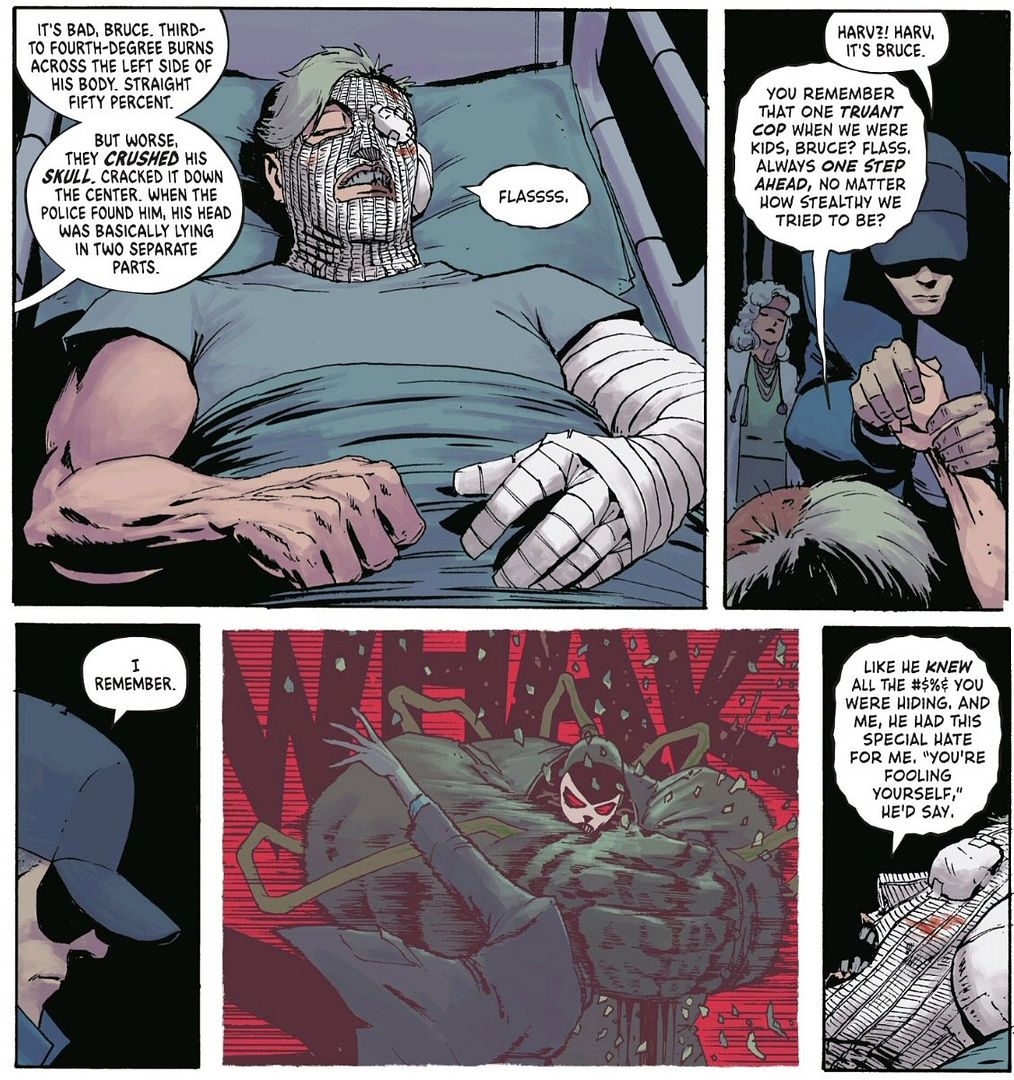
Over the early run of Absolute Batman, you see Bruce turning to those close friends for help – or his friends voluntarily putting themselves into harm’s way for him. Now, thanks to Bane’s intervention, we get to see what happens to these friends. From issue #10 for Waylon …
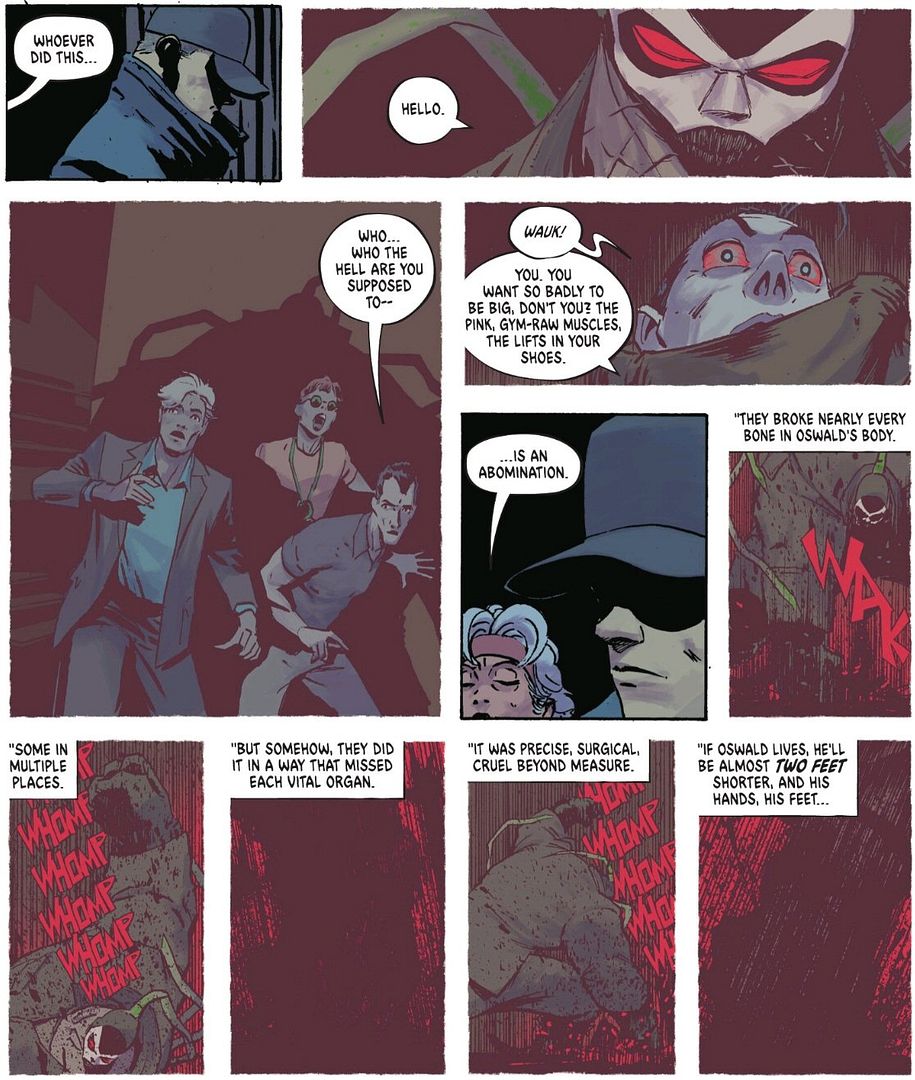
… and issue #12 for Oswald …
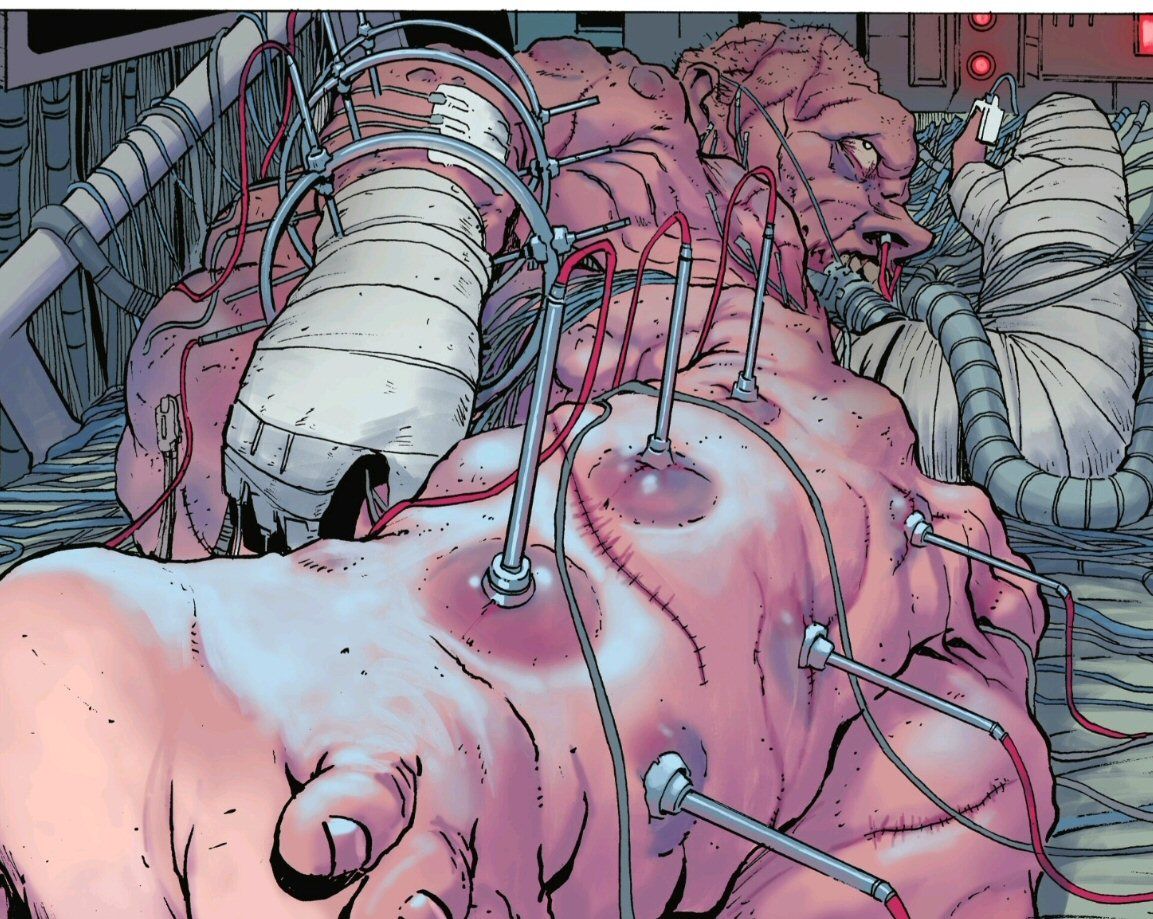
… Harvey …
… and Eddie …
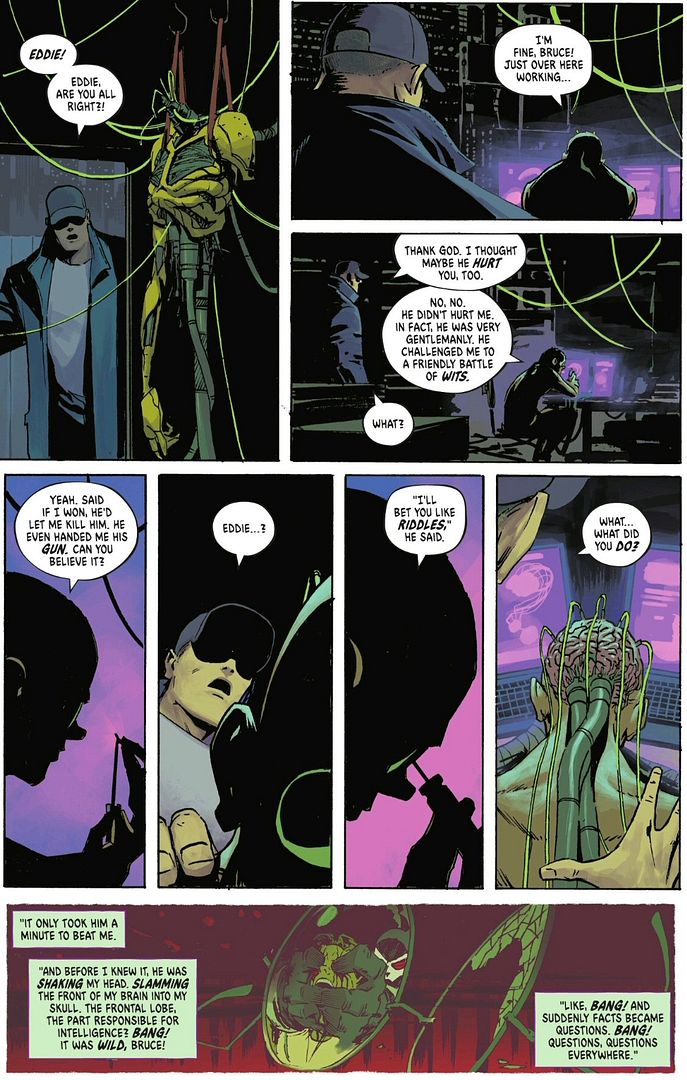
Shockingly, his four best friends are turned into classic Batman villains: Killer Croc (Waylon Jones), the Penguin (Oswald Cobblepot), Harvey Two Face (Harvey Dent), and the Riddler (Eddie Nygma). And Bruce doesn’t get long to rest up:

That isn’t Bane knocking – instead, another key relationship for Bruce has arrived, Selina Kyle (Absolute Catwoman). This is an important support (and potential vulnerability) for Bruce, and one that will likely become increasingly significant over the course of the series – but I’ll save that for future posts.
These assaults certainly test his established friendships. From issue #16:
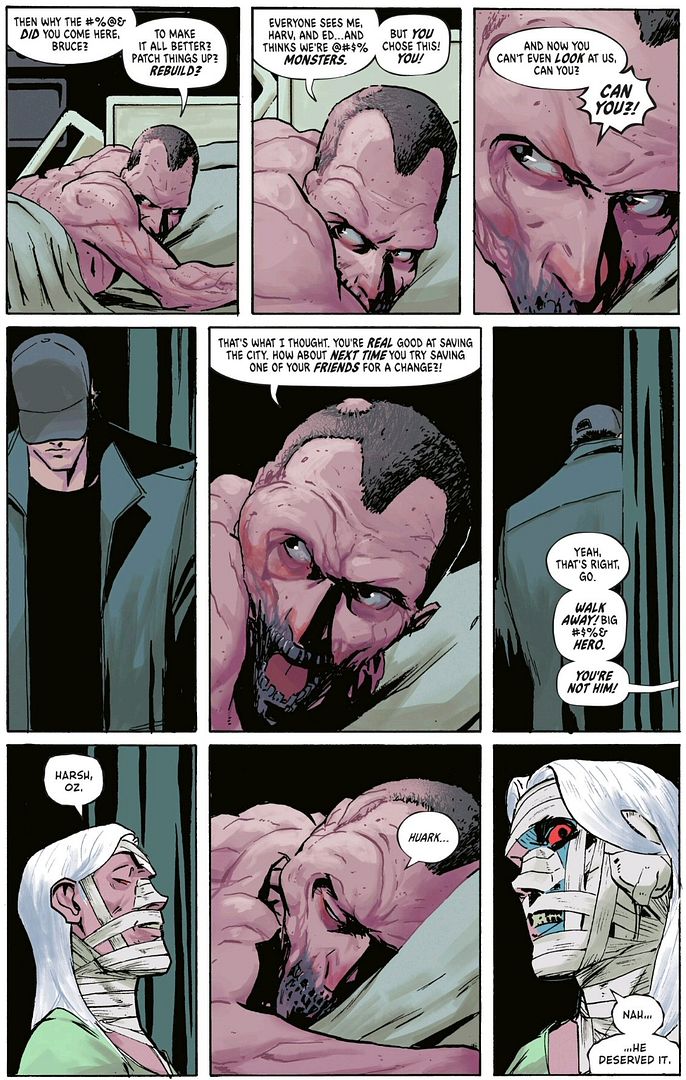
But his friends do typically stand by him over the subsequent story arcs and form a core part of his support network. Of course, there is a lot more going on across these stories, and the attacks on his support group keep coming (there are significant sub-plots involving Selina, his mother, and Jim Gordon, for example). I won’t go through all the arcs, but I will end with the most recent one involving the Scarecrow (“The Straw Man”) – which re-iterates another key aspect of Snyder’s earlier Court of Owls story. But first I want to consider one other key departure for this series: the systemic/structural framing of evil.
Batman villains in the main DCU stories are often individual psychopaths and/or would-be dictators trying to destroy/rule Gotham (or the world) – at least, historically. Batman typically uses his wits and abilities to take them down, often outwitting them through his disciplined and dedicated commitment to strategy, planning, and tactics.
In the Absolute Universe, the overwhelmingly negative influence of Darkseid energy is depicted at a systemic level in society – particularly in Gotham. Villainy has become structural rather than individual, with a corrupt system that has been horribly stacked against the lower classes from the beginning. You can see this is the perverse actions of those with inherited wealth, the much more extensive organized crime rings, and the general indifference of the police and politicians charged with protecting the public – all creating an ongoing pervasive sense of despair and hopelessness among citizens.
This shifts the ethical framing from defeat-the-bad-guy-and-save-the-day (in the classic Batman stories) to resist-the-bad-system in Absolute Batman – incrementally trying to improve a bleak situation. This social justice framing is uncommon in the classic Batman comics (and superhero comics more generally), which tend to have a narrower sense of crime and punishment retributivism. For a fuller discussion of broader social justice perspectives (including from the most influential liberal philosopher of the 20th century, John Rawls) check out my recent Drome ethics overview.
The perpetuation of systemic injustice in the Absolute Universe soon hits Bruce where he is most vulnerable – corrupting his relationships with those closest to him in, as shown in the most recent The Straw Man story arc.
It had recently been revealed to the reader that Bruce’s mother had been part of this Universe’s Court of Owls. This arc begins with Jim Gordon (who is in love with Bruce’s mother) investigating her disappearance and uncovering disturbing secrets about Bruce’s childhood – a supposed “Project: Batman”. It appears that Bruce’s whole life was a deception – one that conspired and manipulated to turn him into the Batman. Overcome with despair, Gordon takes his own life, and Bruce spirals.
Bruce breaks into the prison that houses Joe Chill (his father’s murderer) for answers. But the Scarecrow is already there and intercedes. From issue #20:
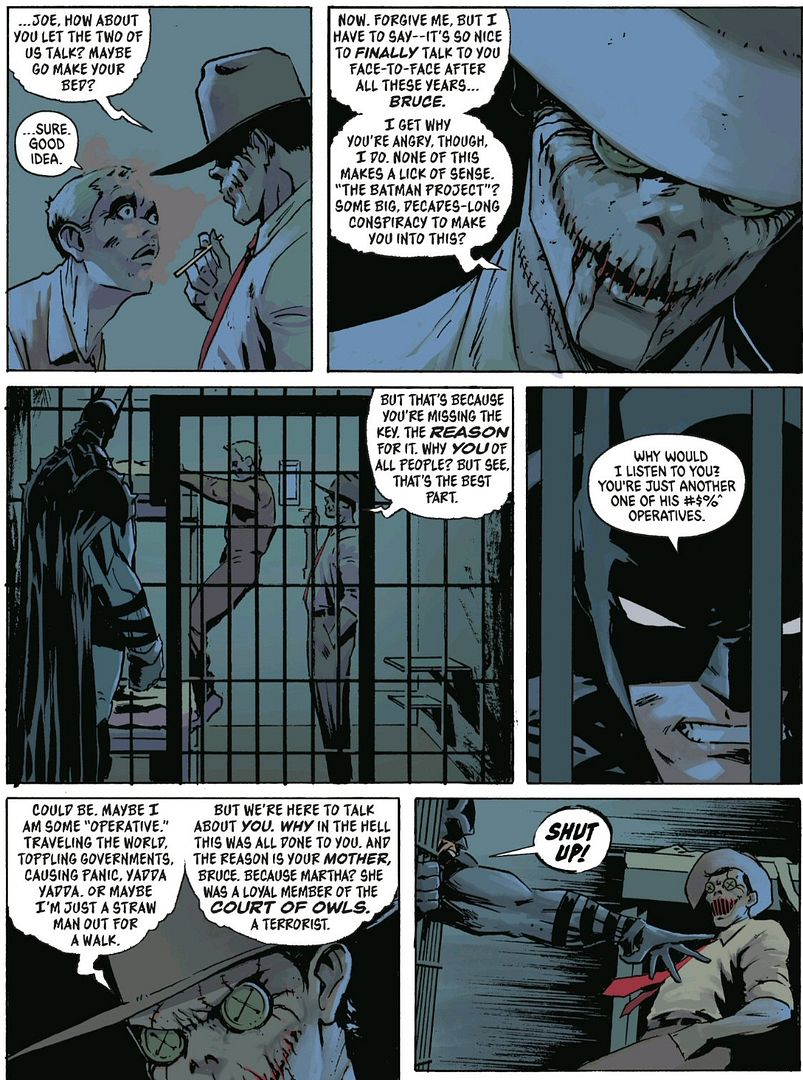
In addition to furthering the idea of this conspiracy is Bruce’s mind, the Scarecrow gives a very good articulation of the systemic dread and hopelessness that has been purposefully introduced into the Absolute Universe (shown below, while forcing Chill to kill himself):
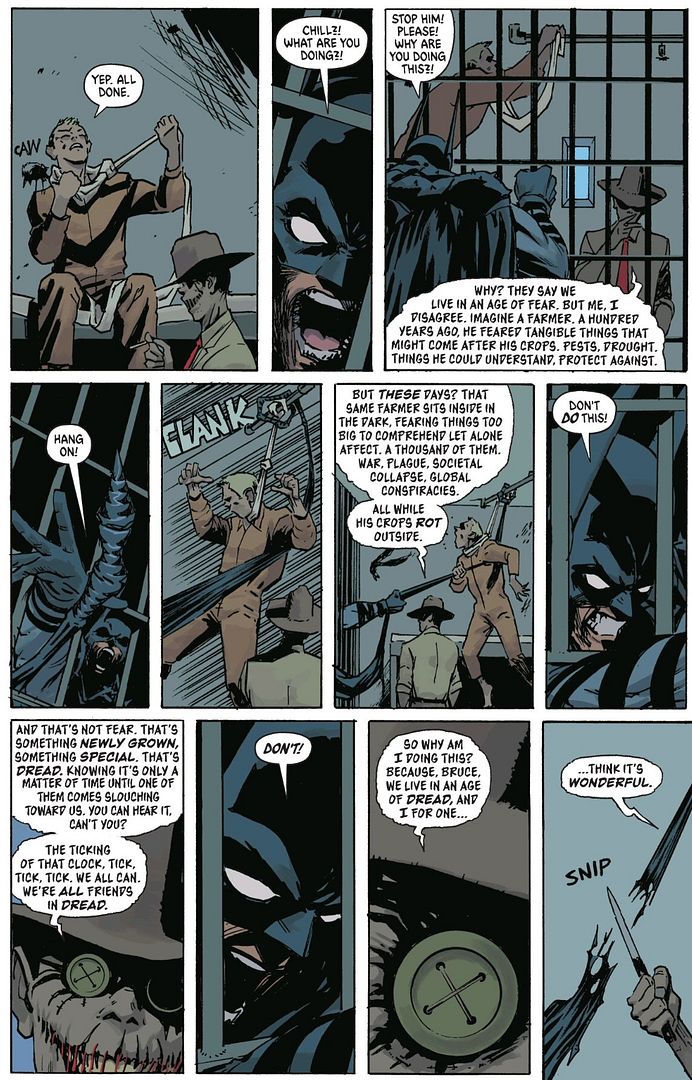
This is really a great description of what has been going on in this series.
As Bruce’s sense of self (and worldview) craters, he is fortunate to still have his friends. From issue #21:
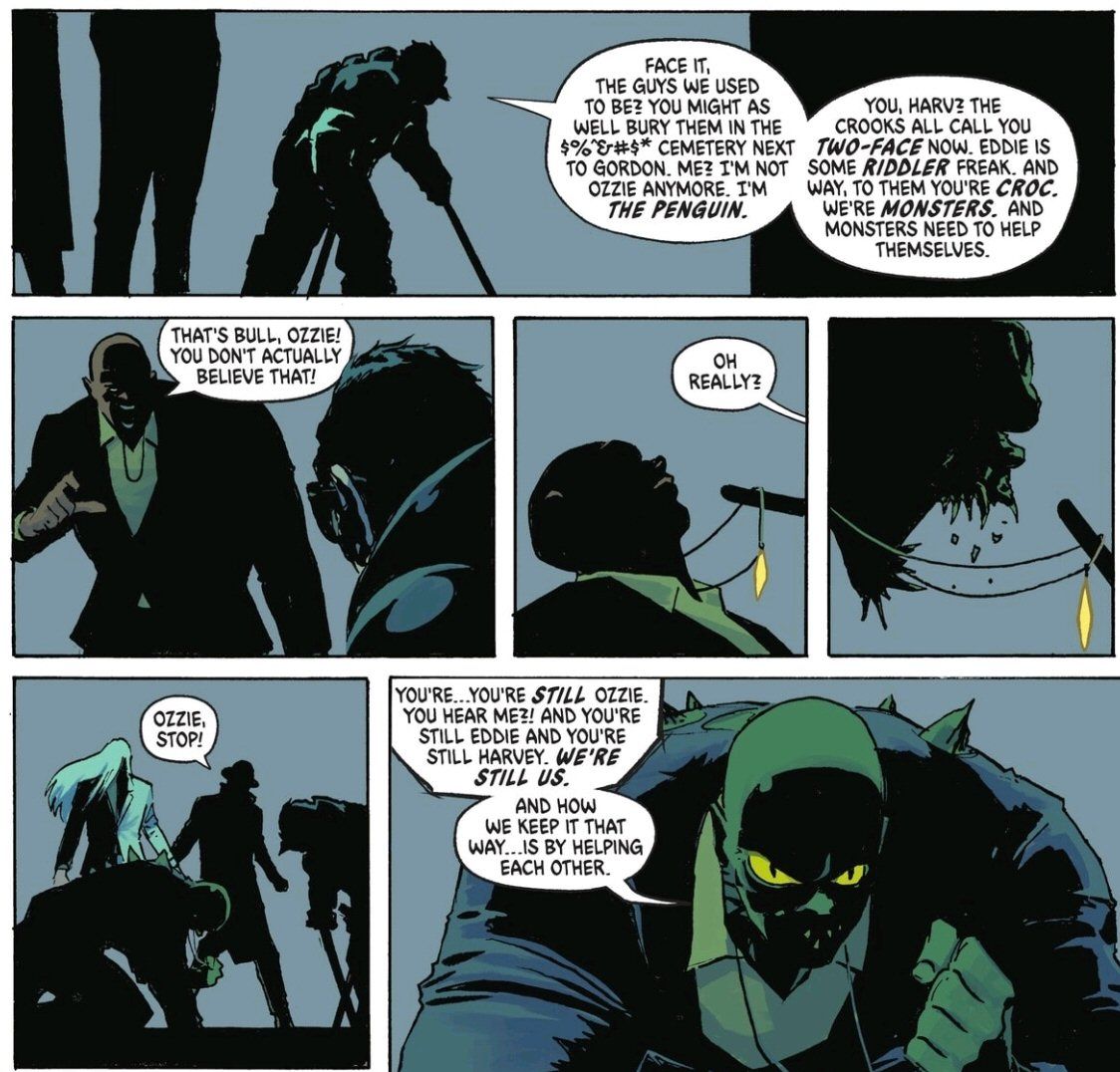
This is an interesting virtue ethics perspective – the only way his damaged friends can hang on to their true selves is by helping one another (and by extension, Bruce). In other words, practicing their ethics.
The same goes for another Batman ally and unlikely voice of reason – this Absolute Universe’s Red Hood, Harley Quinn. From issue #22:
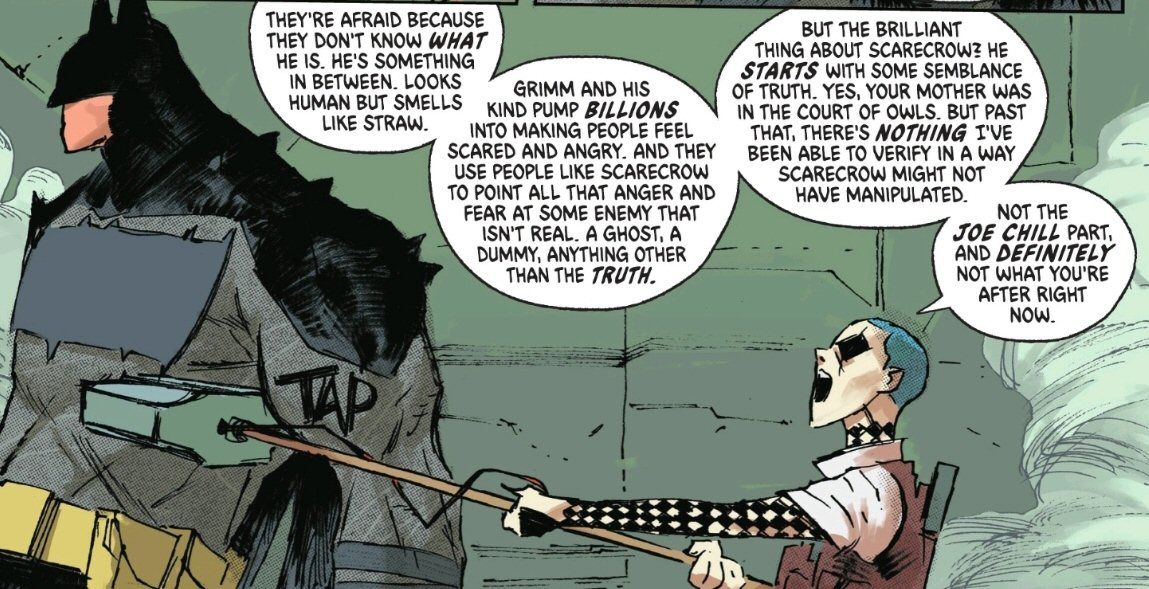
But the Scarecrow continues to apply pressure and sow doubt, causing Bruce to sink deeper into delusion and conspiracy theories – eventually becoming ostracized from his friends. From issue #23:
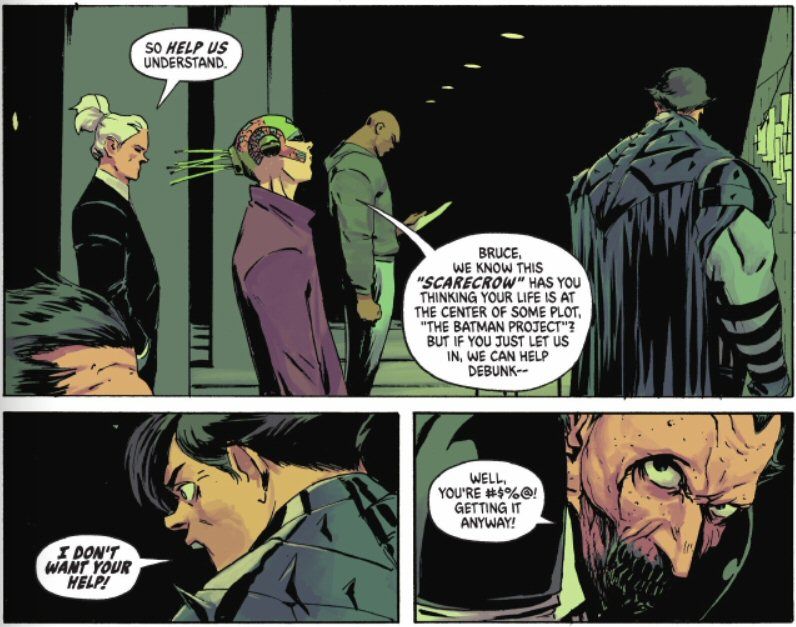
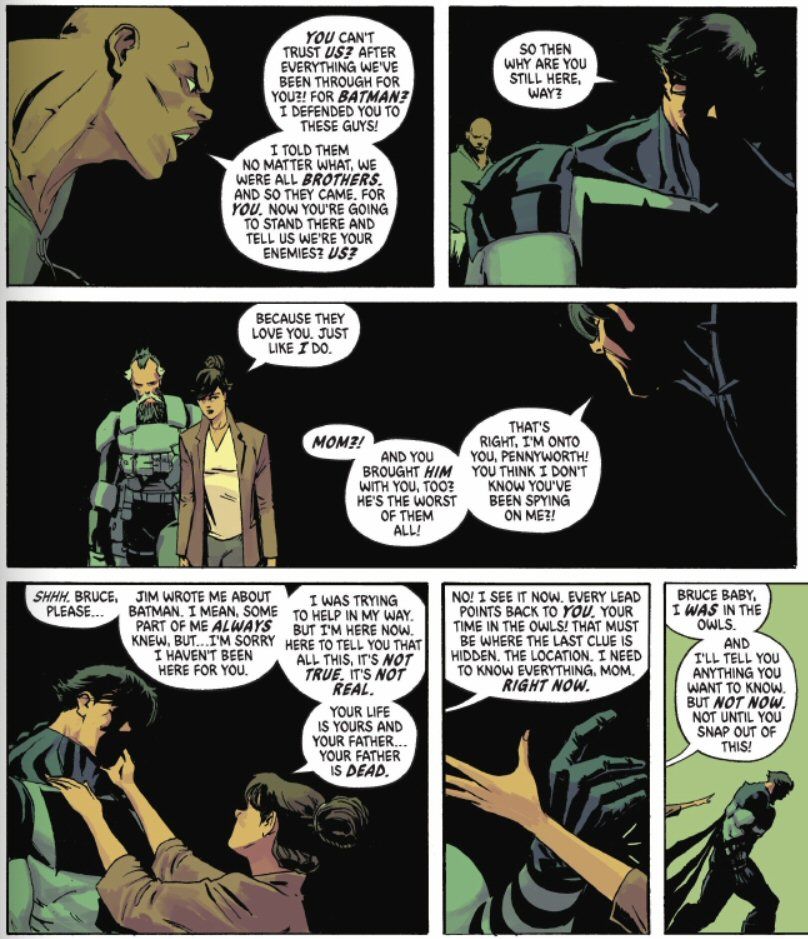
I can’t help but be reminded here of how similar this is to the earlier Synder story, with a drugged DCU Bruce in the labyrinth of the Court of Owls. It seems like that 2011-12 story was a dry run/precursor to what Snyder intended for the Absolute Universe.
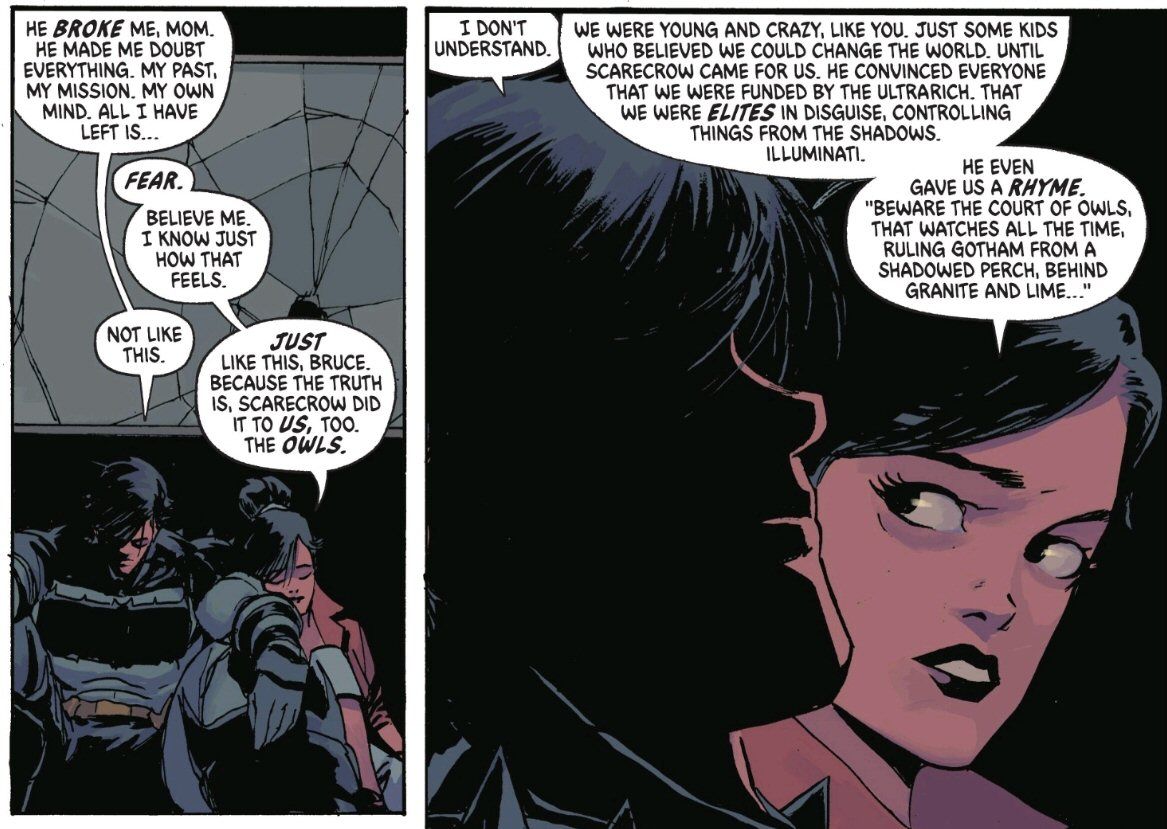
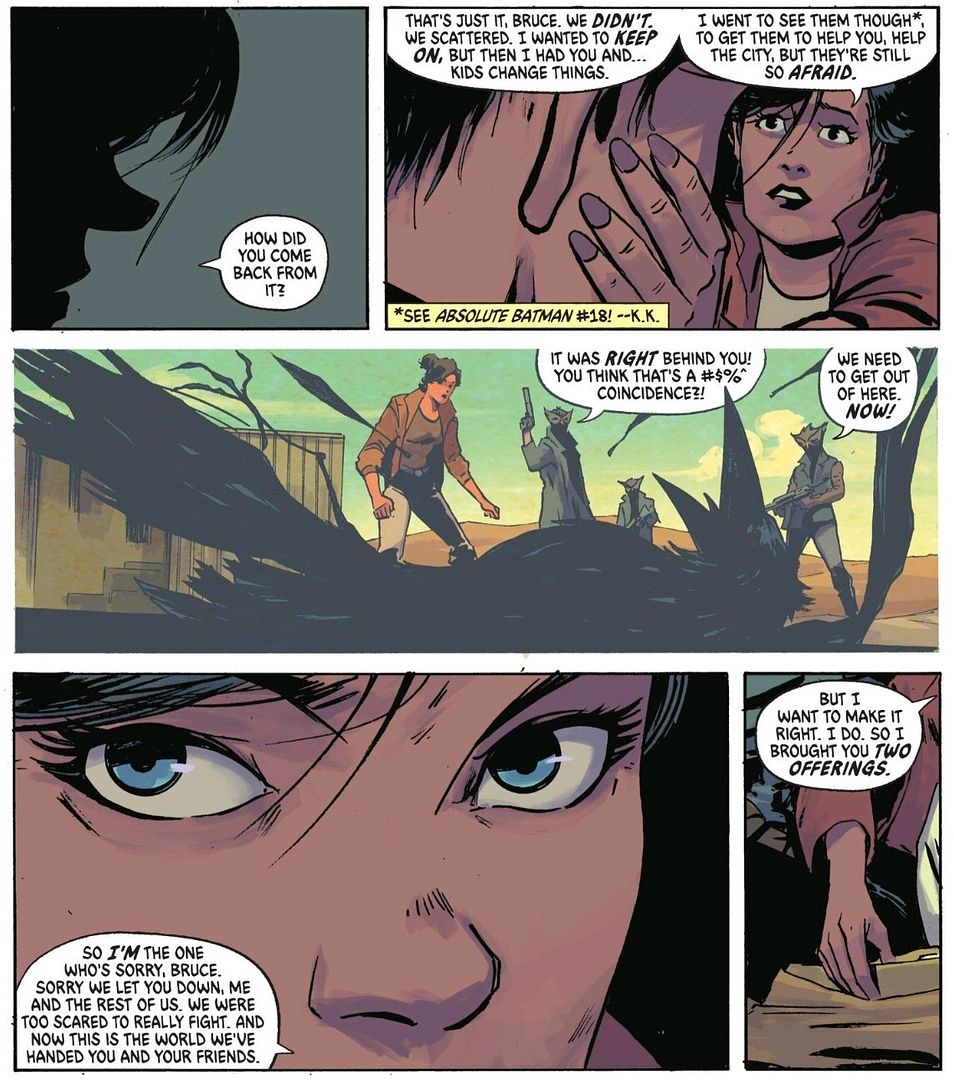
I won’t give away anything from the most recent issue that dropped today (it is a doozy!), but Bruce is shown pulling back from the brink in last month’s issue #24. There we are treated to an interesting story of how this Universe’s Court of Owls (initially a much more hopeful and positive group) were similarly corrupted and destroyed by the evil powers that be:
In the end, I like Pennyworth’s assessment of the value of Bruce/Batman for this Universe, as he finally breaks ties with his surveillance superiors in this issue:
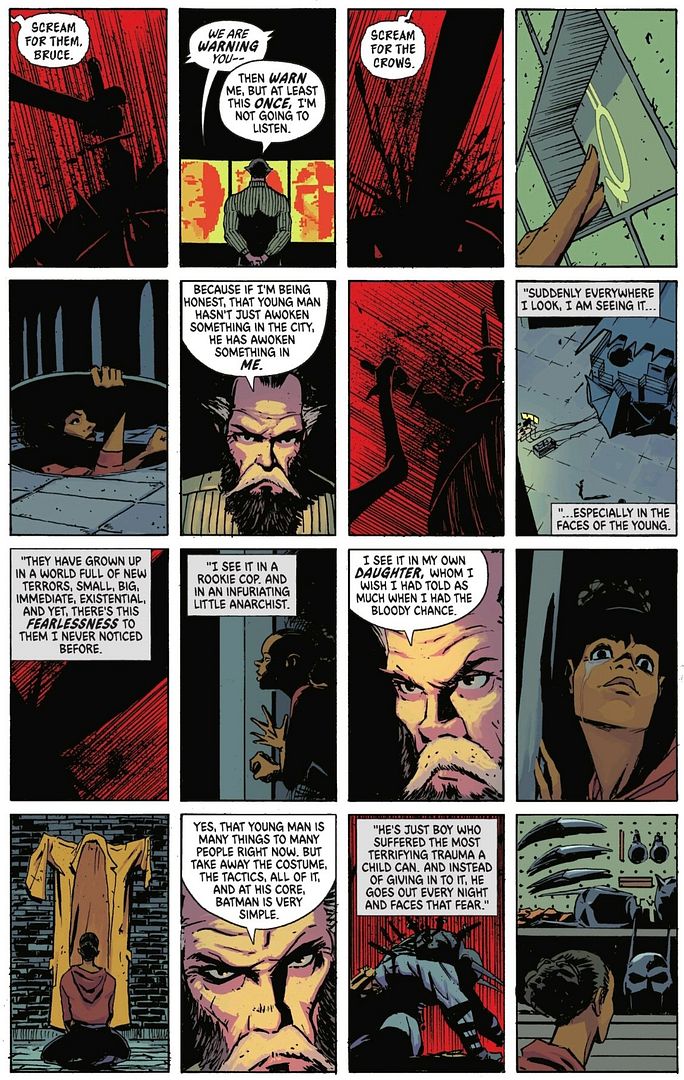
Well said!
The popularity of this series – and the whole Absolute line in general – is a testament to the power of its optimistic message. We have all found ourselves in a darker world in recent years, just like these characters have. And the way out of it is together – by working together, by not giving up hope, and by continually striving to make a better world. I believe that enduring social justice message is what animates so much of the enthusiasm for these comics.
Hopefully I’ve made a compelling case here that Absolute Batman – for all his differences to the main DCU Batman – shares a common virtue ethics core moral philosophy. The way Absolute Bruce/Batman has come about it, and how it continues to evolve, is different several in key external respects. But it ultimately shares a lot of common features (and, I have argued, was presaged in Snyder’s earlier run of DCU’s Batman).
The main series is on a brief hiatus right now, with the release of their biggest issue yet (issue #25) – with some huge story beats. It effectively wraps up the current story arc and sets the stage for the series going forward. It’s a great time to jump on board and catch-up with this extremely popular representation of Batman.
The last word … for now
As I briefly explained in my introduction above (and in considerable more detail in my Batman ethics overview), Batman’s normative ethics have evolved considerably in his >85 years in the comics. But for last two decades, he has remained relatively stable as primarily a virtue ethicist. Absolute Batman was built from the ground up, and it is encouraging to see that modern virtue ethics still makes up the moral core of the character.
But that doesn’t mean they make decisions the same way. And so, it was great fun to consider the dueling perspectives of the Batman of Two Worlds one-shot that came out in September to celebrate annual “Batman Day”. As I explained in my introduction, here we are treated to two variants of the same story – watching Batman deal with a comparable injustice – written and drawn by the two creative teams behind Batman Vol 4 and Absolute Batman Vol 1.
How will the two Batmen react? My prediction is that both will use a virtue ethics frame for their decision making, but customized to their specific circumstances.
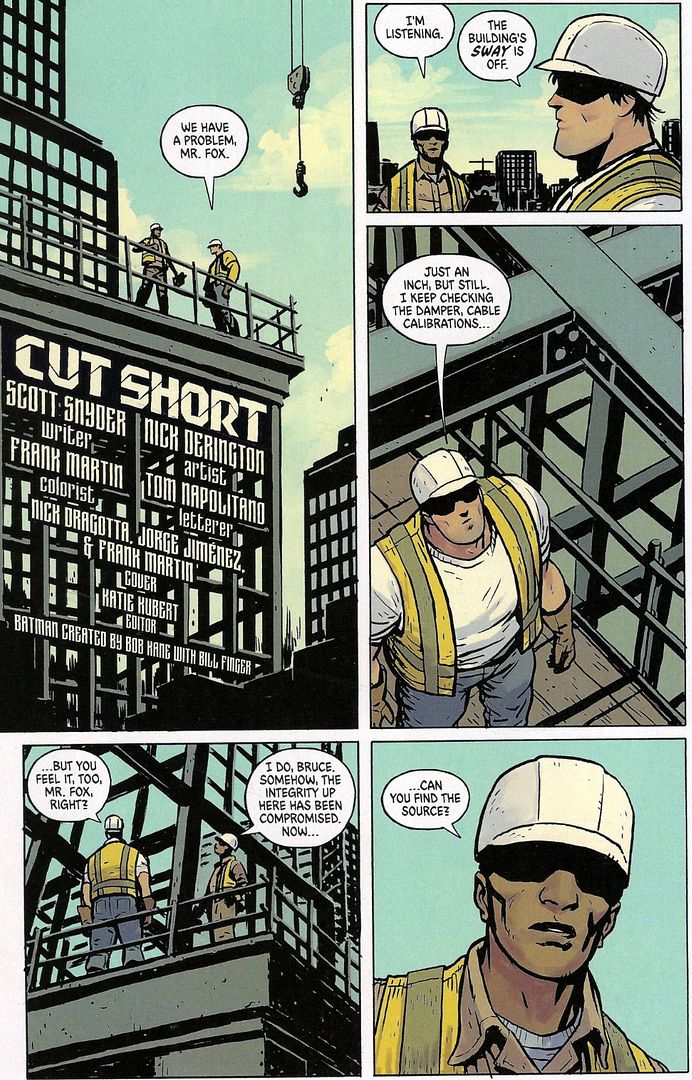
Let’s start with the second story, “Cut Short”, by Snyder and Dragotta, looking at Absolute Batman. It begins with an interesting metaphor for this Absolute Universe, as shown by Bruce in his day job:
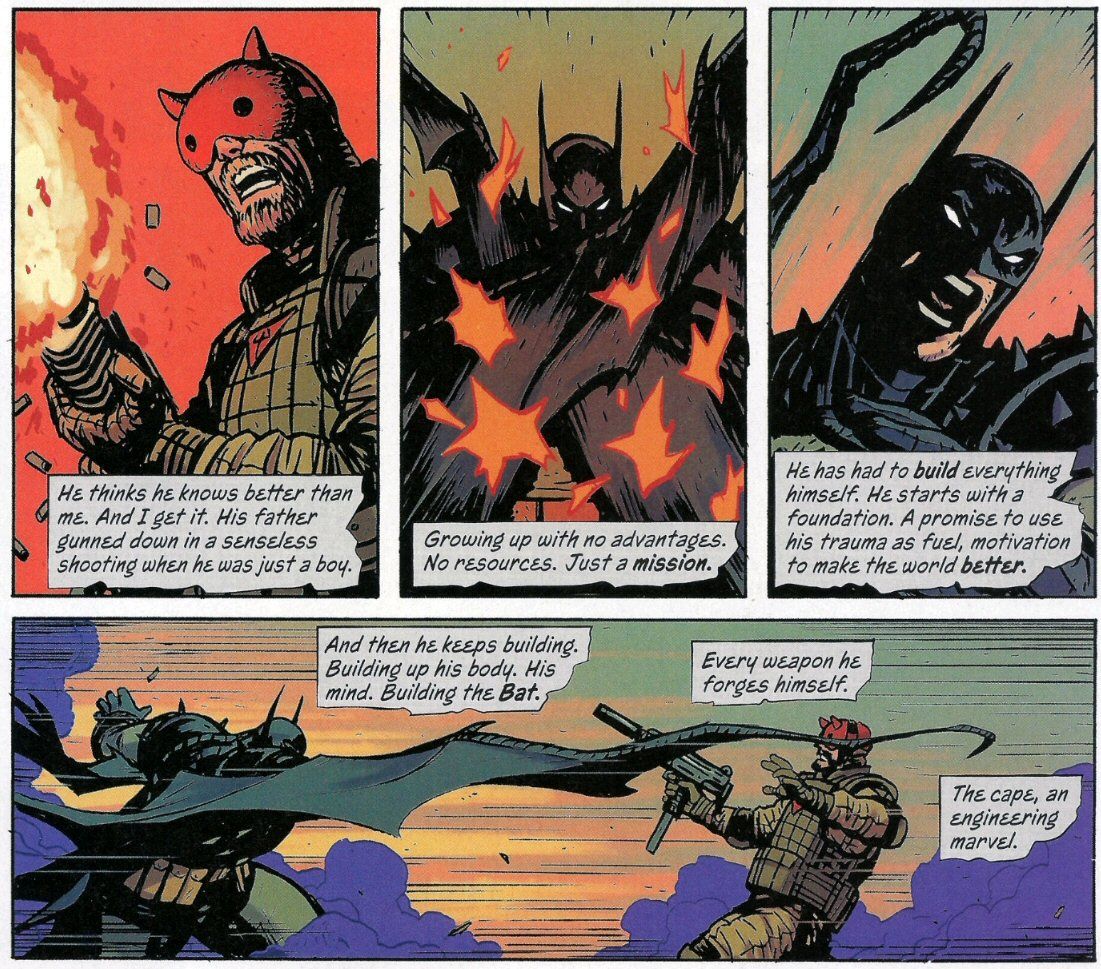
The narration is from our good friend Pennyworth, as Batman foils a bank robbery:
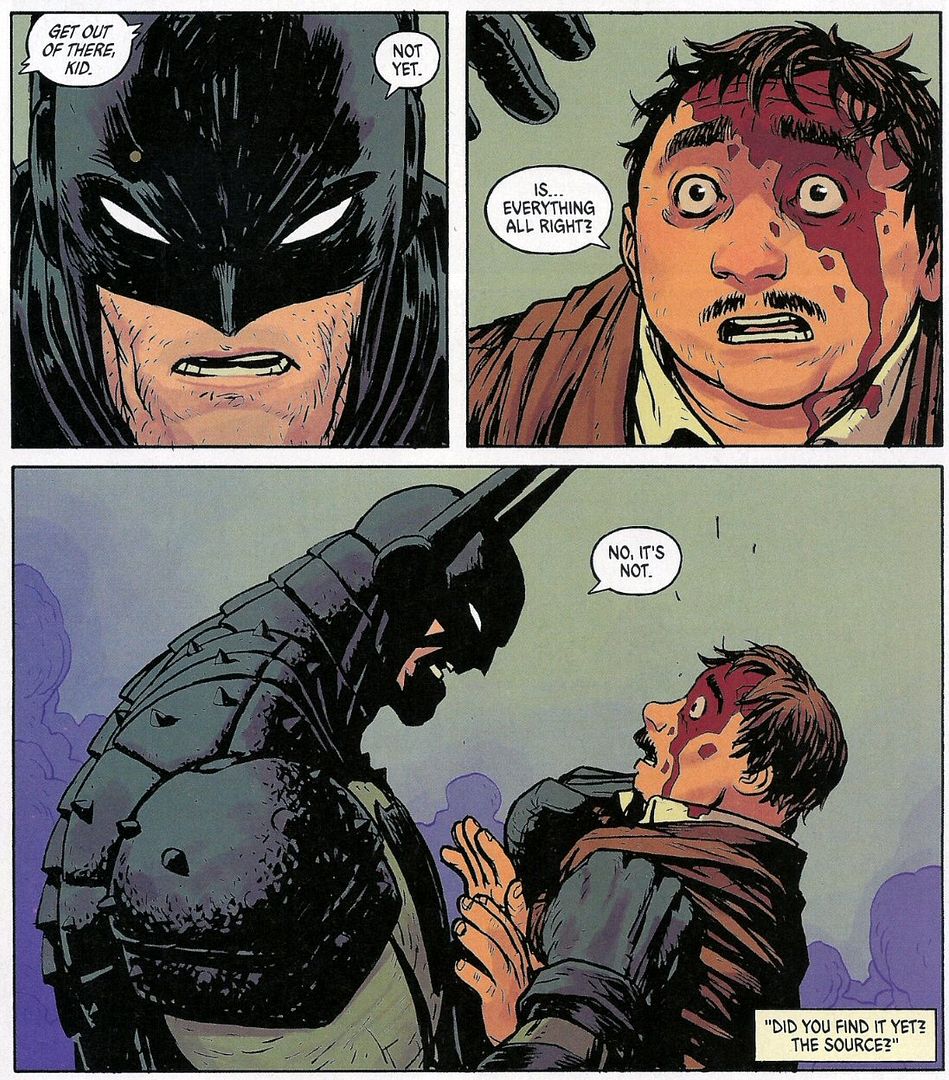
The bloody man above is a bank employee who has been (seemingly) forced by the criminals to open the vault. Cue the overlayed story of Absolute Bruce:
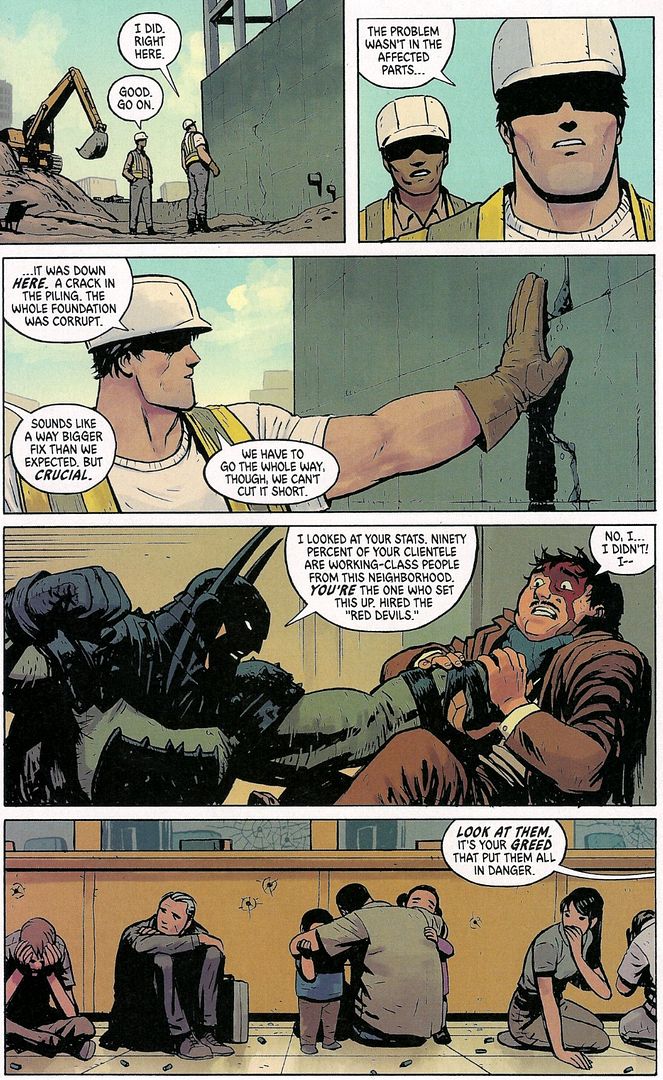
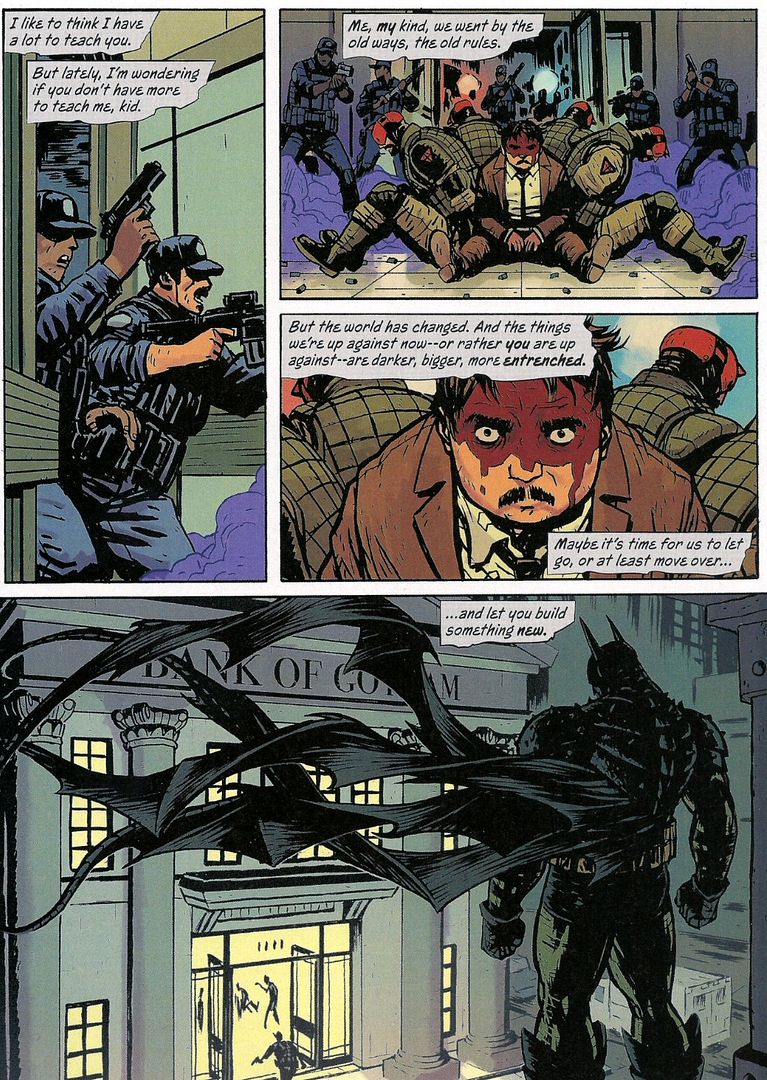
This is ultimately a hopeful message, as both Bruce (and his Batman alter-ego) seek out the rot at the base of this Universe. They are not fooled by appearances – and their practice of virtues has helped them come to see things as they really are and respond to them appropriately.
Meanwhile, in the Fraction and Javi Fernandez story (amusingly called “Short Cuts”), Batman is chasing a pair of criminals with some form of teleportation technology. This is overlayed on a story being narrated by someone we have not seen before:
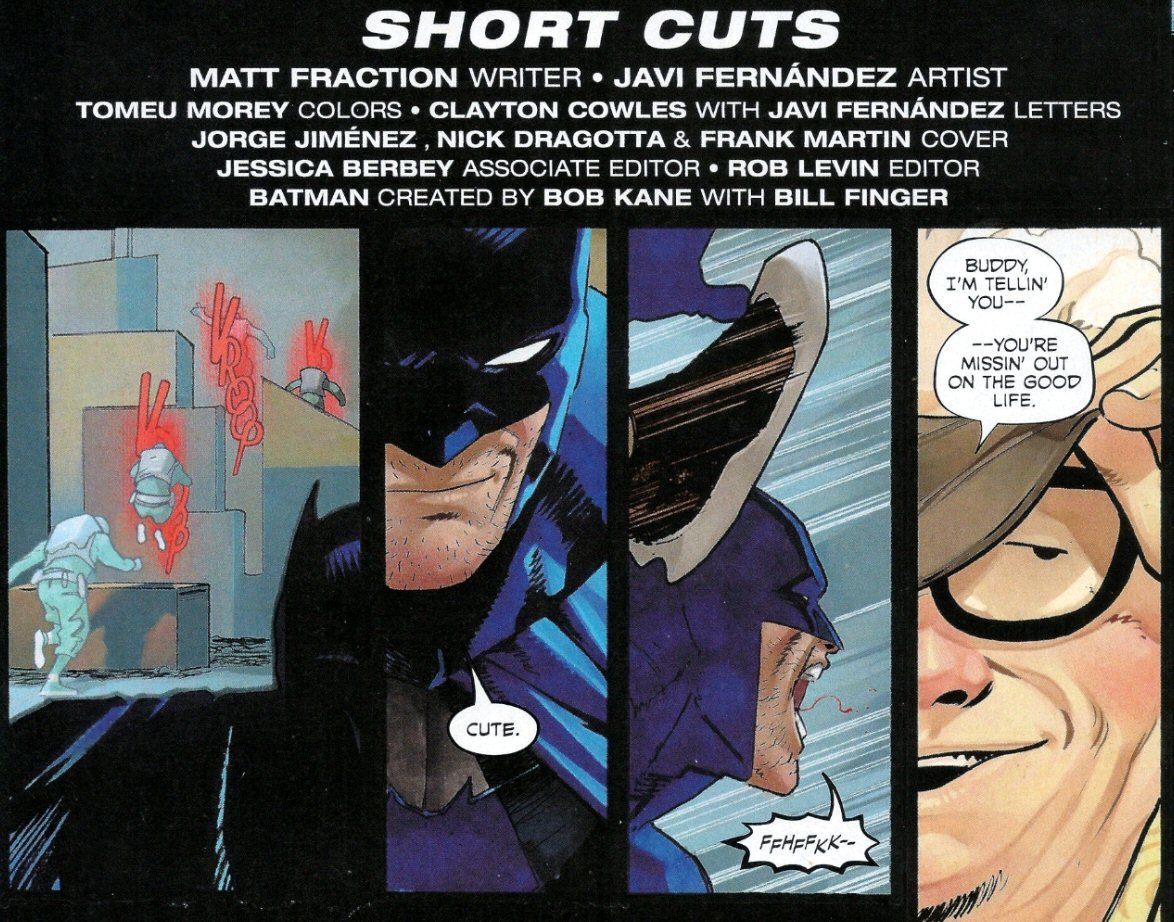
Our narrator is enjoying his first experience of traveling first class …
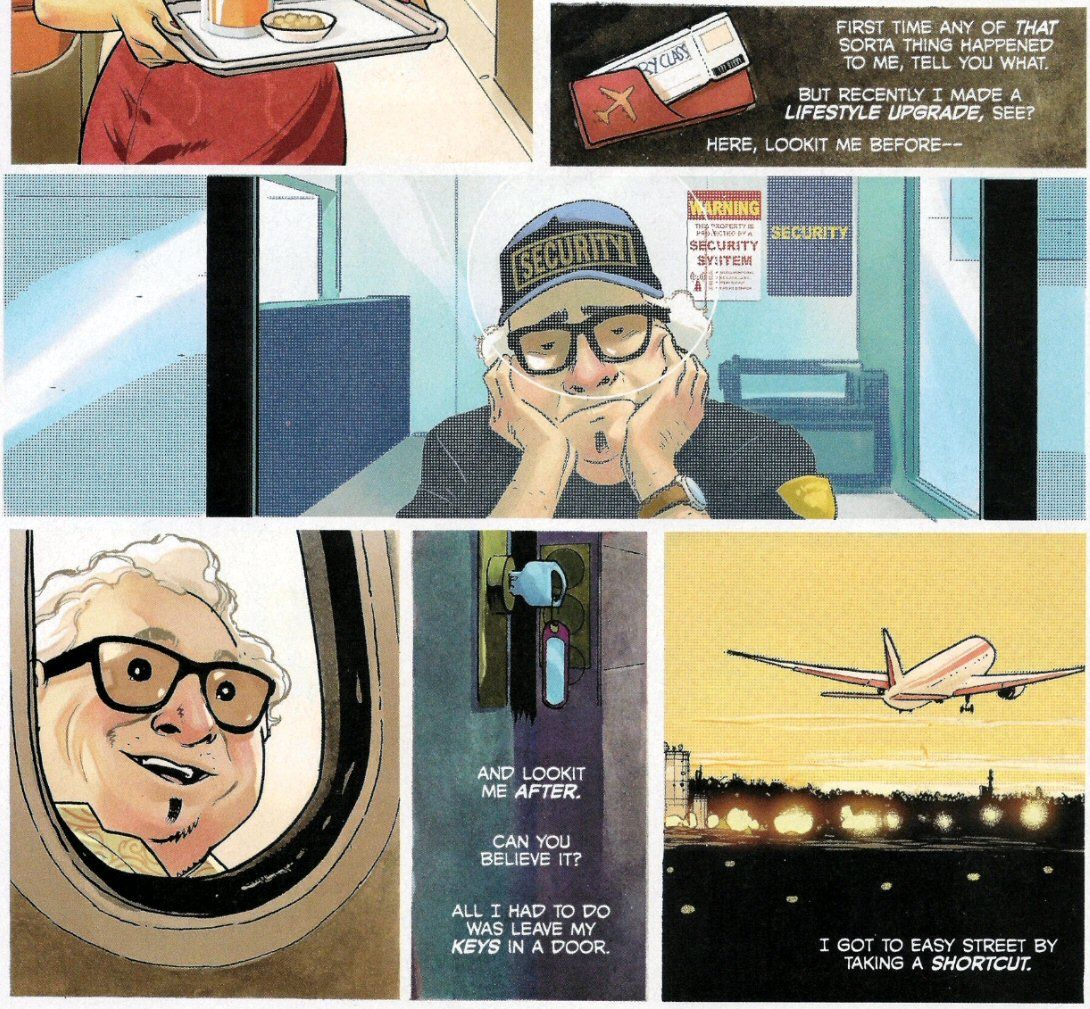
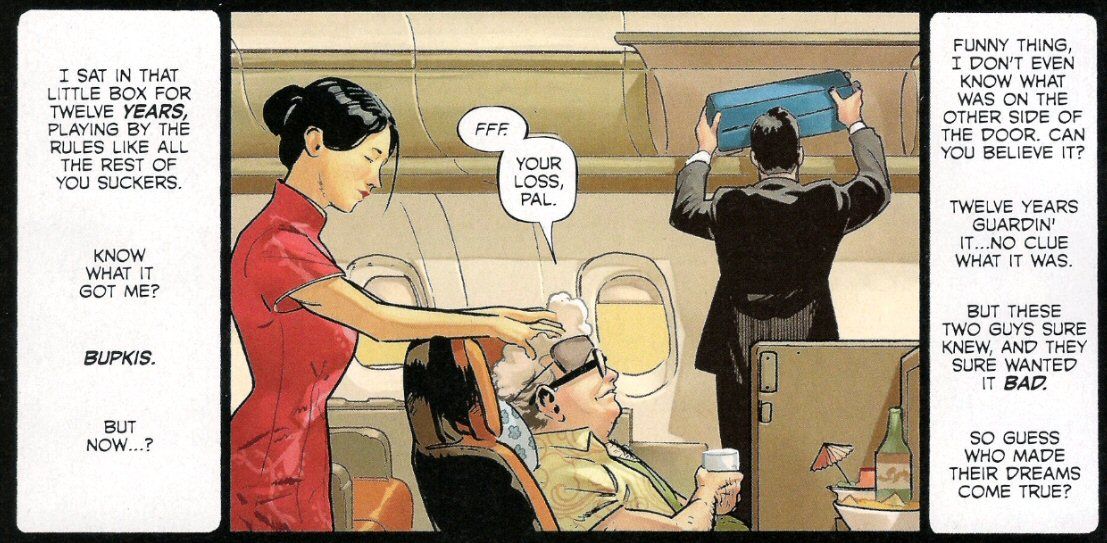
Meanwhile, Batman eventually catches his two criminals:
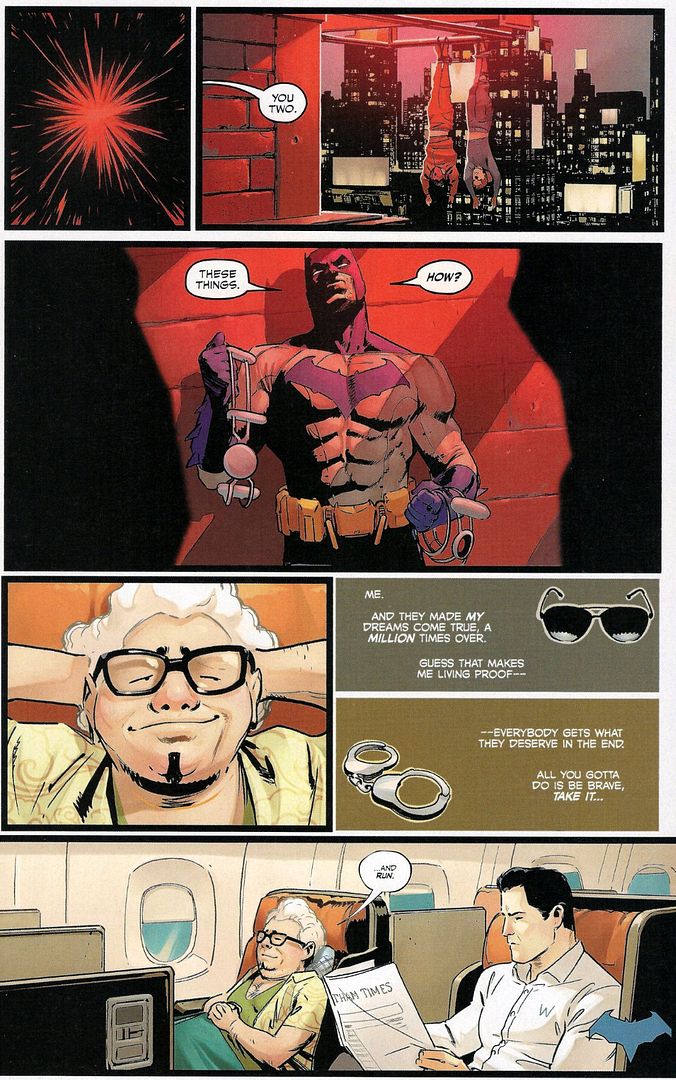
And we discover our security guard-turned-accomplice narrator has been speaking to his seat-mate this whole time – none other than Bruce Wayne. 🙂
The implication is clear – DCU Bruce will meet out some form of legal justice for the security guard, just as Absolute Bruce did. Ultimately, they are making the same choice, drawing on the same core virtues. It is just that DCU Bruce/Batman likes to do it with some flair and panache (in keeping with his privileged status), while Absolute Bruce/Batman is down to brass tacks with no patience for finesse (in keeping with his underdog status). It’s an amusing foray into their differences in style, but commonality in approach.
I hope you enjoyed this overview of Absolute Batman. Please check out my main Batman ethics overview for more detail on the character – and some of my other DC comics ethics overviews below.
See my Glossary post for a list of the key philosophical concepts and related links on this site.
Further Reading
For more Batman: Batman Ethics
For more Absolute Universe: Absolute Wonder Woman
For more DC comics: Superman