

No. I am strong.
Lot of the things that live here are mean and sad. They always bite and kick and hiss first.
But lots of times they just don’t know another way to be. I can show them.
- Little Diana, Absolute Wonder Woman Vol 1, issue #10, 2025, by Kelly Thompson
Welcome to my exploration of the ethics of one of the most popular iterations of DC comics’ Wonder Woman character: Absolute Wonder Woman, created by Kelly Thompson and Hayden Sherman. This ongoing series is now up to 10 issues, with some very interesting normative ethics – along with great writing and art!
As I explained on my DC comics page, the extensive history of Multiversal reboots, “rebirths” and retcons in DC comics makes it difficult to provide consistent continuity for many of the characters. Instead, I plan to focus in my upcoming reviews on a select number of consistent stories for specific universal variants of some of the classic DC characters. But some brief historical background is critical to understanding the modern variant of this Wonder Woman character.
The first appearance of Wonder Woman was in 1941, in All Star Comics issue #8. She quickly became one of the most popular and powerful superheroes in the DC universe. In her original origin story (from the Golden Age of comics), Diana of Themyscira was an Amazon who had been sculpted from clay by her mother, Amazon Queen Hippolyta, and given superhuman powers by the Greek gods. Diana’s origin was changed in the lead up to the Flashpoint universe reboot in 2011 to being the biological daughter of Zeus and Hippolyta (which was always a bad idea, in my opinion). Her original origin was restored in the Infinite Frontier era of the early 2020s, and the clay origin remains the currently accepted origin at the present time (2025) in the main DC comics line (i.e., Earth-0, aka Prime Earth).
The Absolute Universe (aka Elseworld, aka Alpha World) was created by Scott Snyder, and shares many similarities to Earth-0 of the current Infinite Frontier era. But instead of running predominantly on hope (as embodied by Superman energy), this universe runs mainly on despair (as embodied by Darkseid energy). This has resulted in all the heroes having darker origin stories, making them all underdogs at the present time. The characters are supposed to have the same basic traits and fundamental drives as the historical Earth-0 universe characters. And so it is a key question of what will need to change in their ethical makeup to make that happen, which I will be examining here for Wonder Woman.
The Absolute Wonder Woman title was launched in late 2024, written by Kelly Thompson, art by Hayden Sherman, colors by Jordie Bellaire, lettering by Becca Carey, edited by Chris Conroy. The exact parentage and origins of Absolute Diana remain to be fully described in this ongoing series, but her childhood history has been radically altered. The happy childhood as an Amazonian princess raised exclusively by women on the island of Themyscira has been replaced by having been raised by a foster mother, the sorceress Circe, in an isolated Hell (technically, the Underworld – scroll down for a more detailed character introduction from this series).
As always, if you would like to know more about the terms I’m using on this site, please follow the links throughout or check out my Ethics 101 page or Glossary post.
Context for understanding this character’s universe
The Absolute Wonder Woman series leans heavily into Classic mythology in a way that I really enjoy. Classic mythology begins with Greek mythology, which is the collection of myths, legends and stories from ancient Greece. These stories feature gods/goddesses, heroes, monsters, etc., and were originally used to explain the world, natural phenomena, and human behavior. These tales were integrated and expanded into Roman mythology, where the Greek gods and heroes were given Roman names and their stories continued. Classic mythology is inexorably entwined with Greek and Roman philosophy, and has thus profoundly influenced Western culture, literature, and art – and philosophy.
Here are an interesting couple of panels from Absolute Wonder Woman Vol 1, issue #5, 2025, by Thompson and Sherman on this point. Here, Barbara, a historian and expert on Amazon mythology, explains Classical mythology to our hero’s companions.
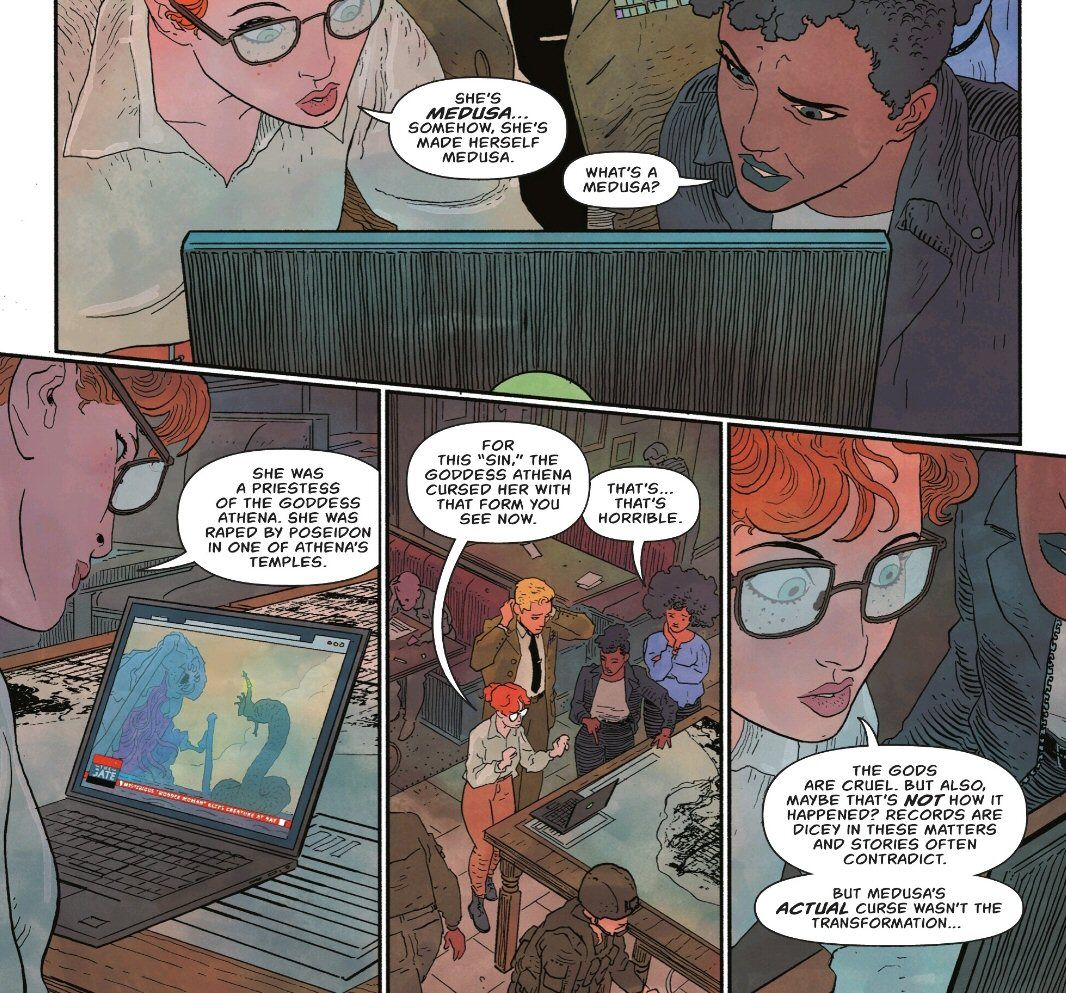
This is a mature way of looking at Classical mythology – both in the comics as well as in real life today. Stories were always meant to be allegorical, and often contradict – reflecting a jumble of conflicting and competing interests, morals, and intentions. There is no official agreed-upon “canon” for the each of the gods, and some ancient writers (or modern translations) can come in or out of favor. I find the later Roman stories in particular are often less likely to be considered canon. Which is ironically similar to the situation at DC comics, with all the hard and soft reboots over the decades!
This gives Thompson and Hayden some apparent freedom as they chart out Diana’s story in the new Absolute Universe. What seems clear is that this Absolute Diana is not going to blindly follow the dictates (or whims) of the gods – she will use her own judgment to try and understand what the gods actions and stories mean for her.
That said, Absolute Diana does feel somewhat beholden to a number of specific goddesses who have helped shape her into who she is – and from whom Diana draws power on occasion. Note for example what Diana immediately does at the successful resolution of her first major challenge and story arc in Absolute Wonder Woman Vol 1, issue #5, 2025, by Thompson and Sherman – she prays to them:
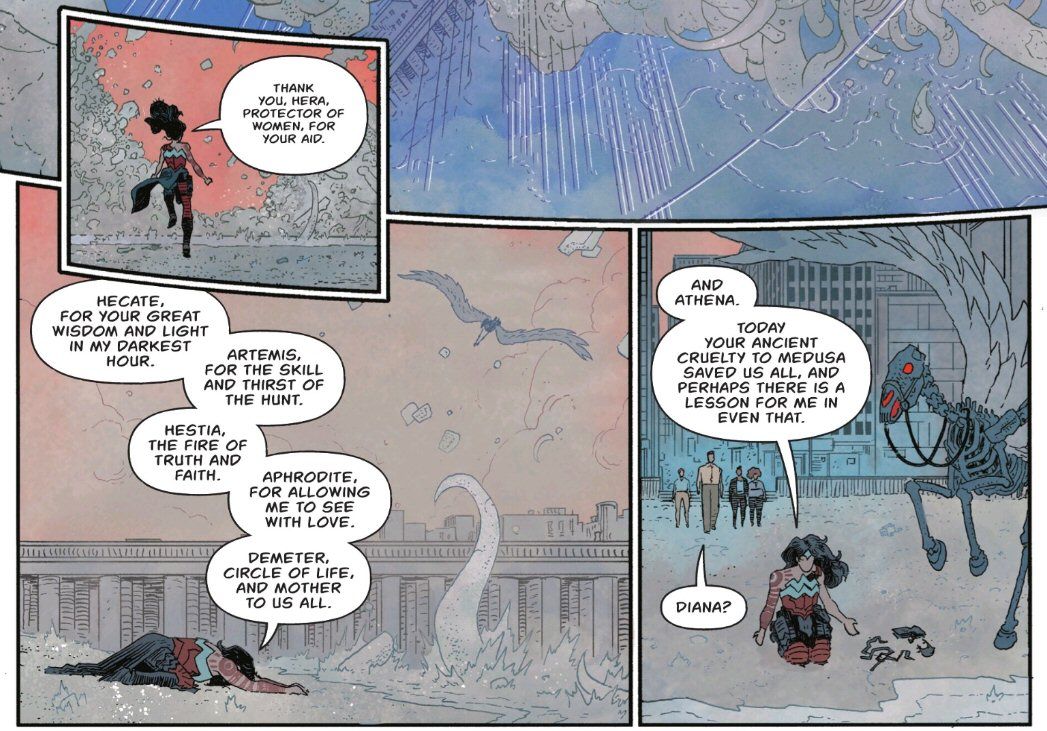
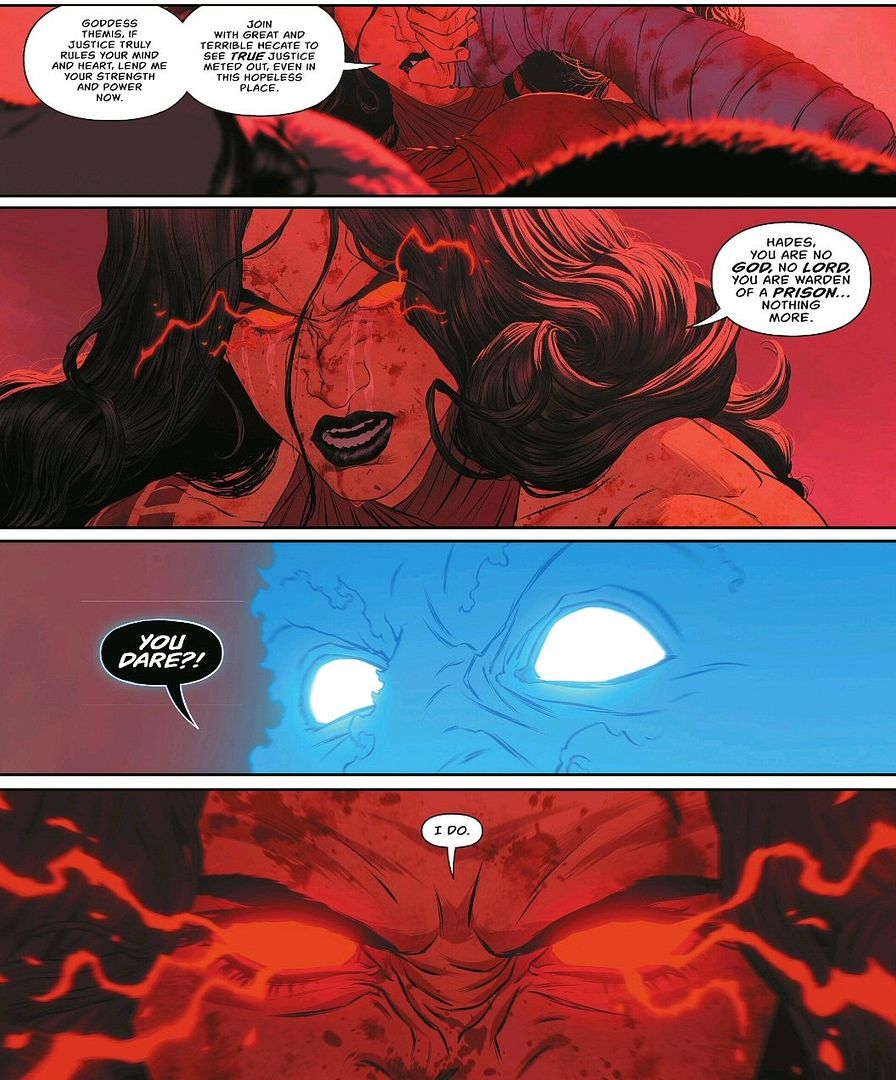
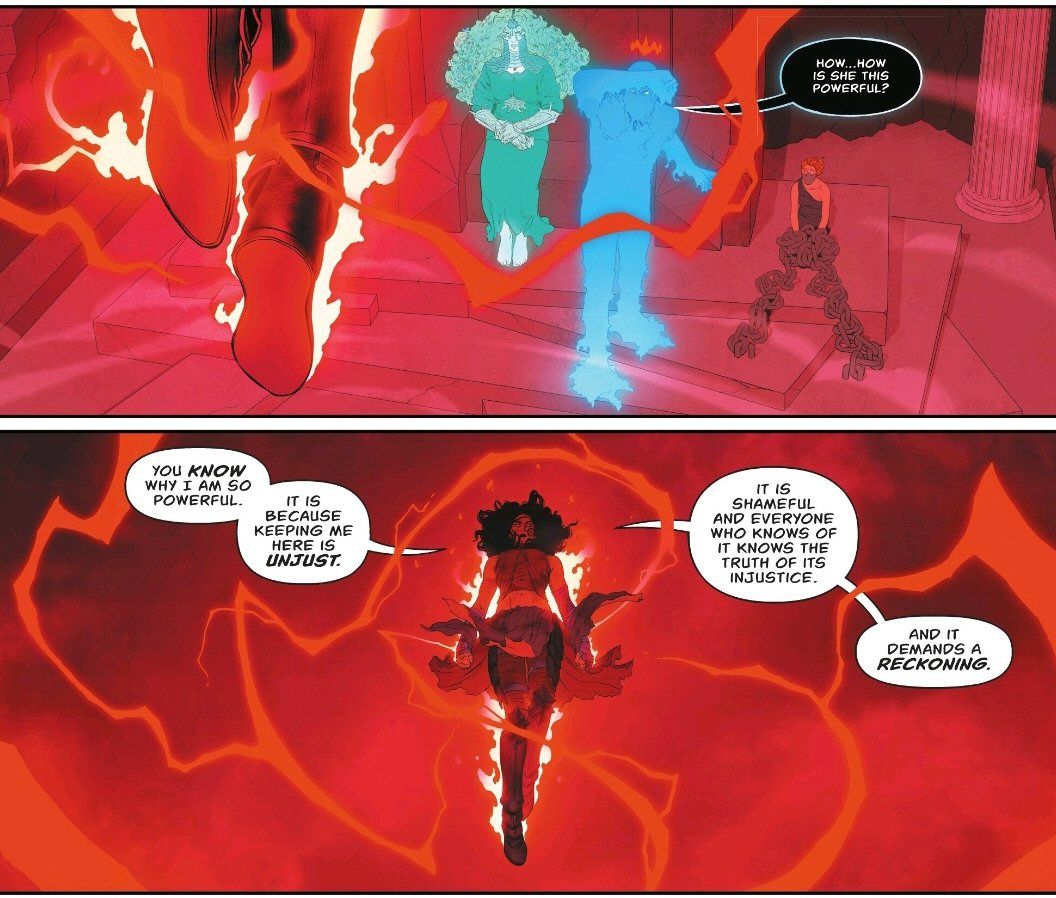
Diana sees herself as an agent of these goddesses, to effect change (as I will describe further below). That these goddesses are directly providing her power is made explicit in the following issue. Here, Hades pulls Diana back down to the Underworld, and subjects her to cruel sport. From Absolute Wonder Woman Vol 1, issue #6, 2025, by Thompson and guest artist Mattia De Iullis:
Introduction to the character
But I am getting ahead of myself. Let’s return to Diana’s origins and upraising in the new Absolute Universe.
It begins, appropriately enough, in a flashback sequence early in the first issue. Here, the sorceress Circe, chief devote of the goddess Hecate and who is currently (and seemingly unjustly) residing in an isolated part of Hell (aka the Underworld), receives an unexpected visit from Apollo, the god of light. From Absolute Wonder Woman Vol 1, issue #1, 2024, by Thompson and Sherman:
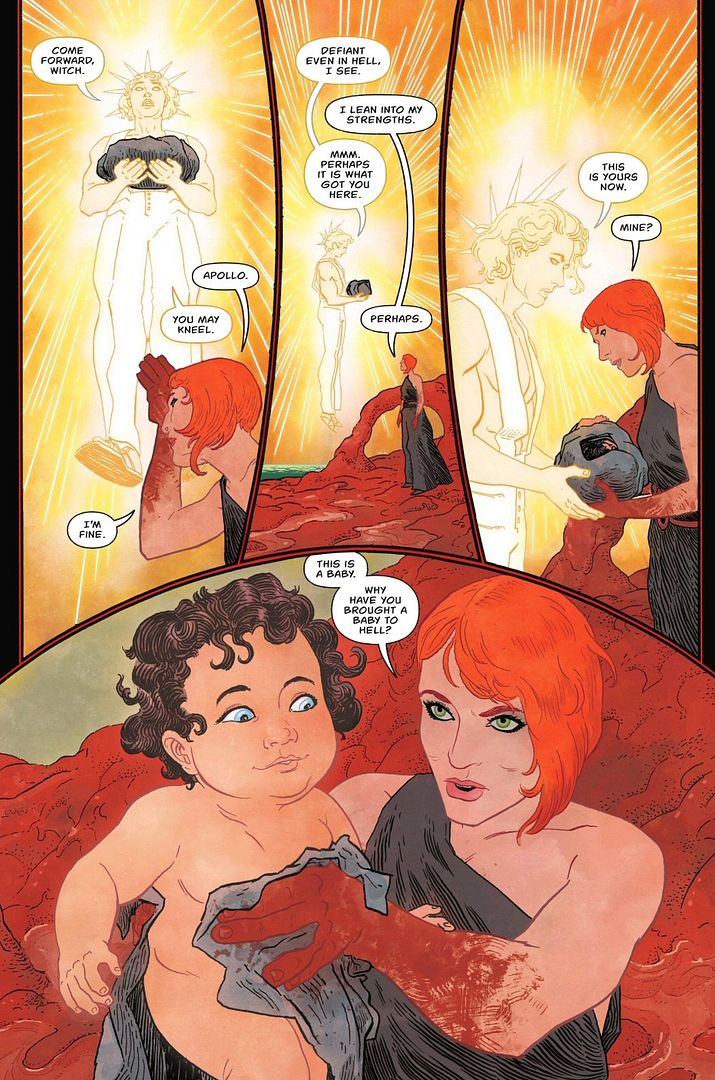
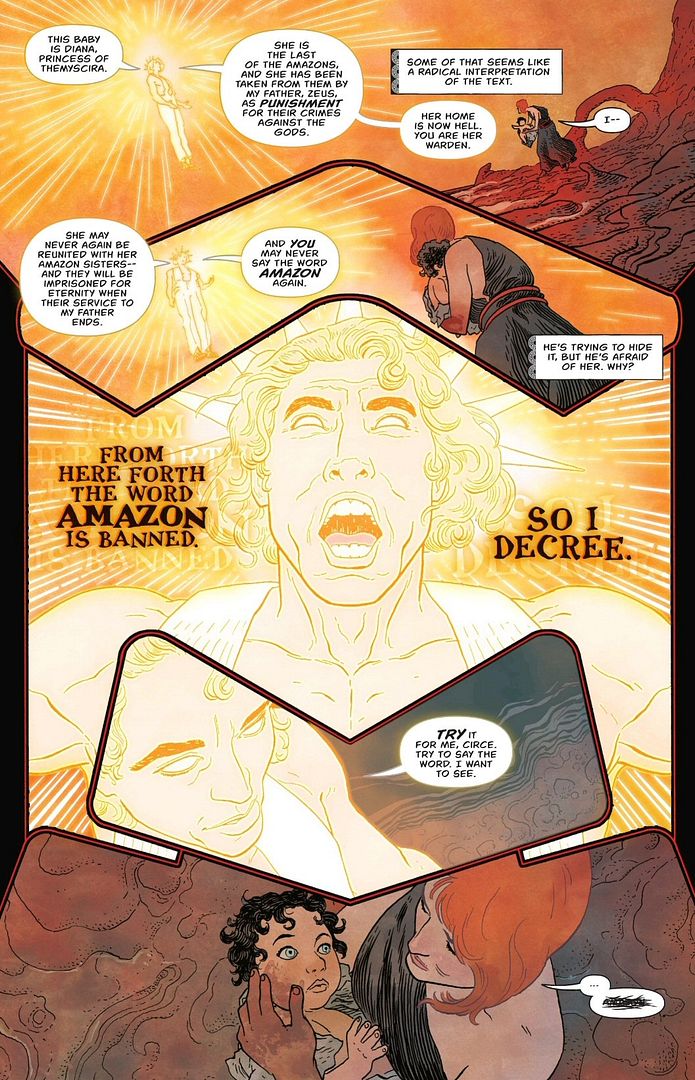
As Circe points out a few panels later, Apollo is a poor excuse of a sun god in this universe.
Apollo makes it clear to Circe that the gods do not care what happens to the baby, and Circe is initially very ambivalent about even trying to raise this child. She is worried the gods are not playing fair (as usual in this universe, it seems) as a deadly snake immediately approaches Diana. While Circe doesn’t like double-dealing gods, she questions if there is anything she can or should do if the gods keep sending instruments to kill her.
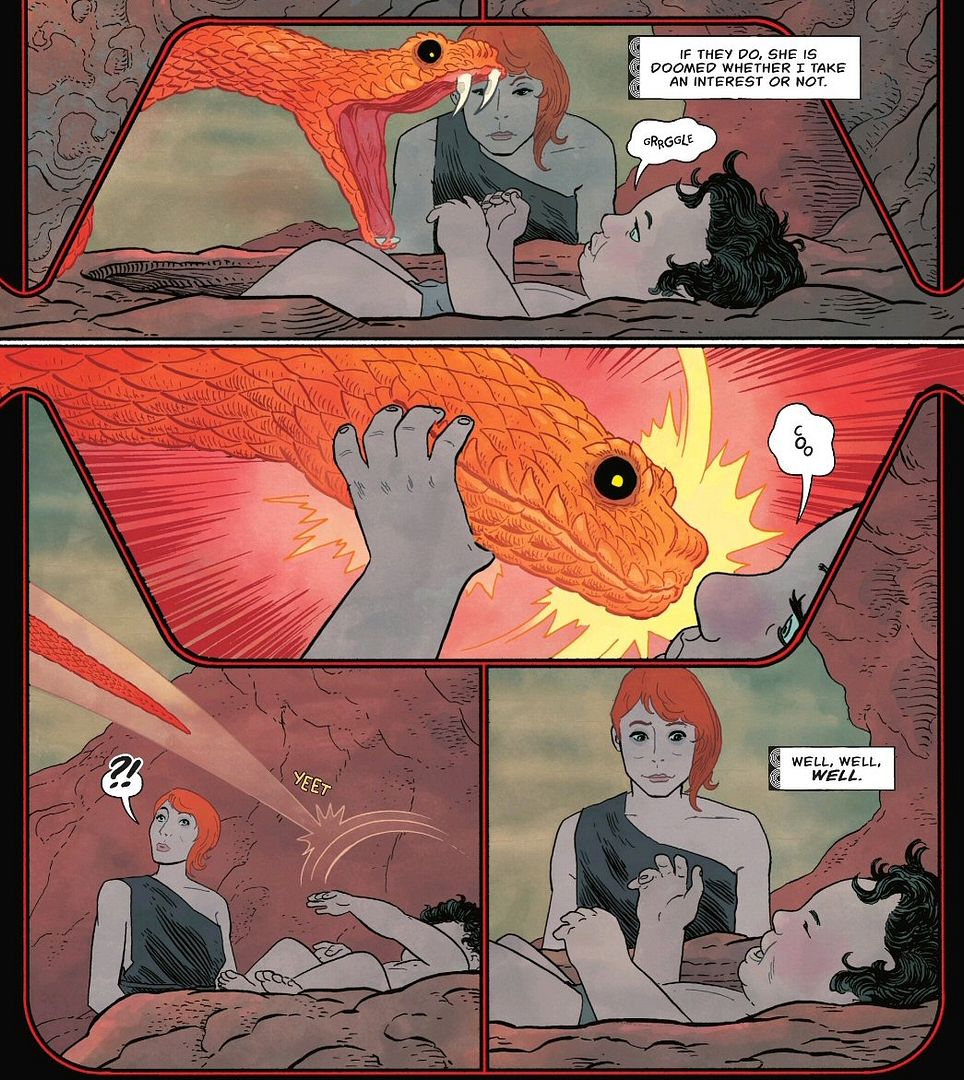
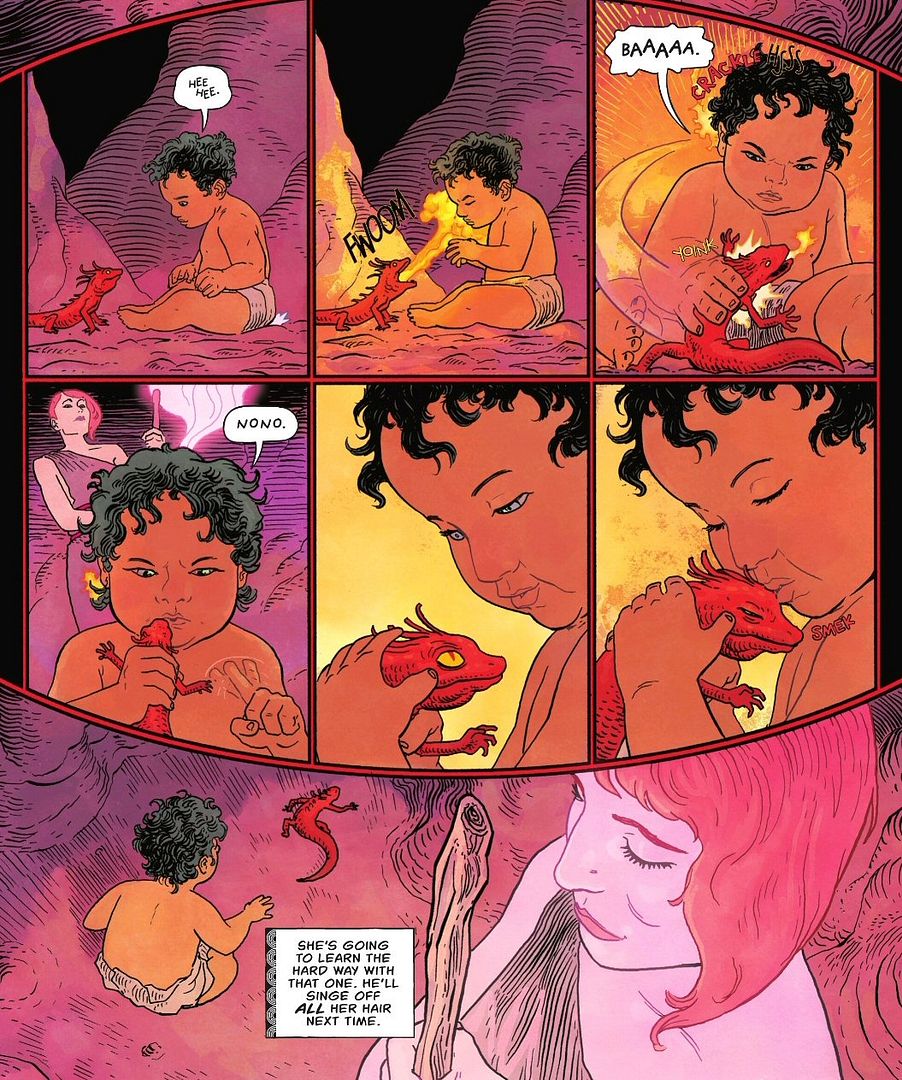
I love these panels. It foreshadows a key point about Diana’s ethics that I will describe below. But Circe is wrong here – as we will come to learn, the monsters and creatures around them take to Diana in surprising ways.
Introduction to the character’s ethics
Although I can’t provide a detailed overview of Wonder Woman’s ethics across nearly 85 years and multiple continuity-breaking events, her overarching ethical core has remained fairly consistent during that time.
As always, check out the normative ethics section of my Ethics 101 page for more general ethics information. You can also click on the Glossary post, also available from the right side bar (and footer), which has links to more detailed descriptions of the ethics terms used here.
Using my superhero normative ethics rating system, I would consider both historical and current Earth-0 Diana a V/d. That is, is she uses primarily a virtue ethics framework for her moral decisions – in the classical Aristotelian sense. Her core virtues include courage, justice, compassion, wisdom, and temperance. Along with Superman, she primarily represents the ideal of moral excellence through virtuous character, rather than just following principles/rules (deontology) or calculating outcomes (consequentialism). In modern stories, she also shows signs of care ethics, which is another modern form of virtue ethics. She is seen to consistently care for others, by prioritizing protection of the vulnerable, and by building and maintaining bonds of trust and love with others.
There is a secondary deontological aspect to Diana, especially in regards to abstract concepts like justice and rights-focused thinking. She will not let injustice stand, and her commitment to truth and justice – as symbolized by her Lasso of Truth – fits with a duty-based approach. But I would argue this is still secondary to her primary virtue ethics perspective. Indeed, I find her ethics overall very similar to Superman in the modern stories. UPDATE: My Superman ethics overview is now up.
Note that in my overviews where characters exhibit classic virtues, I often refer to Aritotelian virtue ethics (or sometimes Aquinas virtue ethics, if they seem more religious-inspired). Of course, I’m actually referring to a neo-Aristotelian perspective, given that many of Aristotle’s (and other ancient Greek philosophers’) ideas don’t exactly mesh with modern society. For example, Aristotle’s thinking of character and virtues didn’t extend to women or slaves, and some of his stated virtues are less relevant today (and others that we value are missing). But even in classical times, Aristotle was hardly the only virtue ethics game in town, and Thompson’s depiction of Diana’s virtues make think of a competing perspective.
Consider these panels when Diana reflects on what her mission really means (in this case, the importance of returning Steve Trevor to his world, despite her desire to have him stay with her). From Absolute Wonder Woman Vol 1, issue #3, 2025, by Thompson and Sherman:
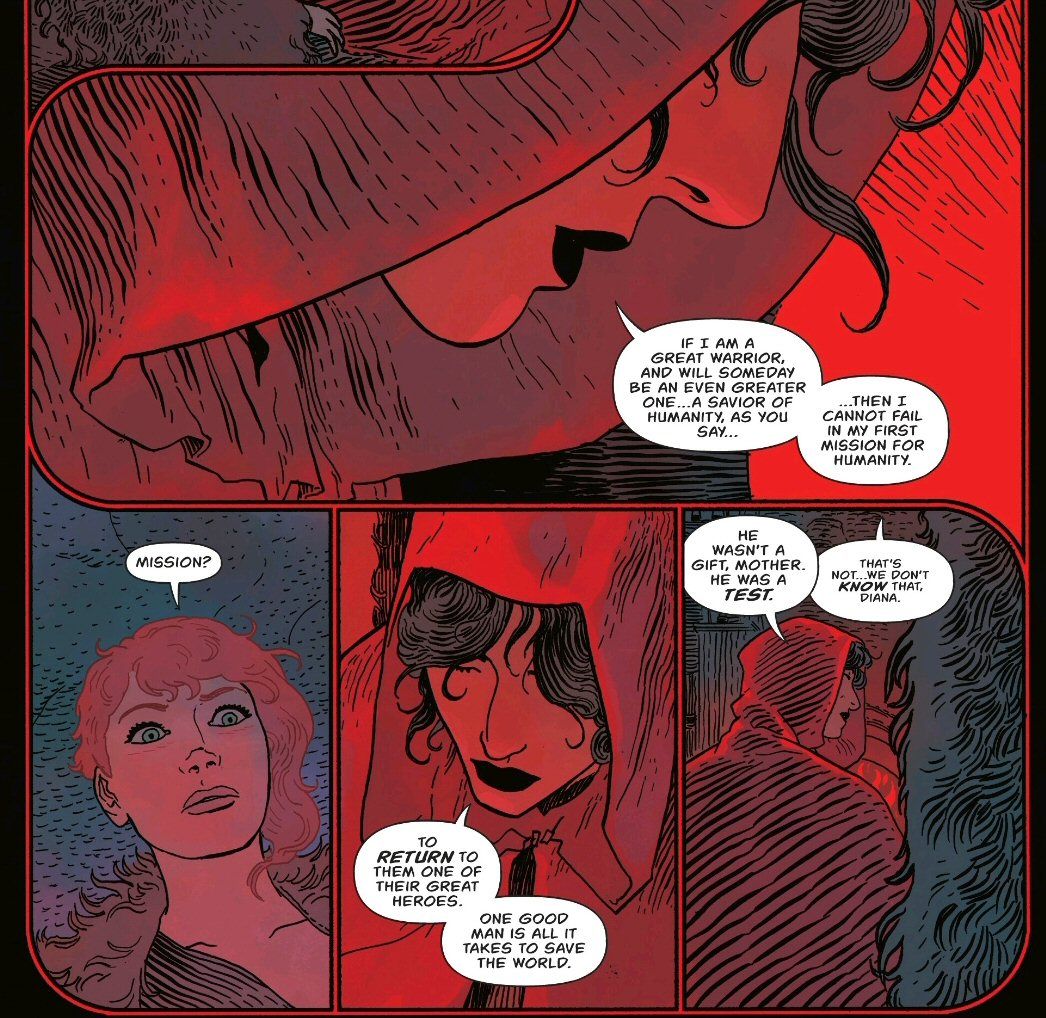
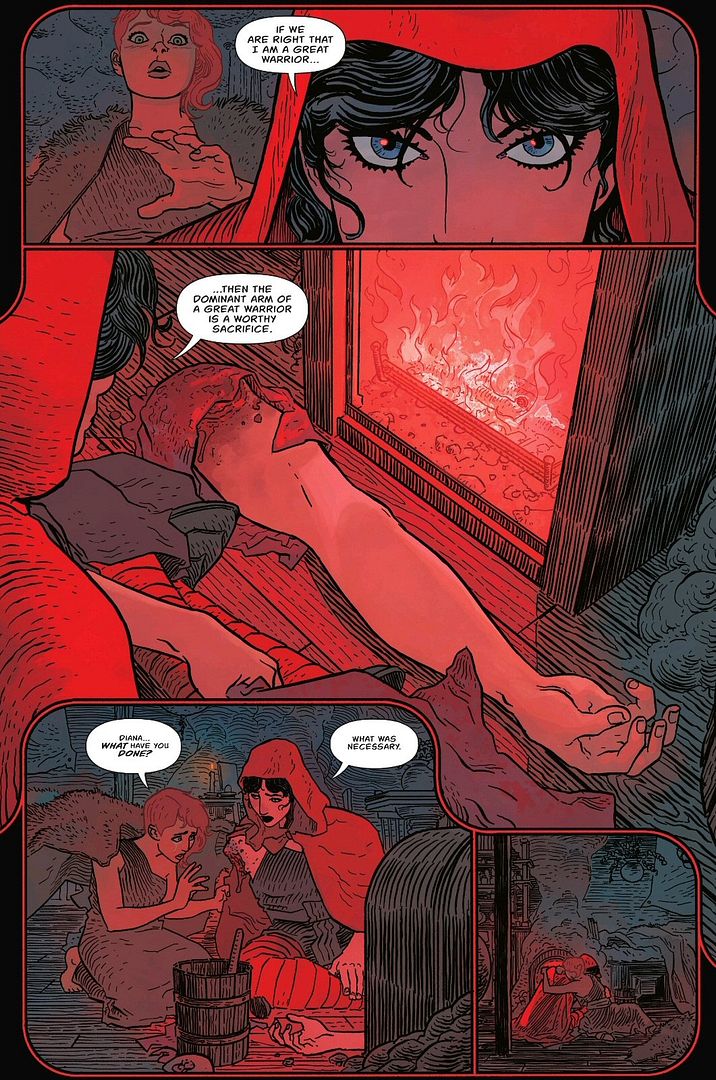
This is certainly a great sacrifice to make, and one that doesn’t seem to be in her personal interests! But there is a lot to de-compact in these two pages.
On the one hand, you could look at this from a deontological lens. Diana’s sacrifice – in pursuit of her mission – could easily be seen as a duty-driven action. Despite the personal costs, she must do what is right. And while that is certainly a valid perspective, the dialogue above points to two other considerations: a very specific consequentialist way of thinking (that I will come back to later), and a virtue ethics perspective. Note how Diana is concerned not only with who she is, but who she will be someday. That is, she is concerned with being better – a core tenet and commitment to virtue ethics. Virtue ethics requires you to continually practice virtues, and this “gift” of Steve also feels like a “test” for her.
Diana as a virtue ethicist
I’ll jump ahead to the most recent issue (#10) for another example that supports a primary classical virtue ethics assignment for Diana. Having just rescued a victim of an apparently evil warlord Queen, Diana voluntarily returns to a dangerous realm to free the victim’s champion – only to be felled with a “powerful hallucinogen”, warping her perceptions and heightening her fear. Despite her diminished state, Diana fights on nobly, resisting the warlord’s minions attempt to cast her into a pit. So the Queen changes tack, finding another way to get the virtuous Diana where she wants her. From Absolute Wonder Woman Vol 1, issue #10, 2025, by Thompson and Hayden:
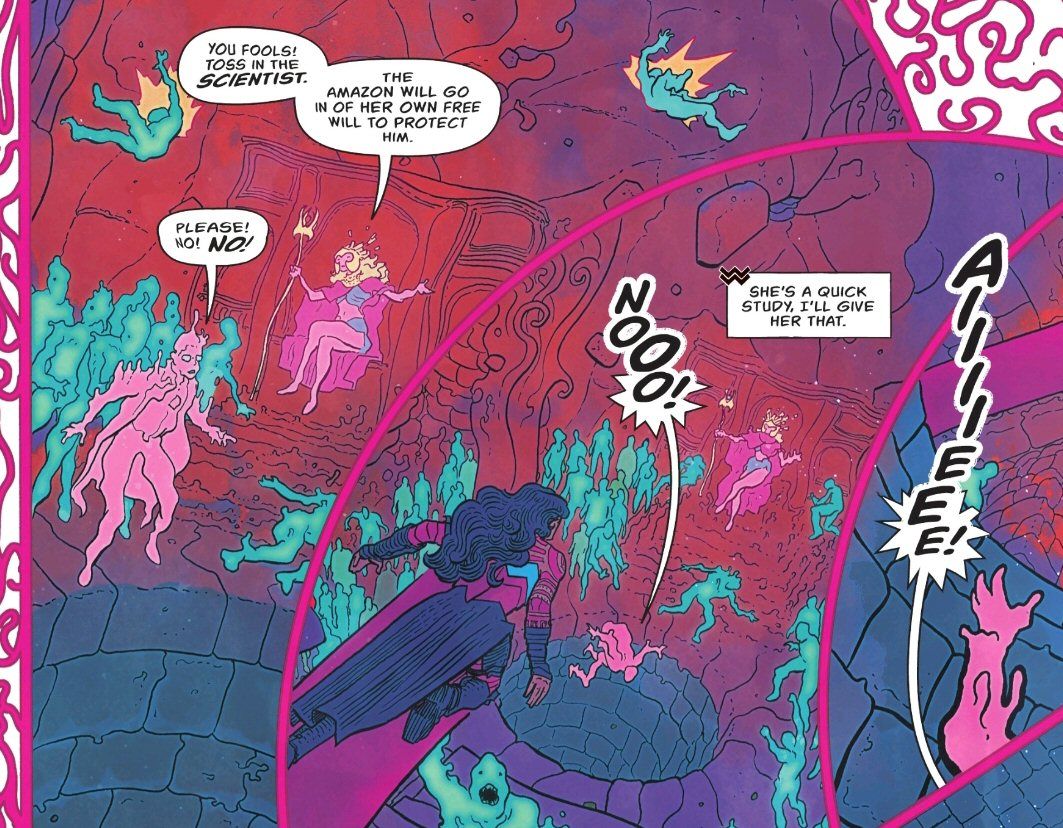
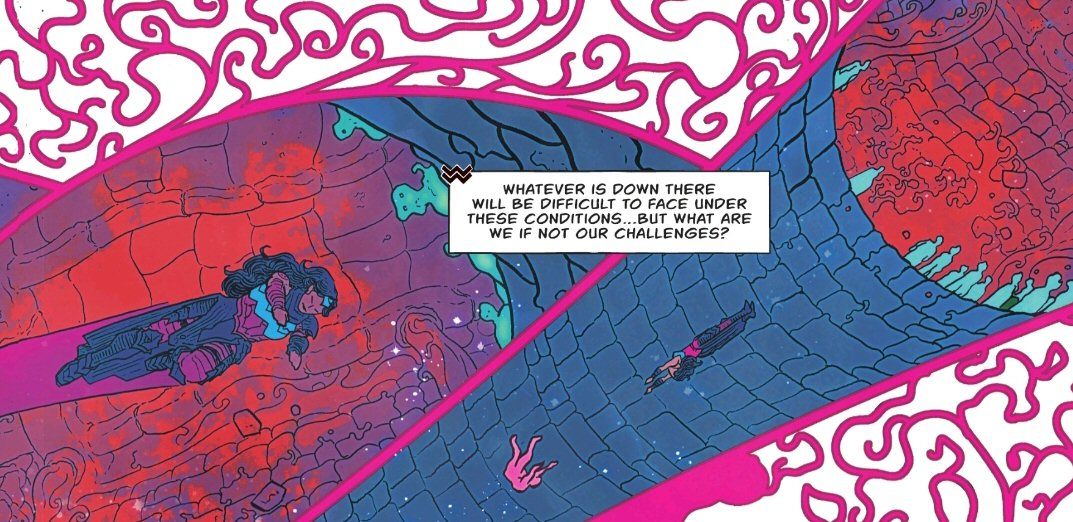
The passage above reminds me very much of one of the classic quotes from Marcus Aurelius, the Roman emperor and prominent Stoic philosopher:
The impediment to action advances action. What stands in the way becomes the way.
- Marcus Aurelius
The implication of this Stoic quote is that rather than hindering progress, obstacles and challenges are actually the catalysts for virtuous growth and development.
The primary difference between Aristotle’s virtue ethics and Stoicism really comes down to their views on the role of external factors in achieving eudaimonia (often translated as happiness, flourishing, or a generalized sense of well-being). Aristotle believed that while virtue is a critical component, external factors like health, wealth, and social standing are also necessary for a flourishing life (and are at least somewhat outside your control). The Stoics, however, argued that virtue alone is sufficient for happiness. They were indifferent to external factors (either good or bad), and felt they do not – or need not – contribute to one’s ultimate happiness.
With its focus on cultivating inner peace and resilience, Stoicism is having a bit of a resurgence these days. Focusing on what is within your control (that is, internal factors) is a core component of modern psychotherapy, and is at the heart of many self-help programs (e.g., the Serenity Prayer from AA is very stoic, but with Christian overtones).
These two examples make me think that Diana is more in the Stoics’ camp than Aristotle’s. This Absolute Universe version of Diana has experienced a lot more adversity in her life (and continues to!), yet remains remarkably positive in her attitude. This is a better fit with the Stoic belief that one can be happy regardless of what befalls you, so long as you act virtuously.
This is also a particularly clever way to deal with the negative influence of the Absolute Universe. While Diana’s core ethical drive remains virtue-driven, the subtle shift to Stoicism makes sense to explain her resistance to the pervasive despair of her universe. Unlike the Aristotelian virtue ethics that epitomized Wonder Woman in the main Earth-0 universe – with its explicit acceptance of external factors affecting your happiness – this Diana has to look inward and focus exclusively on internal factors, in keeping with the Stoics perspective.
As an aside, Stoicism doesn’t come up very often in my overviews, as most comic characters are more heavily influenced by external factors. So I should explain here an additional difference to Aristotle: Stoics explicitly limit themselves four “cardinal” virtues: wisdom, justice, courage, and temperance. Just these four virtues are considered sufficient to live a fulfilled life. This strikes me as limiting.
Of course, exhibiting additional virtues is not a problem – but ancient Stoics felt that more was not necessary beyond this minimal set, which I find hard to accept. In Absolute Diana’s case, she certainly epitomizes those four along with compassion, truthfulness, humility, and magnanimity (and I would add wit, given Thompson’s excellent writing). Note that it is open to debate how many virtues Aristotelian virtue ethics encompasses (you will sometimes see lists of ten or twelve, but those typically come from later writers). And as I’ve mentioned before, the specific virtues (and vices) that Aristotle emphasized differ from modern values.
Personally, I’m of the view that more virtues are better, along with fewer vices (which is a much longer list than virtues). And while I think Aristotle placed too much emphasis on external factors, the minimalist Stoic view that excludes them completely strikes me as unrealistic in practice (although it is healthy from a psychological perspective to focus on what you can control – including your own reactions).
What I particularly like about this characterization of Diana is that her consideration for other people (and indeed, all living things) goes far beyond a simple interpretation of deontology or virtue ethics (or even consequentialism). Consider these panels from Absolute Wonder Woman Vol 1, issue #3, 2025, by Thompson and Sherman, where Diana asks a news crew to relay a message to the citizens from her, but to not record this bit where she prepares magically:
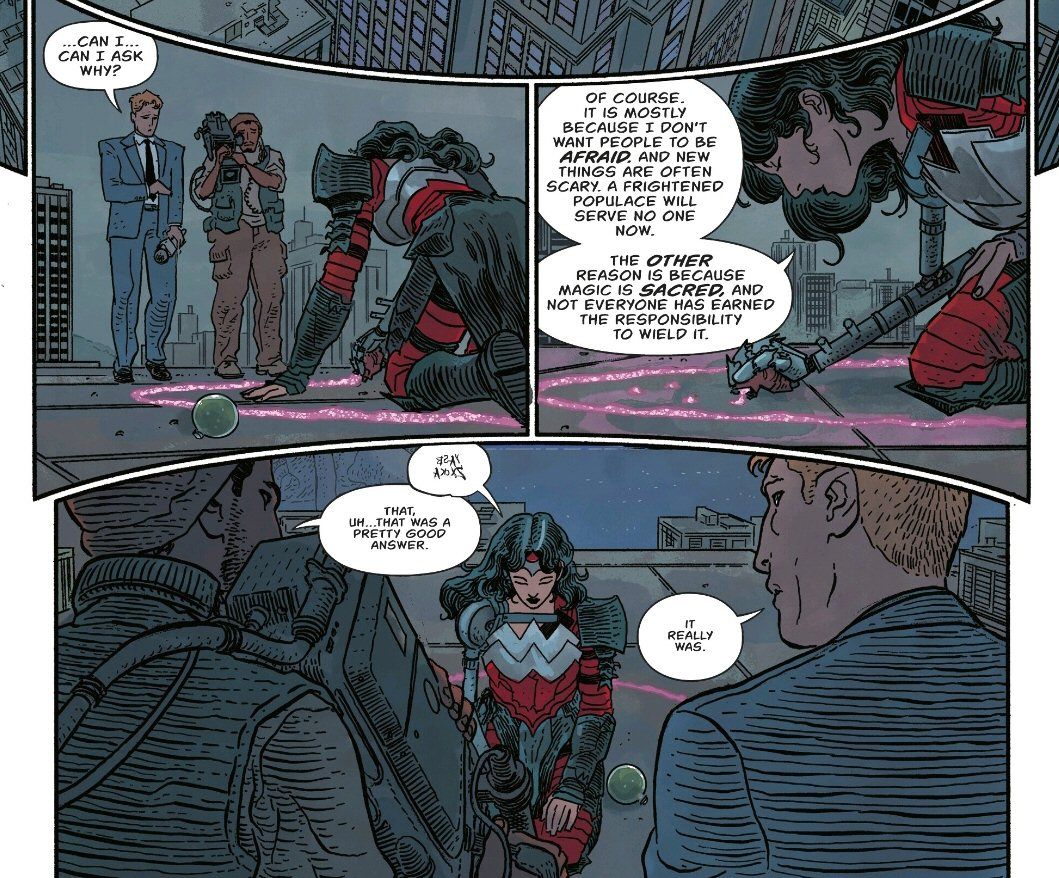
That was a really good answer! Note how she balances a primary virtue-driven perspective (“It is mostly because I don’t want people to be afraid”), with a secondary consequentialist one (“A frightened populace will serve no one”) and finally a deontological one (“… magic is sacred, and not everyone has earned the responsibility to wield it”). A very efficient and succinct summary of Absolute Diana’s ethical core!
Of note, her actual message to the population is heavily consequentialist and virtue-driven:
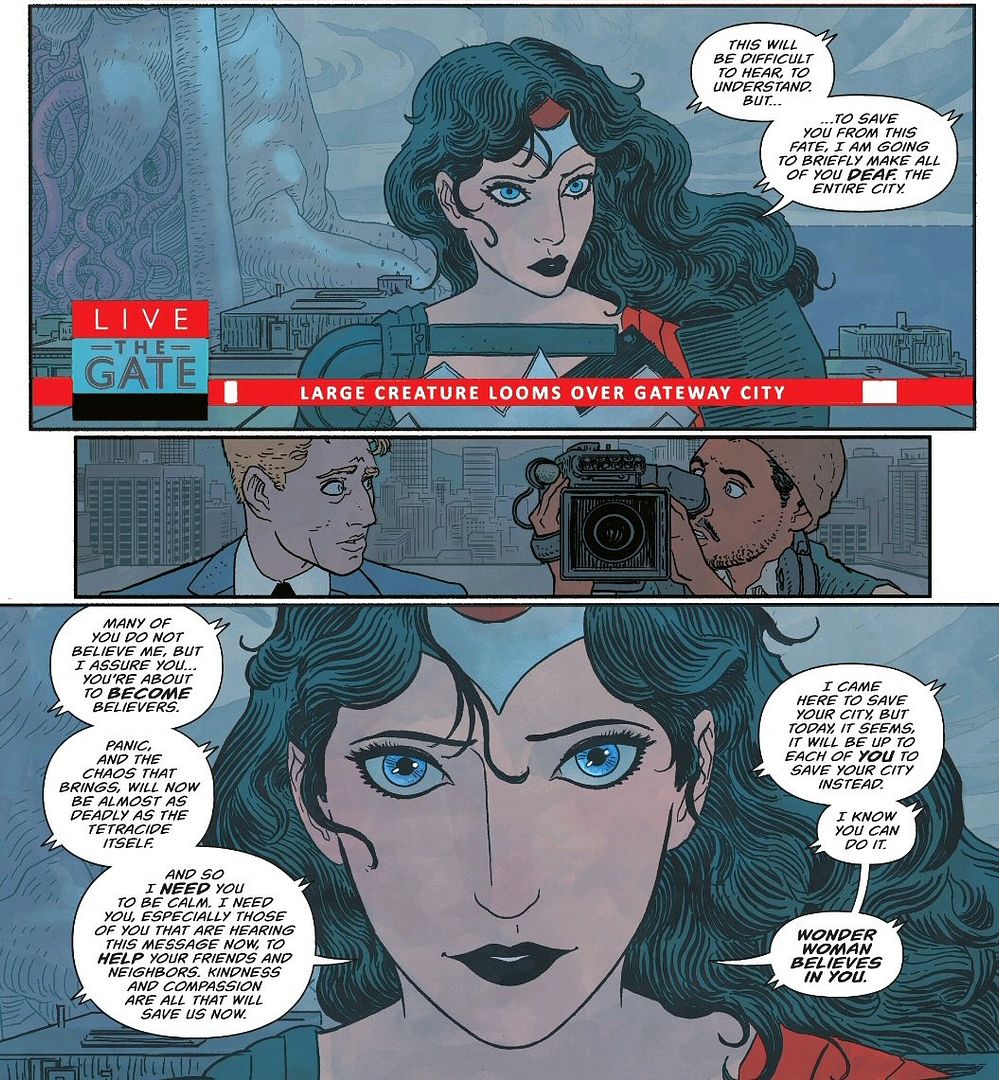
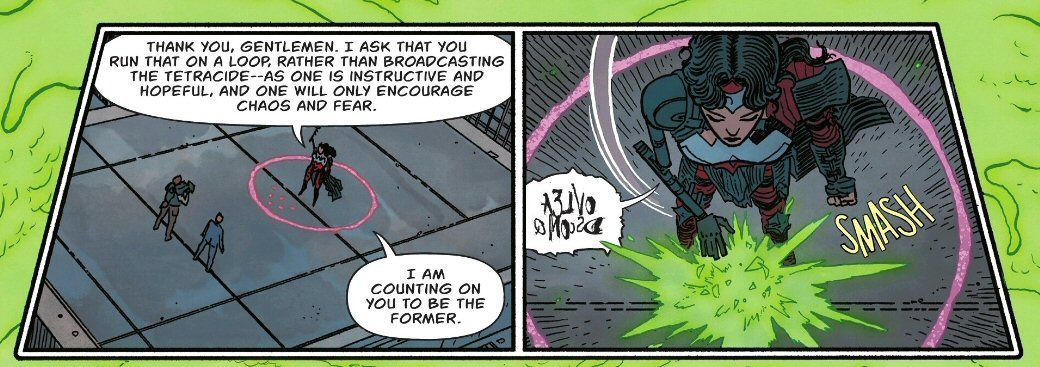
This encouraging (and relying) on others to also adopt a virtue ethics perspective gets back to the core of virtue ethics.
One of the common criticisms of virtue ethics (in all forms) is that it encourages selfish or egoistic thinking (by focusing on improving the self). The emphasis on being better – as opposed to deontology’s doing right or consequentialism’s doing good – has led some ethics critics to argue that virtue ethics doesn’t provide actionable guidance (and is thus just a supplement to the other two theories). But this reasoning is mistaken.
Putting aside the fact that all three ethics theories are open to the criticism that they can benefit the self, this narrow thinking about actions rather misses the point. There is in fact a lot of guidance to found in the act of practising virtues and avoiding vices. For example, trying to do what is charitable, considerate and honest, and not do what is uncharitable, inconsiderate or dishonest is actually very good action guidance in all sorts of situations. Indeed, the list of vices to avoid is particularly lengthy in virtue ethics (far longer than the list virtues to pursue) and thus provides far more practical examples of how to (not) act than the comparatively shorter list of deontological rules that anyone has ever managed to come up with.
Interestingly, deontology and virtue ethics both have a similar additional criticism – how to resolve a problem when the rules or virtues conflict on what action to take (act utilitarianism try to avoids this by simply calculating the act that leads to the greatest good overall – but that isn’t so simple in practice either). Proponents of Kantian ethics (the most popular form of deontology) sometimes try to sidestep the problem by saying there can be no conflict with the categorical imperative (a somewhat dubious claim). But most reasonable ethicists will admit that some rules/virtues are higher ranked than others, or have reasonable exceptions built-in (e.g. lying in order to save an innocent life is permissible to both). Deontologists unfortunately have to limit themselves to some sort of hierarchy of rules while virtue ethicists have the advantage of pointing to the virtue of practical wisdom (known to the ancient Greeks as phronesis) as a guide in deciding conflicts.
Finally one quick example of care ethics for Diana, in regards to her foster mother Circe. Circe has the gift of foresight and had crafted for Diana a number of magical lassos (that differ from the single one she carries in the main Earth-0 universe). In issue #5, we are treated to an extended flashback sequence where Diana barely survives a struggle, but perseveres because of the lasso known as “sacrifice”. Diana complains afterwards to her mother that she finds the weapon to be “… a bit cruel”. Circe is offended by this and Diana worries that Circe either cannot see the cruelty, or doesn’t care. Hecate appears and tells Diana that it is probably both – and certainly the latter – because Circe “knows how to weigh things appropriately”. From Absolute Wonder Woman Vol 1, issue #5, 2025, by Thompson and Sherman:
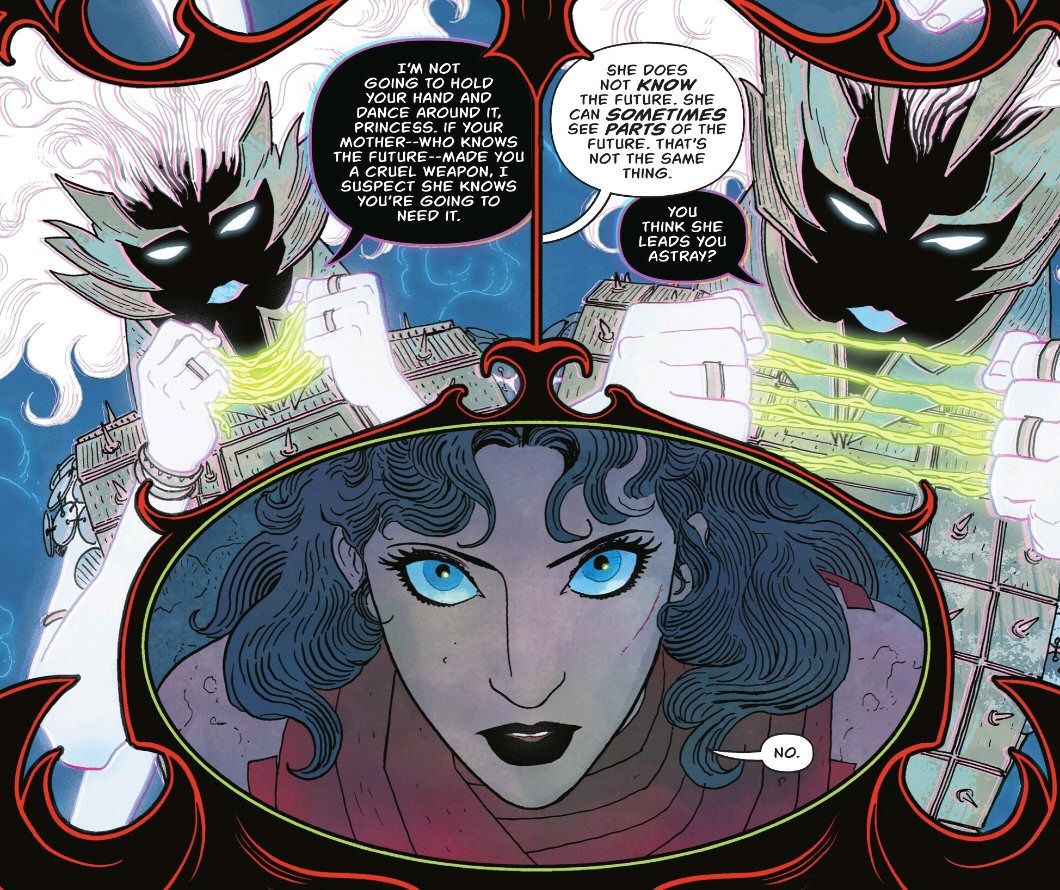
Diana continues to worry that she and her mother don’t see things the same way. Hecate admonishes Diana for her foolishness and explains that the lasso is her mother – she made it with her own love and pain (in essence, it is Circe’s sacrifice for Diana). This leads to Diana seeking out and apologizing to her mother, in a way that seeks the strengthen the bond between them:
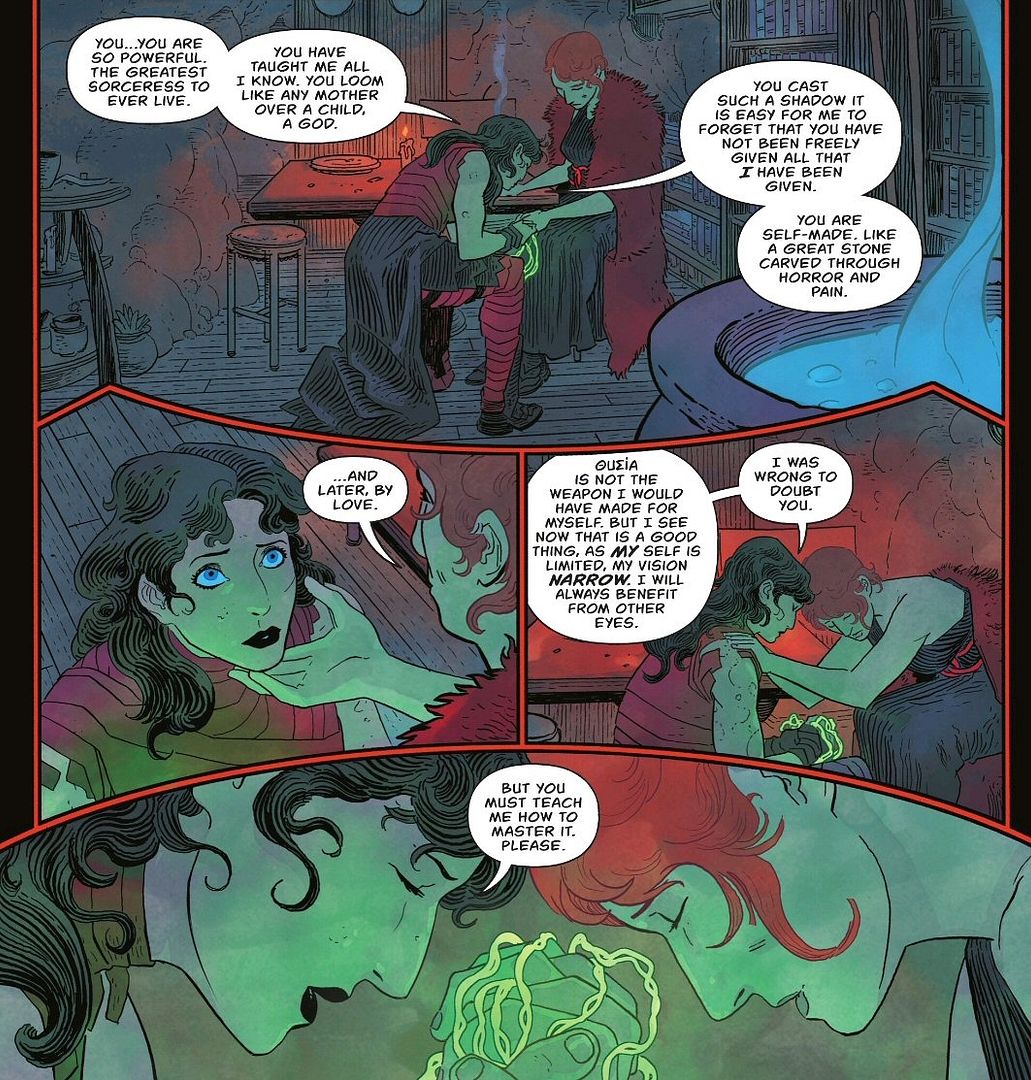
I think the evidence above makes a fairly compelling case for a primary virtue ethics assignment for Absolute Diana – from both a classic virtue ethics perspective (especially Stoicism) as well as a modern care ethics perspective.
Diana as a consequentialist
Which brings me to the one ethical theory I haven’t explored yet for Absolute Diana, consequentialism. This is another interesting ethical dimension to this version of Diana, and one that I find particularly distinctive and intriguing – and worth exploring in detail.
One thing I find significant in this darker Absolute Universe is that several of the gods – specifically, the goddesses working to develop Diana as a champion of humanity – have an explicitly consequentialist view, and one that seems quite act utilitarian (the main form of consequentialism today). They seem to be aware that something is wrong with their universe, and want to fix it. From Absolute Wonder Woman Vol 1, issue #4, 2025, by Thompson and Sherman, where Circe is complaining to Hecate of the burden she has placed on her:
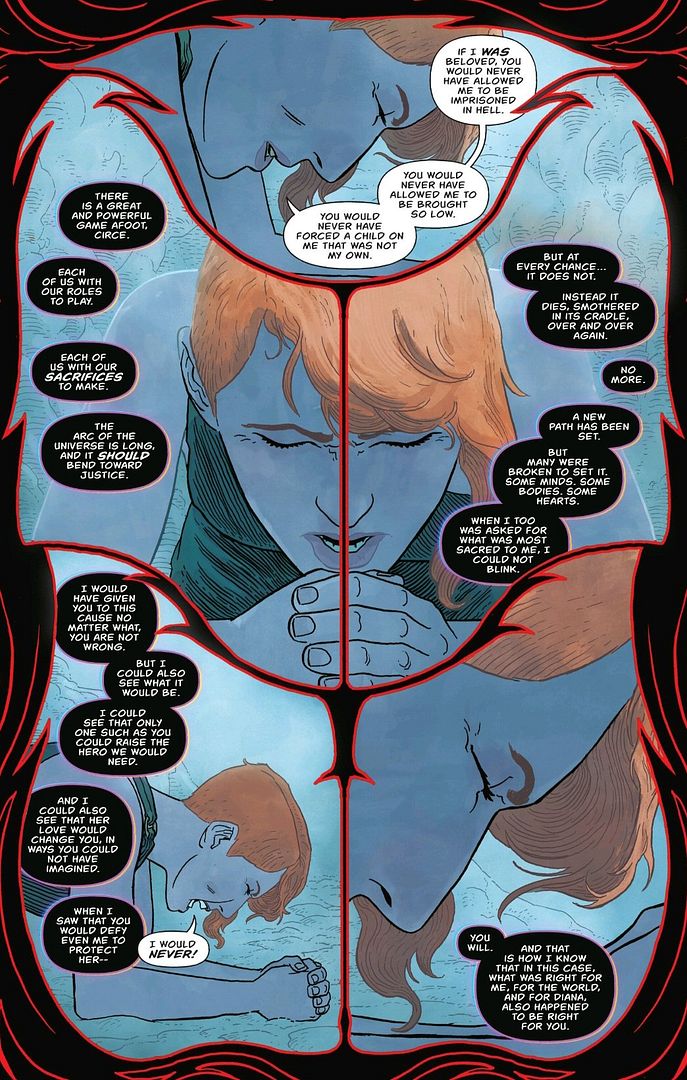
The idea of sacrifice – both self-sacrifice and the sacrificing of those closest to you – is a reoccurring theme in this series. It is also extremely consequentialist: this very utilitarian line of reasoning – using people as a means to an end and not an end on to themselves – is a direct violation of the Kantian categorical imperative (the current main form of deontology).
But what is the form of consequentialism that Diana uses? It is not utilitarianism, despite its apparent favor with the gods in this universe. No, I believe it is a relatively uncommon form of consequentialism known as situational ethics (in particular, its main Christian form).
Situational ethics was developed by Christian theologians in the middle of the 20th century, and builds on many common precepts of the earlier 20th century pragmatic ethics. Its most notable proponent was American academic Joseph Fletcher. In its main form, it seeks to maximize not “utility” (as utilitarianism does) but rather love. Specifically, the love expressed in the notion of “love thy neighbor,” ascribed to Jesus Christ in the Gospels of the New Testament of the Bible. Specifically, this form of consequentialist ethics seeks to promote and maximize agape, which is the highest, unconditional form of love there is. Indeed, if you follow the selection of specific comic panels above, it is not hard to see an almost Christ-like figure in this Diana.
I realize this conclusion might seem a bit surprising initially. How could an ethical system developed in the 20th century specifically for a monotheistic religion be relevant to a character from Classical times with a polytheistic world view? But it will help to recall that the New Testament was initially written in Greek (the language of scholarship in the first few centuries of the Common Era). The ancient Greeks had four distinct words for love, each representing a different facet of the emotion: storge, philia, eros, and agape (often translated as familial affection, friendship, romantic passion, and the highest form – unconditional, selfless love). If you follow the Wikipedia link for agape, you will see it currently says that agape “is ‘the highest form of love, charity’ and ‘the love of God for [human beings] and of [human beings] for God’.”
The difficulty in translating this word – note the use of both “love” and “charity” above – is a tip-off here: agape is the term that was initially used in the New Testament to describe the sense of selfless love that Jesus preached. For example, despite its wide use in Bible readings at weddings, Paul’s letter to the Corinthians (1 Corinthians 13) is not what many seem to think it is. From the frequently cited modern Good News Bible: “If I speak in the tongues of men or of angels, but do not have love, I am only a resounding gong or a clanging cymbal.” But this passage is not referring to romantic love (eros) at all, it is agape. This is one reason why I prefer the language of the King James version of the Bible, as it translates agape as charity (“Though I speak with the tongues of men and of angels, and have not charity, I am become as sounding brass, or a tinkling cymbal”).
Back on point: situational ethics is really just a formalized version of the consequentialism that the writers of the New Testament ascribed to Jesus. It is pragmatic, relativistic (that is, relative to the situation, hence the name), positive, and personalized (that is, it should benefit people). Does that not sound a lot like Diana across this series?
Consider this panel from Absolute Wonder Woman Vol 1, issue #5, 2025, by Thompson and Sherman, where Diana is having a quiet moment with her companions before turning to the final big battle:
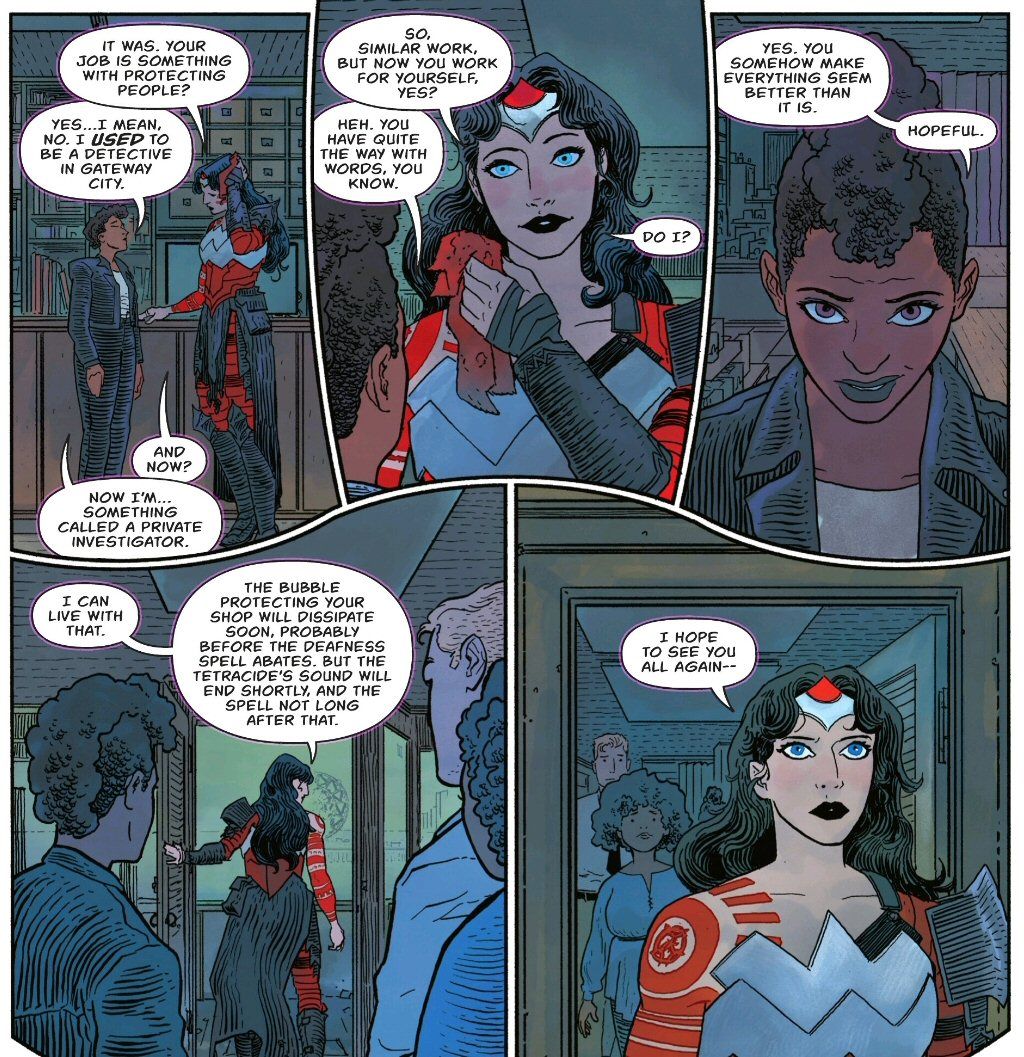
Is Diana’s “way of looking at things” not a positive message that uplifts others, inspires them, and gives them hope? Note that this has nothing to do (necessarily) with the practice of modern Christianity – I am simply referring here to the philosophy espoused by Jesus in the New Testament (specifically, maximizing agape), as the basis of situational ethics.
And what does Diana learn from her experience, especially in reconsidering the cruelty that was done to Medusa by Athena?
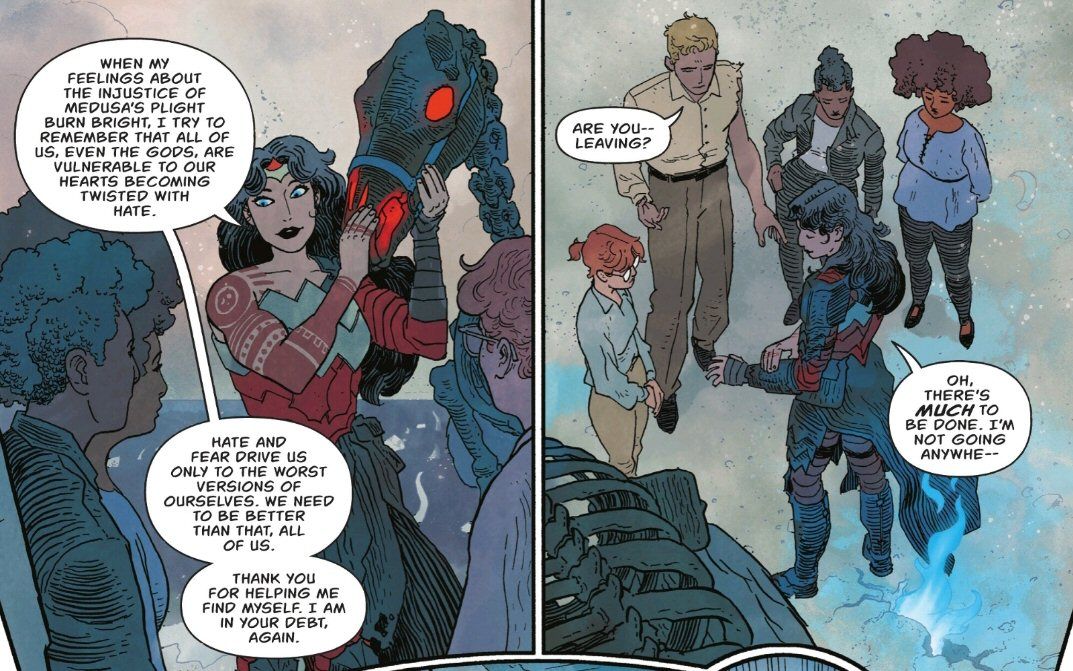
It is also another clever way of dealing with the pervasive negative energy of the Absolute Universe. The original Diana of the main Earth-0 universe was certainly an inspiration as well – but she didn’t need to literally inspire a following. This darker universe needs a source of love and positivity that can spread and inspire the world. It will be very interesting to see if Diana continues in this role.
I know this overview has gone for some length, but there has been a lot to consider. I would like to end with one last ethical observation of Diana, from several key pages over the last couple of issues. It was previously promised in issue #9 that young Diana would get a visit from Artemis (the goddess of the hunt), to begin her education as a warrior hero. Oh, and for context’s sake: Artemis was known as Diana in Roman mythology. From Absolute Wonder Woman Vol 1, issue #9, 2025, by Thompson and Sherman:
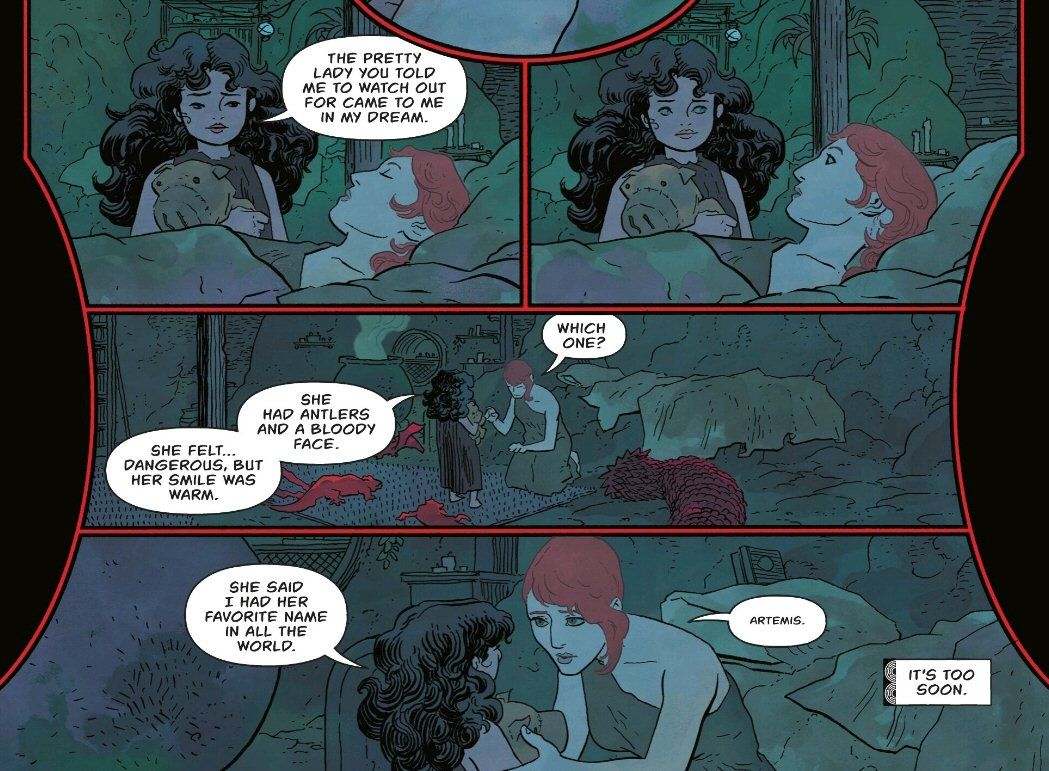
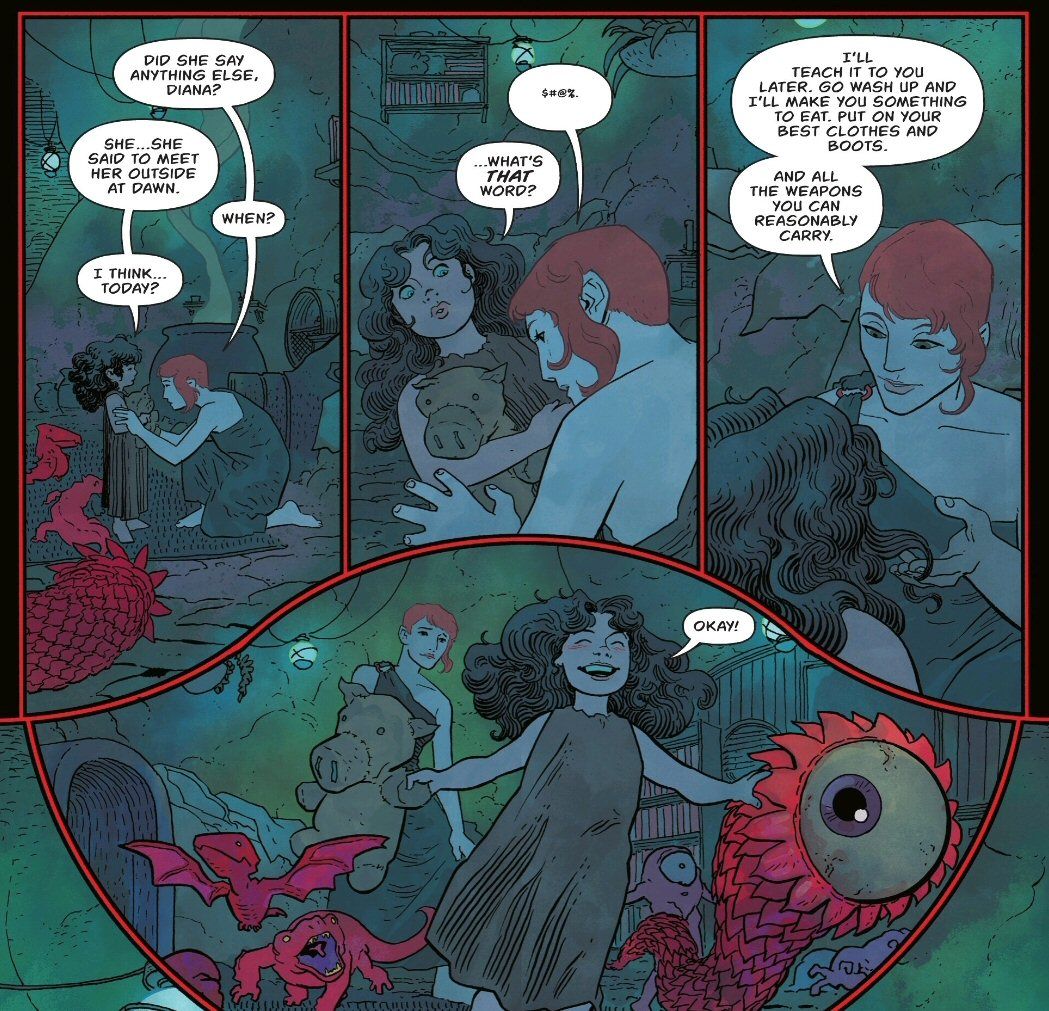
Circe has clearly been dreading this. But I particularly like that last panel, where you see the joy in Diana’s face (not knowing what is coming) – still clutching her teddy bear, with all her devoted monster companions in tow.
From Absolute Wonder Woman Vol 1, issue #10, 2025, by Thompson and Sherman:
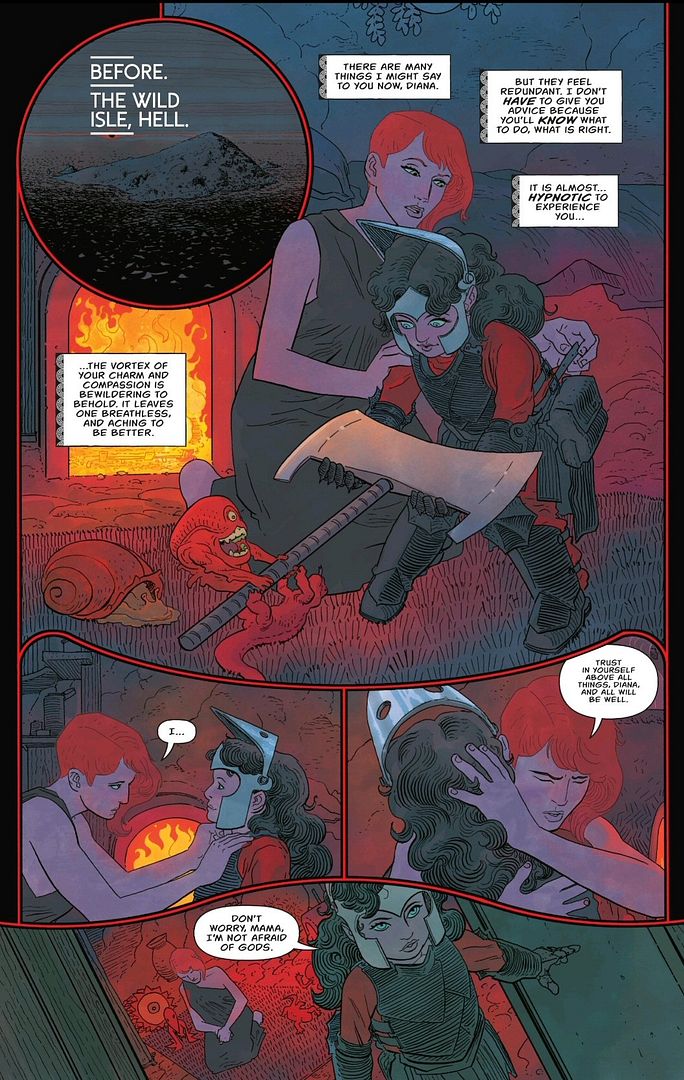
It was good advice from Polonius to his son Laertes in Shakespeare’s Hamlet (Act 1, scene 3), and it is still good advice here. But Diana should be more afraid.
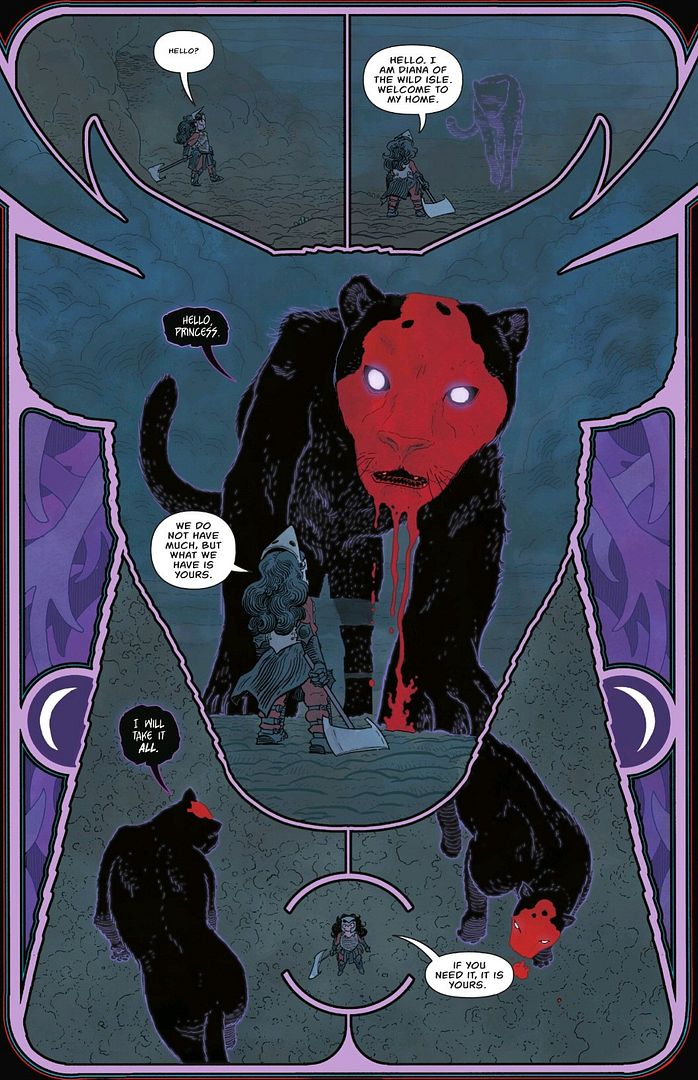
This is an amazing panel by Sherman. It is presumably Artemis as the bloody-faced panther. But in case you aren’t sure, the panel layout spells it out for you: she is often depicted with stags and crescent moons, which is what you will see if you zoom out and look at the page as a whole.
You will note that in addition to offering all that is theirs, Diana is unwilling to engage in combat for no good reason:
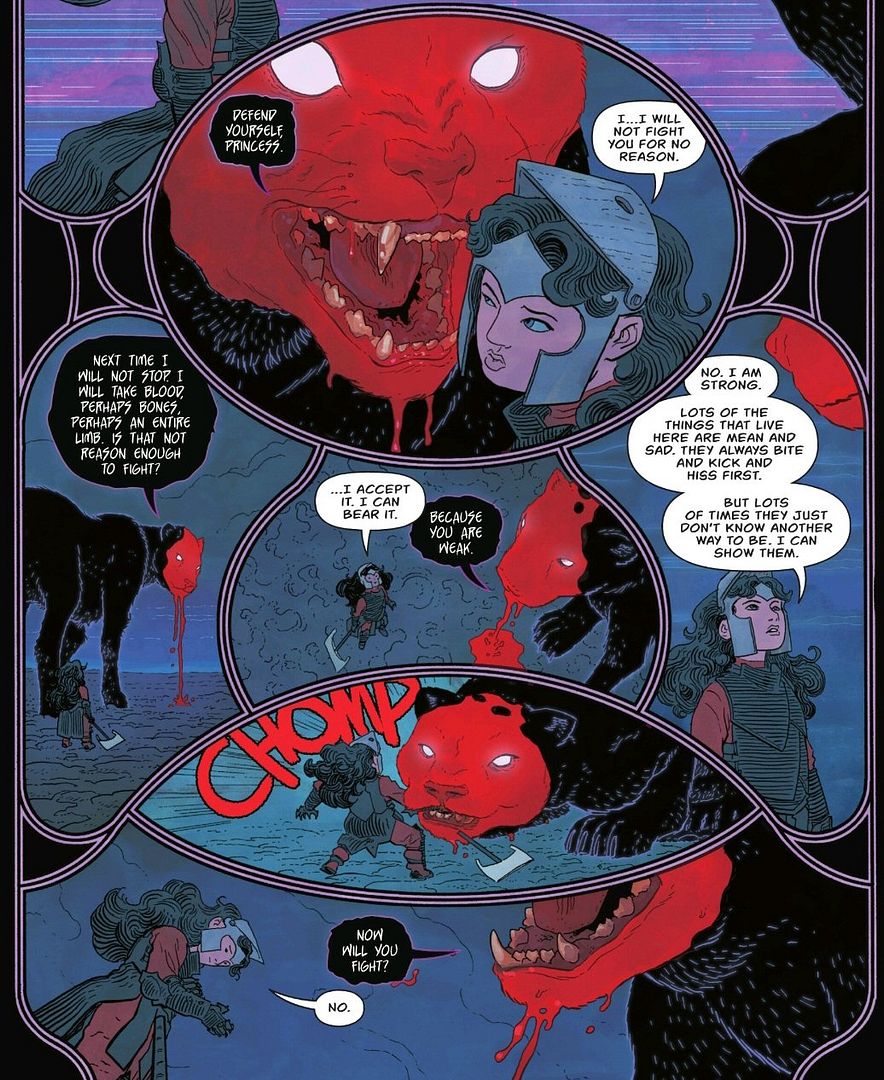
Diana clearly articulates here how her positive and loving perspective helps influence others – specifically, all the myriad monsters and creatures that share their home. This harkens back to the earliest panels, which foreshadowed the kind of Christ-like leader Diana would become.
Artemis continues to probe until she finds what Diana will fight for – the innocent.
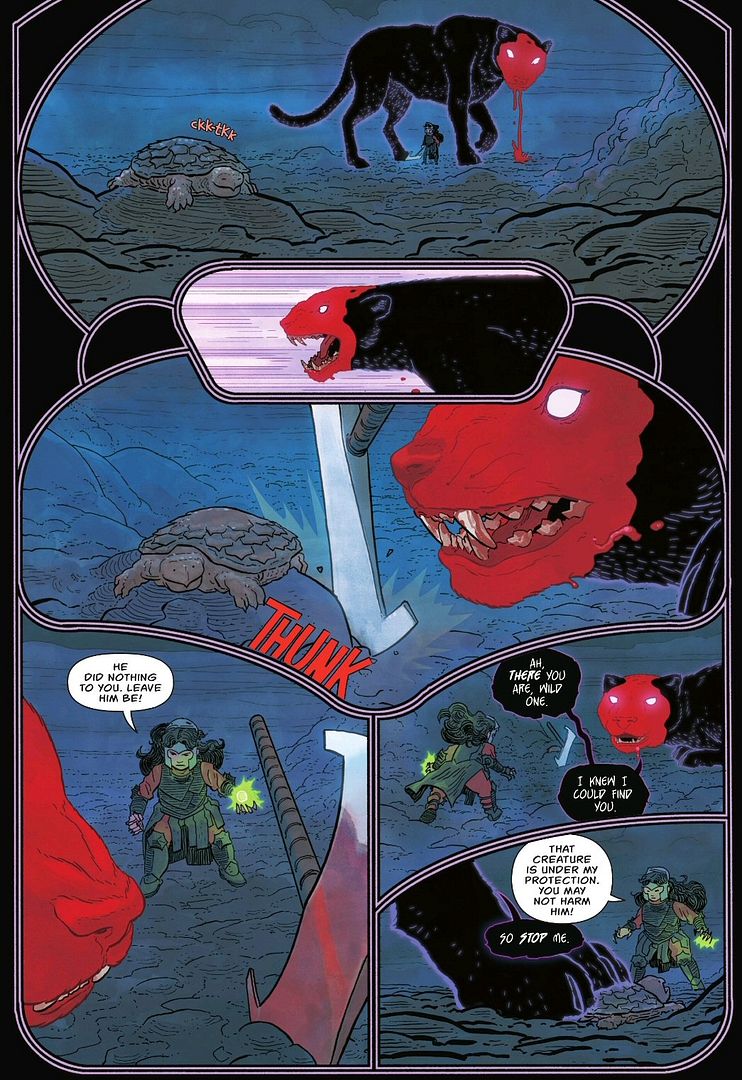
A frantic battle ensures, while Circe prays alone in her room. Eventually, Artemis withdraws, and the door to Circe’s home opens. Circe leaves to investigate:
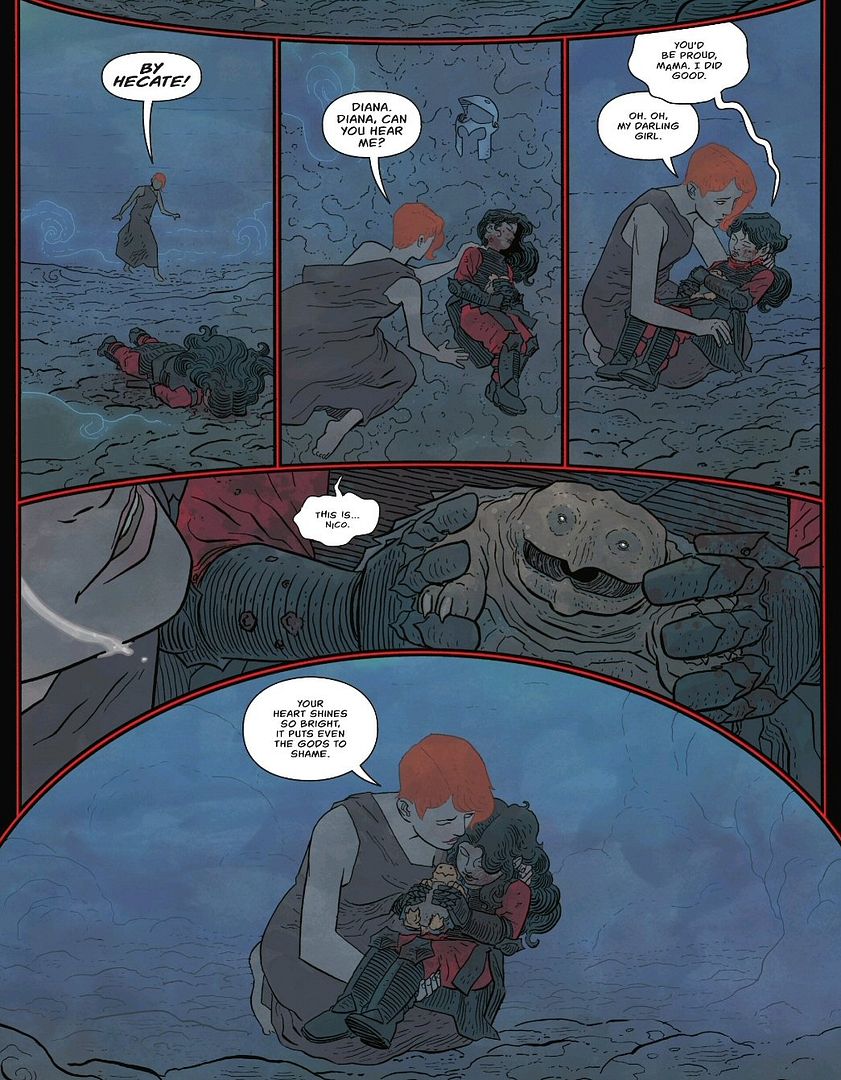
I so love this page – it beautifully expresses the core of who Diana is, as well as showing Circe’s love and recognition of her.
This brings me to my last observation of Diana’s ethics: her virtue and situational ethics apply not only to humans – they apply to ALL living things. This is a relatively new concept in modern ethics, and you can see it for example in ethicist Peter Singer‘s consideration of animal ethics and liberation, through an expansion of preference utilitarianism. Preventing the pain and suffering of all living things – and considering their interests – is core to this modern interpretation of ethics.
Given that this is an ongoing series, it will be interesting to see where Diana goes from here. Using my superhero normative ethics rating system, I would consider this Absolute Diana a V/c at this point. That is, she is primarily a virtue ethicist (in the classic Stoic sense especially, but also from a modern care ethics perspective), with a secondary consequentialist streak (situational ethics specifically, with its emphasis on promoting the higher love known as agape). There is also a minor deontological duty aspect to the character, but her stated rationale for her actions is most consistent with virtue ethics and consequentialism.
I have great faith in this creative team – who, at the time of this writing, just received the highly competitive 2025 Eisner award for Best New Series. Congratulations to Thompson, Sherman, and all their collaborators – very well deserved!
The last word
I was skeptical when I heard the premise for the new Absolute Universe in DC Comics. How exactly were the characters going to have the same fundamental traits and central drives, with radically different (and darker) origin stories, in a universe led by despair instead of hope? Clearly, that was going to require some reconsideration of their ethics.
Thompson, Sherman, and company have done a masterful job here – I can’t imagine a better modern revision of Wonder Woman than the one they have brought to the page. The darker tone of this universe underscores the need for a positive message, and the revised ethics of the character suit that beautifully.
I was impressed with Thompson’s earlier work on Captain Marvel (from Marvel Comics, 2019-2023). That was a character that was still being restored from an earlier era of traumatic abuse when a major cross-over event tipped her into being an extreme consequentialist. Thompson immediately revitalized the character by taking her down a virtue ethics path instead (in a classic Aristotelian sense, but most especially in a modern care ethics one). The deliberate care and thoughtfulness expressed there made her the perfect choice to create this new inspirational Wonder Woman. I love the updated ethical drives, and am looking forward to many more stories to come!
A final side segue – one of my favorite characters from Classic Mythology is the Titan Prometheus. So I was thrilled see an extended sequence between Diana and Prometheus in issue #6. This depiction of Prometheus’ character is exactly how I’ve always imagined him (although probably not quite this tall). From Absolute Wonder Woman Vol 1, issue #6, 2025, by Thompson and outstanding guest artist Mattia De Iulis:
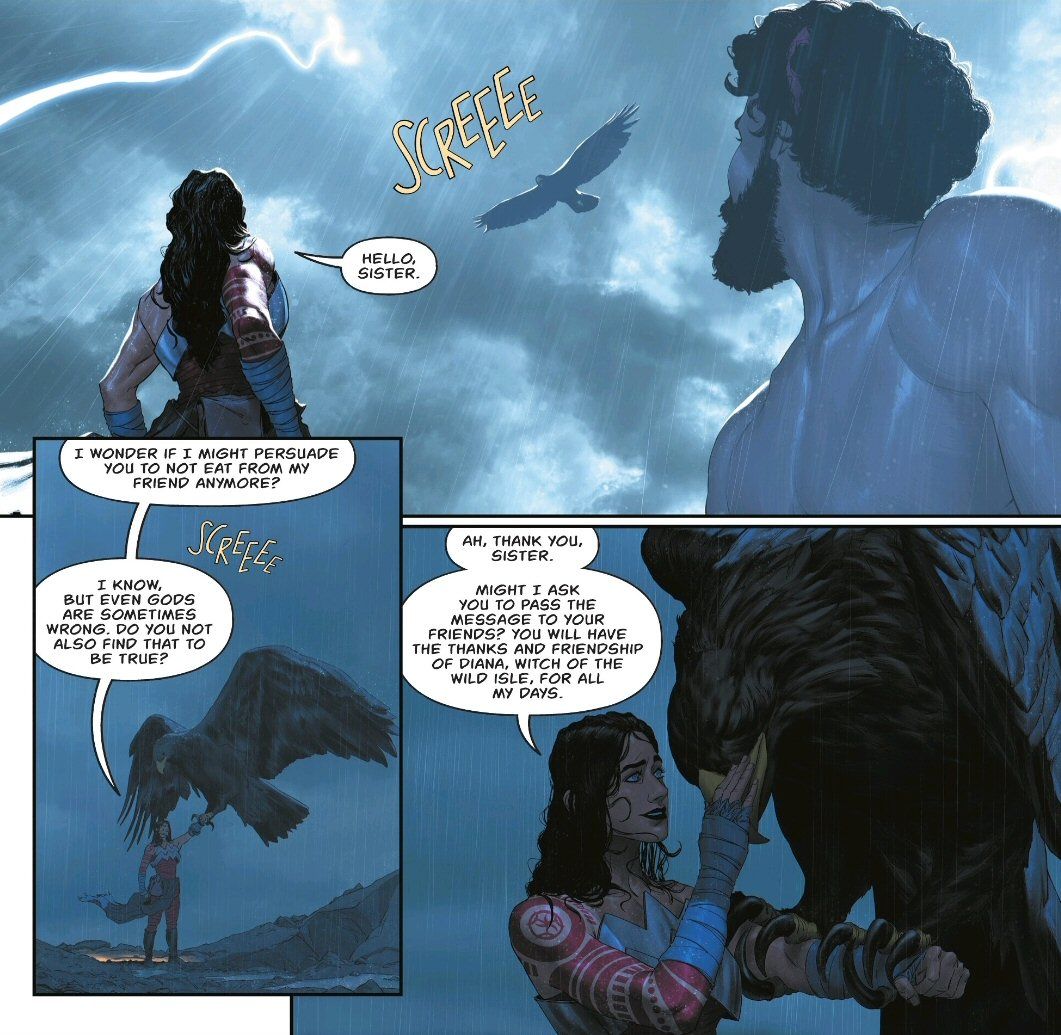
As previously noted, Diana has a way with animals. As she subsequently explains, she is confident that the eagles will no long bother Prometheus. But that doesn’t mean nothing else will come – it is hard to evade the will of Zeus, obviously. Prometheus praises Diana (and Circe) for their cleverness, as Diana hands him a magical flask that will continuously replenish itself.
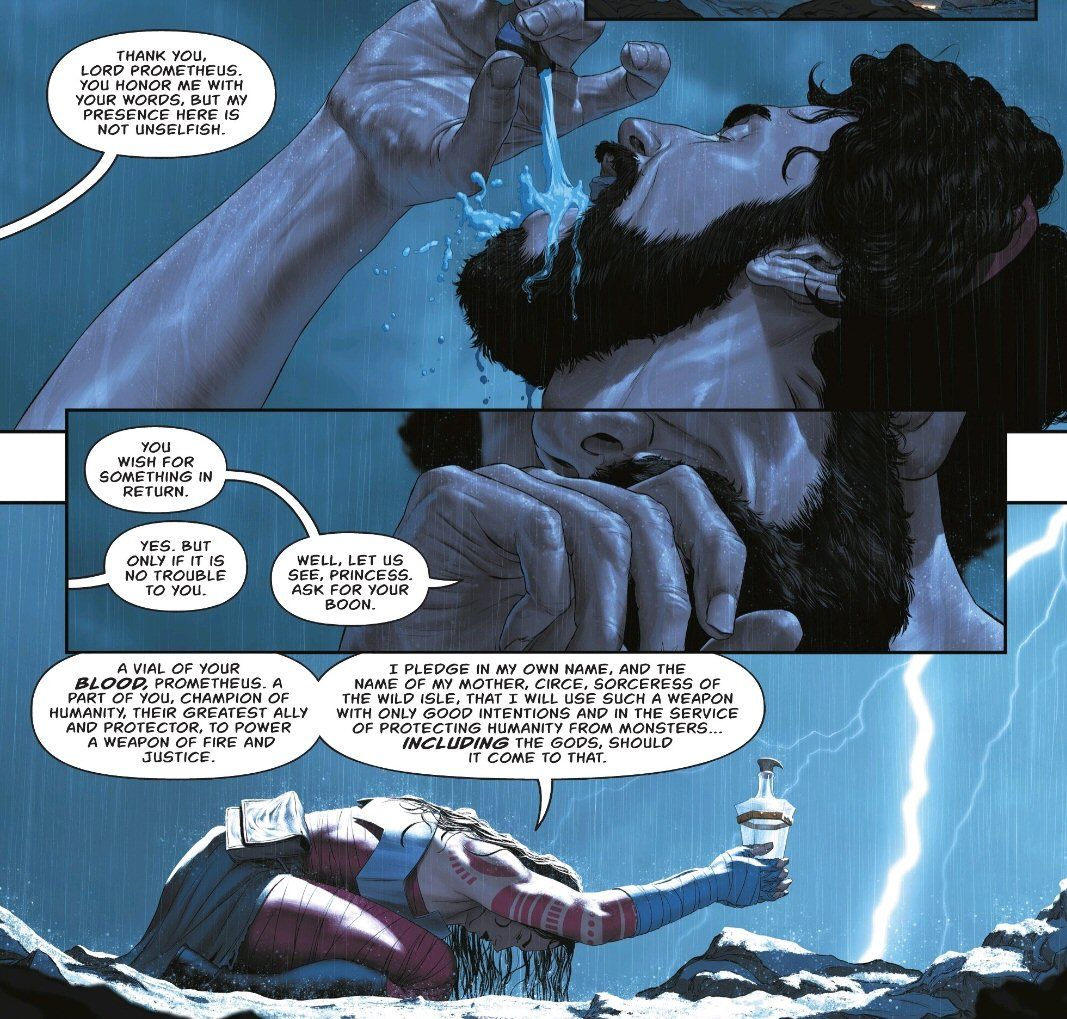
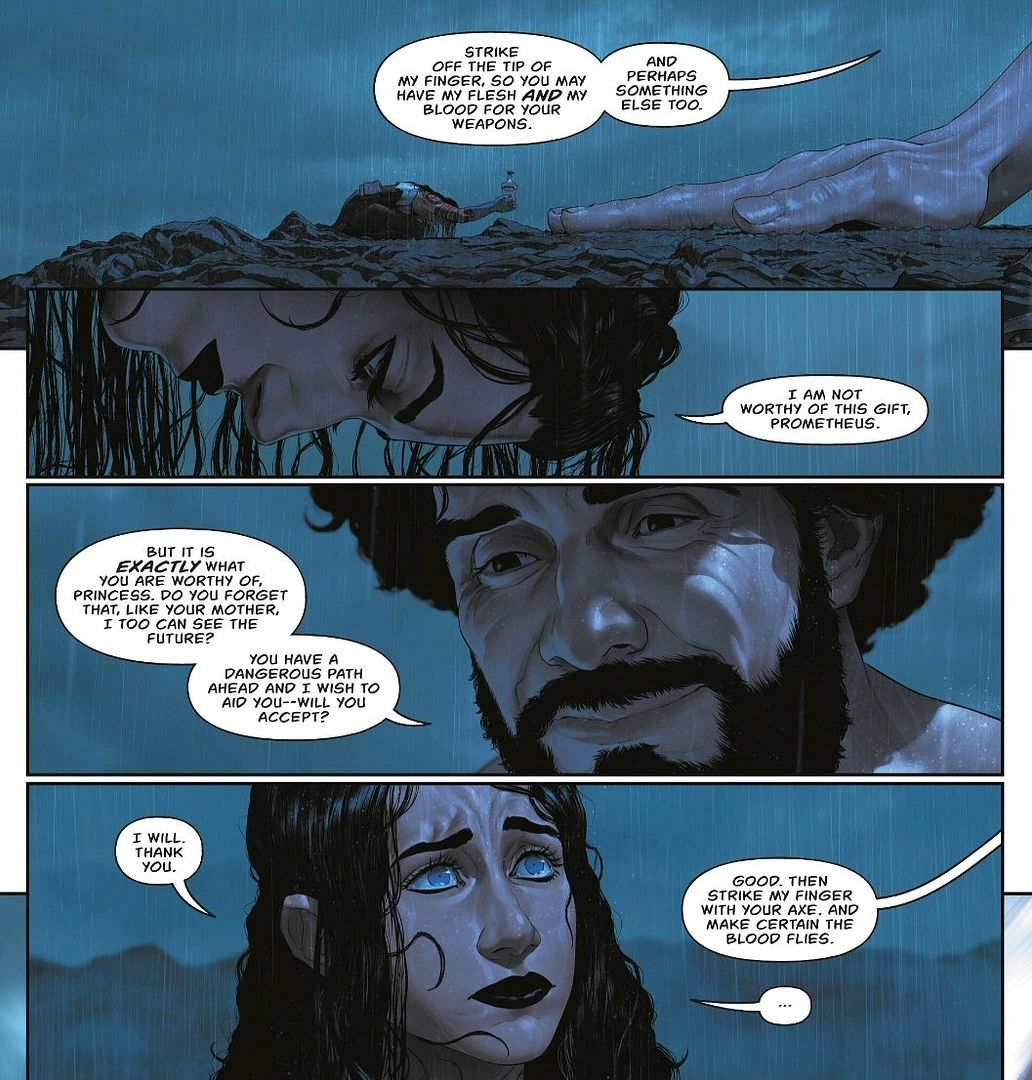
Prometheus has one additional gift to give Diana – a resurrected Pegasus (who seems to have been previously killed by Zeus in this universe).
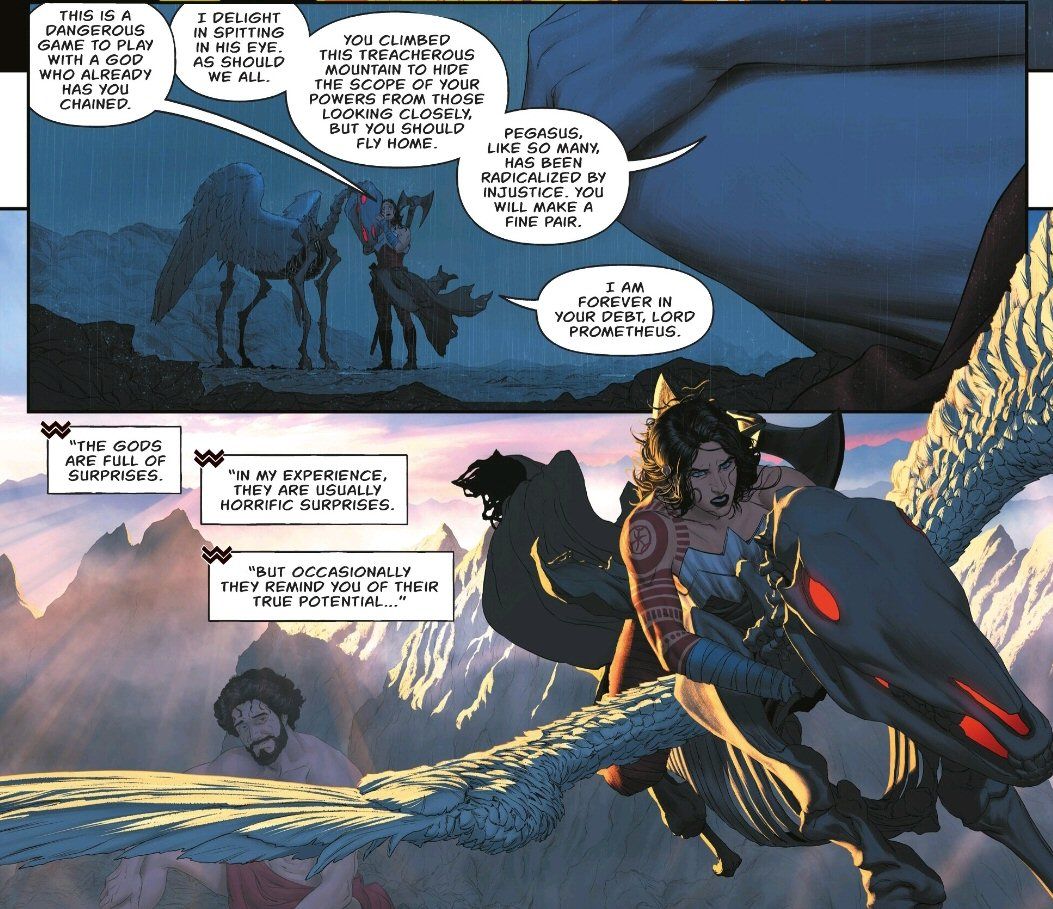
Prometheus has always struck as among the most ethical of all the Classical gods. Despite knowing the eternal torment he would suffer at Zeus’ hands, he still did what he felt was right, good, and virtuous for the sake of humanity. The parallel to the mission that Diana finds herself on is hard to miss. And like Prometheus, she will use all three normative ethics at her disposal, with an emphasis on virtue.
See my Glossary post for a list of the key philosophical concepts and related links on this site.
Further Reading
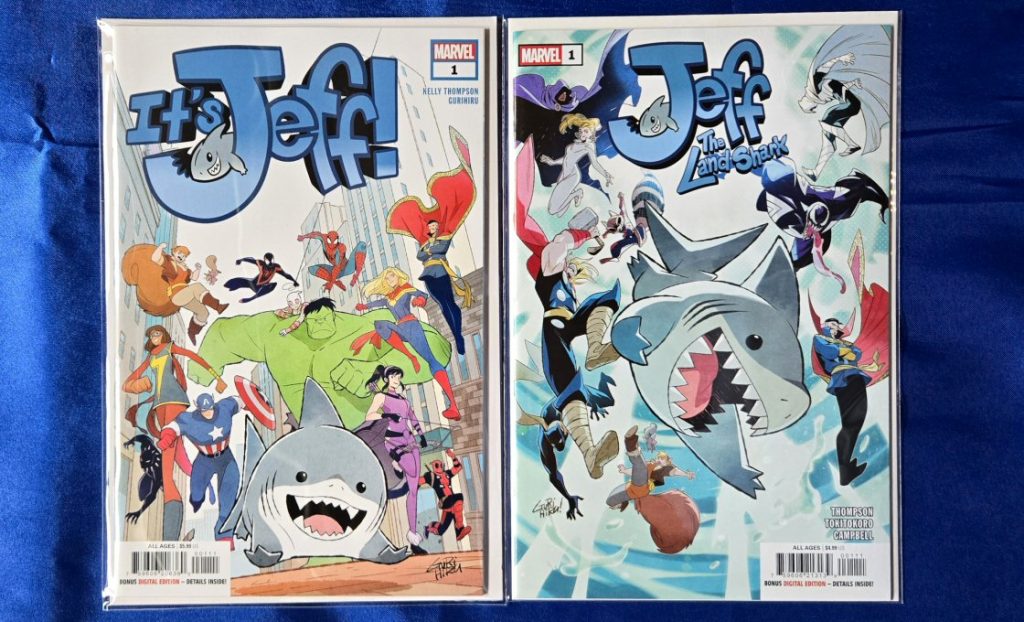
For more Kelly Thompson: Jeff the Land Shark
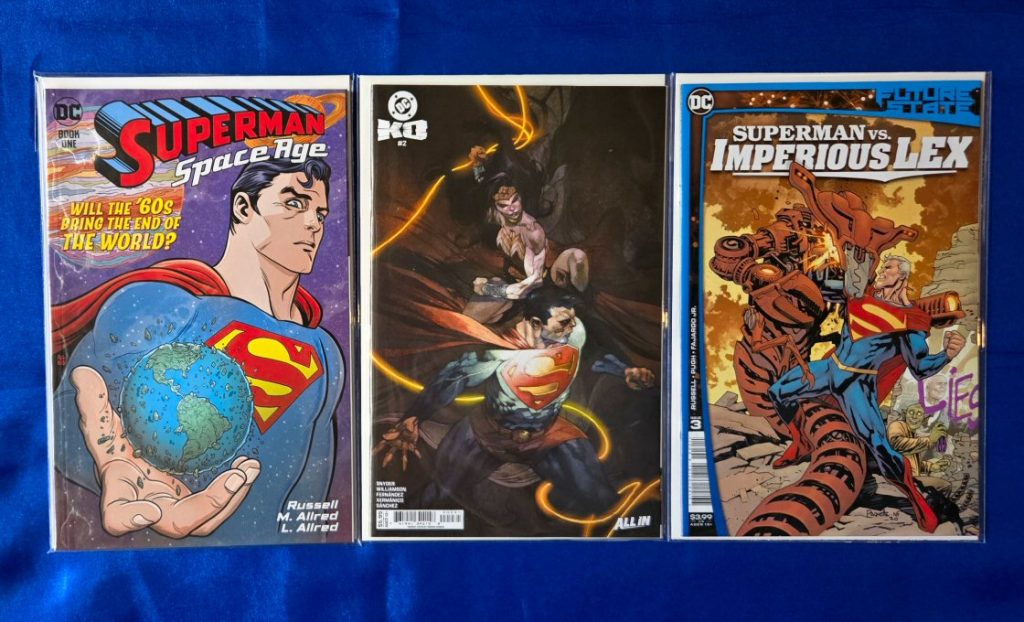
For more DC comics: Superman
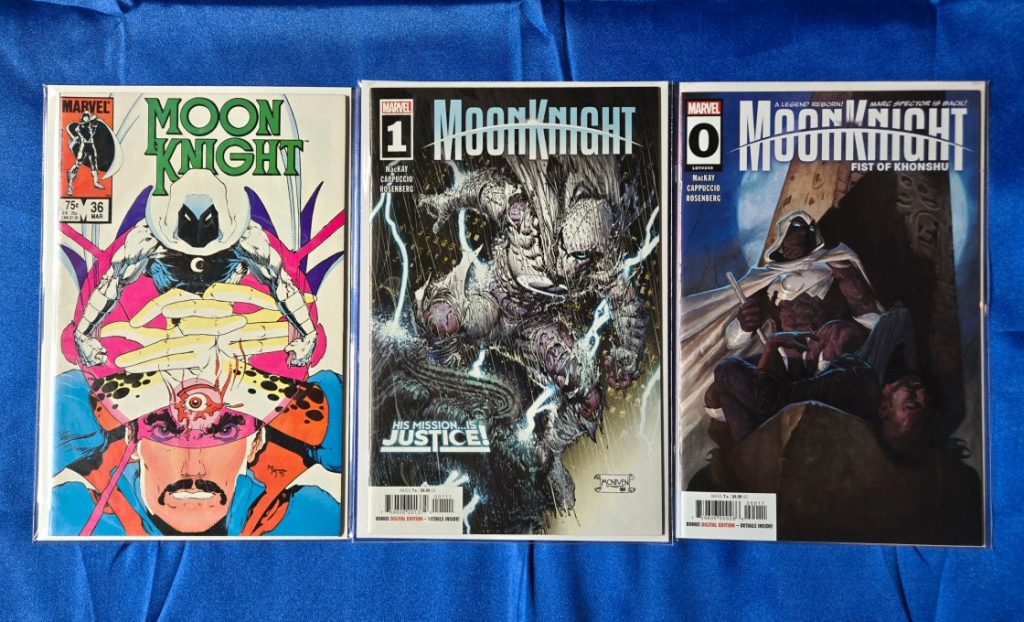
For more situational ethics: Moon Knight
I posted a brief synopsis of this post on Reddit’s r/WonderWoman subreddit – specifically focused on my situational ethics analysis and how Absolute Diana displays Christ-like characteristics.
I received three thoughtful replies within minutes – until the whole thread was removed by automated Reddit filters. I suspect the issue was the reference to Jesus Christ – although I did specifically make this caveat in my post: “I don’t mean this in a religious sense, but rather a moral philosophy one. As told through the New Testament, Christ espoused a very consequentialist ethics message centered around love (agape).” Nevertheless, the fourth post was a single inflammatory sentence by a troll (who clearly didn’t read the original post), and the whole thread was removed.
I guess I will need to limit any further Reddit posts to moral philosophy that doesn’t have any possible link to religion.
UPDATE: I originally posted an anonymized version of the initial comments below, but have removed them as the thread has now been restored! Not sure what happened, but you can see the full discussion thread here:
https://www.reddit.com/r/WonderWoman/comments/1micwon/absolute_wonder_woman_as_a_christlike_figure/
UPDATE 2: In the past 48 hours, the post has had 16K views, 212 up-votes, and 31 comments. Wow!
Oooh, that sounds juicy! What happened, did some bible-thumper get upset that you used his lords name in vain?
Ha, no, it was the opposite. He initially swore and called me a “right-wing scumbag”, presumably because he reflexively thought any mention of Christ must mean I was some sort Christian evangelical (he clearly didn’t read the post before responding).
Amusingly, he edited his post after the thread was restored to instead slightly tone down his profanity but now accuse me of being the second coming of a famous comic book censor. Again, he clearly did not understand the post – I suspect he reflexively responded to the word “ethics” as meaning I was telling someone they couldn’t do something.
It’s interesting to see how triggering simply mentioning the words “Christ” and “ethics” can be for some online. It’s too bad he didn’t bother to actually read the short post there.
Ah, interesting.
Btw, forgot to mention this was a really interestng summary. I don’t know much about wonder woman, only vaguely remember that campy tv show from the 70s (80s?). But this makes want to check out this series.
Another strong woman character! What a great read, sounds like a fascinating series.
I will have to look into this one …
Really fascinating analysis here Eric! I’ll be honest, I’ve never heard of “situational ethics” before reading your breakdown here. The idea that there’s a whole ethical framework built around maximizing love rather than just general utility is pretty intriguing.
I’m curious though – how would situational ethics handle conflicts when “maximizing love” isn’t clear-cut? Like, what happens when showing love to one person or group might harm another? Does it have built-in guidelines for those tough calls? Makes me want to dig deeper into this whole framework – any recommendations for good starting points on situational ethics for someone coming at this fresh?
Great work connecting all these philosophical threads to what sounds like an excellent comic series!
Thanks Michael. Normally, I’d refer people wanting to know more than what is on Wikipedia to the Stanford Encyclopedia of Philosophy. It is my favorite online resource for philosophical thinking, as the articles are quite thorough with tons of secondary research links. Note that it they are written in academic philosophical language, so it’s less approachable than Wikipedia (but far more detailed). Unfortunately, there is very little there on Joseph Fletcher or Situtation Ethics (to use his original term).
Situational ethics was a bit of a philosophical fad, hitting its heyday in the early 1980s, and then rapidly disappearing from view. This was an era when virtue ethics was making a huge comeback (especially feminist theories, with a focus on relationships). I think a big part of the issue is what you are alluded to in your questions: the concept of love (agape) is rather vague as a course of consequentialist action. Utility was developed into a much more explicit framework, and situational ethics never received that kind of attention.
So I’m going to suggest a rather unusual source – a series of historical fiction novels featuring the character Brother Cadfael. These were created by the linguistic scholar Edith Pargeter (under the pseudonym Ellis Peters) in the 1980s and early 90s. This is actually where I first became aware of situational ethics, by reading her books at the time (although I didn’t learn the name for it until years later). The character is a 12th century Benedictine monk, living in England during a historical period of civil war. I found the stories very interesting to read, as Cadfael had a very modern moral sensibility, yet one that still worked in the context of the stories. Someone eventually figured out that Cadfael uses situational ethics, and Pargeter confirmed it before her death. It seems she liked the idea of giving a 20th century Christian moral perspective to a character from a 12th century Christian world.
I remember reading an interview Pargeter gave once (likely in the back of one of the Cadfael paperbacks I collected), where the interviewer asked her if she had any rules for writing fiction. She answered she had only one: “it must have morality, otherwise, what is the point?” She always impressed me as a very moral writer – like Kelly Thompson, here for Absolute Wonder Woman. I’ve always found it remarkable how much you can learn about philosophy in non-academic resources.
Oh, I remember that series, it was great!
Never really thought about the ethics of the character, but he certainly stood out from the rest. I’ll have to go dig those up again.
Kelly Thompson very kindly provided a description and link to my analysis here in her latest blog post.
I appreciate the recognition, and really enjoyed reading the comments from her followers. I know “ethics” can have a negative connotation for many, and I’m glad to see that what I am trying to do here was understood and supported – namely, to show how ethics can provide options on how to think about things, as opposed to being told what to (not) do.