
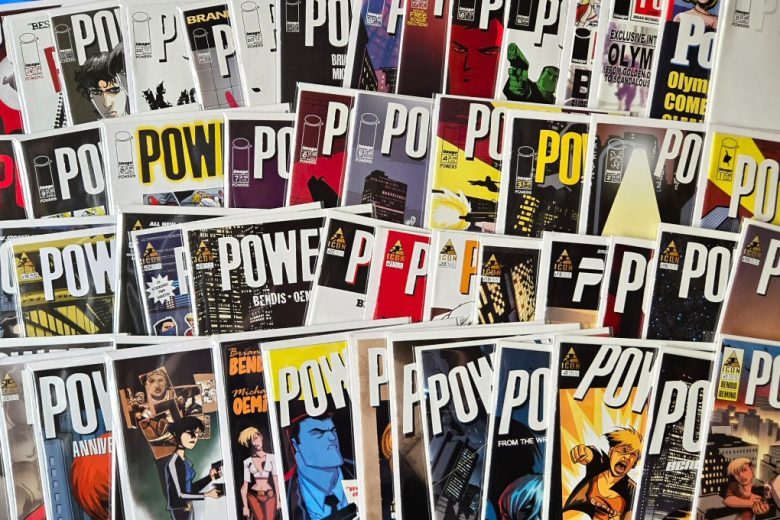
Could I have stopped this? What was the greater good? Every day I — I try to pick the right thing. To choose the —
- Christian Walker, from Powers Vol 3, issue #11, 2012, written by Brian Michael Bendis
The launch of Powers 25 by Dark Horse Comics in 2025 gave me the idea to catch up on the earlier series that I had missed during my time away from comics. And so, I sought out all the earlier runs by comics powerhouses’ Brian Michael Bendis by Michael Avon Oeming. Which, if my math is correct, totaled up to just over 100 issues and a graphic novel, all originally published between 2000 and 2020.
This extended series has been extensively reviewed and discussed over the years. But as an introduction to the currently ongoing Powers 25 Vol 1 series, I want to focus here on what I believe is a relatively unappreciated aspect to the original stories – the ethics of the series’ characters, how they changed with time, and what this suggests in terms of the overall moral themes of the series.
As I explain on my background pages (like my About Site and Ethics 101 pages), normative ethics is what we now call moral philosophy. Superhero comic book characters often have different moral perspectives (that is, they espouse different ethical theories). But the superhero medium is also, by definition, somewhat limited in how diverse a set of theories can be explored (e.g., you don’t see a lot of superheroes arguing for non-action or passively letting things go!).
I’ve always been a fan of detective fiction, as I discussed recently on my Doctor Strange of Asgard post. Powers was arguably the first comics series to successfully combine the genres of superhero fiction with crime noir and the police procedural. It thus provides an opportunity to consider certain normative ethics theories (like deontology) that you don’t see in a lot of detail in superhero comics, as well as a form of applied ethics that is very distinctive (criminal justice ethics).
This series is also a great chance to examine the concept of power more generally – and the corrupting influence it has on individuals and institutions. Much like The Power Fantasy by Kieron Gillen and Caspar Wijngaard, this series explores many of the darker aspects of power dynamics, with potentially Earth-shattering results. And like that modern series, Powers is also meant for mature audiences only – this is not a series suitable for children. Please be advised before scrolling down and seeing very graphic and explicit violence and sex acts in the panels below.
By delving into the individual characters’ ethics, this overview will also be a series recap of Powers from 2000-2020 – one that will position you to start reading the new Powers 25 series (which I have been thoroughly enjoying). It has creatively flipped the Powers script with some intriguing new characters and plots. I plan to review that series separately soon.
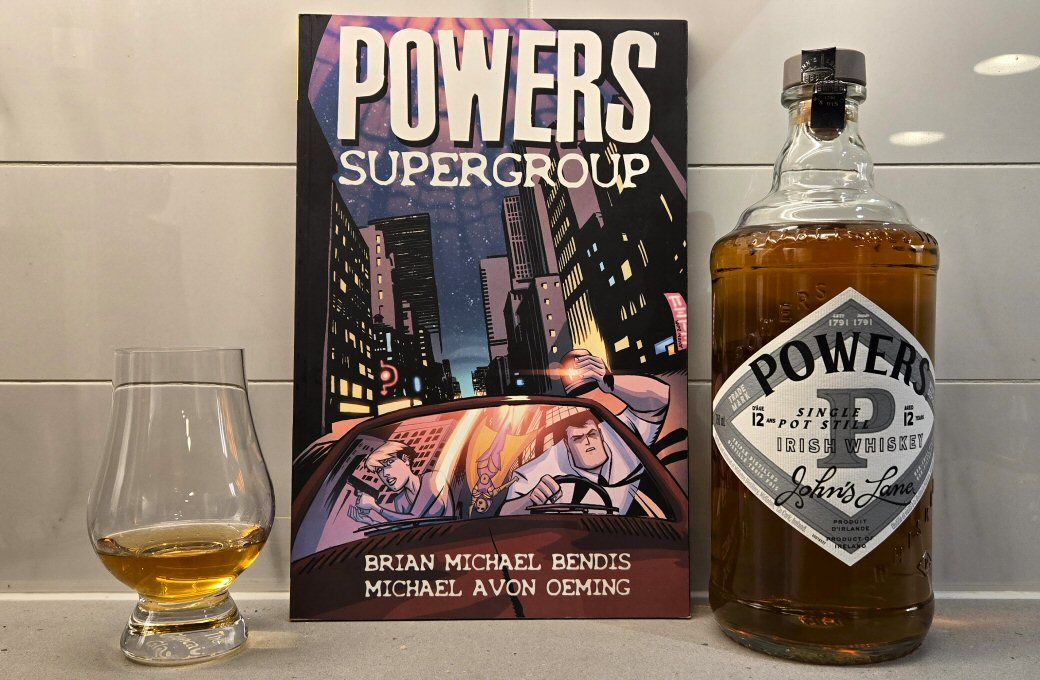
In honor of the mature themes, above is a photo of my personal favorite Powers – the Powers 12 year old John’s Lane (follow the link for my whisky review, from my old Whisky Analysis website). This is one of my favorite Irish whiskies, and the top of the Powers line.
As always, if you would like to know more about the terms I’m using on this site, please follow the links throughout or check out my Ethics 101 page or Glossary of Terms post.
History of the series
Powers is a creator-owned comic book series written by Brian Michael Bendis and drawn by Michael Avon Oeming. The series’ first volume (comprising seven story arcs across 37 issues plus an annual) was published by Image Comics between 2000 and 2004. This series garnered numerous awards, including the Eisner Award for Best New Series for Bendis and Oeming in 2001, and the Best Writer Award for Bendis in 2002 and 2003.
The series then moved to Marvel Comics from 2004 to 2017, as a part of its creator-owned Icon imprint (given Bendis’ major role at Marvel at the time). Icon published four more volumes, with Powers Vol 2 comprising five story arcs across 30 issues plus an annual (2004-2009), Powers Vol 3 comprising two story arcs across 11 issues (2010-2012), Powers: Bureau Vol 1 comprising two story arcs across 12 issues (2013-2014), Powers Vol 4 comprising one story arc of six issues (“All the Powers”, 2015-2016), and a cancelled run two issues into a second arc (“The Best Ever”, issues #7-8, 2017).
In 2018, Powers moved to DC Comics as part of its creator-owned Jinxworld imprint. The material from the incomplete second arc of the 2017 Icon Powers Vol 4 series was combined with new material and released as a single complete story arc in graphic novel form, Powers: The Best Ever, for the series’ 20th anniversary in 2020. Significantly, this graphic novel completed the character arc for one of the main characters, Christian Walker.
In 2021, Powers moved to Dark Horse Comics, where it now resides. Dark Horse re-released Powers: The Best Ever graphic novel in 2022, with additional retrospective material. A new ongoing series, Powers 25 Vol 1 was launched in 2025 (named after the 25th anniversary of the series).
There have been numerous collaborators to Bendis and Oeming on Powers series over the years, including colorists Patrick Garrahy (Powers Vol 1, issues #1-11), Peter Pantazis (Powers Vol 1, issues #12-37 and Vol 2, issues #1-24), and Nick Filardi (Powers Vol 2, issues #25-30, Vol 3, Powers: Bureau Vol 1, Powers Vol 4, Powers: The Best Ever, Powers 25 Vol 1). Also letterers Patrick Garrahy (Powers Vol 1, issues #1-11), Ken Bruzenak (Powers Vol 1, issues #12-37 and Vol 2, issues #1-20), Chris Eliopoulos (Powers Vol 2, issues #21-30, Vol 3, Powers: Bureau Vol 1, Powers Vol 4, issues #1-3 and 5), Joe Sabino (Powers Vol 4, #4 and 6-7), and Joshua Reed (Powers 25, Vol 1).
Introduction to the story
Powers is set in a world where “Powers” (a short-hand in the comics for people with superpowers) are relatively common – and vary considerably in their strength and effects on the world. This is not the “world outside your window” of Marvel Comics – this is a far more chaotic and uncertain place. The series doesn’t focus on the superpowers themselves, but instead primarily explores the lives of a couple of detectives in a dedicated police squad investigating cases involving “Powers” for the Chicago Homicide department.
The police are greatly outmatched in their pursuit of Powers criminals, as they are not allowed to employ powers themselves. Their only apparent defense appears to be “power dampers” – shown by a green light in their interrogation rooms and prison cells – but these are only effective up to a certain Powers level. Eventually, portable power dampers and special handcuffs are displayed in the series, but these typically have a limited range and effect. The origin of the power damping technology is part of a significant plot reveal toward the end of the first volume.
Bendis has indicated that he was greatly influenced by David Simon’s non-fiction book, Homicide: A Year on the Killing Streets (which was the inspiration for the great fictionalized TV show, Homicide: Life on the Street). He was looking to create a researched-fiction gritty police procedural and realized that placing it in a world of super-powered beings could work well to illustrate key themes (taking a harder look at superhero comic cliches in the process). He was also interested in the concept of celebrity, and wanted to do a Behind the Music-style take on superheroes (indeed, many of the early plots are directly inspired from famous rock star and music industry stories).
Based on the appearance of the world and the technology, the comic series appears to take place roughly concurrent with the reader’s time period at the series start (so, roughly 2000). Although the pauses and breaks within the story don’t exactly line up for each story arc and volume, overall, a roughly equivalent length of time has passed in the comics (so, it is 25 years later in the current Powers 25 series).
Introduction to the series’ ethics
I would argue that the central ethical theme of Powers is that “power tends to corrupt, and absolute power corrupts absolutely” – to use the famous phrasing of Lord Acton. The idea that unchecked power leads to moral corruption, as it makes people less accountable and prone to abuse their authority, is a reoccurring one in this series. It shows repeatedly how Powers can become detached from human ethical concerns, how their celebrity status and invulnerability erodes ethical and legal constraints, and how even well-meaning Powers can become ethically compromised. But I want to specifically illustrate here how this directly effects the main non-powered characters, like detectives Christian Walker, Deena Pilgrim and Enki Sunrise.
The series also explores a couple of additional core themes in regards to what we now call normative ethics (aka, moral philosophy). As I explain on my Ethics 101 page, there are three branches of normative ethics, with roots going back over 2,500 years. Deontology is concerned with doing your duty to other people, often through the lens of rights or justice. These theories are often rule-based and focus on the moral value of the acts themselves (that is, doing the right thing). Consequentialism is seen as the opposite, focusing not on the acts but rather on their outcomes. These theories typically explore the moral burden of making good decisions (that is, doing the good thing). Finally, virtue ethics shifts the focus from the act to the actor – being the best person you can be, typically by practicing virtues that align with your values and goals (that is, being better). Although philosophers often seem to want you pick just one theory and use it exclusively, that is not how our brains work (as I explored in my Moral Thinking, Fast and Slow post).
You can see a classic police procedural cliche play out in the early dynamic between the two main protagonists, detective partners Christian Walker and Deena Pilgrim. He is a seemingly seasoned, by-the-book veteran (that is, a deontological character) partnered with a young, brash, results-oriented rookie detective (that is, a consequentialist character). It isn’t that simple for either of them, or at least not for long, as I will explain below. From Powers Vol 1, issue #5 (2000):
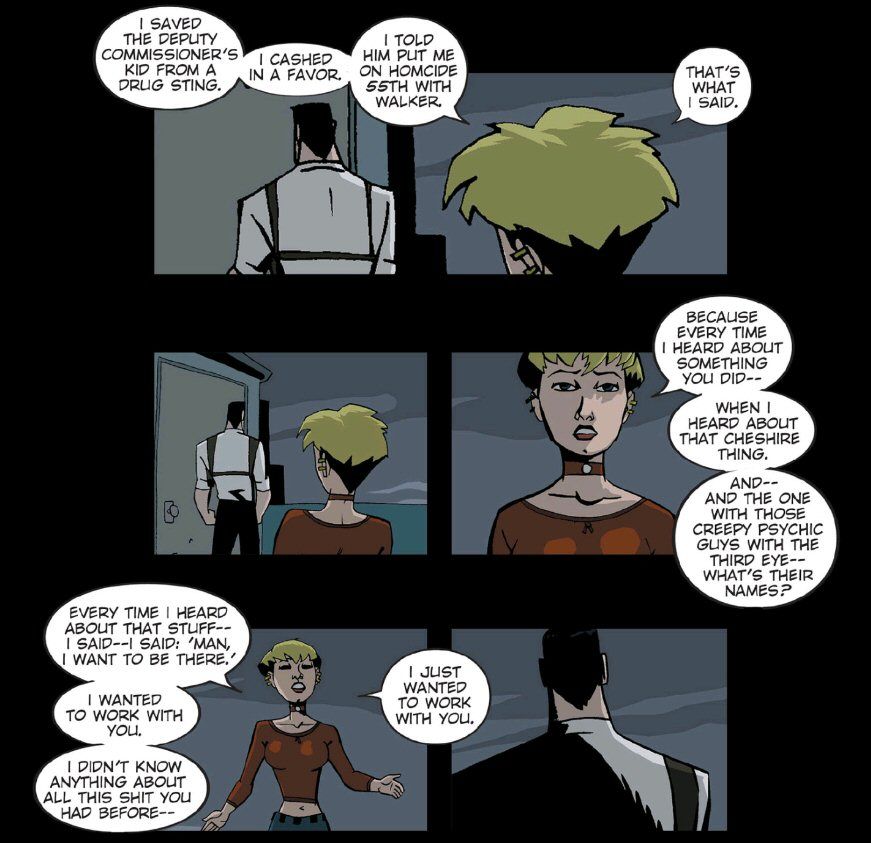
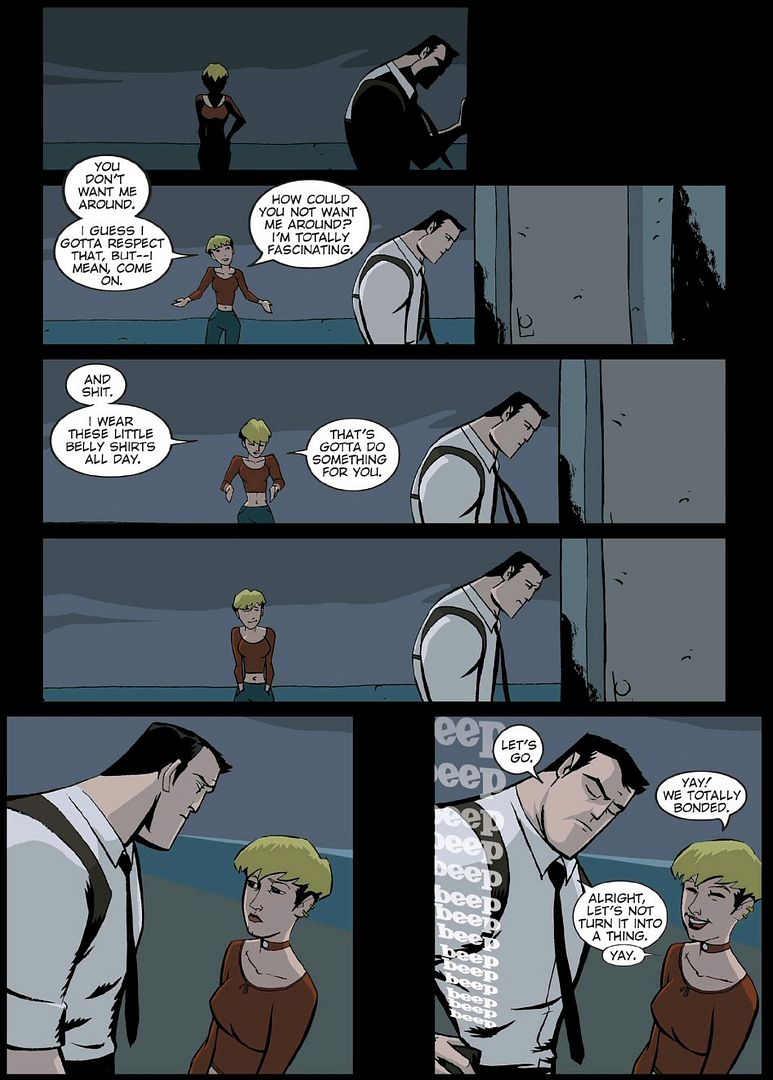
I will describe their characters (and changing normative ethics) down below, along with a few other key characters of significance for the current Powers 25 series.
Their physical attraction to each other (hinted at above) is eventually made obvious, and the sexual tension is heightened across the series as each engages in short-lived sexual encounters or relationships with other people. In another classic fiction trope, this bonds them even closer together, as they each become the only one the other fully trusts – against all the forces arrayed against them. Think Scully and Mulder of the X-Files (before they ultimately consummated their relationship in season 7).
Across the long run of this series, it is common to have various characters debate whether Powers should be judged by the consequences of their actions or by their adherence to legal or moral rules. Also often discussed (especially among the police) is the inadequacy of the criminal justice system in dealing with beings of such super-normal abilities. All of which I will explore in my next section below.
There is another key normative ethics theme to this series, especially over time, and that is virtue ethics. You will see it most clearly in Christian Walker – with his willingness to limit himself and work within human systems, as well as a personal commitment to humility, empathy, and moral development. This series seems to take a skeptical view of power in general, and appears to argue (through Walker and others) that ethical behavior requires vulnerability, compassion, self-limitation, and adherence to agreed-upon societal standards and norms.
This series is also an opportunity to explore another category of ethics that doesn’t get much play in comic books (especially superhero comics) – applied ethics, also called practical ethics. Although there are early examples of integrating ethics into practical systems of living (especially in ancient China, India, and Greece), for most of the last 2,000 years philosophers have avoided doing this – they have kept normative ethics theoretical. I know it seems odd, especially given what philosophers (and everyone else!) were living through in first six decades of the 20th century, but they almost universally eschewed any discussion of applied ethics until the 1960s and 70s. A notable exception was Bertrand Russell, who I discuss a little in the excellent The Power Fantasy series by Kieron Gillen.
My own experience with applied ethics comes through my former professional life. Over the years, I have worked closely with applied ethicists in the areas of bioethics, genomics, emerging technologies, environmental ethics, clinical research, psychotherapy, substance use and addiction, and law. My experience taught me that most applied ethics is really about protecting the vulnerable from the desires and/or actions of the powerful. Or put another way, applied ethics is often about creating systems to prevent the benefits of an action from accruing to a privileged group while the risks are borne by an under-privileged one.
That is a personal perspective, of course, and the nuances and complexity of each form of applied ethics can be quite varied. But thanks to the integration of police/crime fiction into this Powers series, we have a great opportunity to consider the applied form known as criminal justice ethics.
Accountability and justice – applied ethics
If you will bear with me here, I think this is relevant to understanding the world of the Powers comic. But this section is a bit of an aside, and you can skip ahead if you want to just focus on the individual characters’ normative ethics.
I will use the American criminal justice system terminology here, since it is most directly relevant to this series’ story (and its legal terms are widely familiar to fans of the genre worldwide). Note the general principles below apply across democracies generally, although there can be significant differences.
Criminal justice ethics concerns the practical moral principles that guide the police, lawyers, judges and others involved in the delivery of the justice system. These balance rigorous criminal investigations by the police and prosecuting attorneys with zealous advocacy for the accused (even guilty ones) by the defense attorneys. These principles include many common core concepts, such as a requirement for the competence of all involved, confidentiality, avoiding conflicts of interest, ensuring fairness (in some interesting ways I will describe below), and addressing broader social issues like preventing racial bias.
But consider what a “fair trial” actually means. There are numerous “procedural safeguards” in place to protect the accused’s rights. These include the “presumption of innocence”, the burden on the prosecution to prove guilt “beyond a reasonable doubt”, and a large number of “due process” rights. These rights include the requirement for judicial warrants (or “just cause”) for any police search, the right to remain silent and have free public defender counsel present during police questioning, freedom from self-incrimination, and a fair trial by a jury of one’s peers.
From an applied ethics perspective, I find the different obligations placed on the lawyers for the defense and prosecution very interesting. The defense lawyers must ensure their client’s rights are protected and that the prosecution satisfies its burden of proof. But the defense is also required to demonstrate loyalty to their client and dogged advocacy on their behalf (within legal bounds). This means they cannot lie or present false evidence (regardless of the guilt or innocence of their client). And while they cannot openly “suborn perjury” (they must try to dissuade a client who insists on testifying falsely), there are strict rules on what they can disclosure to the court. The defense is bound by a strict oath of client confidentiality and can’t reveal anything that could adversely affect their client’s case.
In contrast, the prosecution must turn over to the defense all of the evidence they and the police have collected on the accused. They especially must include any evidence that might suggest the innocence or reduced liability of the accused (“exculpatory evidence”). This is a significantly altered playing field between the defense and prosecution!
Similarly, if the accused is found guilty, they have numerous immediate appeal options – and any evidence of unfairness (or misconduct) by anyone on the state’s side (including the police, prosecutors, judge, jury members, etc.) will result in the convicted being set free or given a new trial with the fault corrected in their favor. In contrast, if the accused is acquitted, the prosecution has no recourse and cannot try them again – even if new compelling evidence of their guilt is found (“double jeopardy”, at least in the U.S. – limited exceptional circumstances are often allowed in other jurisdictions).
In all the examples above, doesn’t it seem like the system is biased in favor of the accused? Not according to justice advocates – they see the above as simply being evidence of strong “procedural safeguards” to protect the accused’s rights. But why do the accused need such extra safeguards for their rights? It is because of the inherent imbalance of power between an individual and the all-powerful state. The state has virtually unlimited resources at its disposal to seize, search, and confine (not to mention coerce or compel). It seems to me that the applied ethics of the criminal justice system have been set up to preferentially protect the rights of the weaker party in this power dynamic (that is, the accused).
Of course, despite these protections, wrongful convictions happen all the time. Systemic issues like implicit bias, poverty, racial profiling, underfunded public defenders, and “tunnel vision” by the police often negatively impact the accused – especially for marginalized or under-privileged groups (who often also receive harsher sentences). Those who can afford expensive defense attorneys can often take much better advantage of those safeguards.
What does all this have to do with understanding the Powers comics? Well, this series appears to argue for an applied framework where everyone must be accountable under the law, regardless of their power level. But the ubiquitous presence of Powers means the balance-of-power has shifted from the state to the individual in this world – but all the current criminal justice safeguards for the individual still apply (!).
As such, any criminal with powers has a HUGE advantage over the police – putting the officers in a horrible position. What if a Powers doesn’t want to be arrested and incarcerated? What if their allies don’t want to see them incarcerated? What if their enemies want to take them out while incarcerated? All these events quickly come to pass in this series, with many deaths and other serious injuries to the police officers involved. Indeed, the powers squad of the Chicago police department gets virtually decimated on several occasions over the years (which must make ongoing recruitment tricky!).
What effect do you think that will have on the individual police officers (well, the survivors anyway)? This trauma perspective helps to explain a lot of what happens to the main detectives in this series – most notably Deena Pilgrim and to a lesser extent Enki Sunrise. It also explains the changing political and societal perspectives around policing powers that is displayed over the course of this series (e.g., the various laws banning or pardoning Powers). Democratic societies require mechanisms to check power, and the limitations of our existing criminal justice system safeguards are readily apparent in this power-inverted world. Early indications from the Powers 25 series suggests this will be a key theme of the latest series.
Character ethics
The characters who I think show the most interesting philosophical issues are profiled below: detectives Christian Walker, Deena Pilgrim, and Enki Sunrise, as well as the current Retro Girl, Calista Secor.
Let’s take them one at time …
Christian Walker
The series begins with Walker as the strong, silent type. It is clear that Walker has close personal relationships with many of the higher-profile Powers (indeed, it is eventually revealed that he has had secret romantic relationships with several of them over the years). It is also revealed that Walker was formerly a Powers himself, called Diamond. The way he lost his powers is left vague and mysterious initially, and is eventually clarified over the series long run. Eventually (mid-way through Powers Vol 2, 2006) he is granted new secret powers by an alien organization called the Millennium Guard to serve as the Earth’s protector. His actions to help save the world at the end of Vol 3 (2012) – disobeying instructions not to use his new powers publicly except for alien invasions – causes them to be revoked in the second arc of Powers: Bureau Vol 1 (2013).
As mentioned above, the most straightforward interpretation of his moral character from the first few story arcs would be that he is primarily deontological. Consider the conclusion of the first story (“Who Killed Retro Girl?“). His former superhero colleague Triphammer (who is very much an analogue of the very consequentialist Iron Man of Marvel comics) interferes with the conclusion of their investigation. From Powers Vol 1, issue #6 (2000):
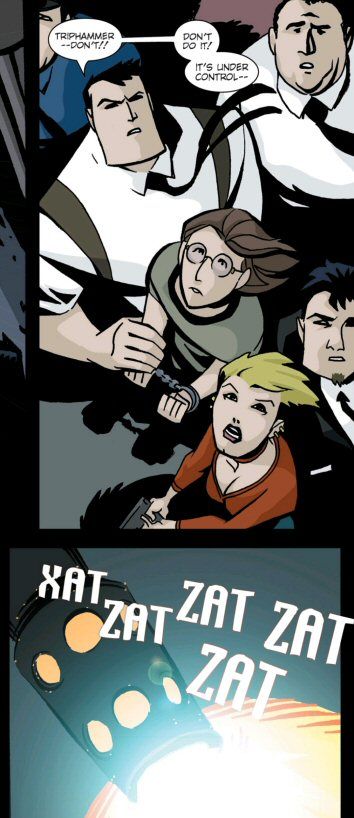
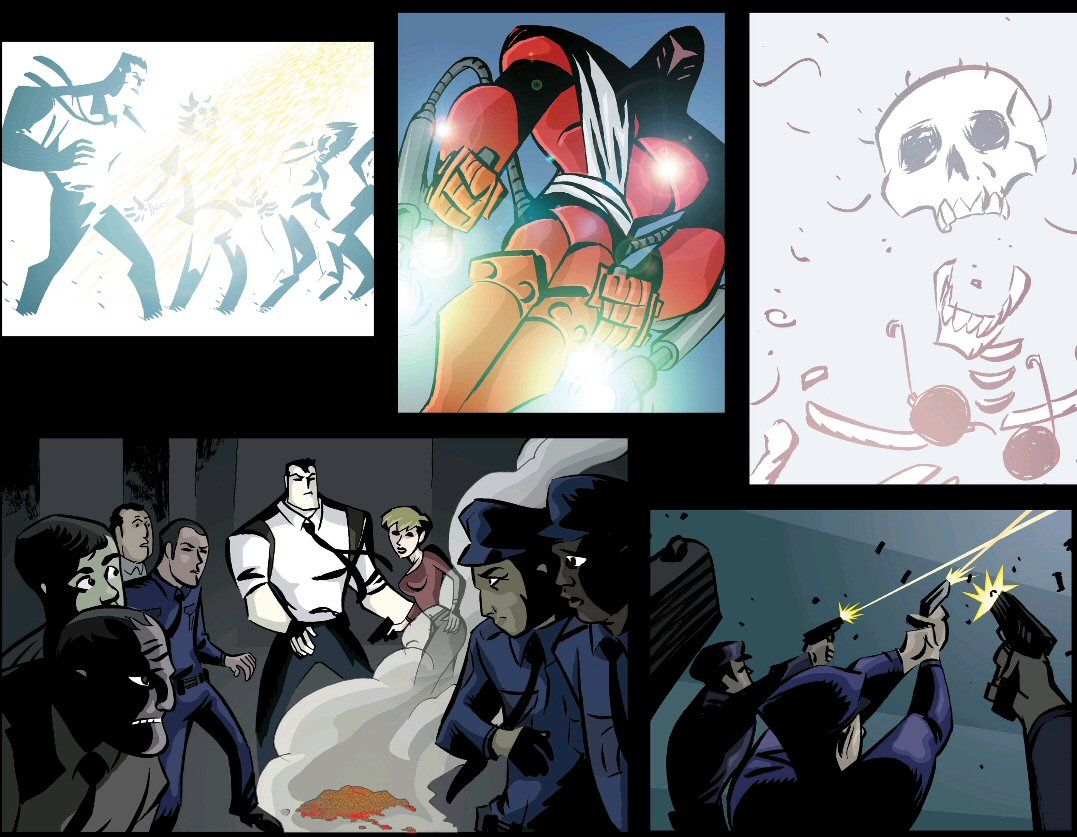
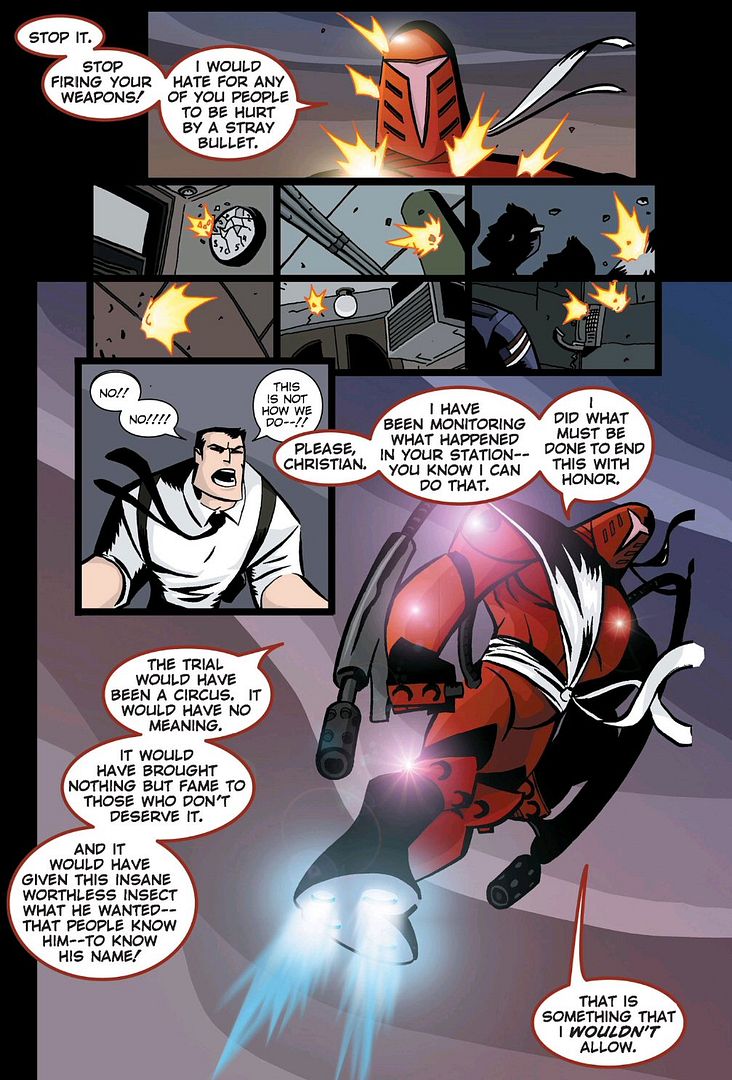
Triphammer gives a pretty clear consequentialist reasoning as to why he is taking matters into his own hands. Walker confronts him in very deontological terms on the next page:
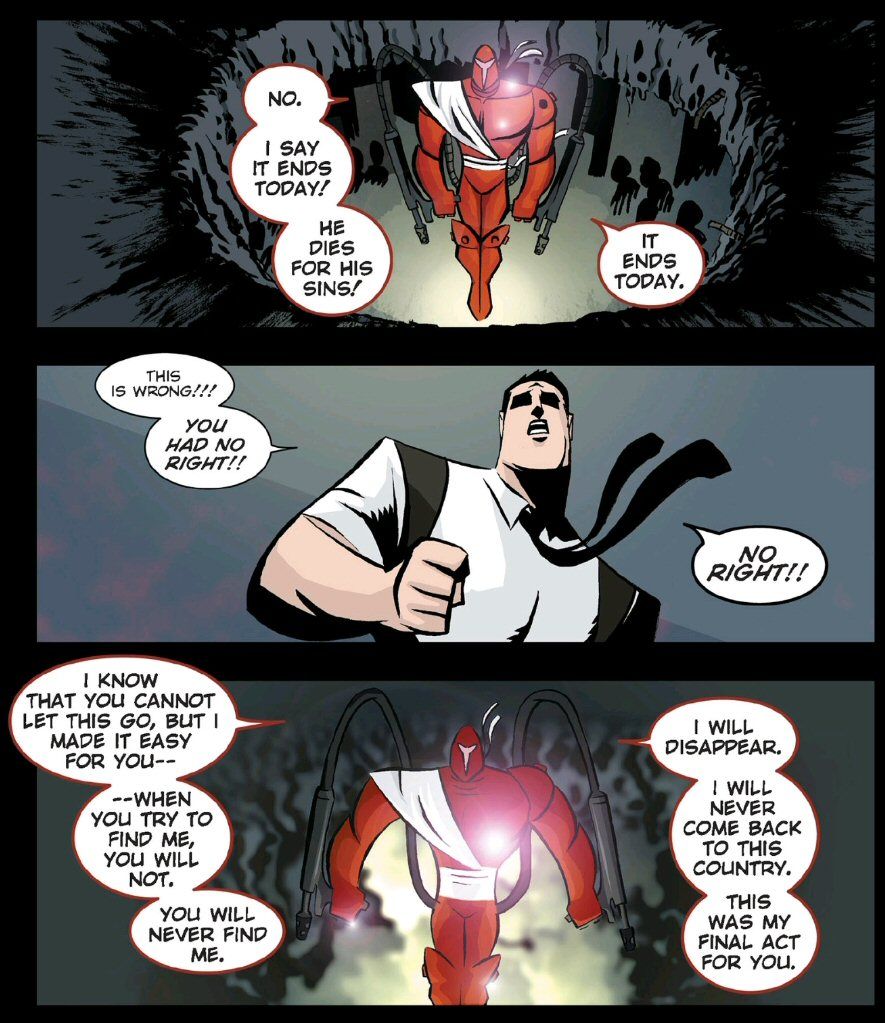
This seems to indicate that Triphammer knows Walker’s deontological ethics (e.g., “this is wrong”, “you had no right”) will not allow him to let this go, and so he removes himself from the law’s reach. In fact, Triphammer returns at several key points across this long series – and each time is recognized and appreciated by Walker (as his own moral sense evolves).
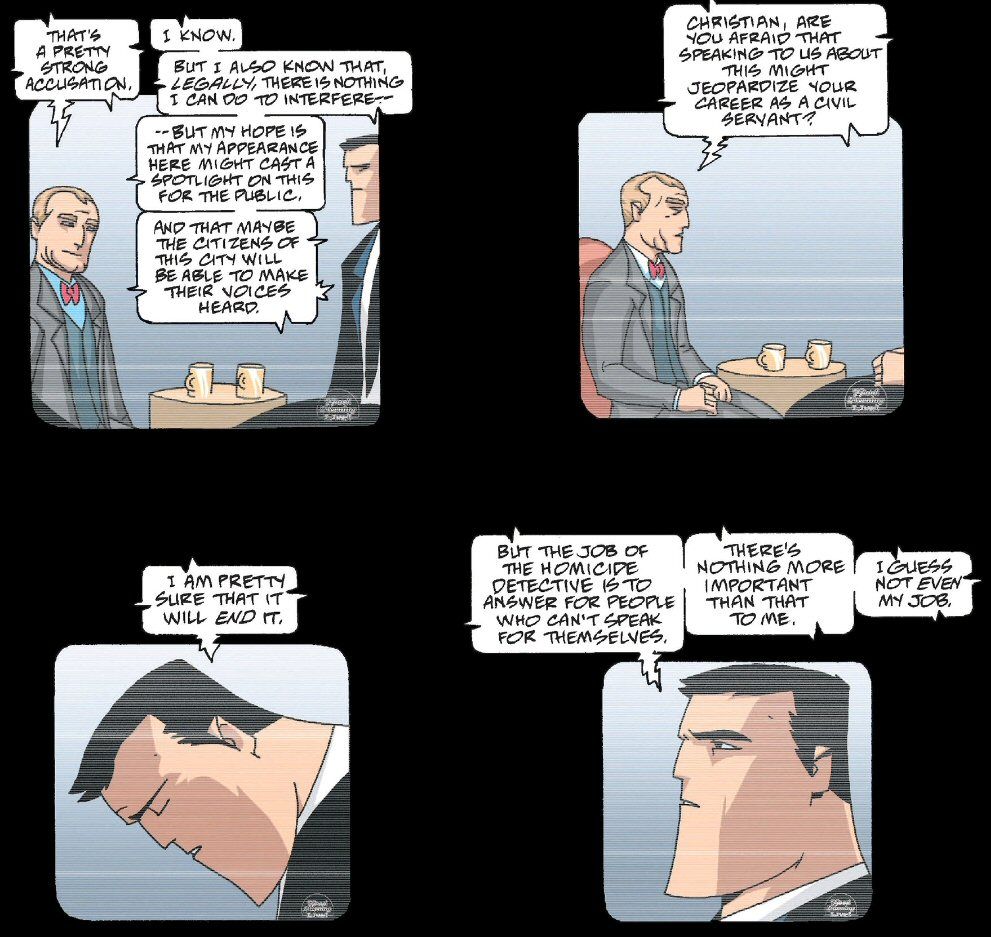
A similar example of his early deontological drive comes at the end of fourth story arc of the first volume, where he uncovers a federal government cover-up of the Powers crime he was investigating. He decides to go public, even though this does indeed lead to his dismissal from the police force. Note his deontological reasoning, from Powers Vol 1, issue #20 (2002):
However, his ethics isn’t that clear-cut for long.
A significant sub-plot in the second story arc involves the murder of a Powers gang leader, Johnny Royale, who was injured in an unusual incident with Pilgrim (who was temporarily suspended as a result). Note her lack of reaction to the news of his subsequent death, from Powers Vol 1, issue #11 (2001):

This scene ends awkwardly as Pilgrim’s previously undisclosed boyfriend makes an appearance. Walker eventually confronts Pilgrim, in Powers Vol 1, issue #17 (2002):

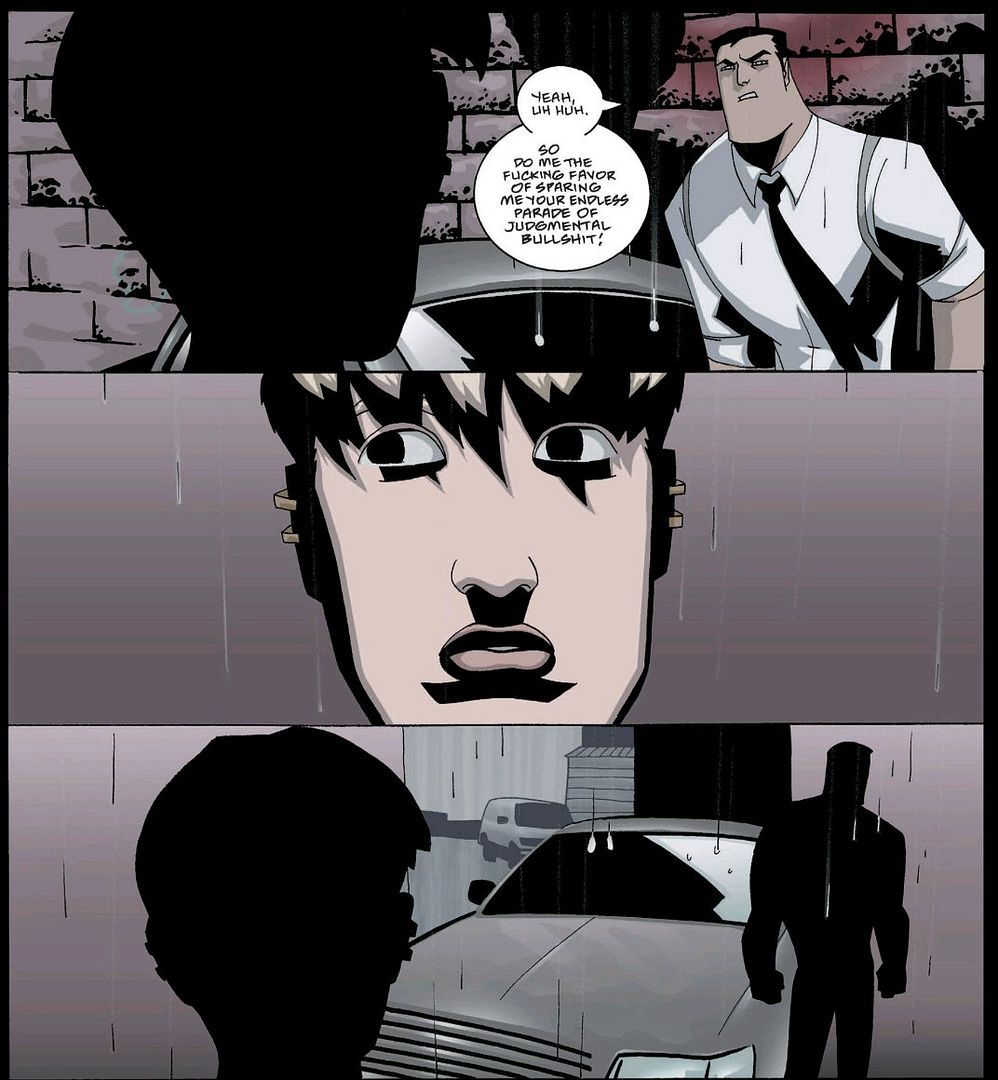
Although Pilgrim doesn’t admit to this, her reaction above is revealing. But Walker’s take on this event had changed considerably when he subsequently returns to the force at the end of the next story arc. From Powers Vol 1, issue #24 (2002):
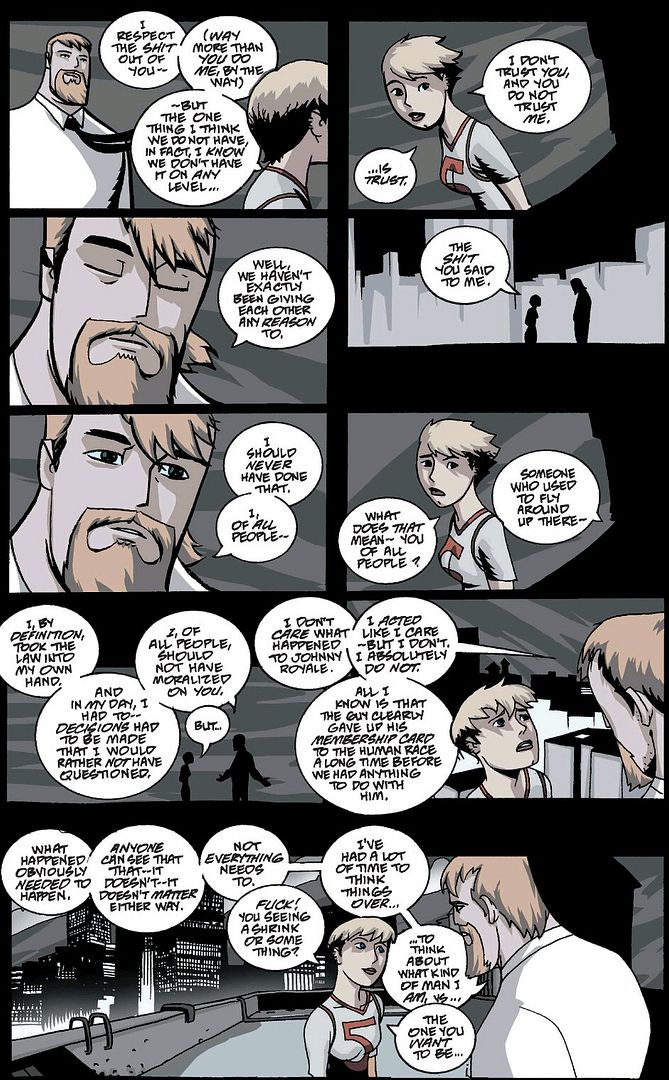
This marks a significant shift in Walker’s moral code. Trust between partners is a mainstay of detective fiction, but it’s hard to understand this apparent shift toward Pilgrim‘s consequentialism – with a dash of moral relativism in regards to murder (I discuss the problems with moral relativism in my X-Men Mystique post). But his relationship with Pilgrim now comes into clearer focus, and these panels end with a major hint as to the type of normative ethics that he is moving towards – virtue ethics, with its focus on the person and not the acts.
As an aside, something that has always impressed me in this series is how Walker and Pilgrim’s dialogue is often quite dialectical in its tone. Dialectical processes proactively use disagreements to overcome conflict to reach a new, better way of seeing things that both parties can agree on. This contrasts with the more common dialogical approach, which simply seeks mutual understanding and acceptance of different perspectives. Walker and Pilgrim’s ability to complete each other’s sentences (and back-and-forth banter) are a mainstay of this series, and each contributes to the moral growth of the other.
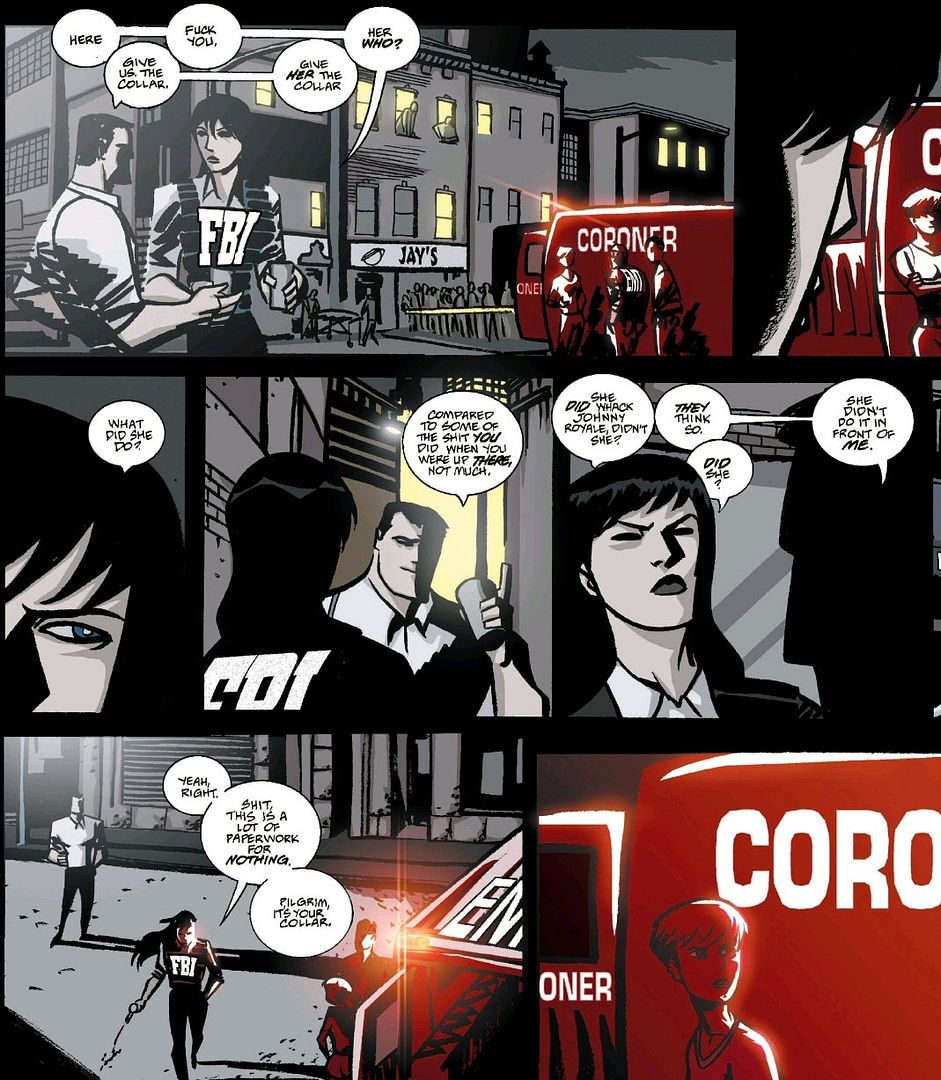
His support for Pilgrim remains unwavering from this point on. Consider his evasiveness several years later when confronted with the question of Pilgrim’s guilt. From Powers Vol 2, issue #18 (2006):
To better understand the evolution of Walker’s normative ethics, we need to understand his full history – which is much more extensive than it would first appear.
This is explored in detail in the final arc of the first volume (Powers Vol 1, issues #31-37, 2003-04) and over several flashback sequences in subsequent volumes. This arc begins with issue #31 (2003) – which is set in prehistoric times (with no explanatory text) and depicts two non-verbal, proto-human “alpha males” fighting over access to sexual partners and leadership of their tribe. In a scene reminiscent from the opening of 2001: A Space Odyssey:
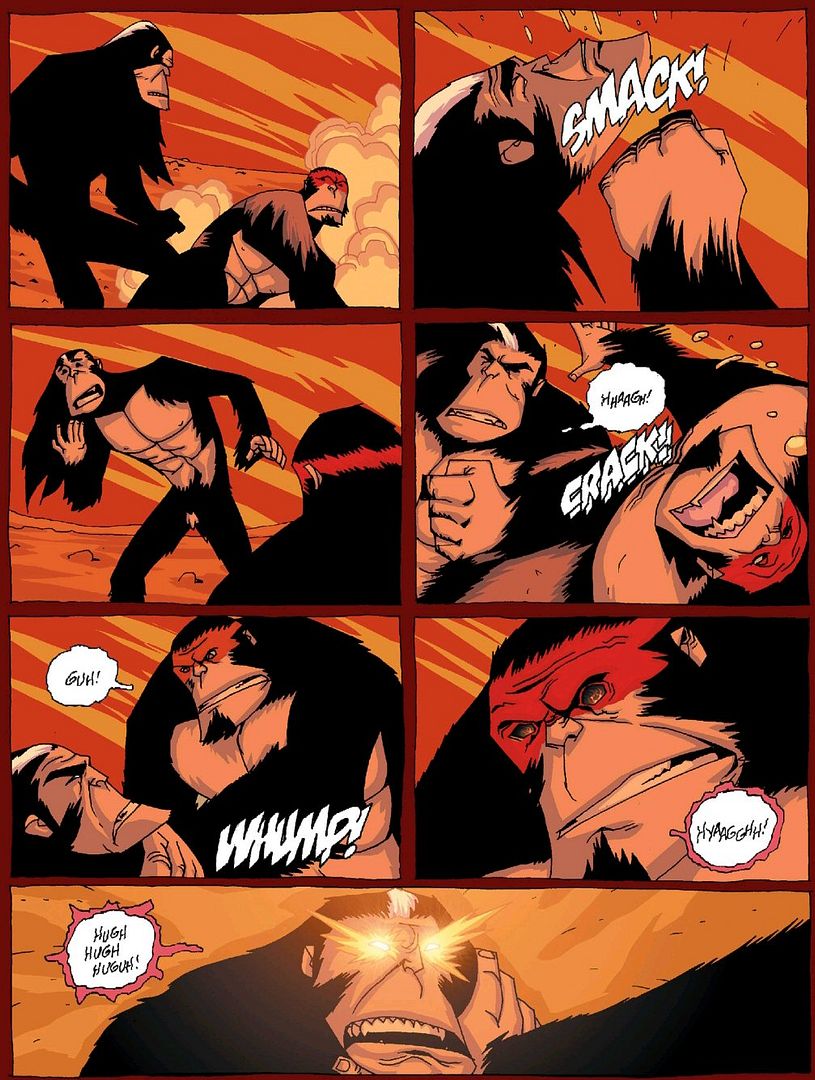
One of the two (identified by a red band around the eyes) is clearly the aggressor, and the other is more of a protector (identified by a white streak on his forehead). Through their struggles, they both discover and unleash their own unprecedented powers – presumably becoming the first two Powers on Earth. Their fight ends in a stalemate, and they simply part ways (after causing much destruction around them). The red band man-ape was the recurring series arch-villain The Wolf, and the white streak would become the hero we know as Christian Walker.
Their feud would carry on through the millennia, as both now-immortal beings continued to change along with their species’ evolution. Note that many early readers were likely confused about this point, as this co-evolution was only explained in depictions five years later in Powers Annual Vol 1, issue #1 (2008):
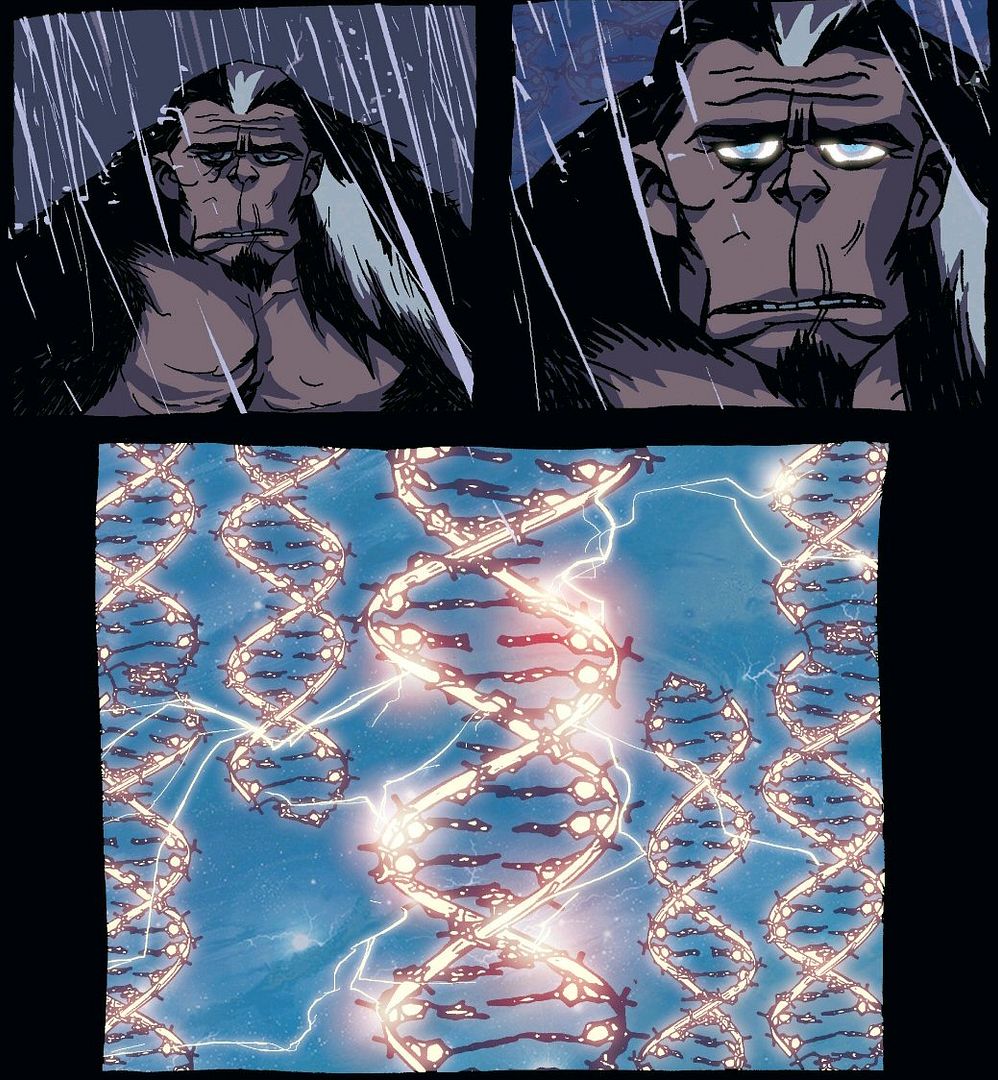
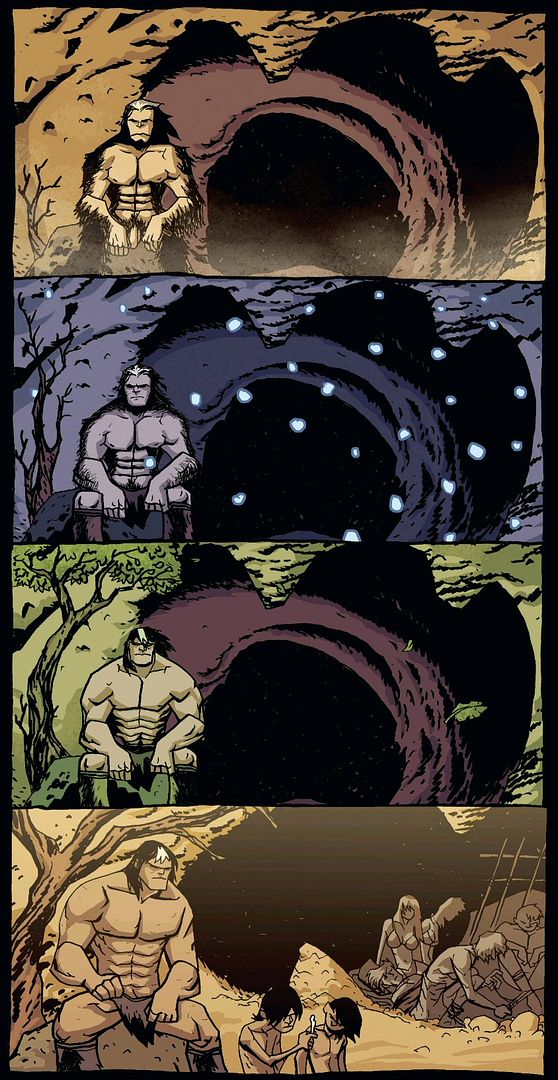
Eventually, Walker mutated into a modern Homo Sapiens human (with Powers – you can see a full list of his abilities on the old Powers Wiki site here). The next several issues of the origin story arc – Powers Vol 1, issues 32-36 (2003-04) – describe Walker’s journeys through ancient time periods (including meeting early incarnations or younger versions of several of the Powers women he has had romantic relationships with in modern times).
There is a great issue – Powers Vol 1 issue #34 (2003) – where Walker seeks out Albert Einstein (!), to explore the nature of his condition:
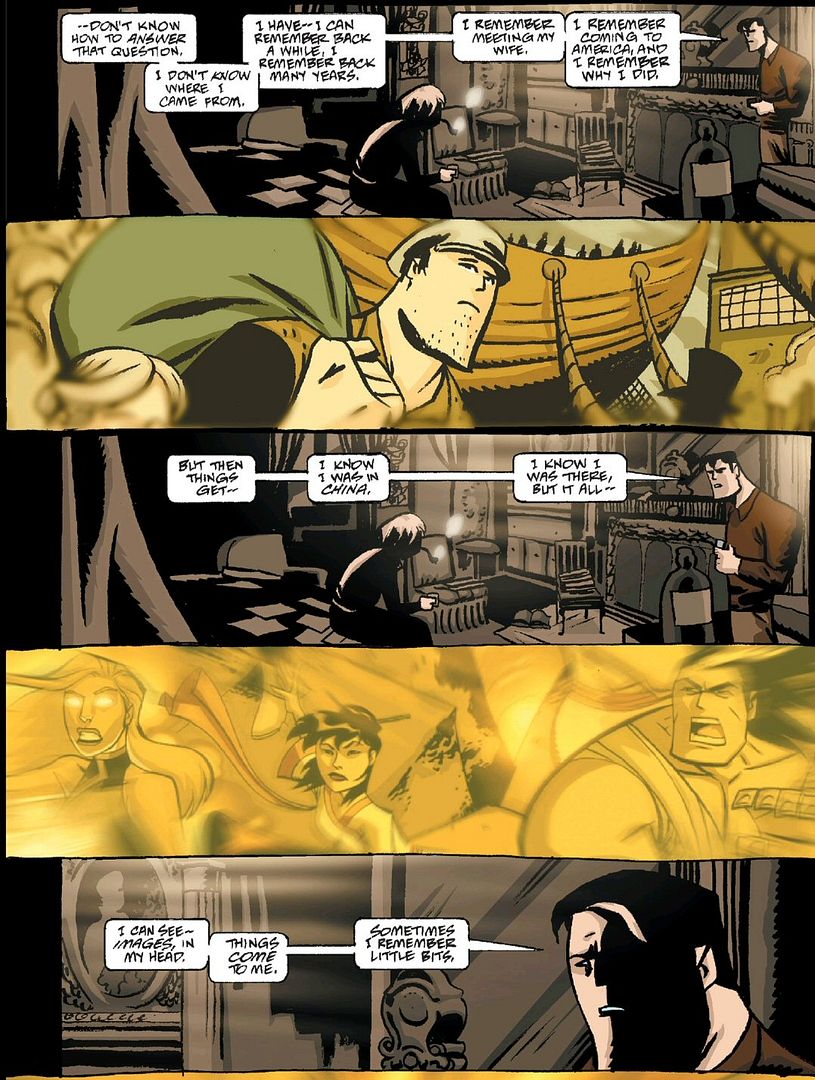
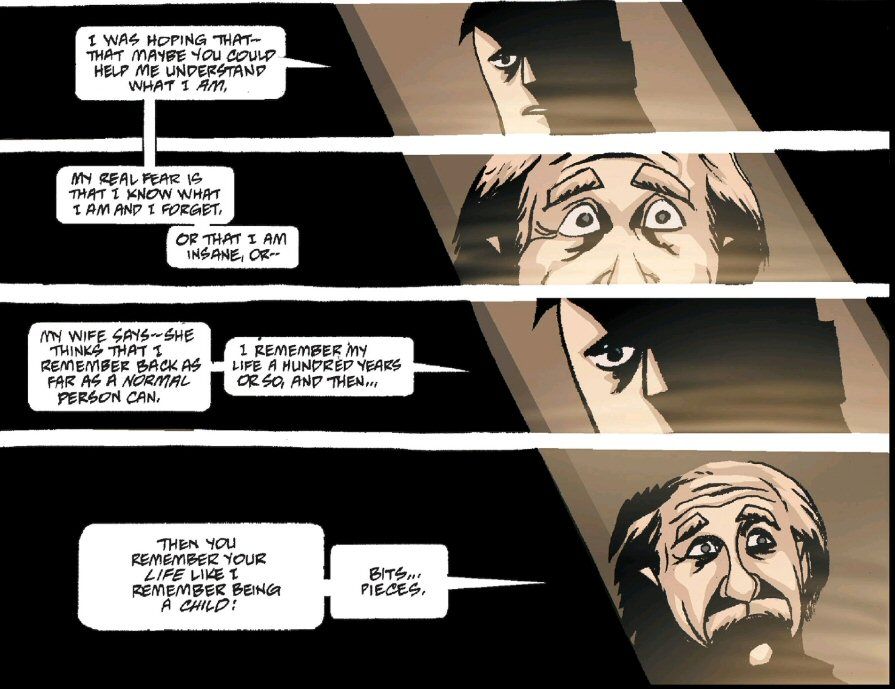
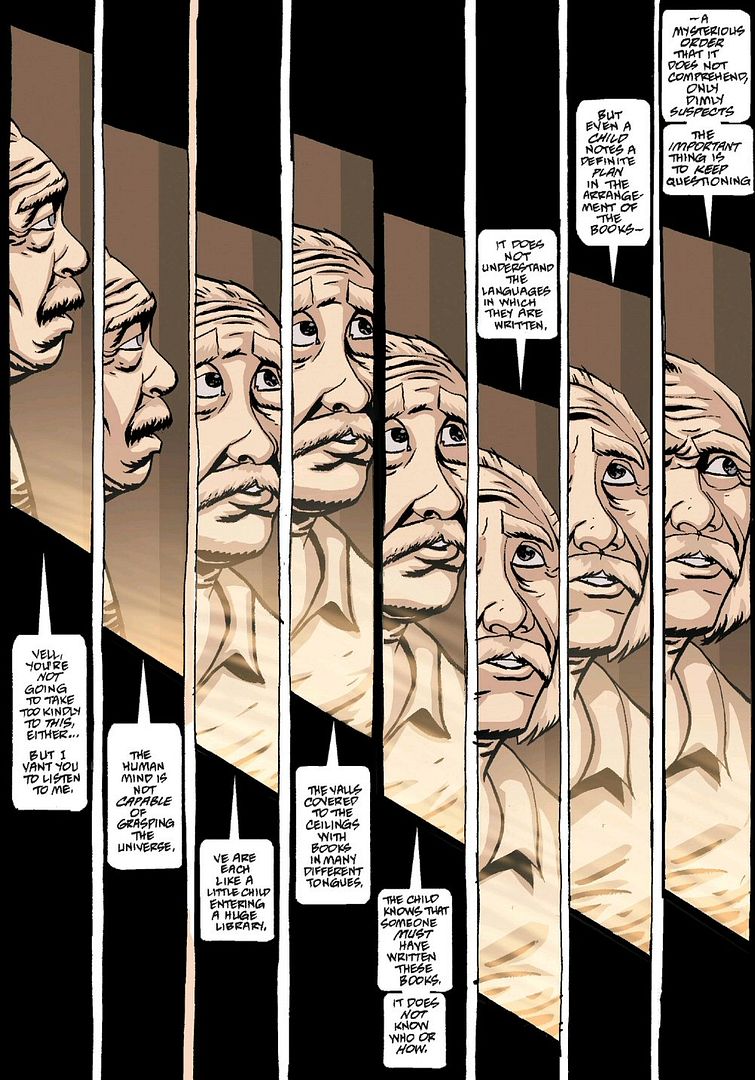
I love the way this is illustrated (like volumes on a shelf!). But consider the horror of it – Walker cannot remember his past, doesn’t know where he came from, and keeps forgetting the things that he does learn along the way (including, presumably, the insights above). This raises a critical question for normative ethics – if you cannot remember your past, can you still learn from it and be better (a core feature of virtue ethics)? I will come back to this point in a moment.
Some of the other Powers have much longer memories, like Zora and Agent Lange (and the Retro Girl re-incarnations). But more problematically for Walker, Wolf has an extensive memory of his immortal life. Wolf repeatedly hunts Walker down across time periods and provokes him (often by killing those closest to him, especially any sexual partners). Wolf’s motives for this are not entirely clear, but seem to involve his belief that they are gods and should not be bound by mortal rules. Most of the time, Walker is unaware of who Wolf even is (as too much time has passed since their last encounter).
The exception is the time Wolf confronted Walker during his Diamond hero days, where Walker still recollected him. Fighting to their usual stalemate, Walker had another plan up his sleeve. He lured Wolf to Triphammer’s lab, where the first prototype power drainer had just been completed. After turning on the power drainer in issue #36:
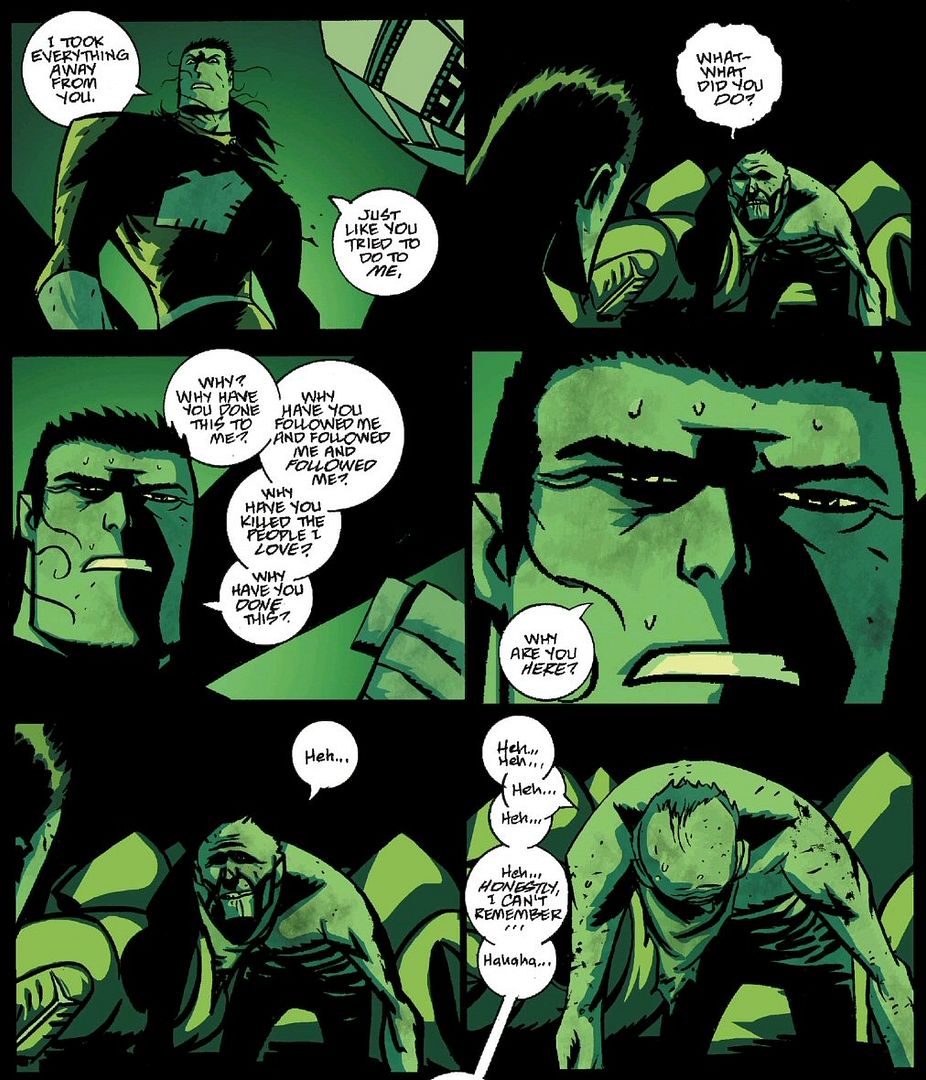
It seems at this point that even Wolf doesn’t know why he is compelled to come after Walker. Despite his weaker physical state, he continues to fight Walker – and in the ensuing struggle gets thrown into the power drainer, causing an explosion:
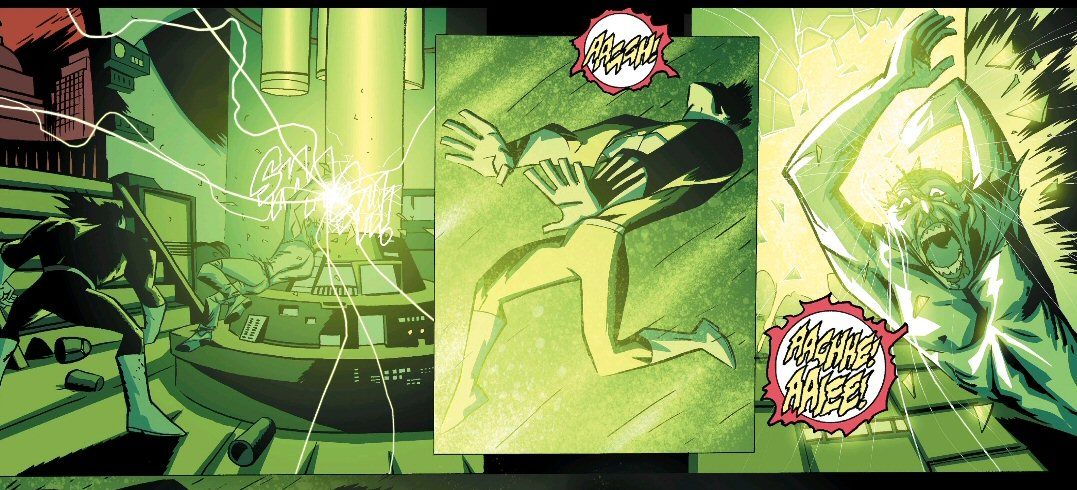
The proximity to the explosion appears to make the loss of powers permanent for both of them – although Wolf eventually regains his abilities and comes after Walker again, back in the present time of the first volume’s finale, Powers Vol 1, issue #37 (2004):
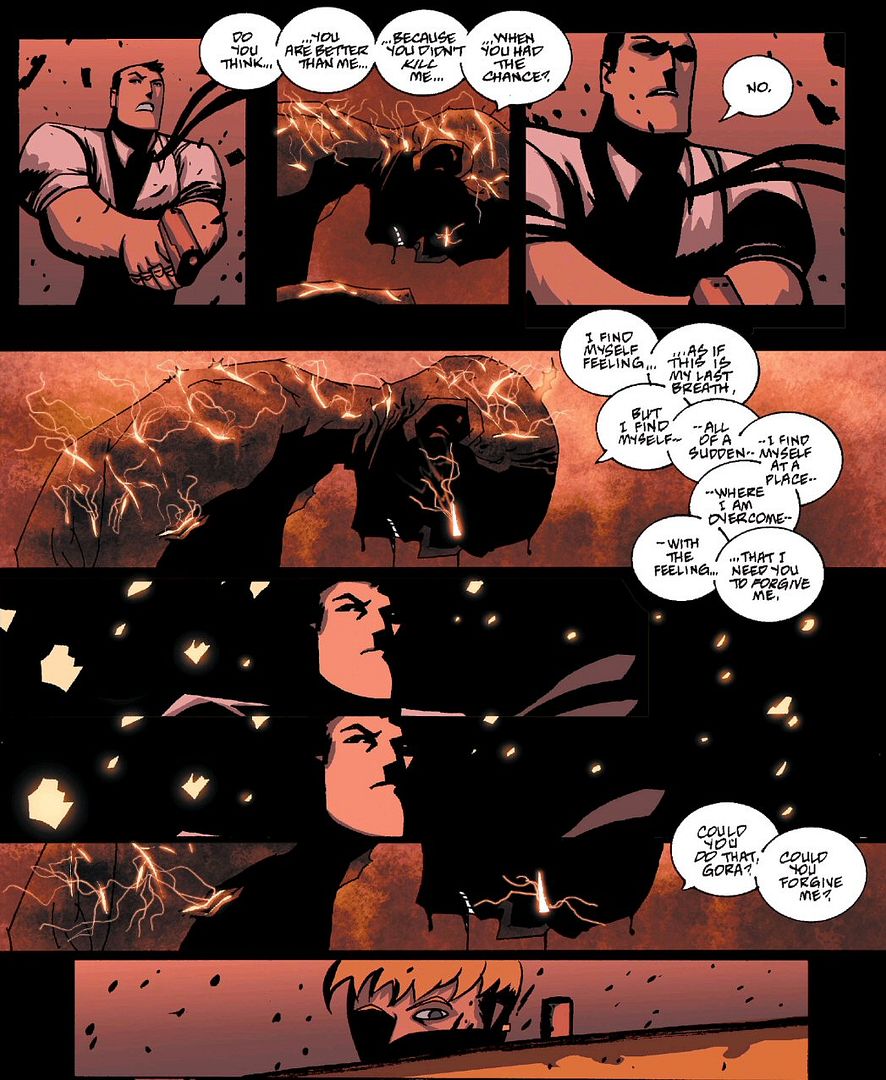
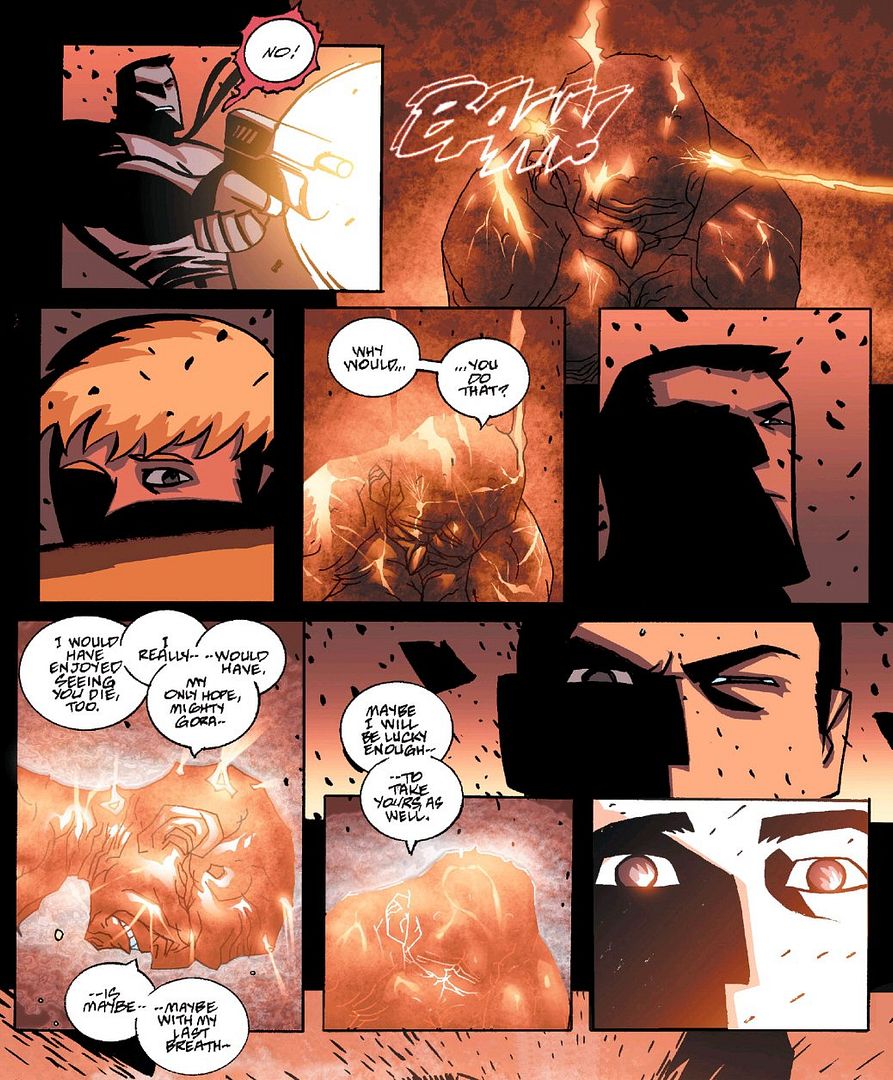
While this seems to be the end of Wolf, we see him again in flashback sequences in several future volumes. And eventually, he returns in a reincarnated form for the end of Walker’s story in the Powers: The Best Ever (2020) graphic novel:
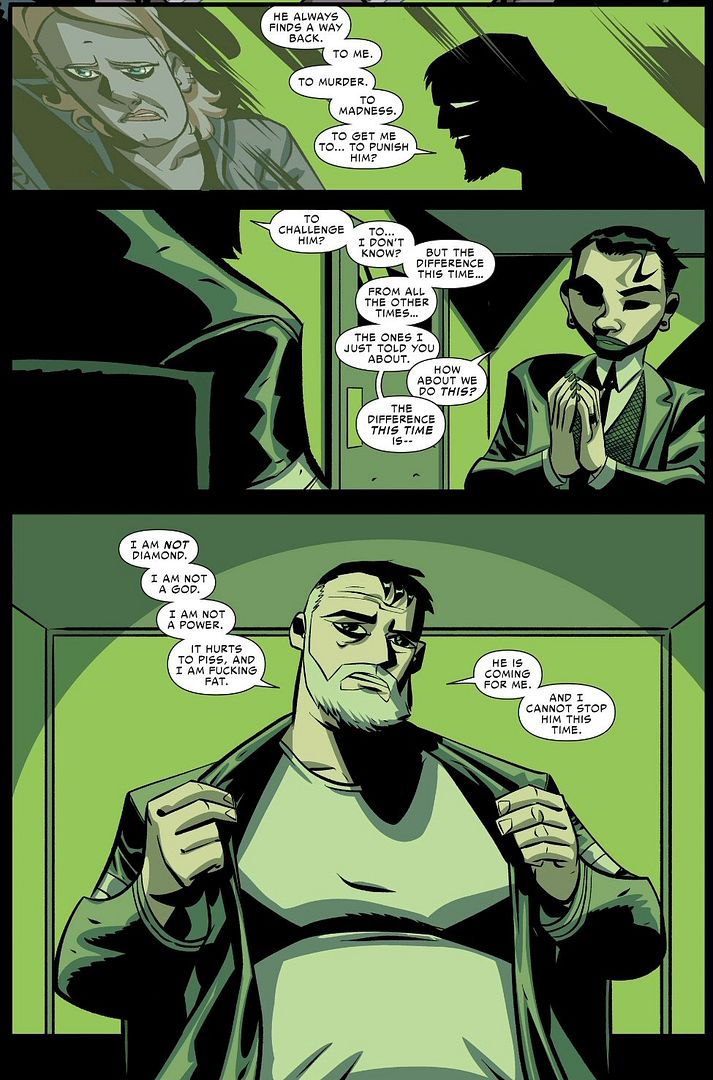
Somewhat conveniently, Walker reveals that Triphammer left him a failsafe device in case Wolf ever came back. In the end, Walker sacrifices his life to eradicate Wolf (hopefully permanently). Despite the funeral held for Walker, is this really his end? I guess we will have to see what Powers 25 Vol 1 brings.
As I suggested above, Walker’s journey across this series is strongly suggestive of virtue ethics. Classic virtue ethics – such as the Aristotelian form that I describe in my A.X.E.: Judgment Day conclusion and my Thor ethics overview – is predicated on striving for eudaimonia (a generalized sense of well-being not usually achieved in comic books!) and strengthening one’s character. One goes about that by the habitual practice of virtues aligned with your core values. Is that still possible for someone with limited memory? I believe it is – so long as your core values don’t change significantly.
Something that impressed me from early on with Walker’s character is how he always treats other people respectfully – regardless of how “important” they might be. Consider this early scene where a rookie beat cop is awed by him, and trying to impress him. From Powers Vol 1, issue #14 (2001):
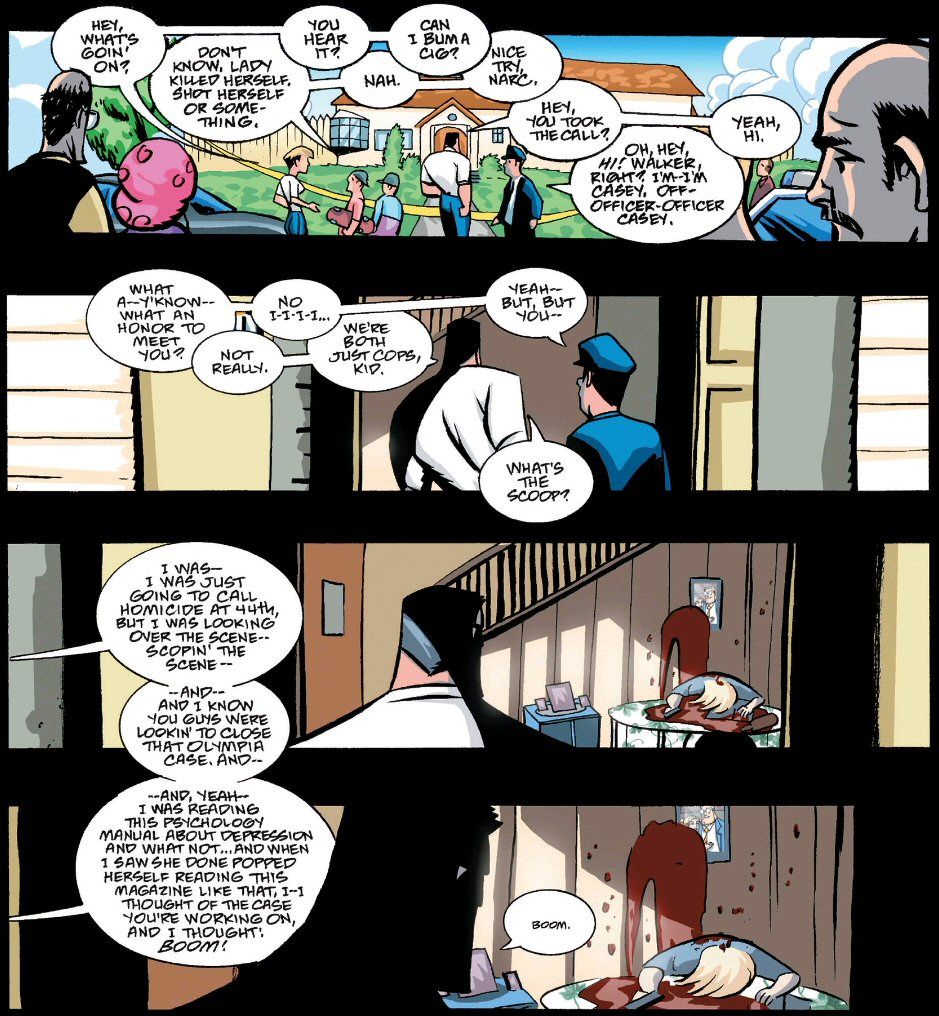
Walker immediately downplays his own celebrity (“we’re both just cops”). Of course, things don’t go so great for officer Casey once Pilgrim arrives:
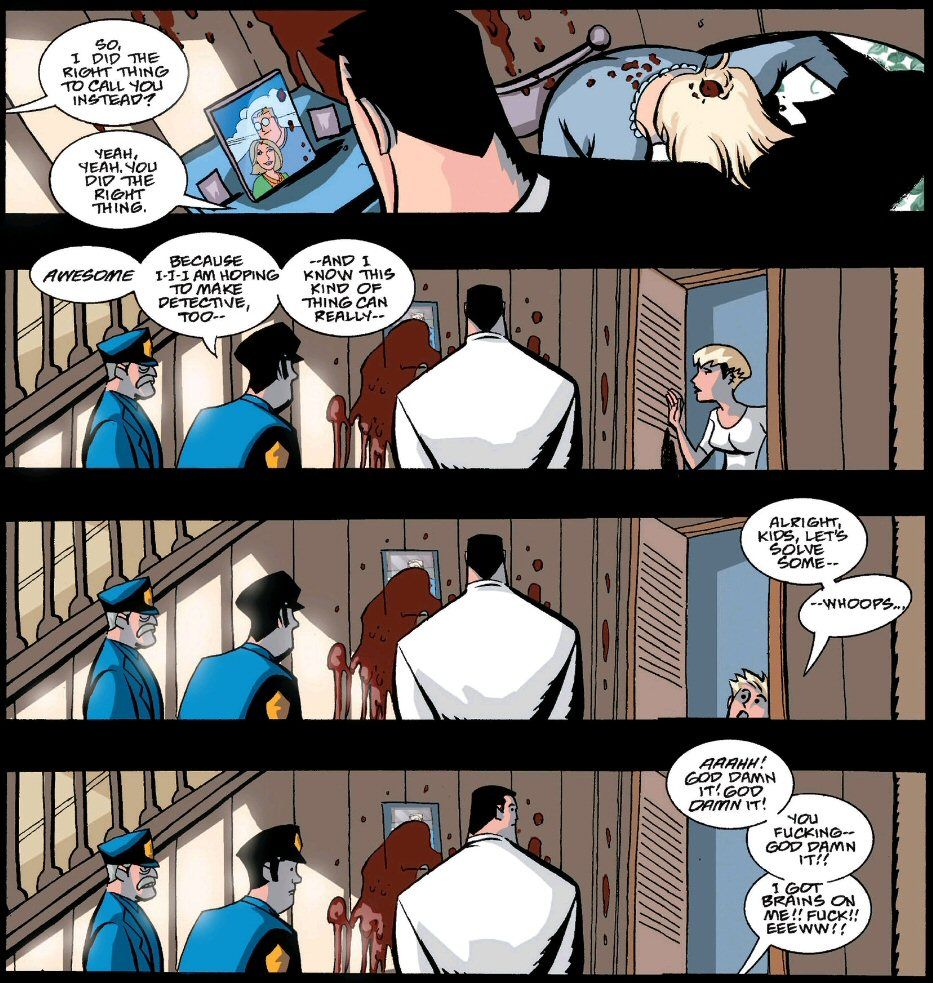
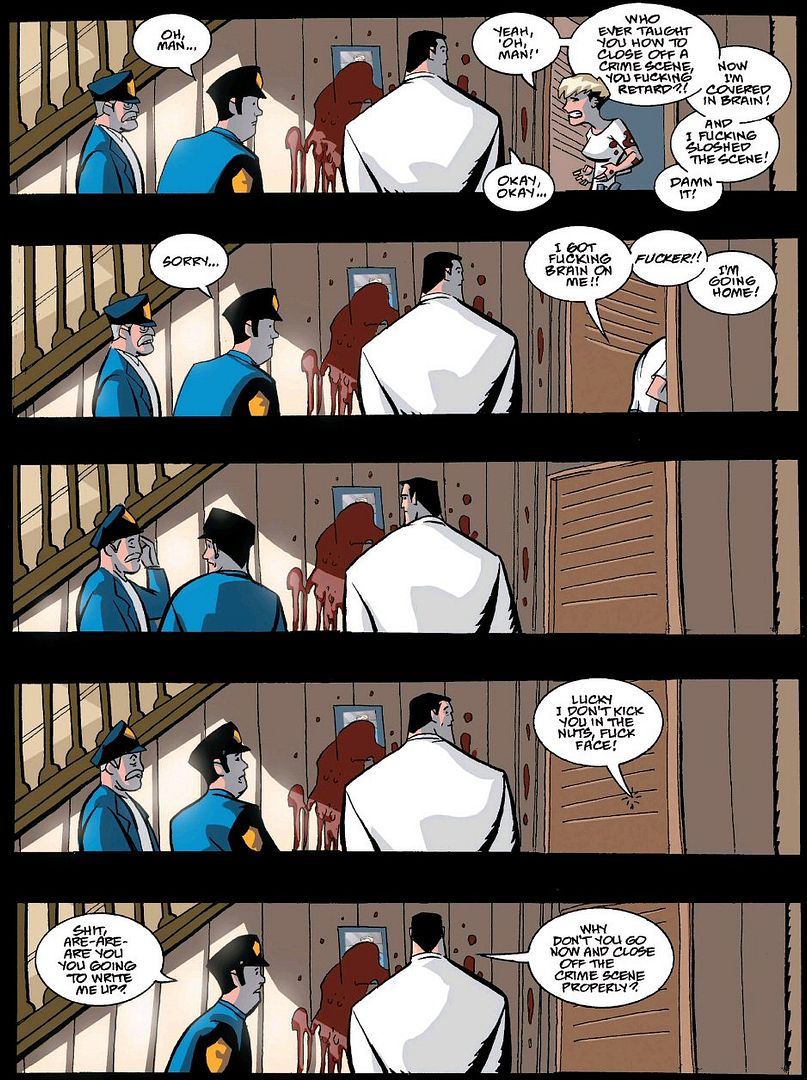
But I find this subsequent exchange revealing of Walker’s character:
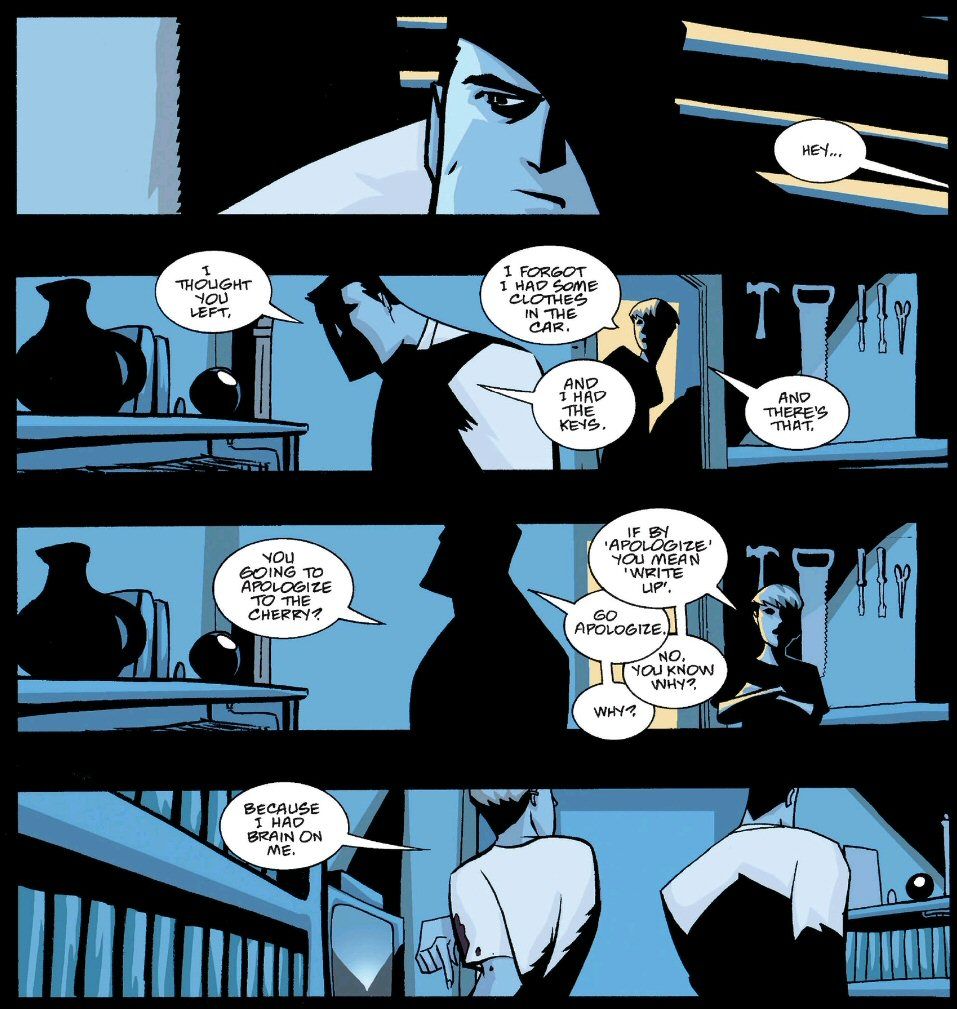
Although Walker refers to the rookie cop by a nickname in this instance, I note that he consistently remembers – and uses – other officers’ names throughout the many volumes of this series. He also repeatedly reminds Pilgrim to apologize when she treats them disrespectfully. Consider this later scene where a beat cop has again failed to fully secure a crime scene. From Powers Vol 2, issue #20 (2006):
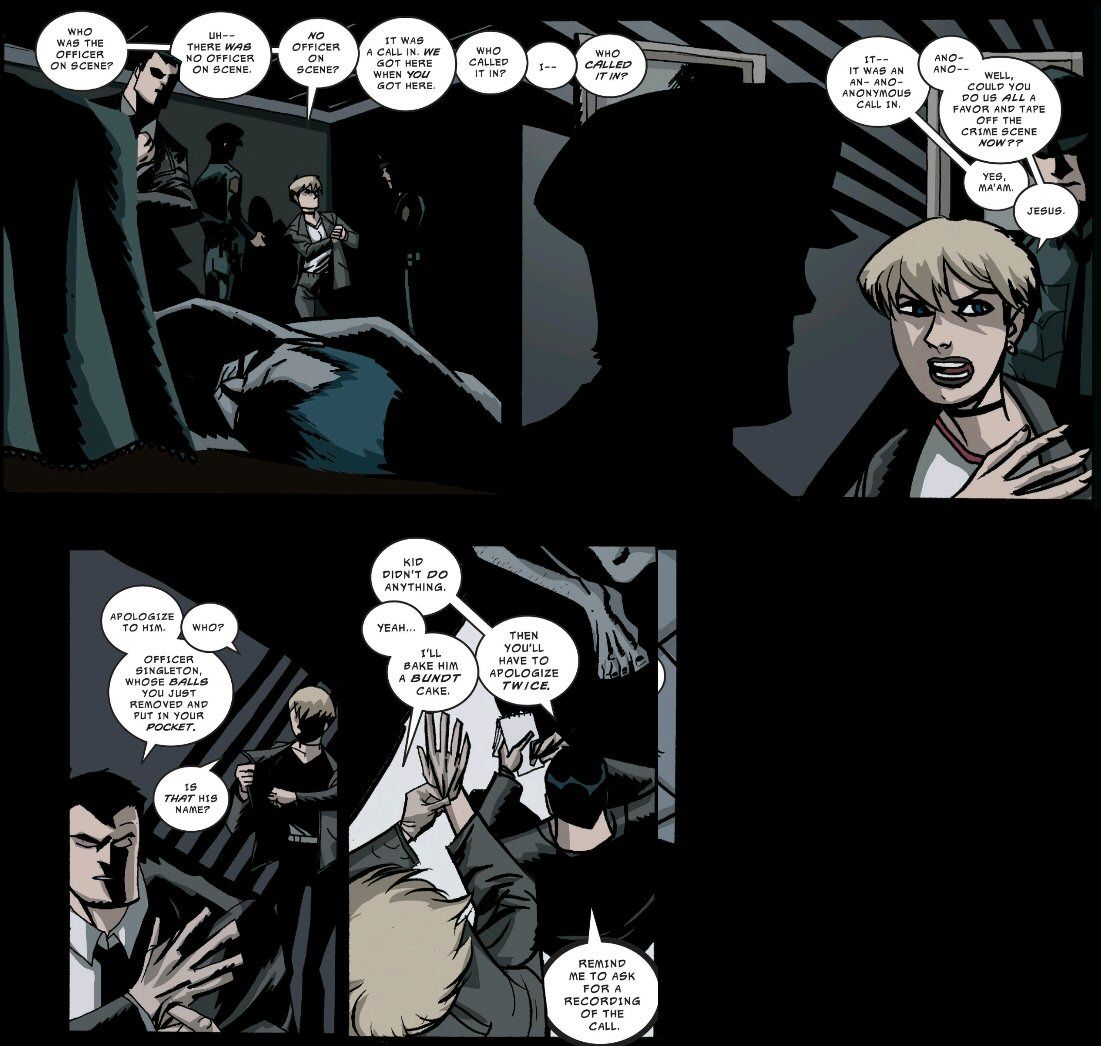
Although these might seem like small points, these repeated scenes show how Walker continually practices virtuous behaviors in his current life. As they become habitual, they become natural and self-sustaining. They also have a positive effect on others (I seem to recall a later issue where Pilgrim agrees to apologize to a cop at Walker’s urging, but I can’t seem to find the issue now).
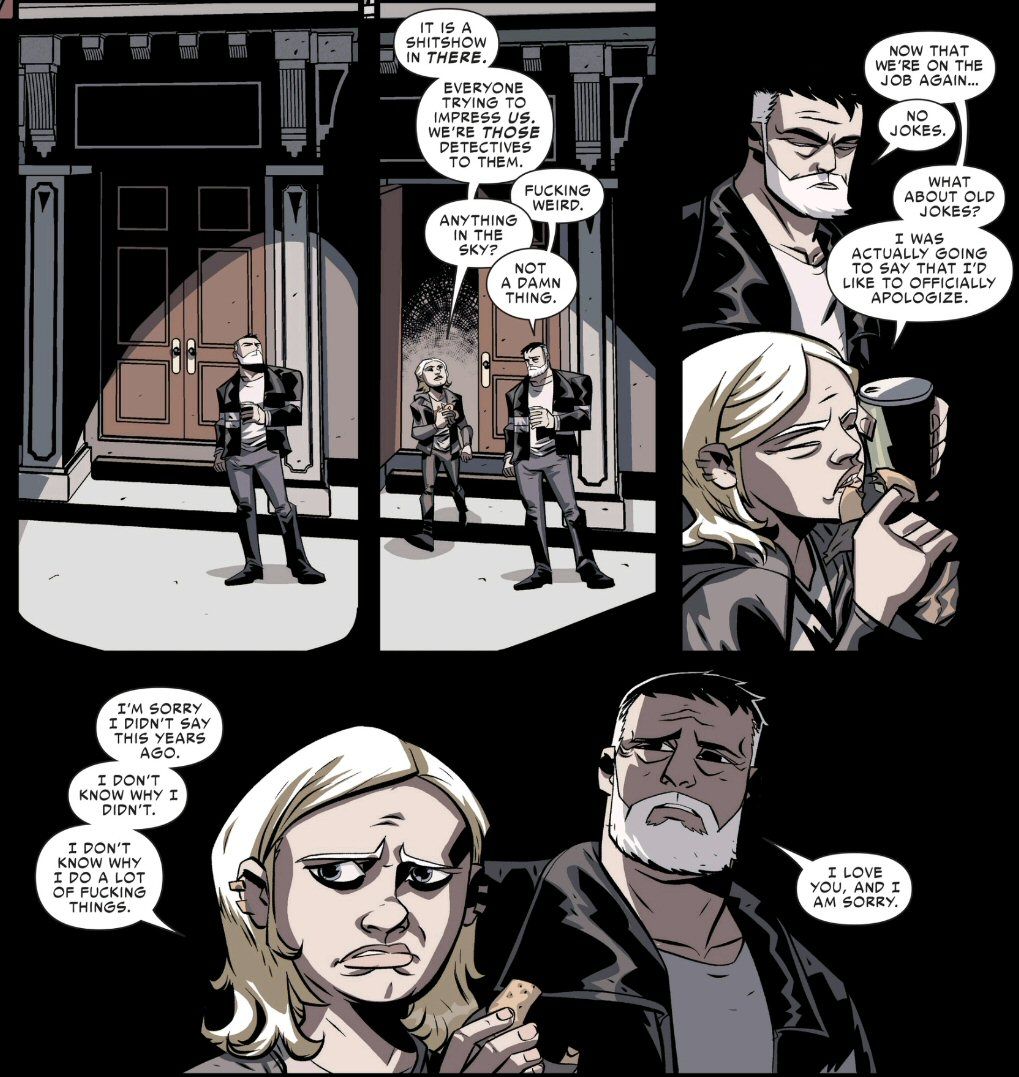
Walker demonstrates many classical virtues, like justice, courage, truthfulness, generosity and patience. These help to explain why so many characters look up to him and ultimately come to love him. Consider this later scene with Deena Pilgrim, from their last story together after a prolonged absence, Powers: The Best Ever (2020):

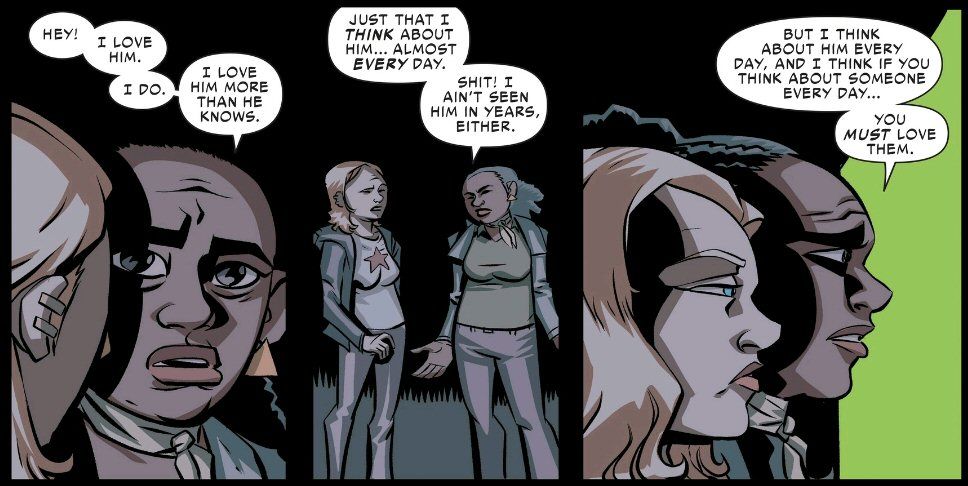
And Enki Sunrise from the same issue:
Check out my Retro Girl entry for an additional example in support of the virtue ethics effect he has on others.
But that is not say he doesn’t have his problems as well. For example, it would be a mistake to take Walker’s serious and reserved nature as a sign of Stoicism – a form of virtue ethics I have discussed a number of times on this site (see my Absolute Wonder Woman post and my 8 Deaths of Spider-Man for good examples). No, something else is going on here: Walker is actually quite emotionally repressed and often refuses to admit or discuss his feelings (until that final story with him above).
This is unfortunately another form of habitual act, and one that repeatedly leads to bad outcomes for him. When the going gets tough, he has a tendency to walk away from his career and friends. I count four times when this occurs over the present time of the comics – plus numerous flashback sequences where you see him do it in previous time periods as well. In many of those times, he descends into alcoholism and casual sex with strangers (which often has its own negative consequences!). It is a painful, recurring theme – and one that shows the limits of his virtue ethics.
The last point I would like to make about Walker – and it is a crucial one – is how he represents the antithesis of the series’ central ethical theme that I introduced earlier: power corrupts. Consider the question of why he wanted to lose his powers in the first place. From Powers Vol 1, Issue #35 (2003):
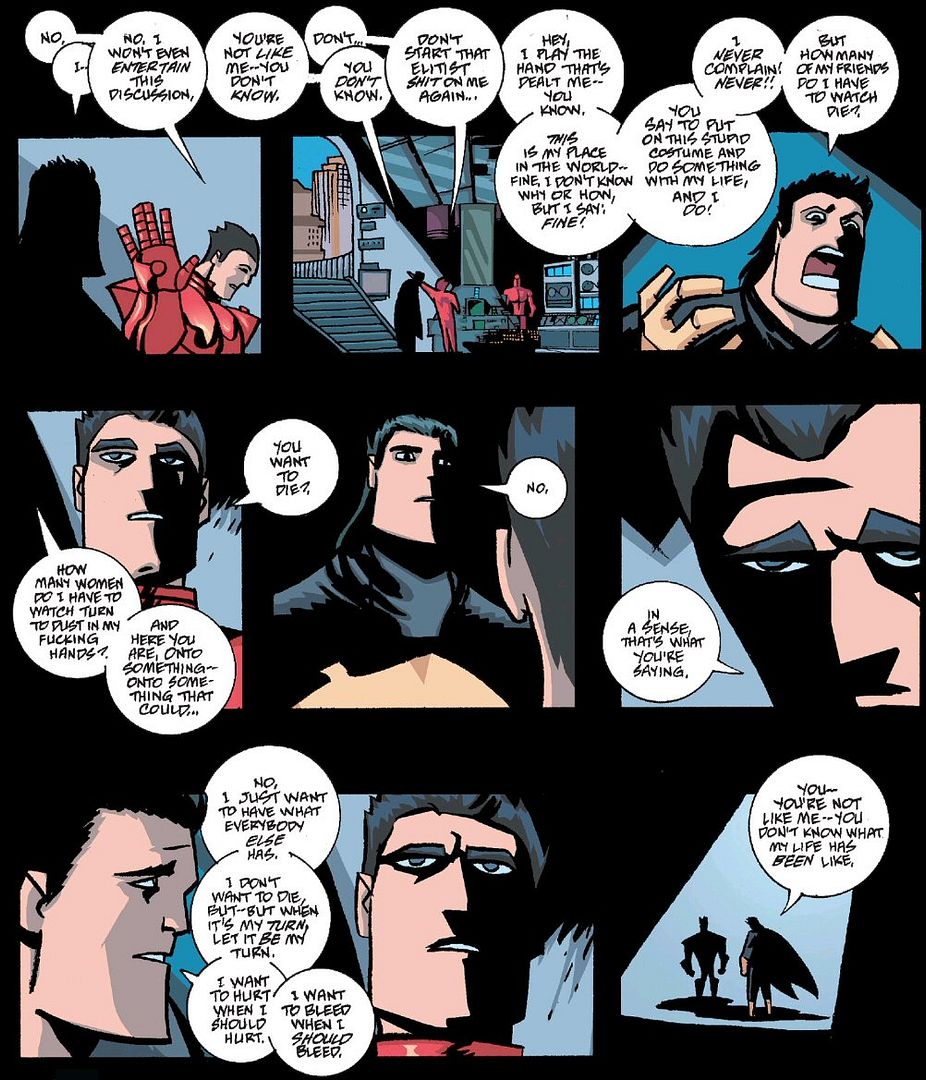
Walker’s early sense of deontological duty and his modern virtue ethics character make him in a hero. But his unique perspective on life has also allowed him to understand both the personal intoxication of power and the frustration of not being able to fundamentally alter things permanently for others. And so, he desires a deliberately powerless existence, in part to maintain his moral sense.
And he accomplishes this – when he does subsequently become depowered, he chooses to use his unique skills and experience as a police detective, thus still continuing to do heroic work despite the personal costs. When new powers are provided to him later, he is willing to sacrifice them too when he feels it will serve a greater good (a sign of utilitarianism, the main form of consequentialism). From Powers Vol 3, issue #5 (2010):
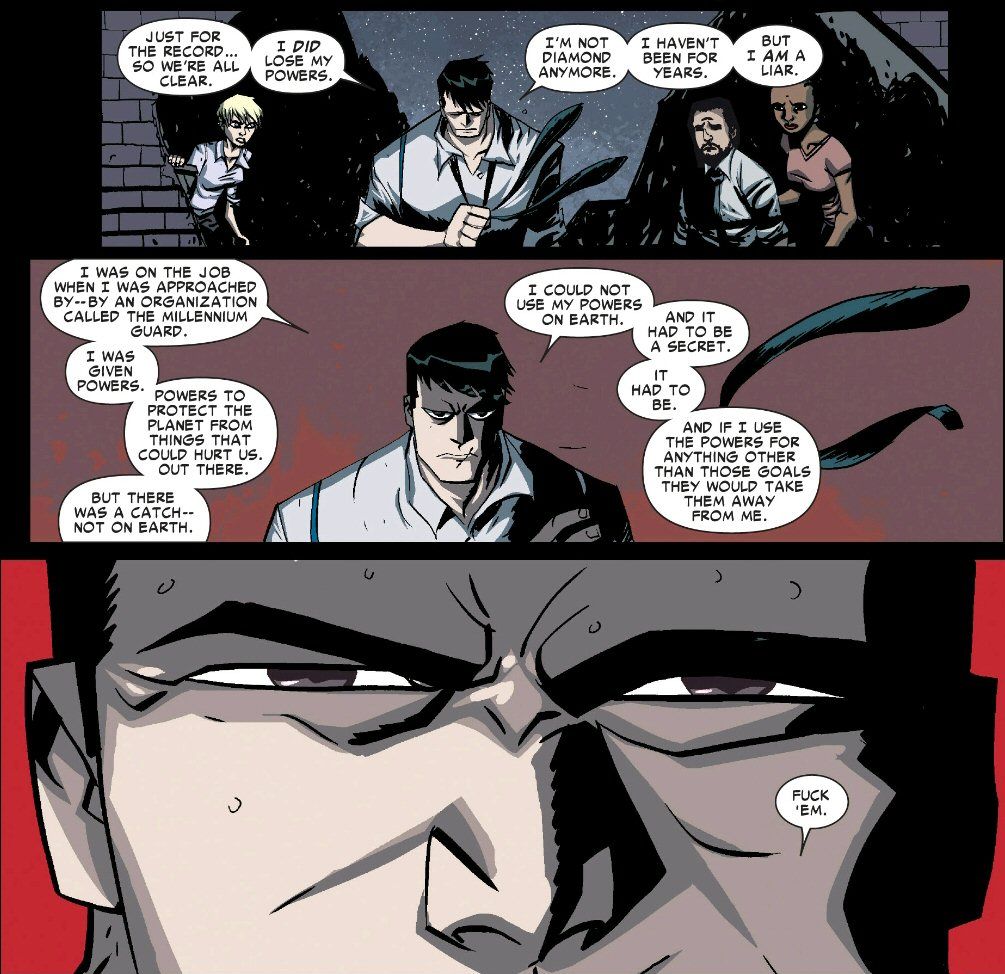
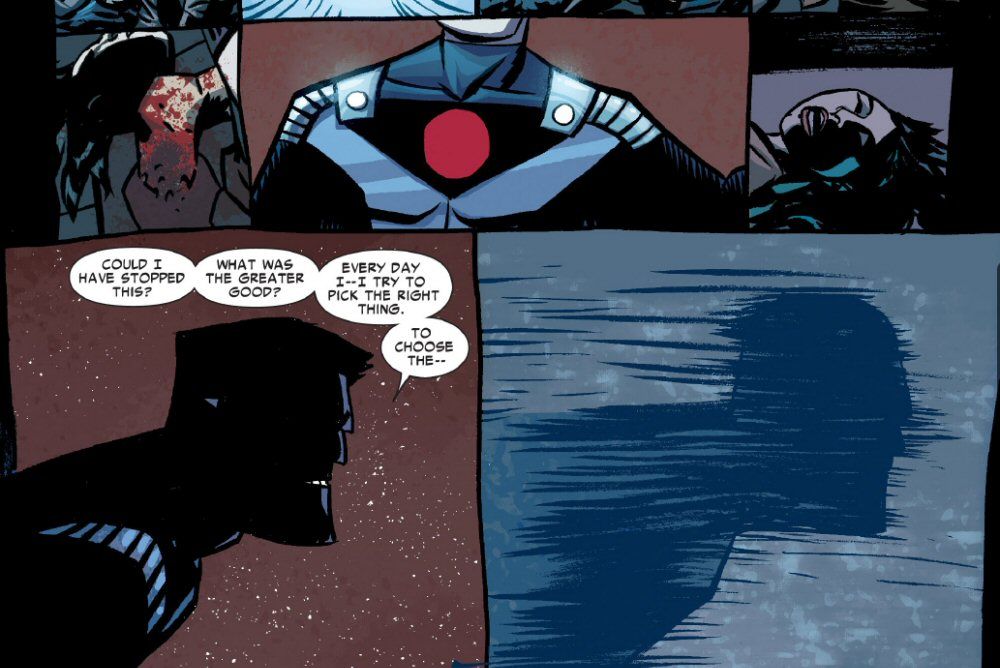
Yes, he struggles between consequentialism, deontology, and virtue ethics (as do we all). But he dusts himself off and puts himself back out there, doing whatever he can.
This is the key to his moral character. Whatever his challenges, whatever impossible choice he has to make, he ultimately chooses to face it. Even when it means the end of his impossibly long life, as it does when he defeats Wolf one final time in Powers: The Best Ever (2020).
And like any person with a strong sense of virtue ethics, the effect he has on all the other characters is huge, as I will describe below.
Deena Pilgrim
Pilgrim is very much the other half to Walker – she is the Yin to his Yang, the shade to his sun, the feminine to his masculine. And I find her ethical story arc even more interesting in many ways – given the trauma she is subjected to, and how she responds to it.
In the beginning, she seems to be a competent if inexperienced detective – and over-compensating with an over-the-top persona. From the very beginning, we are exposed to her acerbic wit and withering put-downs. As previously mentioned, she is very consequentialist in her moral thinking, prizing the outcomes over the means – in contrast to Walker’s early deontological approach. For Pilgrim, it seems almost anything goes, as long as there is a good outcome – although she does show considerable empathy for the victims of crime in those early stories.
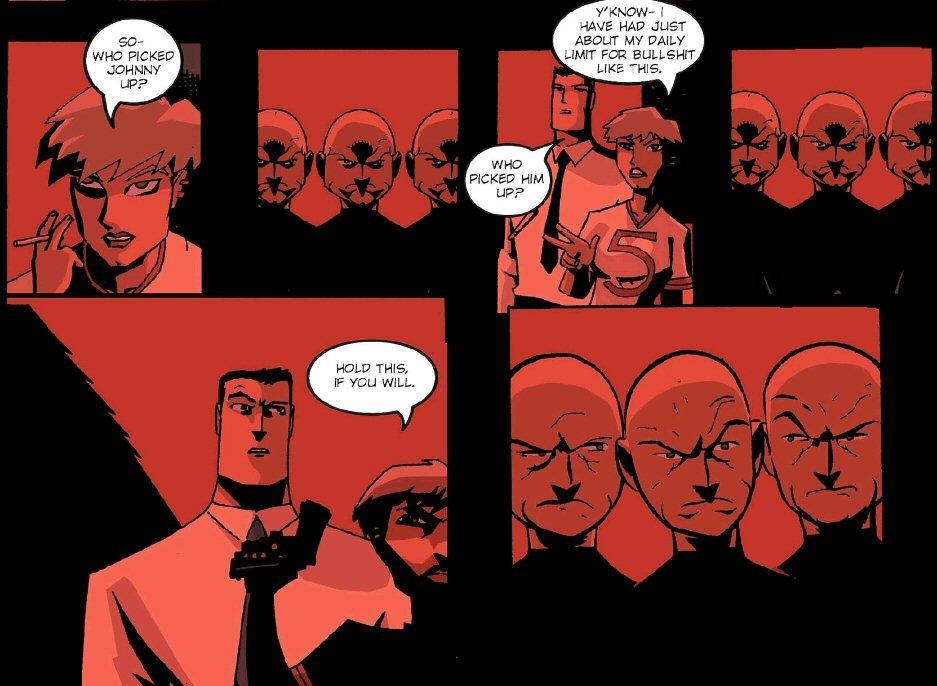
She is also capable of great violence. Consider this early scene where the henchmen of Powers mob boss Johnny Royale refuse to talk to them, even about a minor question. From Powers Vol 1, issue #2 (2000):
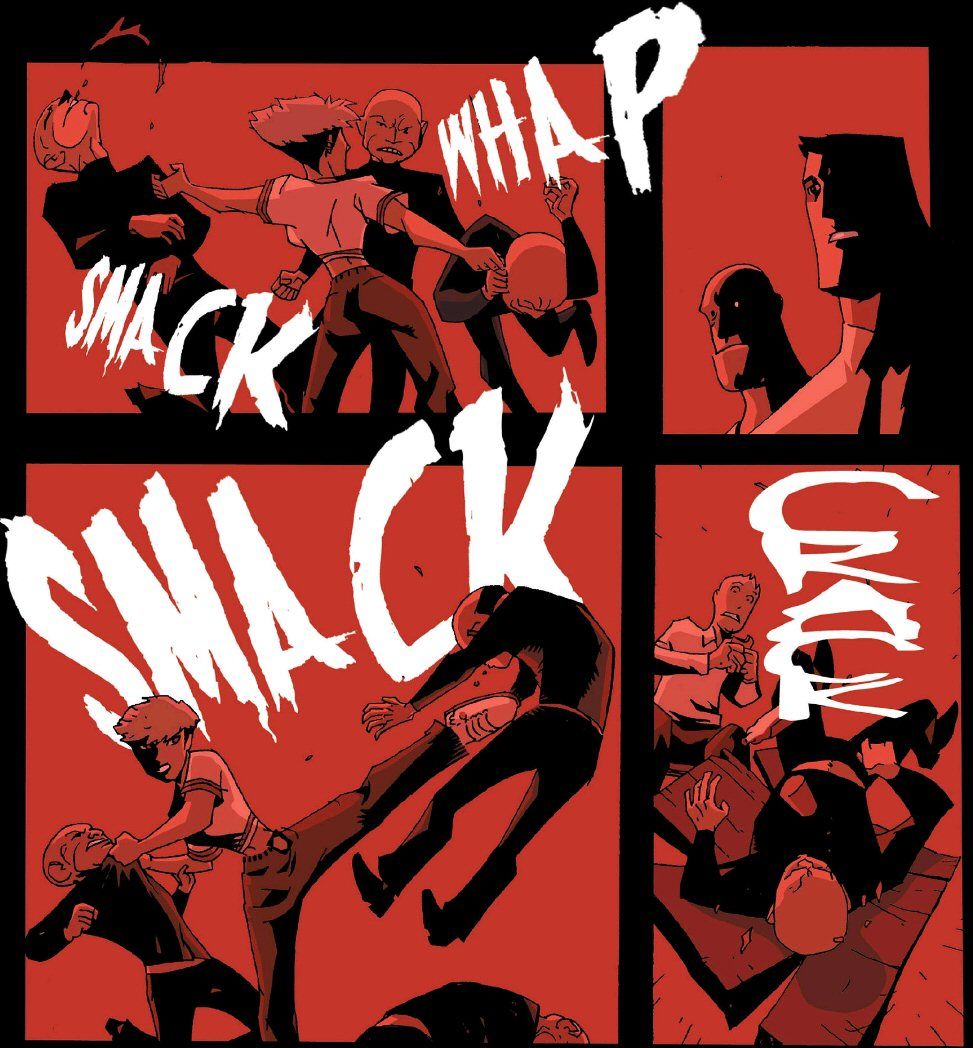
A page or two of beat-downs later:
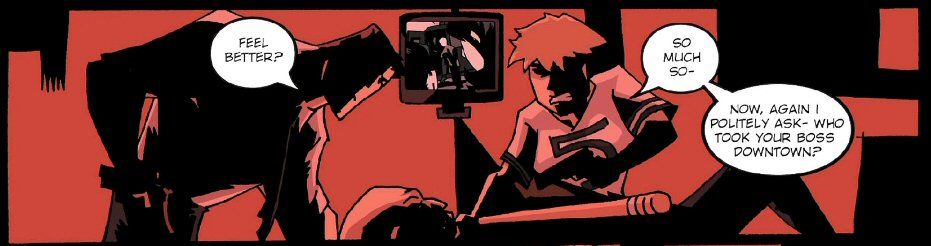
There is no justification or need for this violence – except to show off her facility with it.
Incidentally, the use of a baseball bat is a reoccurring motif for Pilgrim. Consider this scene from the start of the second volume, where Walker and Pilgrim have just captured a cop-killer with powers. Note this scene takes place in custody, under power dampers, with the suspect’s hands handcuffed behind his back. From Powers Vol 2, issue #2 (2004):
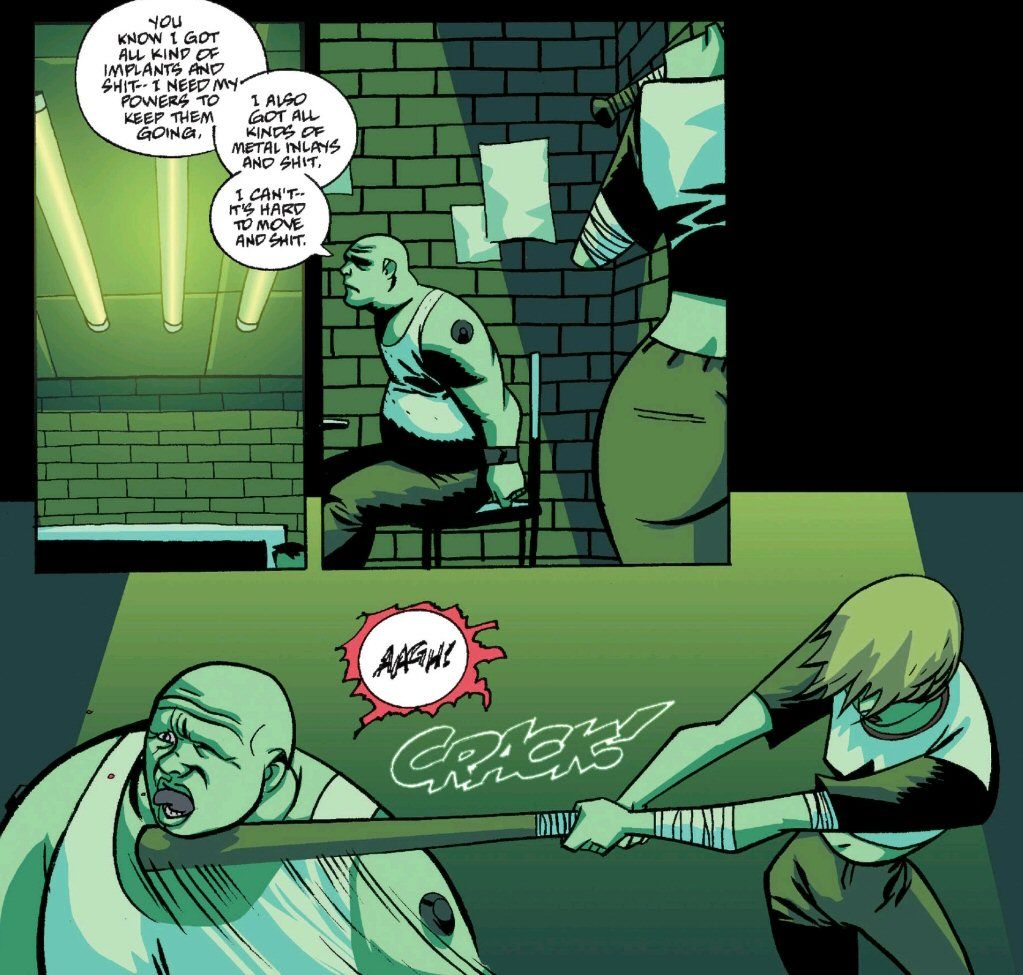
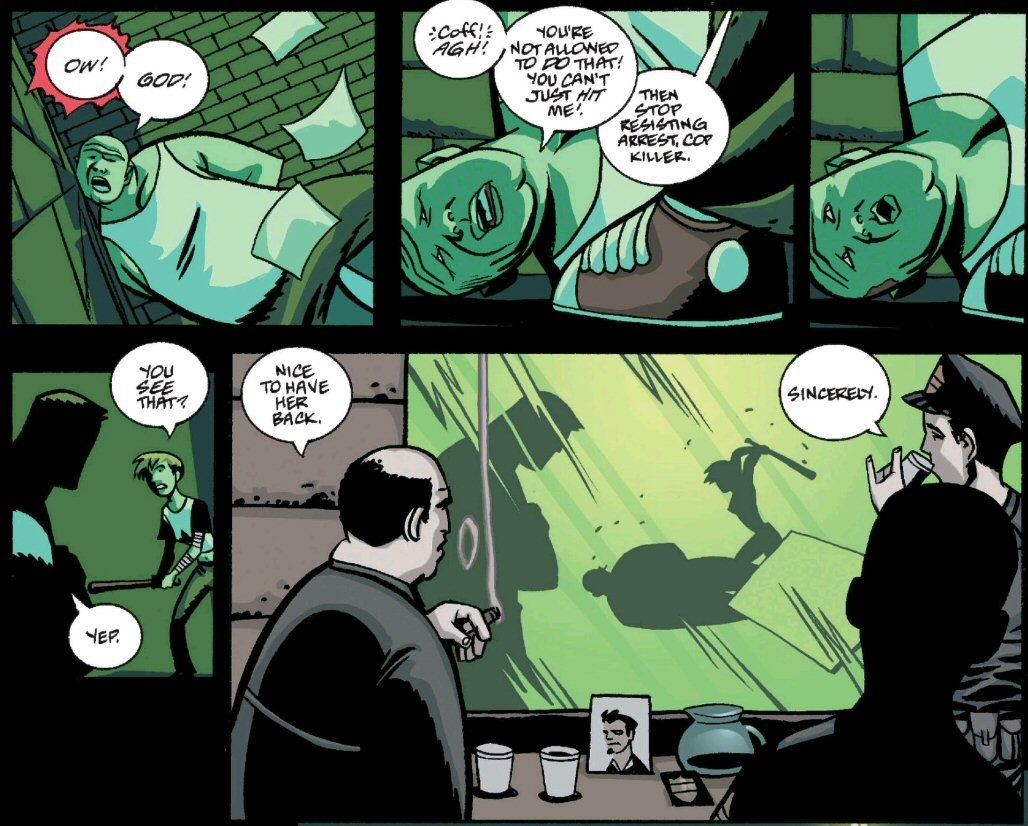
Not only is the use of violence extreme but note how all the police (including Walker and their Captain) encourage and support her actions. This relates to what I alluded to earlier – the severe disadvantage the police find themselves in when dealing with Powers suspects has a corrosive effect on all their moral judgments. Especially when a fellow officer (first volume series regular Detective Kutter, in this case) was just killed without justification by the suspect, simply for responding to a call. The tacit and explicit support of her fellow officers has a worsening effect on Pilgrim’s moral compass here.
Interestingly, Pilgrim’s background is eventually retconned at the end of this second volume a few years later. I will explain the context for what she suffers through (and does) across this volume down below. But the key point here is that at the end, Pilgrim is effectively pardoned from any responsibility for her violent actions, including unsanctioned murder (as a sort of involuntary “temporary insanity”). Sharing a quiet moment with her Captain, she reveals a previously unknown story about her family history. From Powers Vol 2, issue #30 (2008):
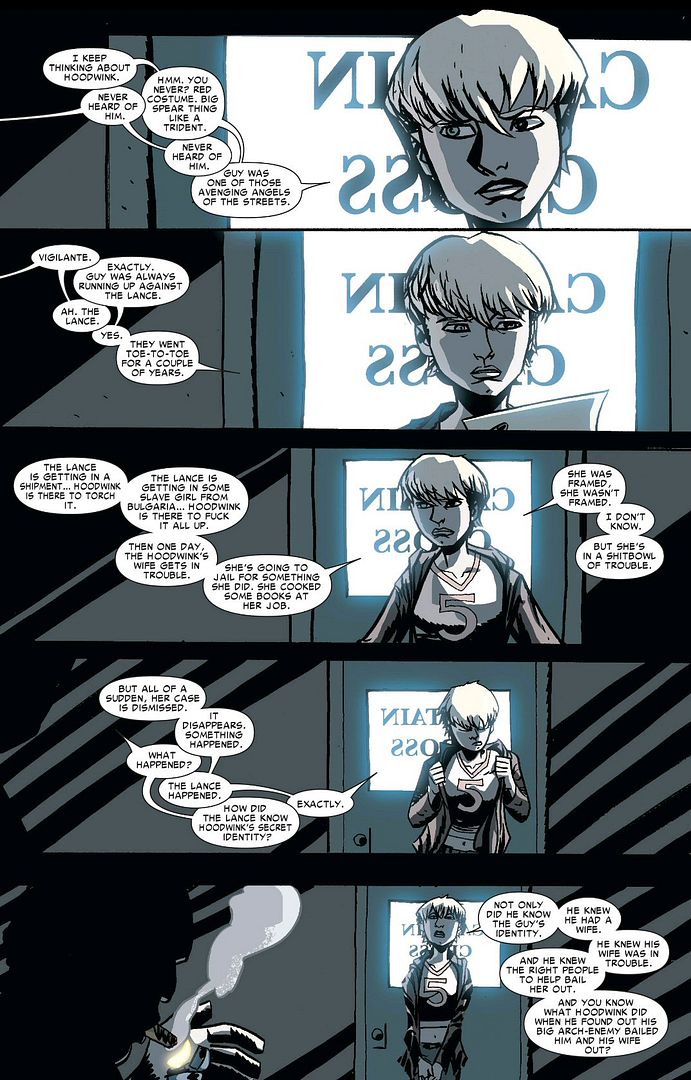
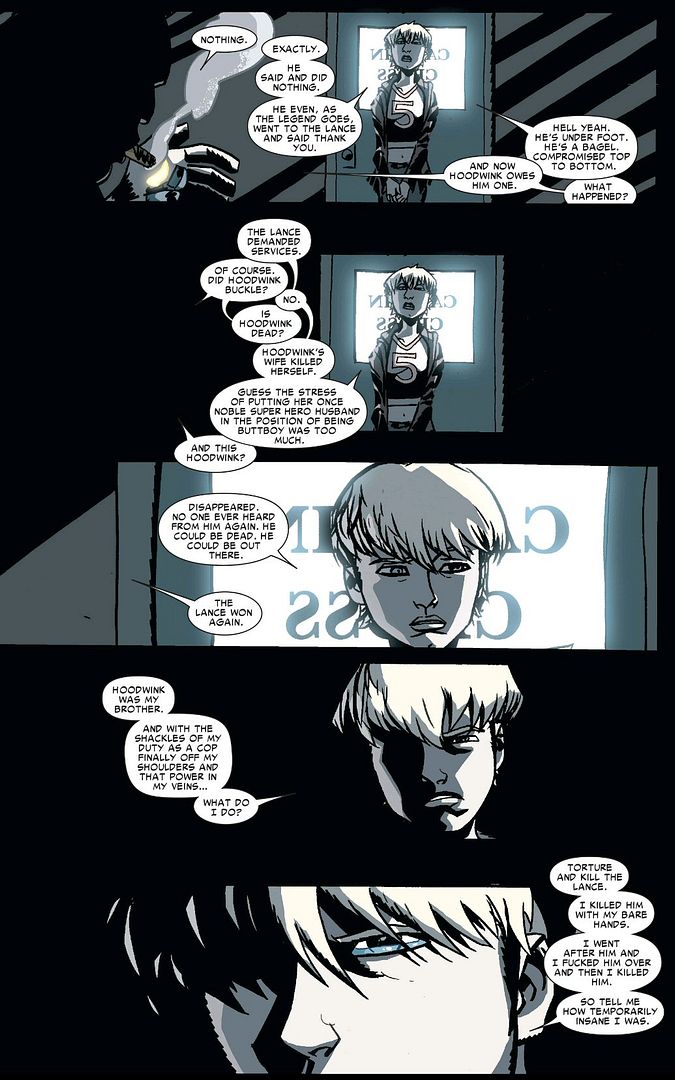
This revelation helps place her violent actions in better context (I love how the art shifts to black panel backgrounds for the reveal). But let’s walk through the trauma she suffers across the series’ time frame. And fair warning right now, it is very disturbing imagery.
Beginning early in the first volume, she has a run-in with that mob boss, Johnny Royale (who has a massive lawsuit ongoing against the department for previous harassment). Pilgrim gets fed-up when he keeps using his teleportation powers to avoid questioning. From Powers Vol 1, issue #9 (2001):
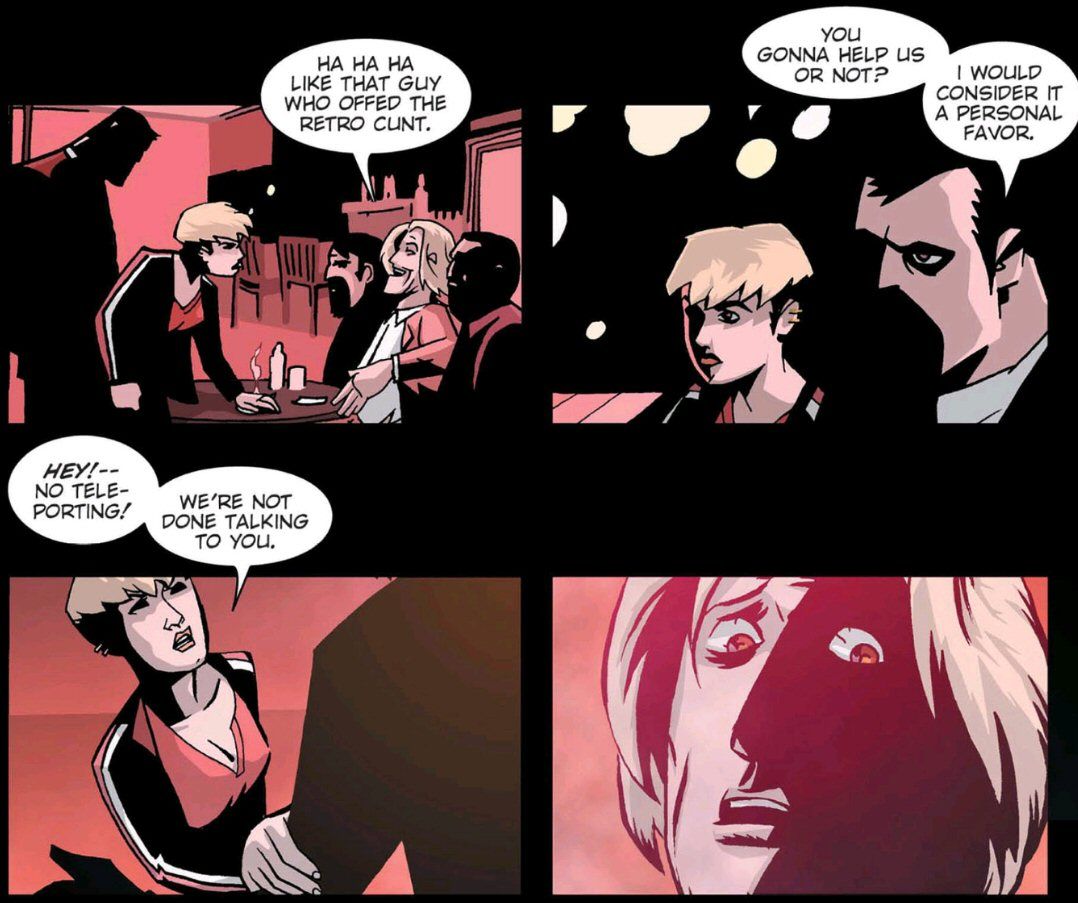
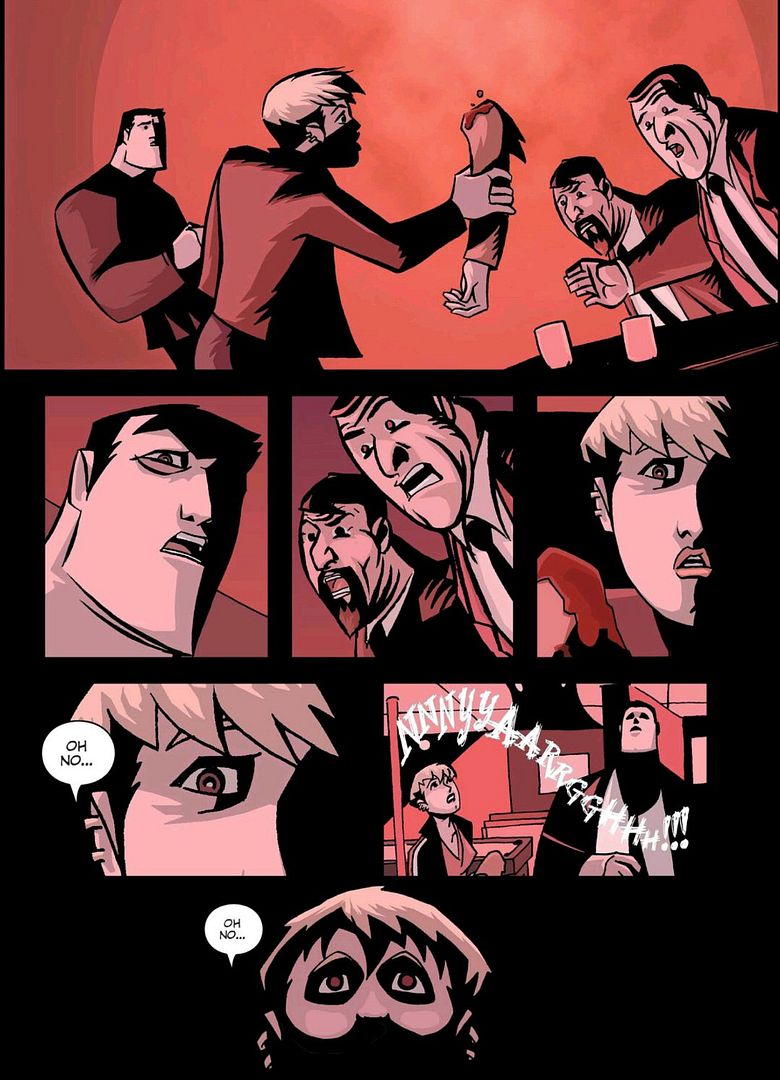
Although this was clearly an accident, in light of the lawsuit, Pilgrim is suspended from the police force. But in a stroke of apparent good luck, the problem is quickly resolved two issues later (issue #11):
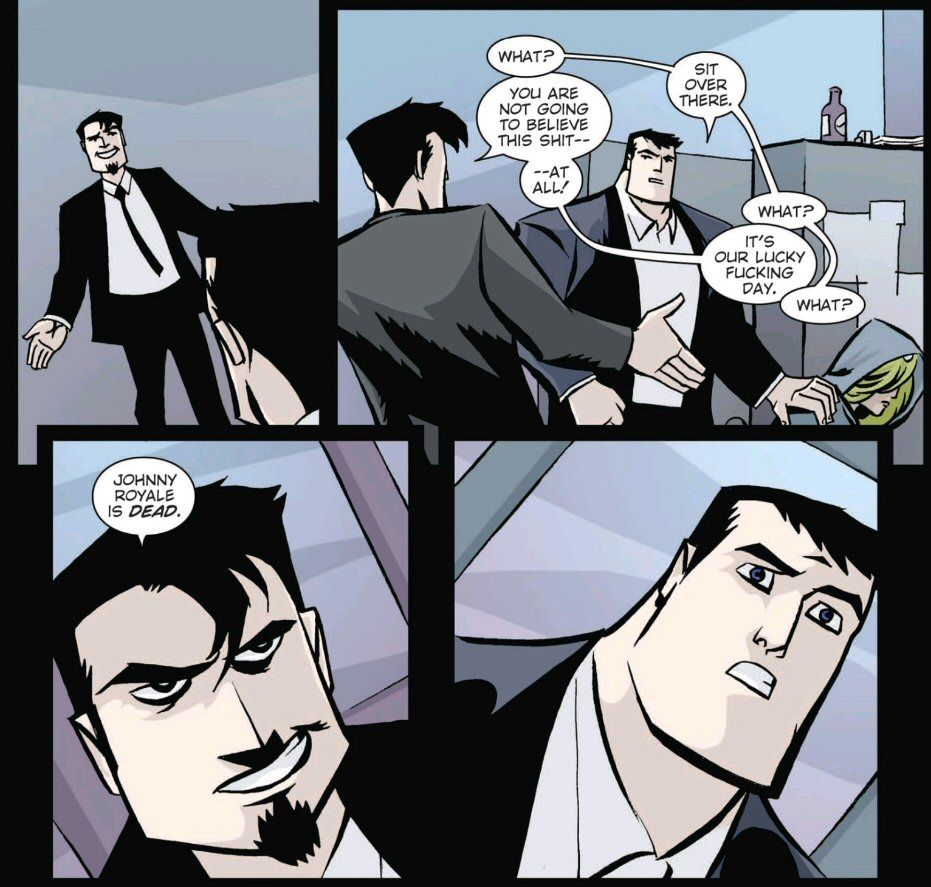
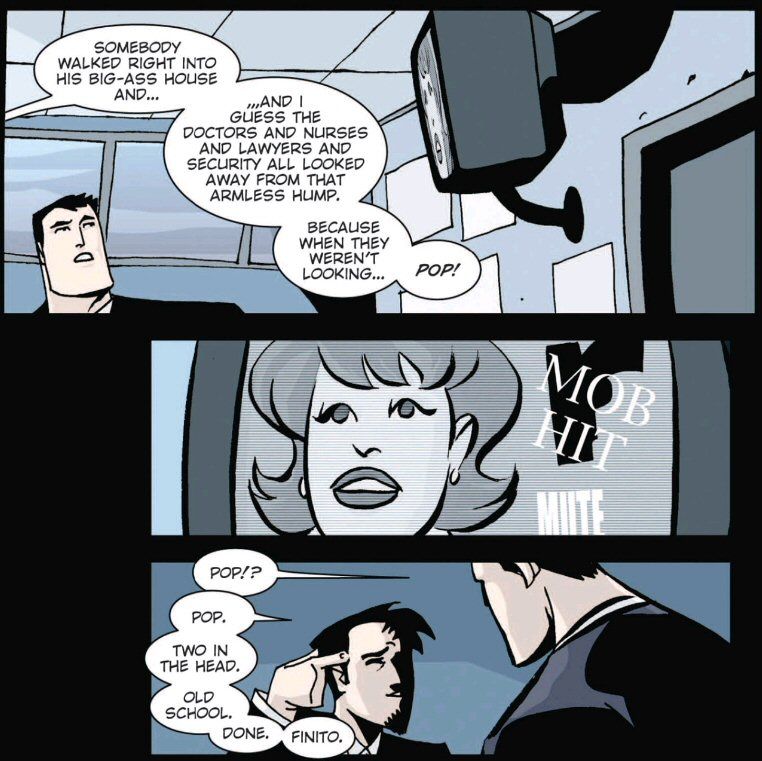
With Johnny Royale’s death (in an apparent mob-style hit), the lawsuit against the department and the suspension of Pilgrim are dropped. As I explored in my overview of Walker however, he quickly comes to believe Pilgrim was the one who whacked Royale. But he ultimately decides it doesn’t matter either way, and drops the matter. But as we see play out from this point on, pretty much everyone believes she did it (they just can’t prove it – and frankly, they doing really care to try).
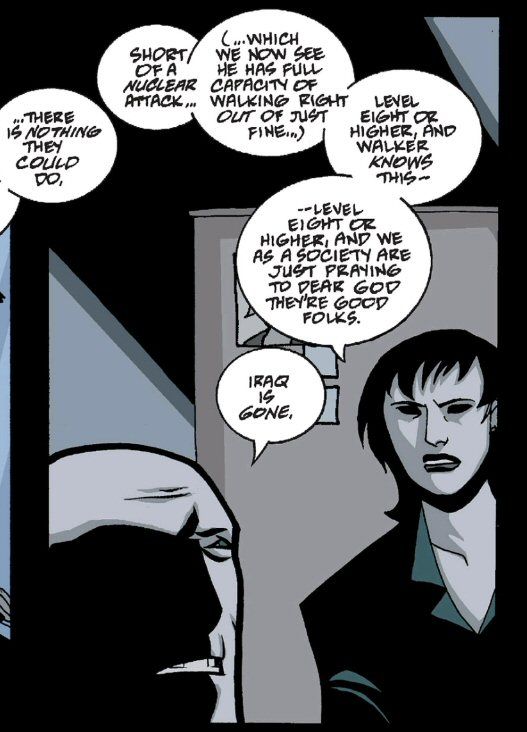
The next major trauma Pilgrim experiences is at the hands of Supershock, near the end of the first volume. Supershock is one of the oldest Powers, and had virtually god-like abilities. He also had a very Superman-like deontological moral core initially, and lived to serve humanity and do the right thing. He became one the most iconic and beloved Powers – just like Superman. And then he lost his mind (slowly at first, and then all at once).
It was the corruption of his fellow Powers that pushed him over the edge – and he decided to take matters into his own hands to end the “hypocrisy” of the world (by killing several of his fellow Powers, destroying the Vatican and the Pope, wiping out the Middle East, etc.). Agent Lange’s assessment from Powers Vol 1, issue #29 (2003):
Pilgrim follows a lead and inadvertently winds up face-to-face with Supershock on her own and without backup. She asks him to stop and undo everything he’s done, and he responds by stripping her naked and taking her up to Earth orbit – where he … well, see for yourself. From Powers Vol 1, issue #30.
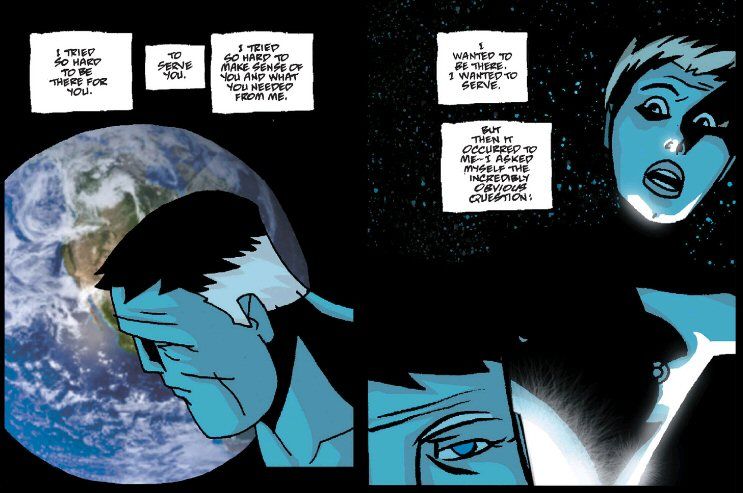
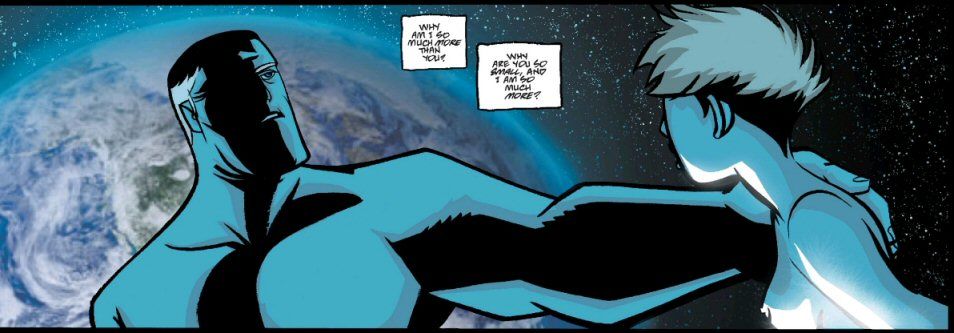
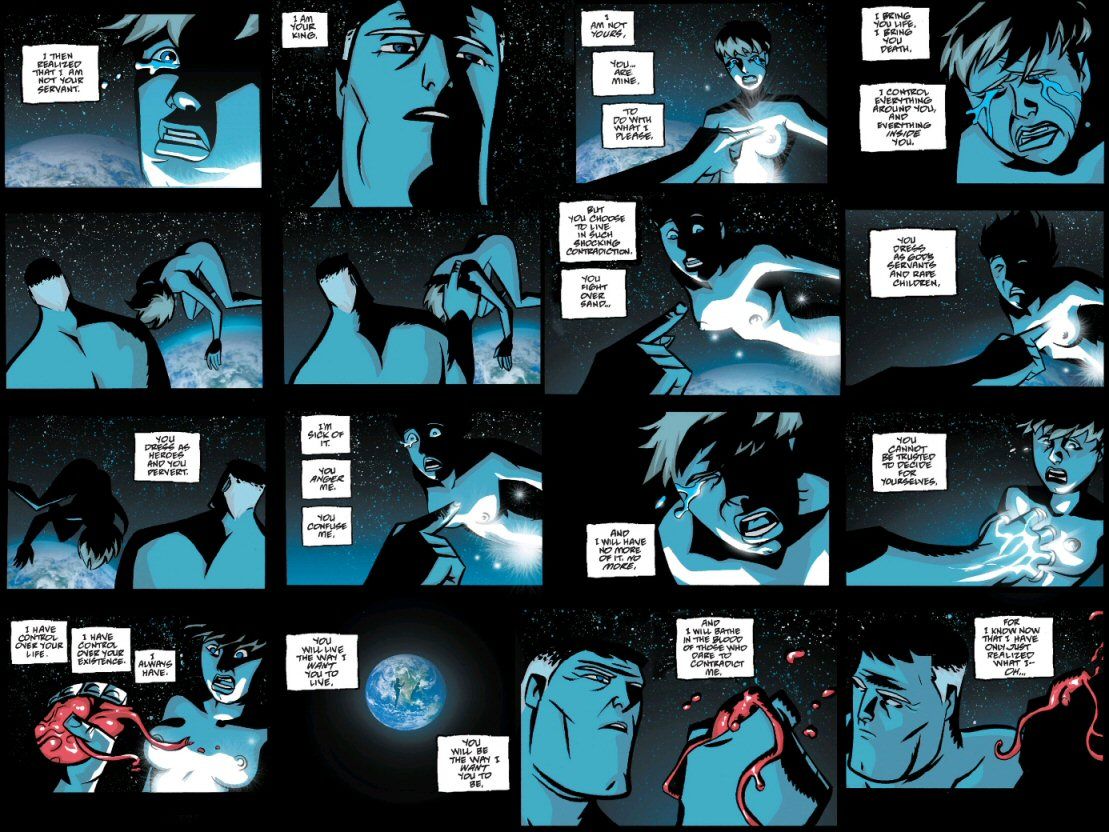
Pilgrim’s life is saved when Supershock’s former lover Ultrabright (who has mind-control powers) orders him to cease his own existence. She also saves Pilgrim’s life.
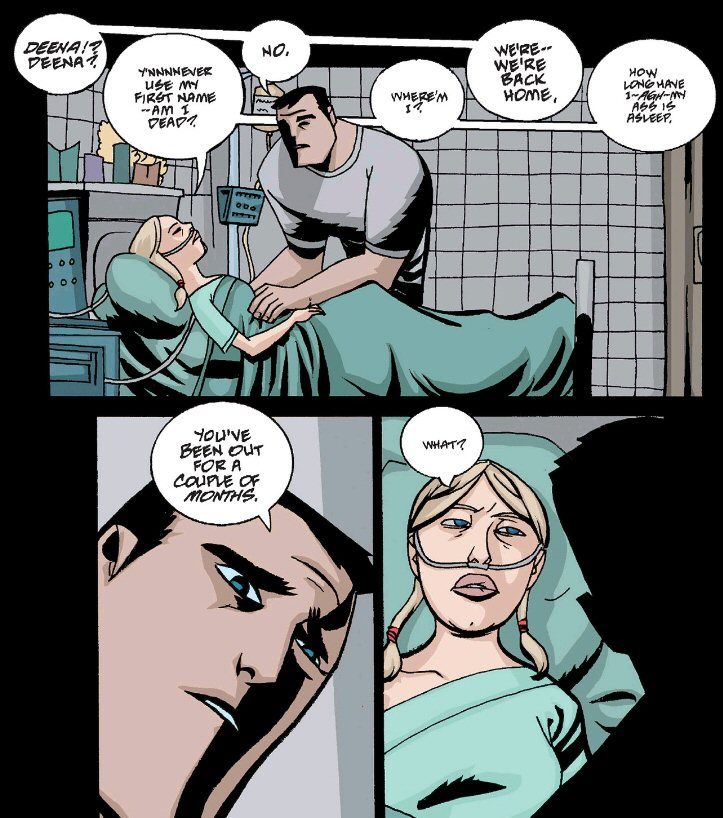
Pilgrim returns to the force, but is clearly suffering from PTSD from these events (quite understandably). She is shown repeatedly experiencing flashbacks to having her heart ripped out of her chest. Unfortunately, it soon gets much worse for her.
Again acting on impulse and without backup, Pilgrim confronts a suspect and is instead kidnapped and delivered to a Powers criminal known as the Bug. Pilgrim had previous history with him from her time in the vice squad, and he delights in torturing her over several days. Unfortunately, his intentions for her are even more repulsive, as explained below (warning again for the graphic nature of these panels). From Powers Vol 2, issue #5 (2004):
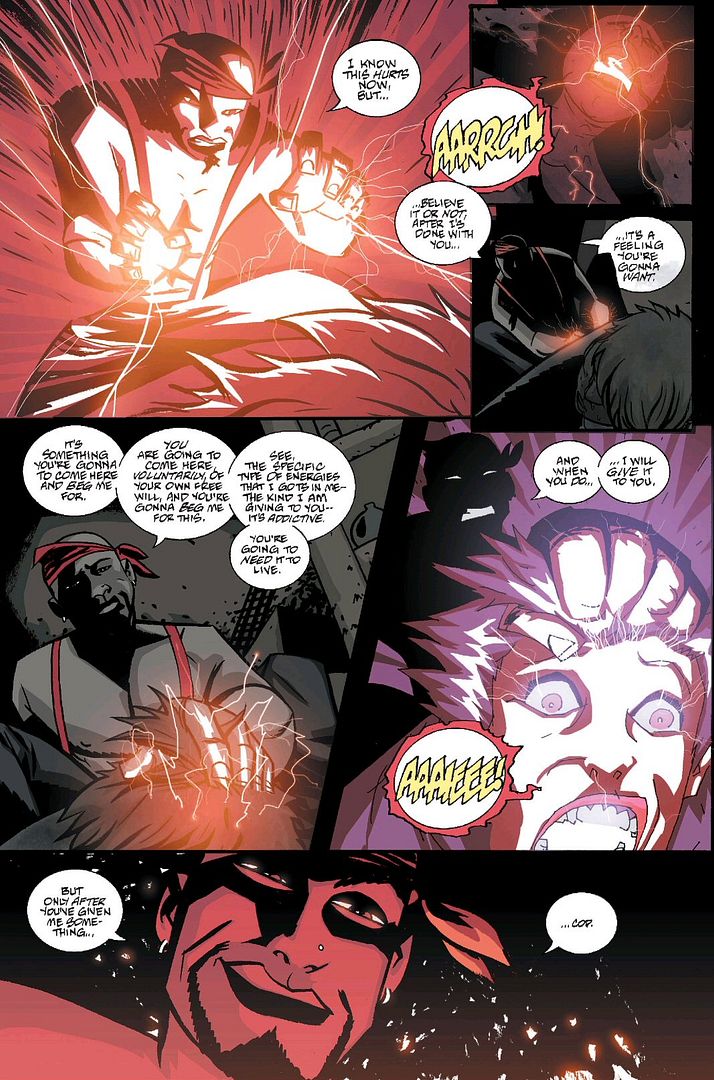
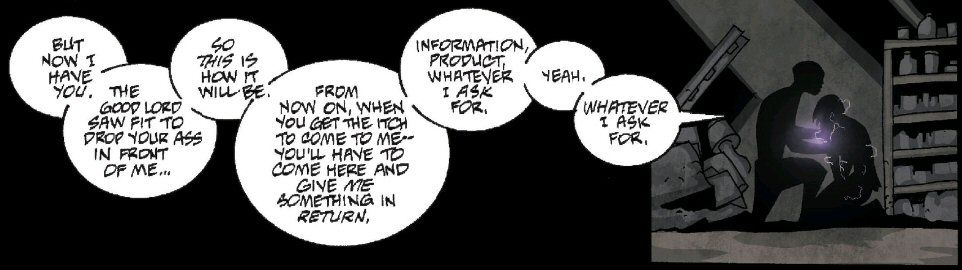
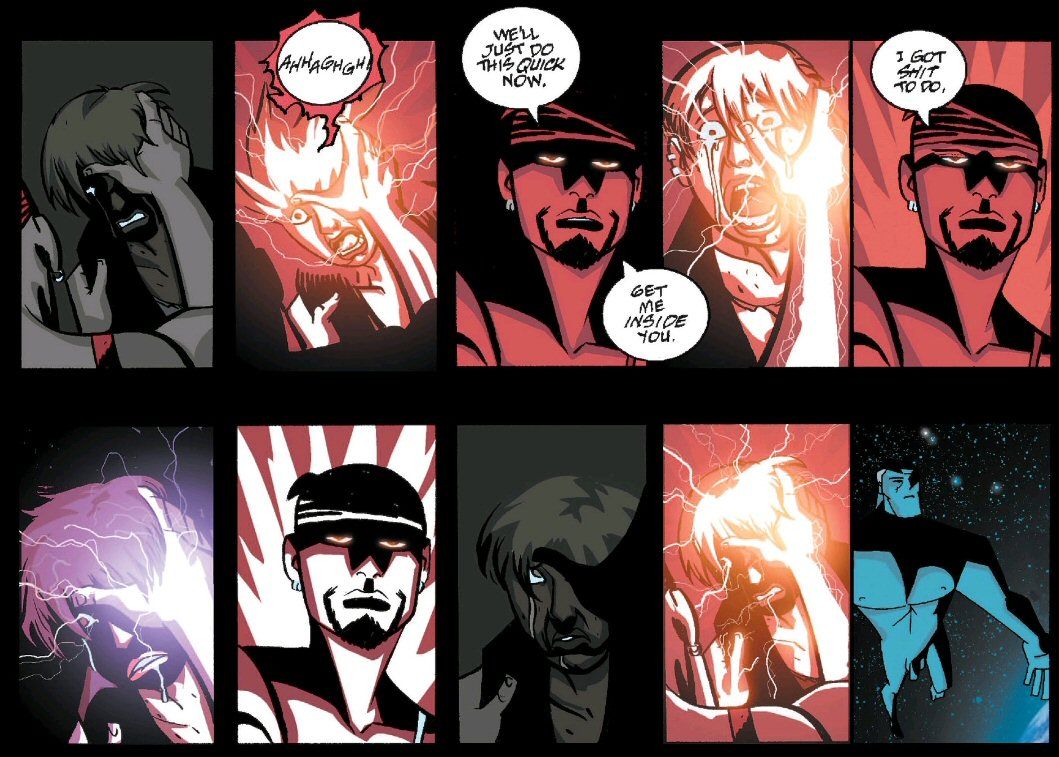
This triggers Pilgrim’s PTSD, and something unexpected happens:
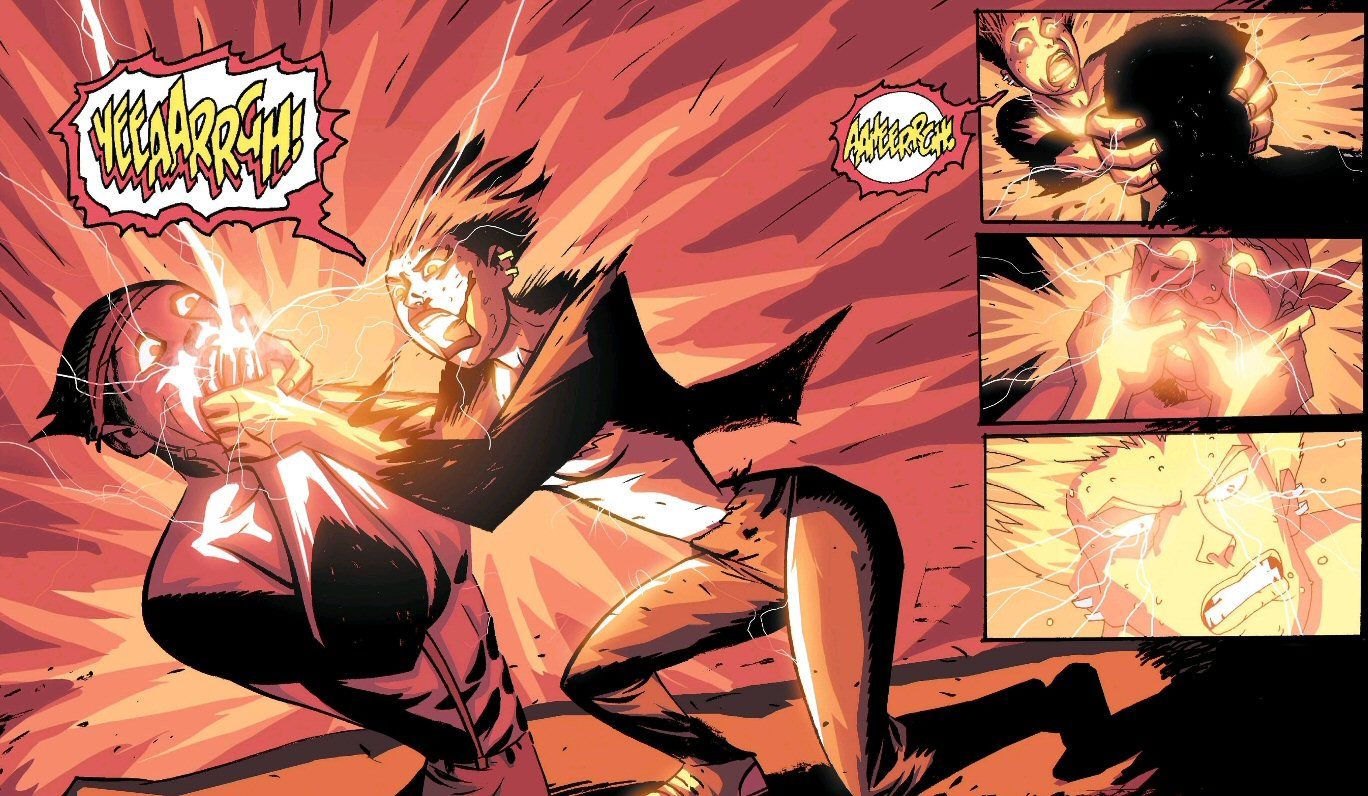
Pilgrim kills the Bug with her new-found powers, and then proceeds to take out his entire crew. Once she is rescued, she hides her abilities and makes up a fictitious story about how the torture wasn’t that severe.
At the time, I presumed the Supershock experience must have left some nascent abilities in her – but it is eventually revealed that she had contracted a new “powers virus” that has just emerged. This powers virus gives you powers abilities, but eventually burns you out and kills you. Unaware of these circumstances, Pilgrim tries to hide her powers – but becomes increasingly tempted to use them to kill her adversaries (including an Internal Affairs officer whom she tracks down at home – only stopping when she realizes the officer has a child).
There is also a fascinating issue that follows a visit from her estranged ex-boyfriend at the end of Powers Vol 2, issue #10 (2005):
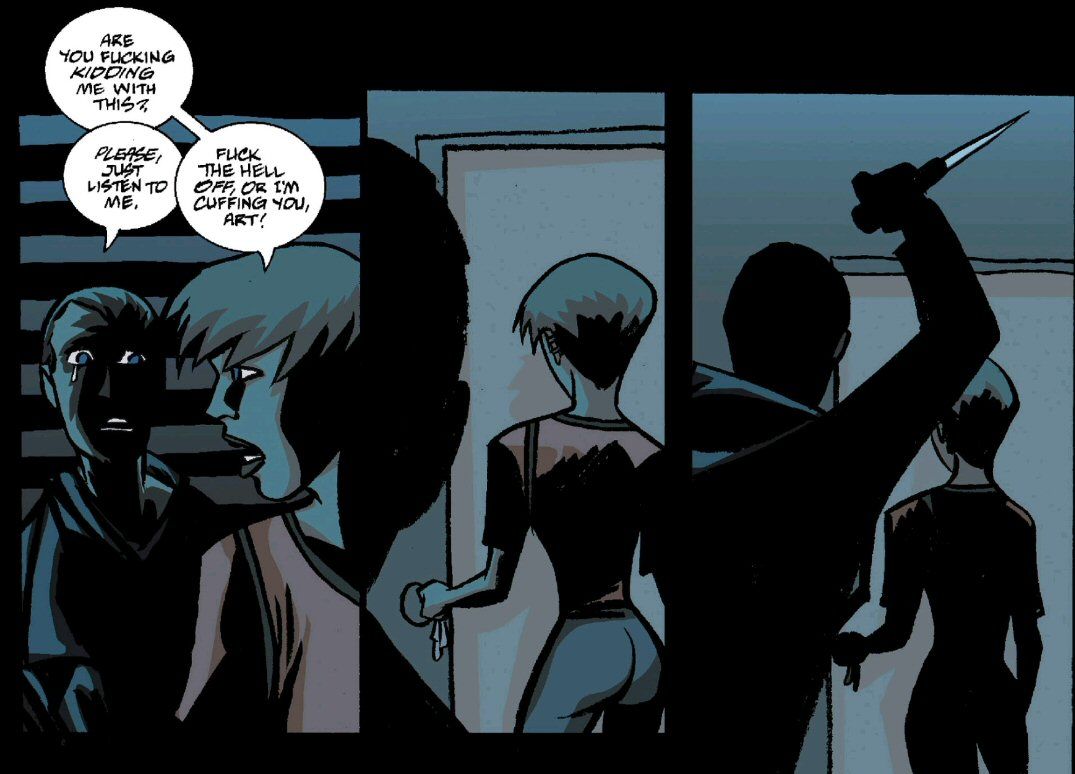
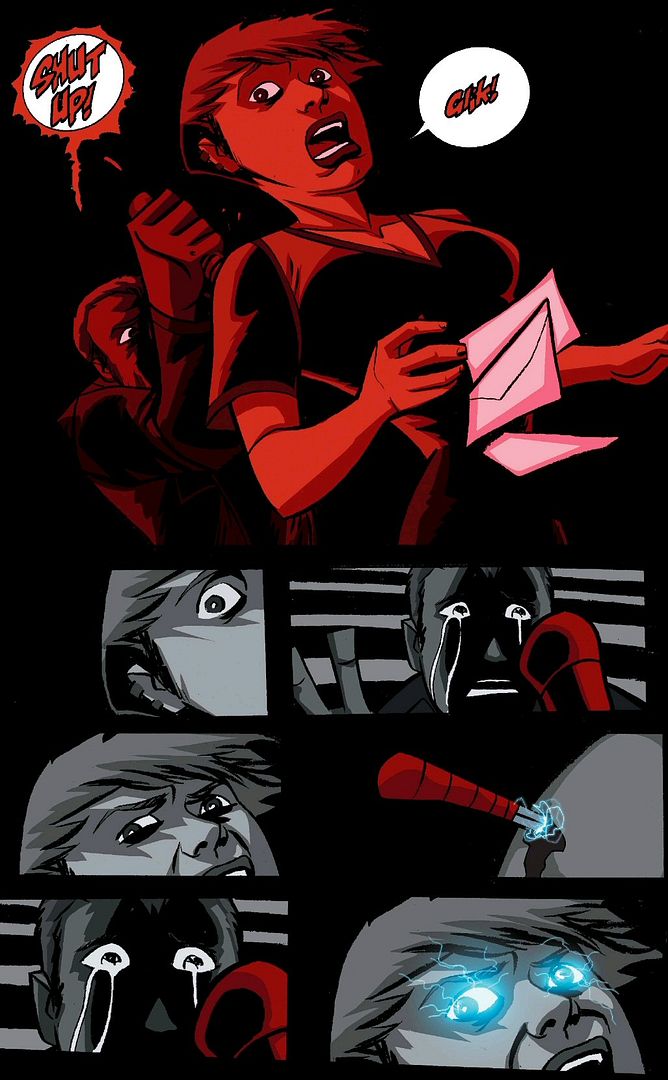
What follows in issue #11 could best be described as one extended fugue-like state:
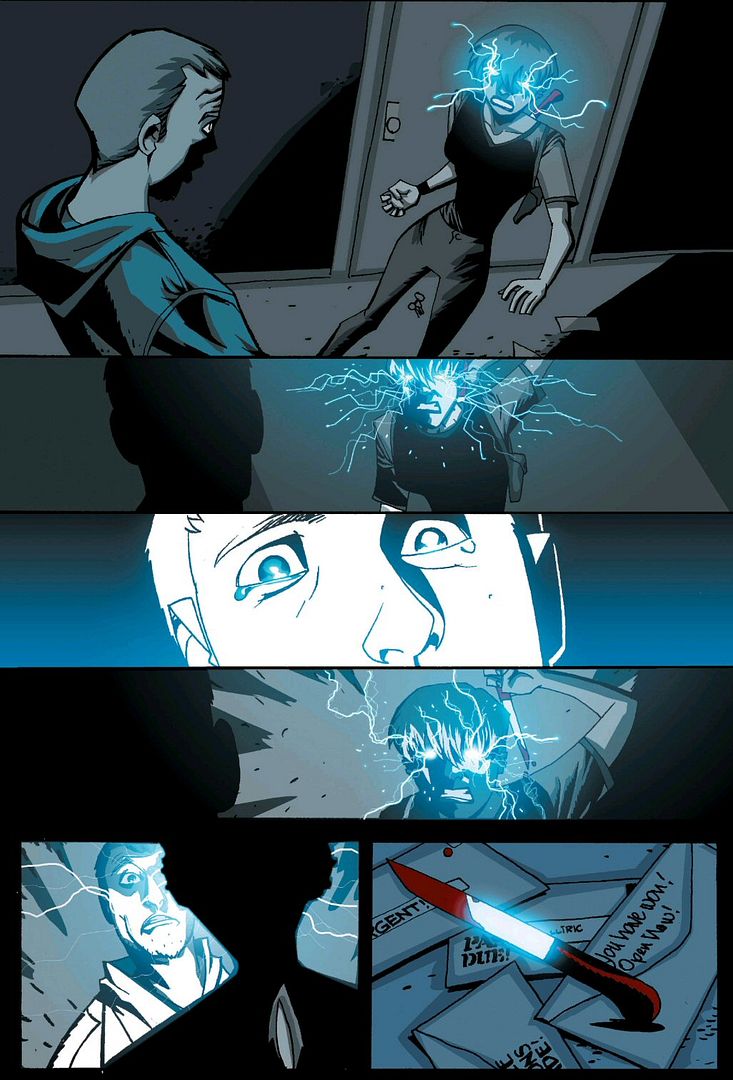
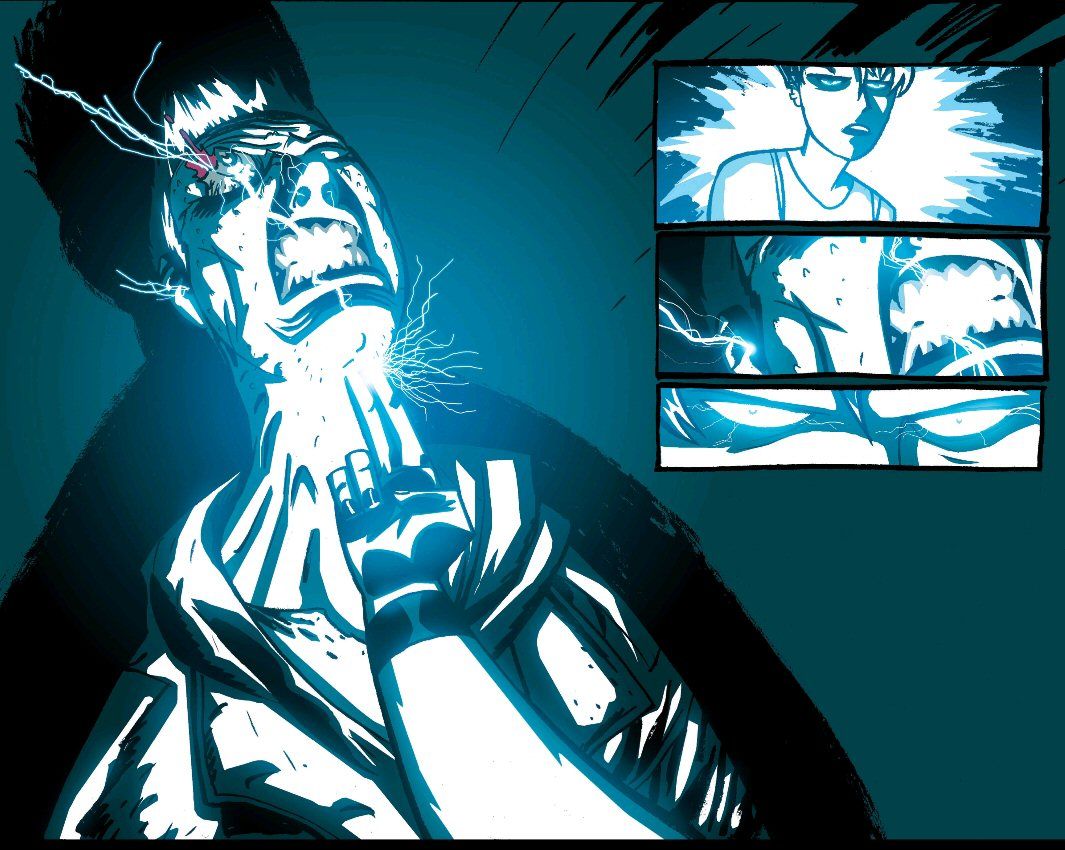
The rest of the issue sees her meticulously and dispassionately clean up the crime scene and dispose of the body.
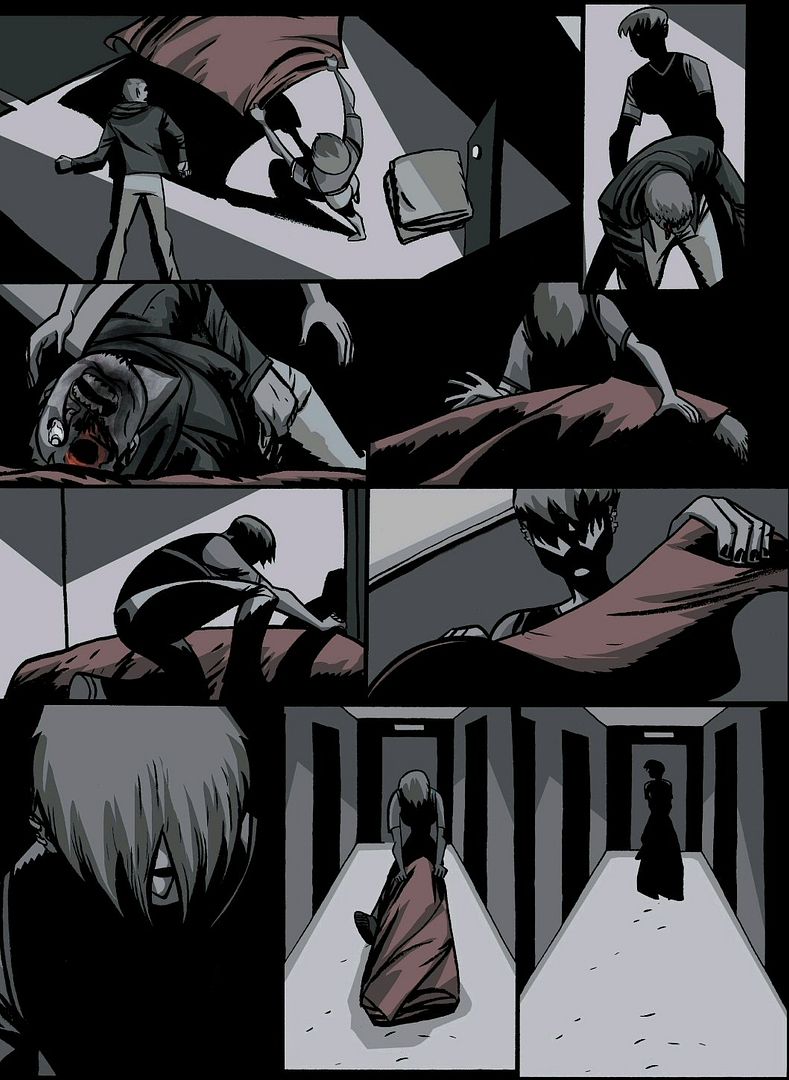
It is only at dawn the next morning, once she settles into a diner, that the full force of what she has done hits her:
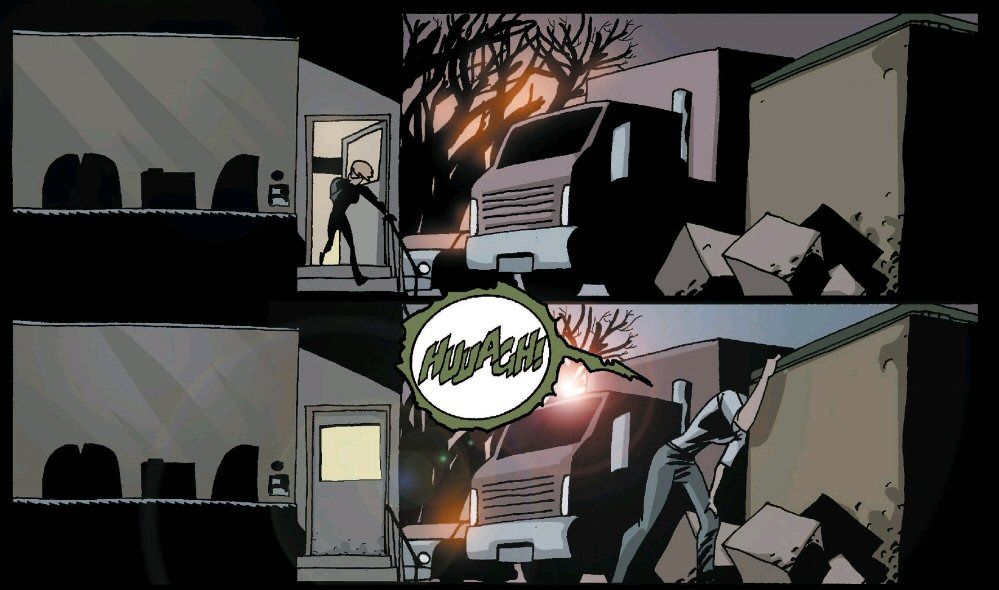
Pilgrim then proceeds to lie to everyone about his disappearance, including his family who repeatedly reach out to her.
Things go from bad to worse for Pilgrim, as she increasingly loses control. Eventually, she resolves to tell Walker – but then discovers he has powers again, and flees instead. Working on her own to hunt down a ring of child-killers with vigilante justice, Pilgrim eventually becomes a suspect herself in the killings. When she is brought in for questioning, the police chief over-rules Internal Affairs, and lets Walker interrogate her. From Powers Vol 2, issue #27 (2007):

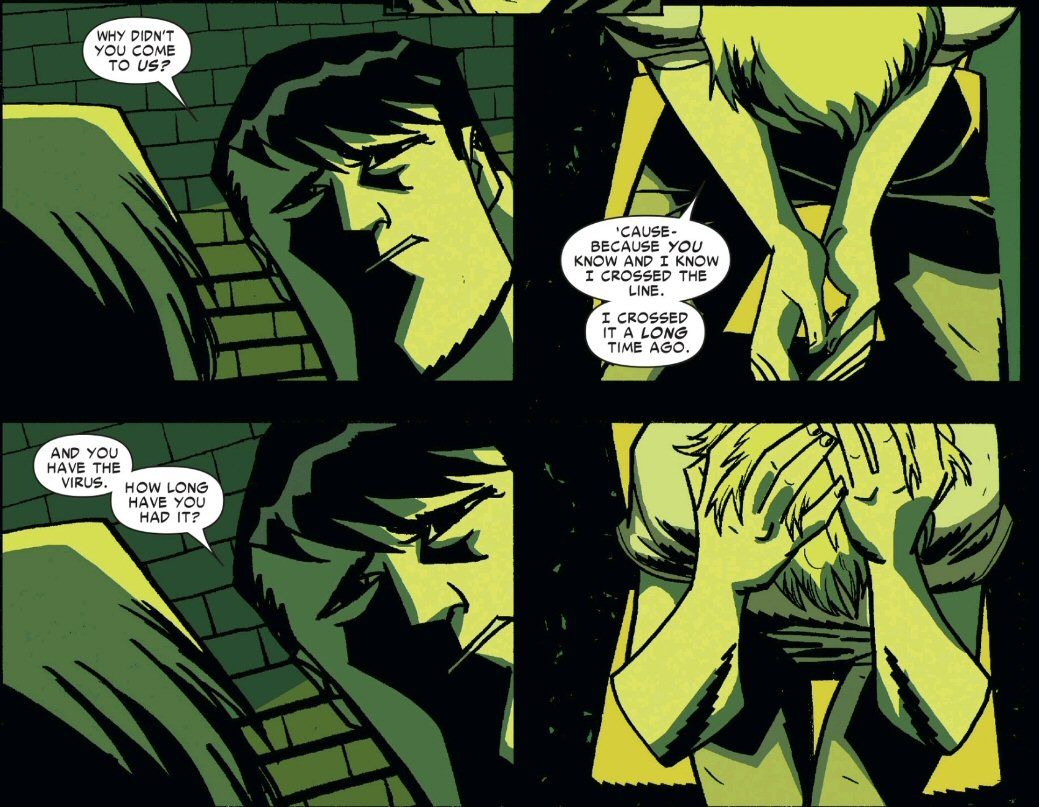
Eventually, the cops agree to send Pilgrim in to the crime ring she has infiltrated, to try and bring them down (and rescue Retro Girl). In end, Pilgrim kills all the bad guys – and is then saved by Triphammer, who had come up with a cure for the powers virus. The conclusion to this story arc is interesting. Much to Pilgrim’s surprise, she doesn’t go to jail for her many crimes over this volume. From Powers Vol 1, issue #30 (2008):
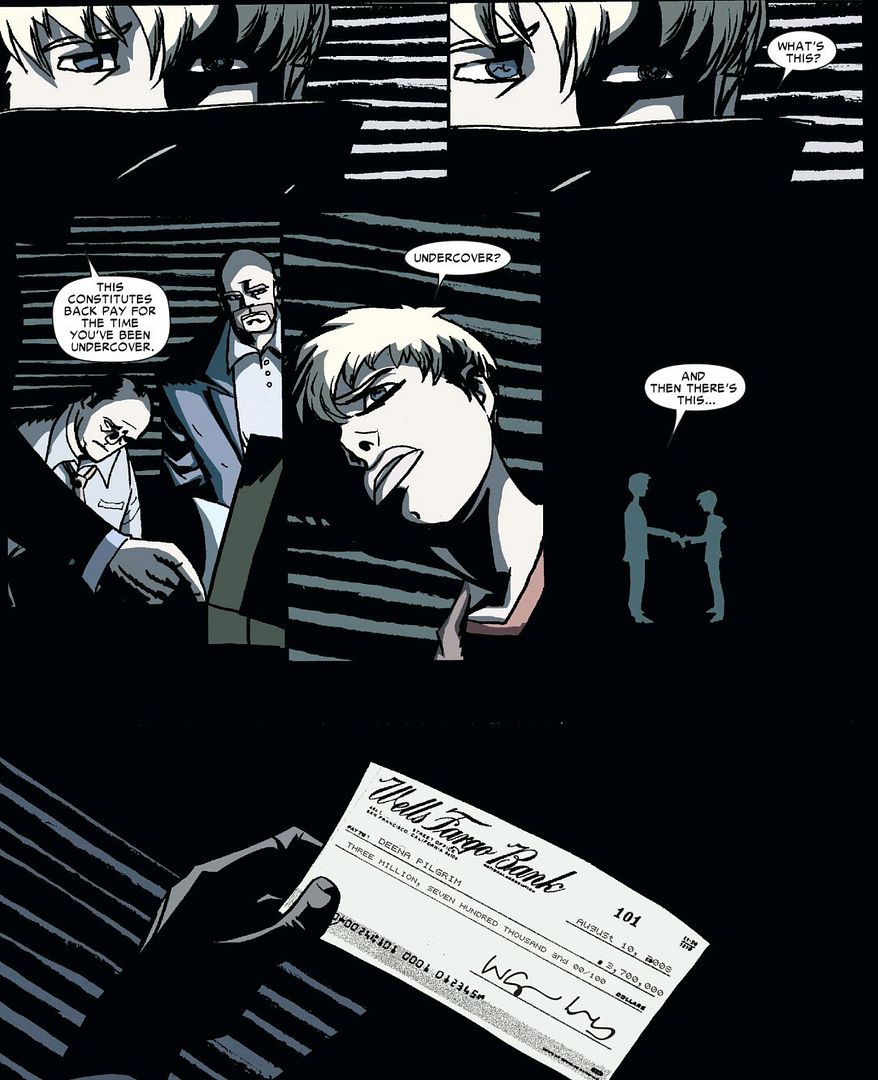
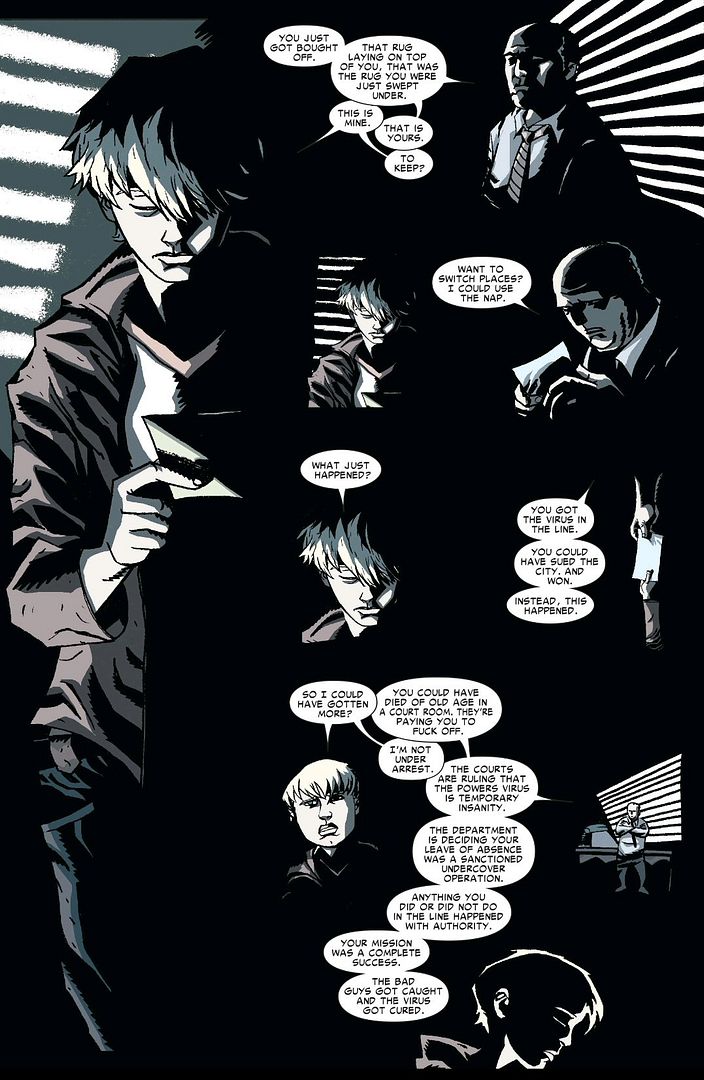
This leads to the panels I showed earlier, where Pilgrim reveals her family history. That is a followed by a great panel showing the clearing of the air between Walker and Pilgrim:
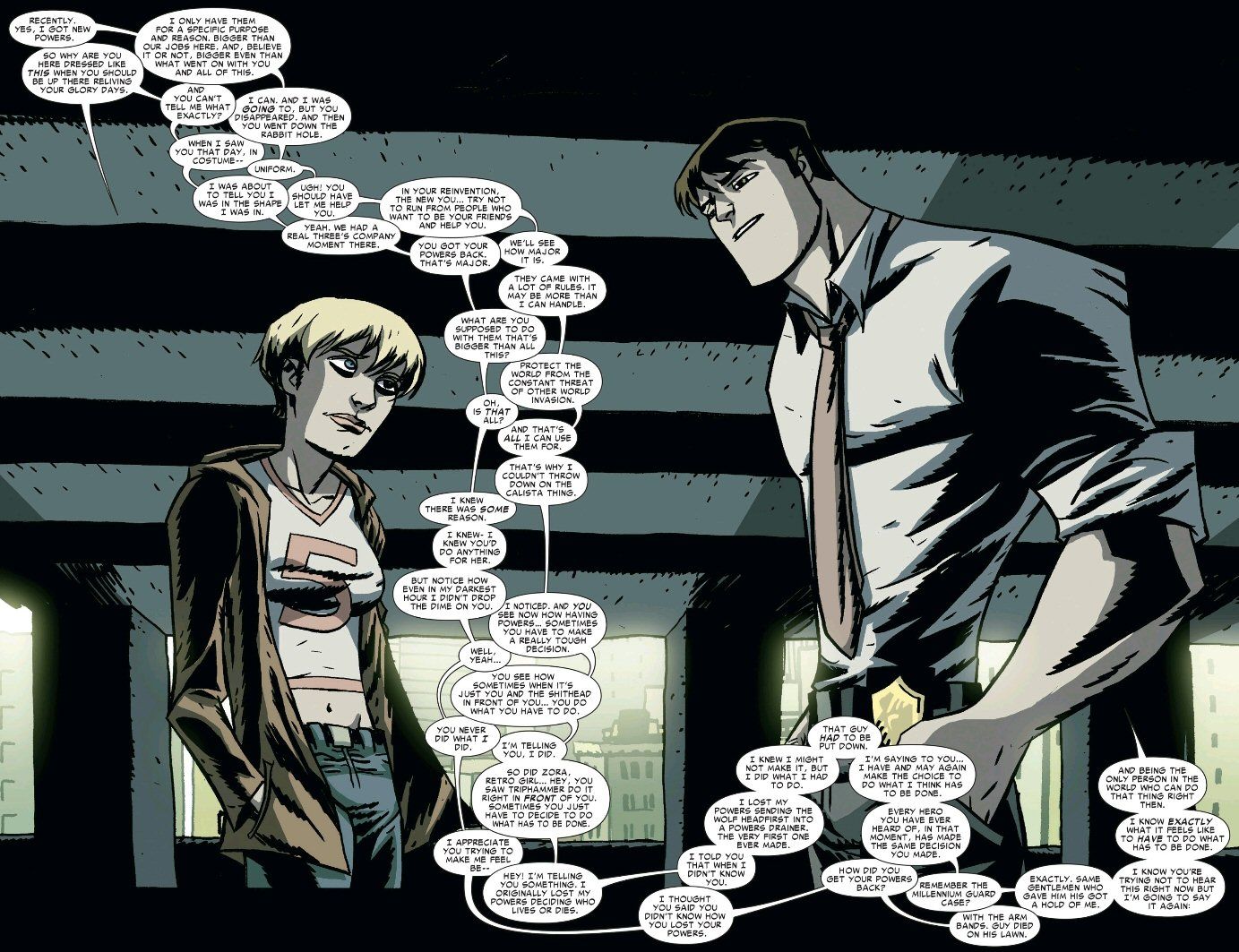
Walker’s message to Pilgrim is interesting. He is seemingly trying to absolve her of her guilt by saying he has done the same kind of things she has. Walker frames it as the burden of responsibility that comes with having powers (how very Spider-Man of him: “with great power comes great responsibility“, he seems to suggest). Of course, as I argue in my Walker entry above, what makes him a virtue ethics hero is that he voluntarily takes on that responsibility even when he doesn’t have powers. Just like we know Peter Parker (or Miles Morales would) – it is partly why I consider them primarily virtue ethics driven.
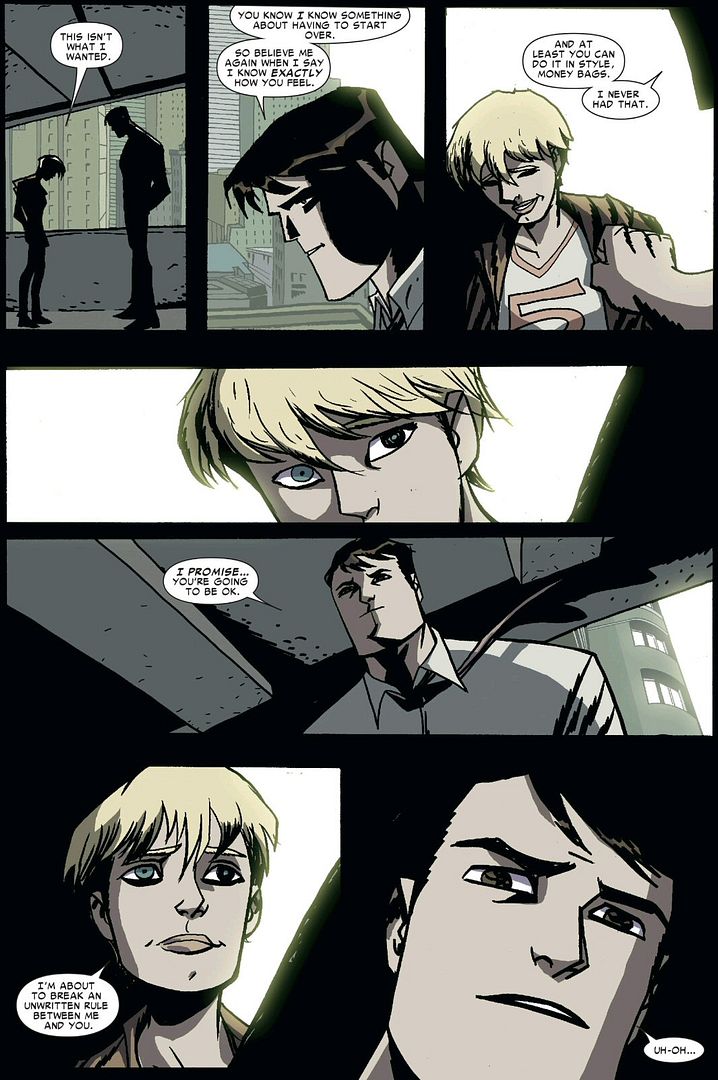
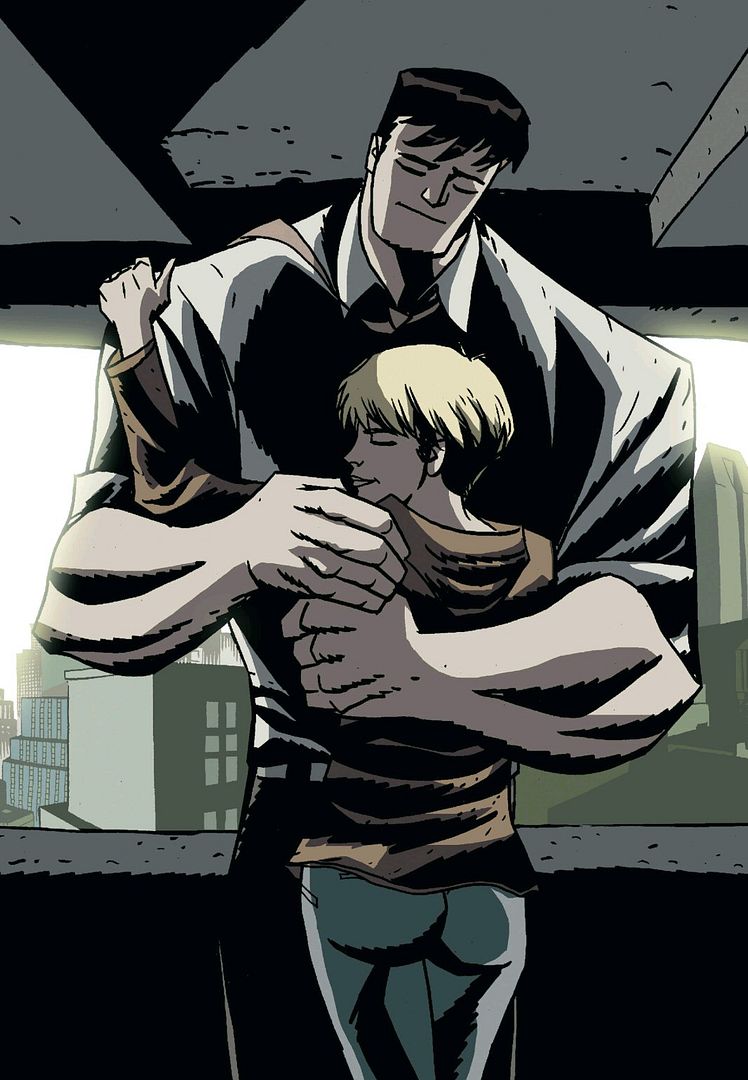
It seems like we are set for a “happy ending” to this volume. After dealing with an attempt on her life from that disgruntled Internal Affairs cop, Pilgrim gets to retire to the beach. And how does this issue finally end?
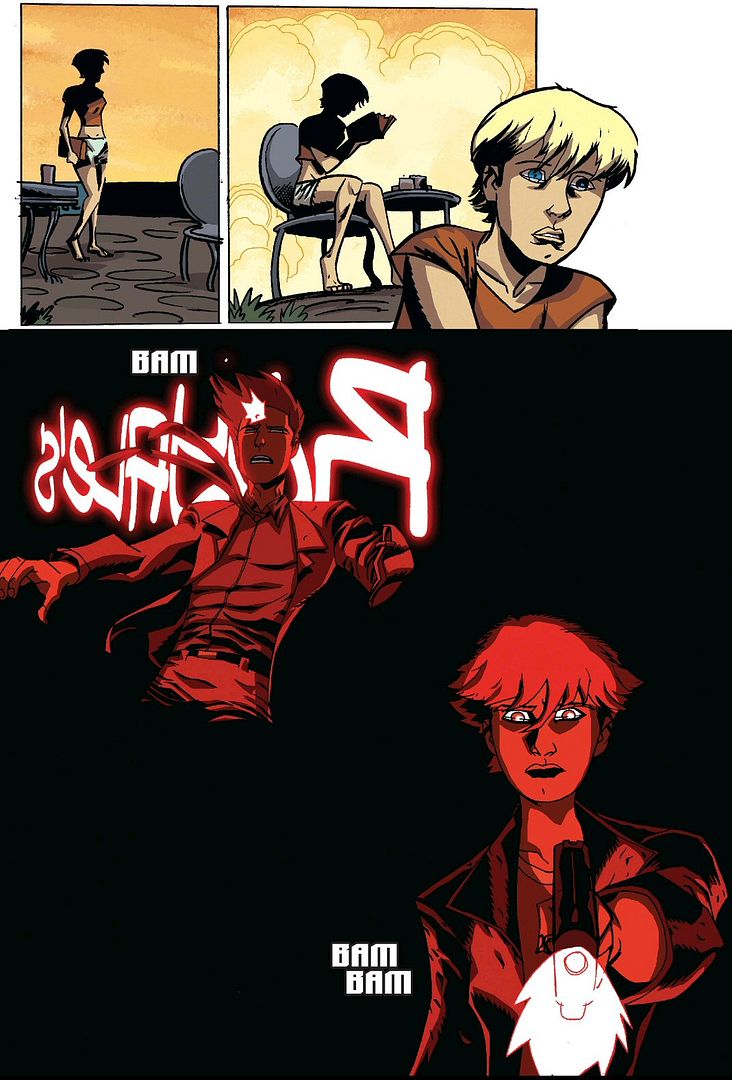
Ah. And so we finally see what everyone has long suspected – Pilgrim had indeed murdered Johnny Royale in cold blood. And she is troubled by a guilty conscience for it.
In many ways, Pilgrim’s character arc fits the central ethics theme of the series even more than Walker’s does. Unlike Walker, Pilgrim has always had a uniquely consequentialist way of looking at things. As I describe in some detail on my Professor X redemption page, there are a lot of problems with solely applying a consequentialist lens to moral problems. Pilgrim is deeply troubled by her own actions – she is clearly suffering from the moral injury of negative responsibility (where you feel responsible not only for your actions, but the actions of others too – as I explain at that link above). But she has also experienced horrible trauma due to her job – through no fault of her own, but through the lack of protection for police when dealing with rogue Powers.
The powers virus story line is a creative way to explore a corruption arc for Pilgrim. When layered on all her trauma (both self-inflicted through her strident consequentialism and imposed by her job), we get another example of how power corrupts morality. When living through the powers virus, we see her experience the intoxication that invulnerability brings, a detachment from human consideration and feeling, and the erosion of the empathy that initially grounded her ethical perspective as a detective.
Pilgrim’s willingness to sacrifice herself for others at the end of this arc (saving the victims in the process and only surviving due to Triphammer’s unexpected intervention) is a form of renunciation comparable to Walker’s rejection of powers (twice in his case!). To me, this reiterates the series’ apparent core ethical argument: human moral agency requires accepting human limitations. Anything else corrupts.
But again like Walker, that doesn’t mean Pilgrim is out of the woods here. Just as Walker frequently reverts to denial (through alcohol-fuel binges and anonymous sex), Pilgrim reverts to her base state – inflicting violence on “bad guys” to make herself feel better (at least temporarily). Walker’s reversion to depression and despair is self-injurious – but Pilgrim’s reversion to anger and violence is potentially damaging to all around her.
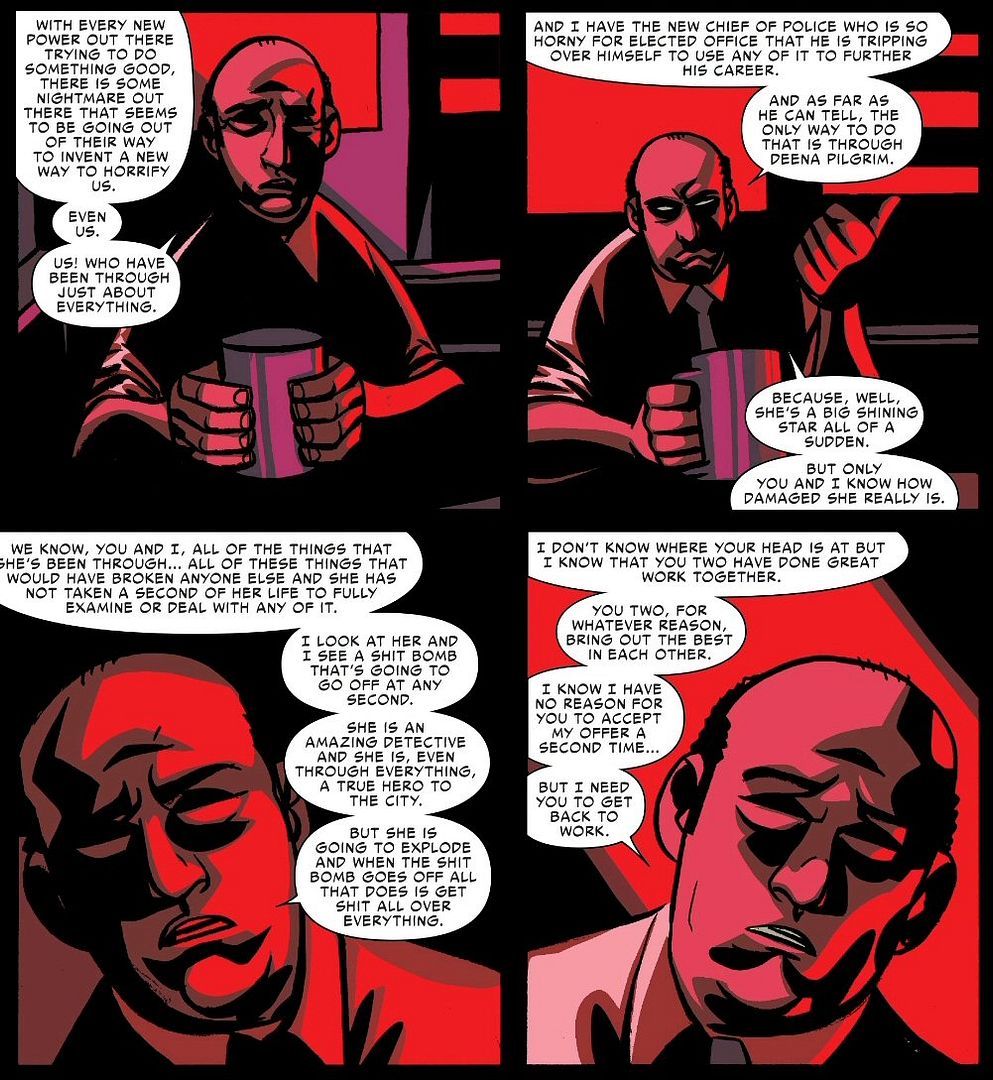
I’m going to jump ahead to Powers Vol 4 (2015-17), where this comes to a head for her character. When you consider all the trauma she has experienced, and her natural propensity to externalize it through violence, she could easily be considered a ticking time bomb – a risk to herself and others. Indeed, this is something her Captain notes in a conversation with Walker at the start of this volume (when Walker is off on another one of his self-destructive binges). Captain Cross uses slightly more colorful language – from Powers Vol 4, issue #1 (2015):
Consider the end of this story arc, when Pilgrim has the confessed suspect alone in custody (and under power dampers). From Powers Vol 4, issue #6 (2016):
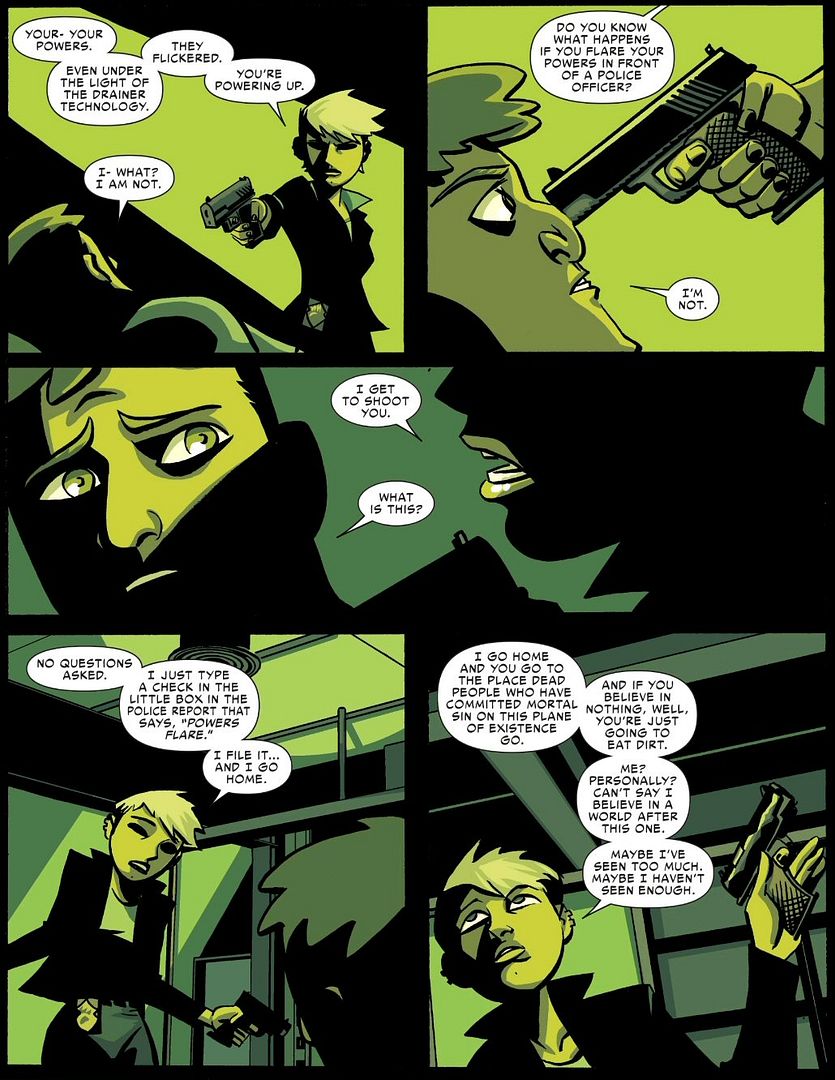
Interestingly, Pilgrim decides to give him a consequentialist morality test of sorts. He fails it by passing:
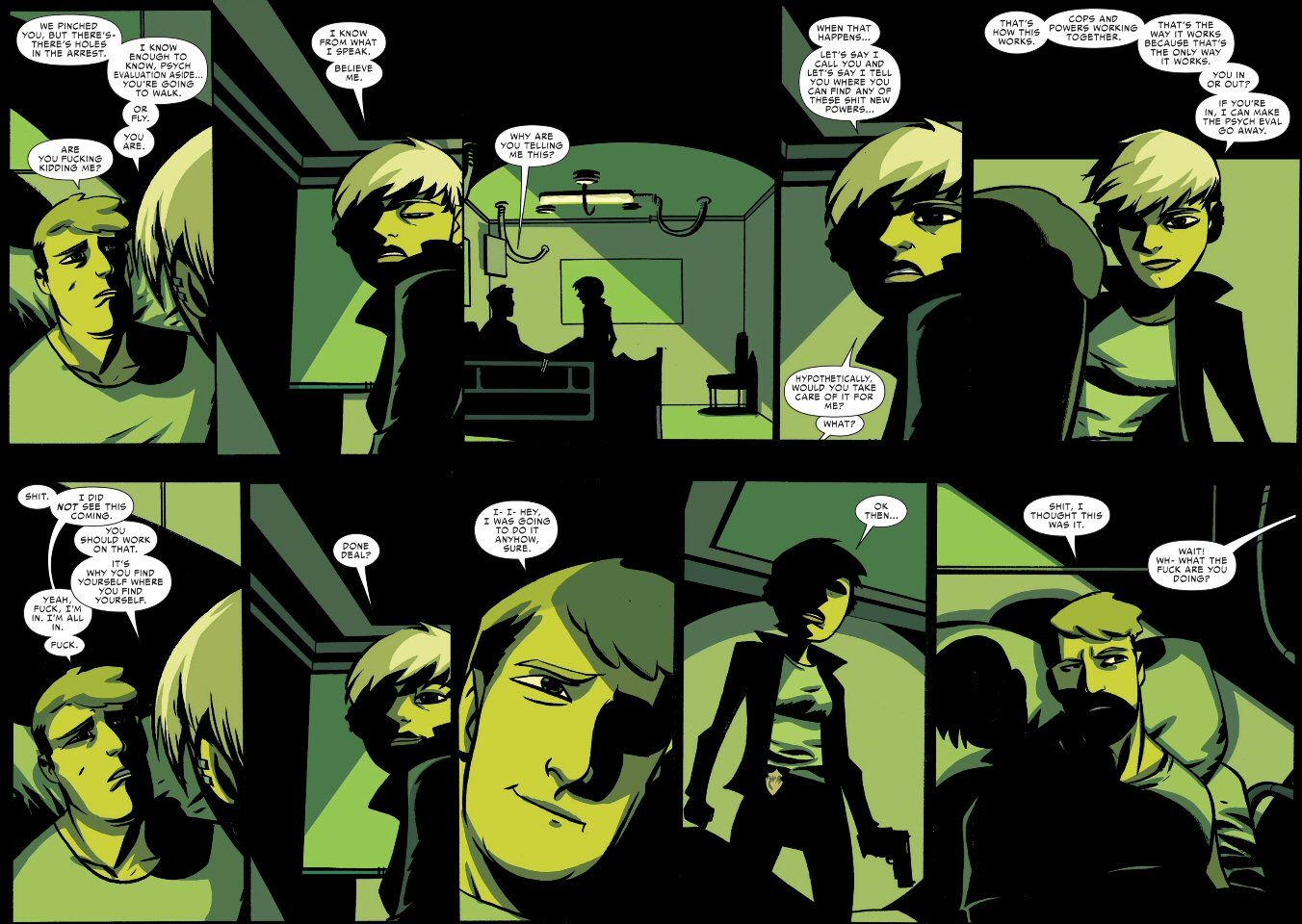
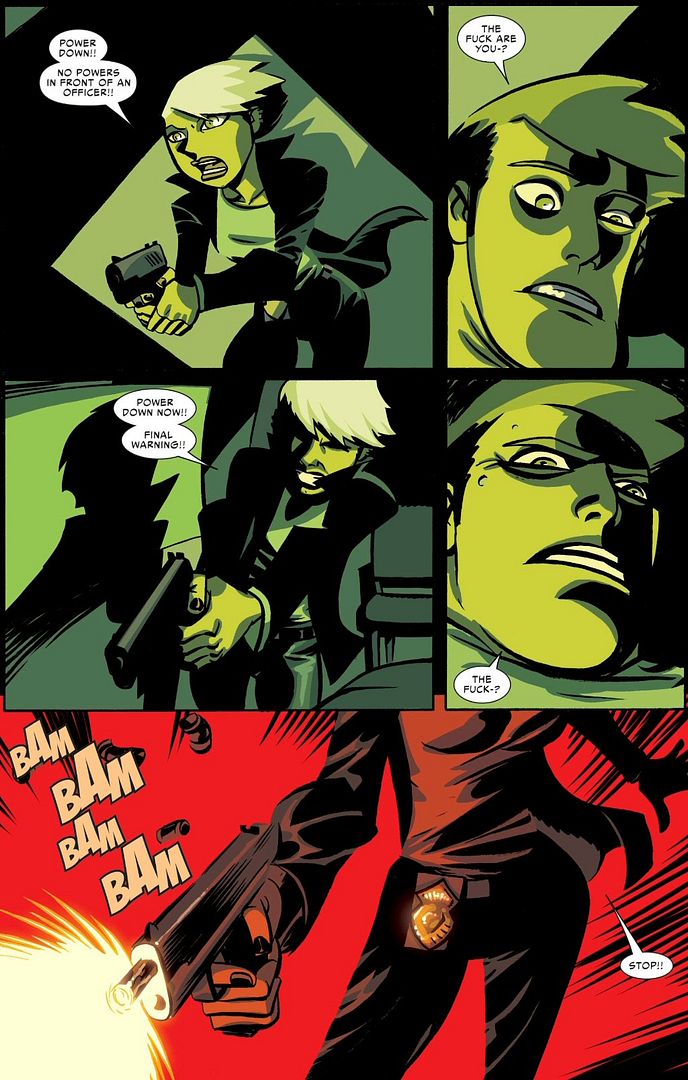
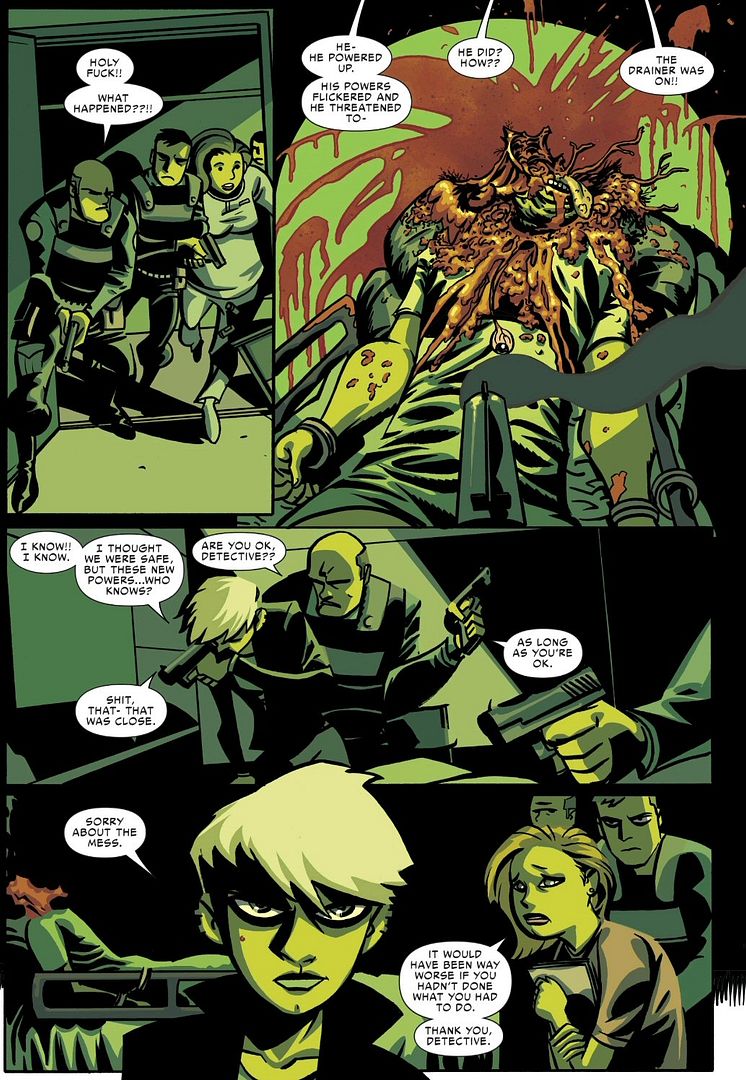
Whatever lines Pilgrim may have crossed before, this is a new low. And how does this issue and story arc end? Not with a guilty conscience like the end of the second volume. No, this arc ends with a very pleased-looking Pilgrim staring up at the sky full of Powers. A found it very chilling.
The next arc jumps forward in time by a considerable amount. It is quickly clarified that Walker and Pilgrim are both long gone from the force, and haven’t even seen each other in many years. They both show their age. From Powers: The Best Ever (2020):

Eventually, they become part of the big show-down with the reincarnated Wolf (see my Walker overview for a discussion, including the panels below).
After Walker’s funeral (and an interesting speech by Retro Girl, who addresses both Pilgrim and Walkers’ sense of ethics), Enki Sunrise – now Captain of the Powers squad – makes a surprising offer to Pilgrim:
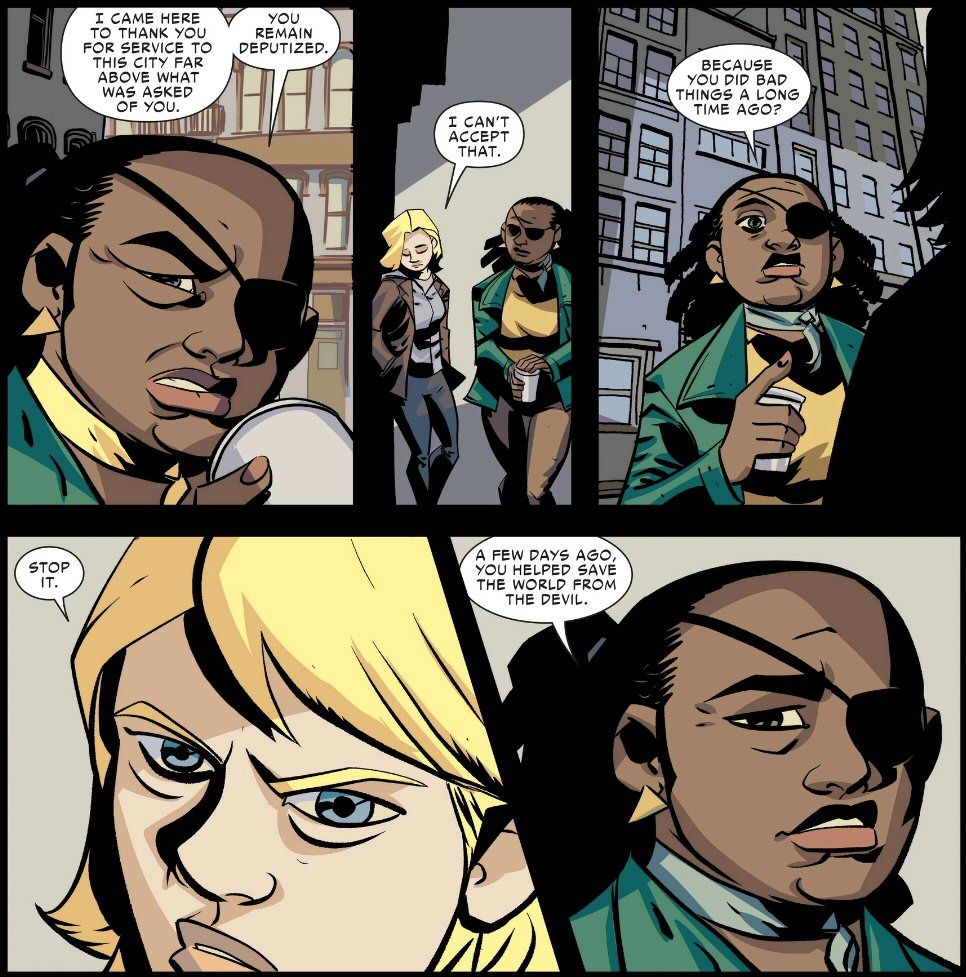
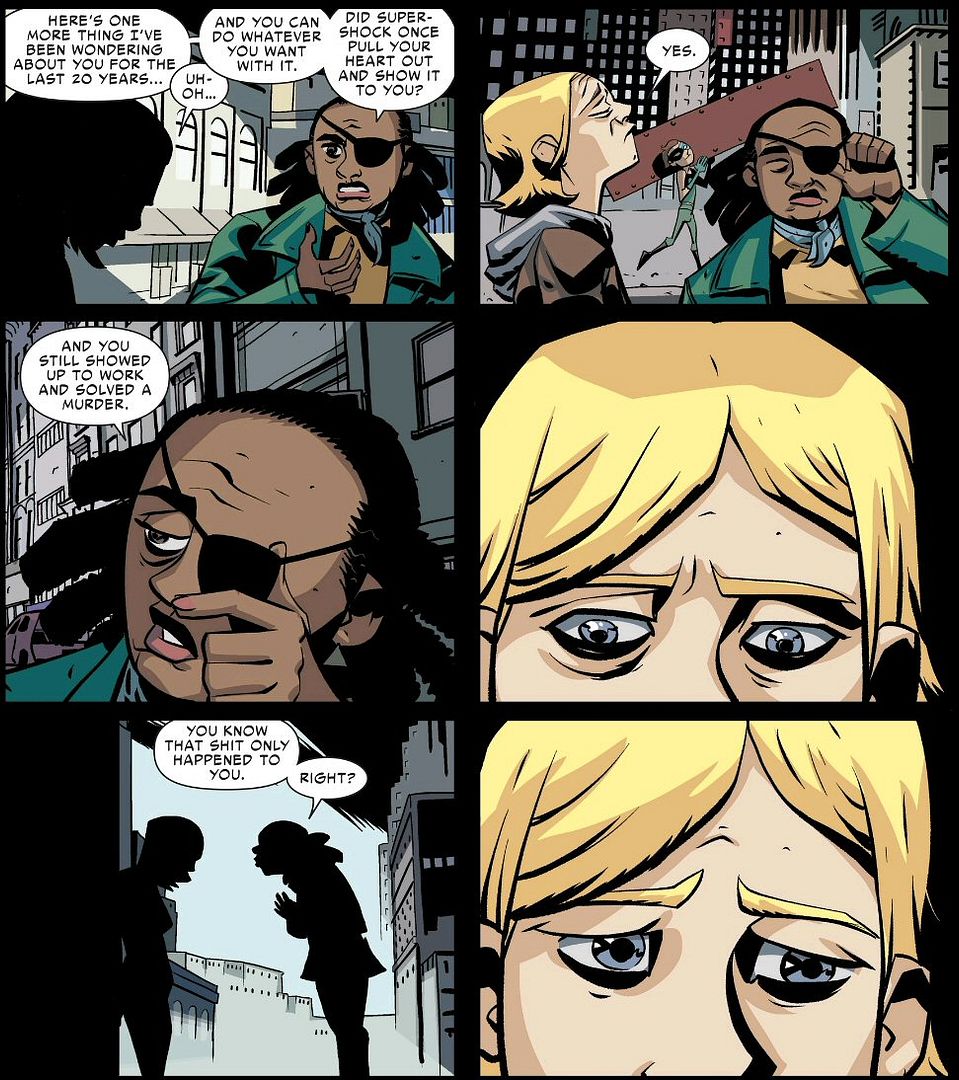
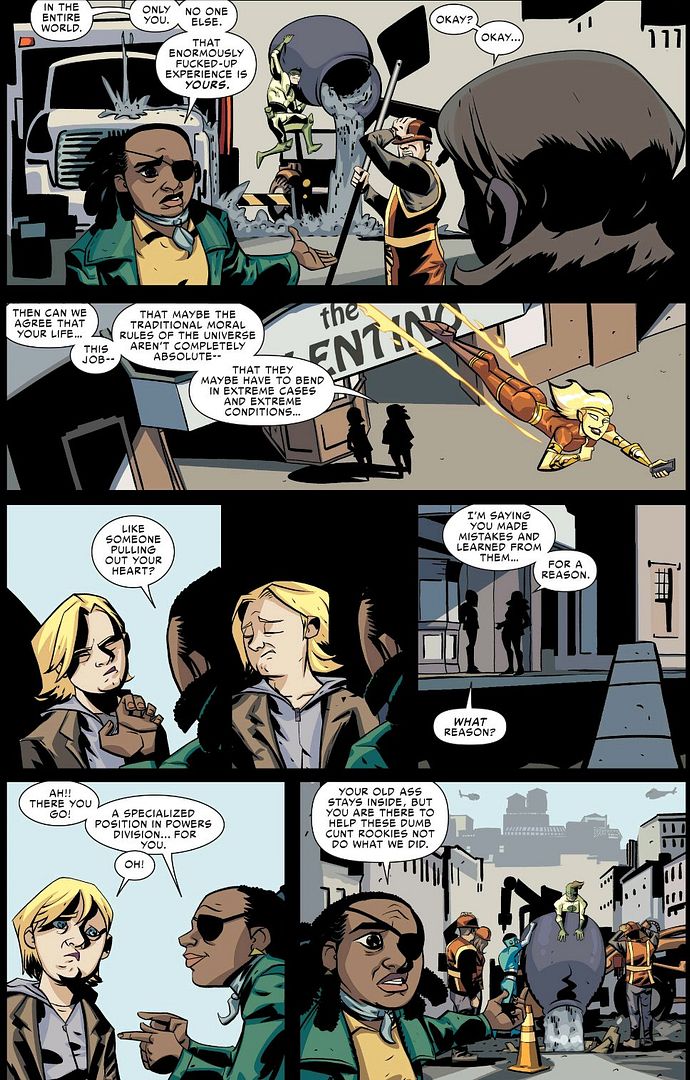
This is an interesting perspective from the formerly deontological Enki Sunrise (which I explore further in her entry down below). But there is more to this offer:
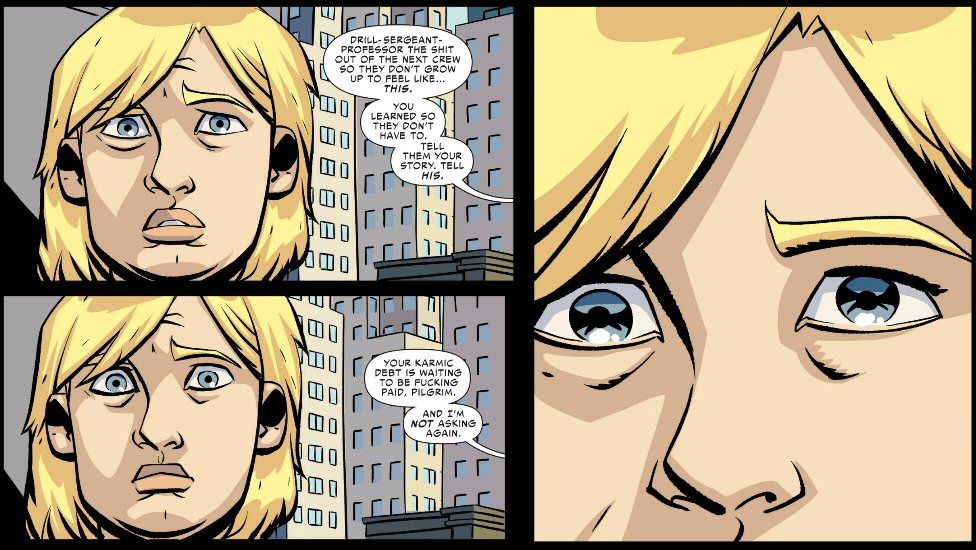
Yes, Pilgrim’s karmic debt is due – Pilgrim has a lot to atone for. I discuss Buddhism in my FML comix post, as the philosophical aspects of Buddhism are a form of classic virtue ethics. And so, I like the virtue ethics framing here around making amends. This is another opportunity for a redemption arc for Pilgrim, leading into the new Powers 25 series.
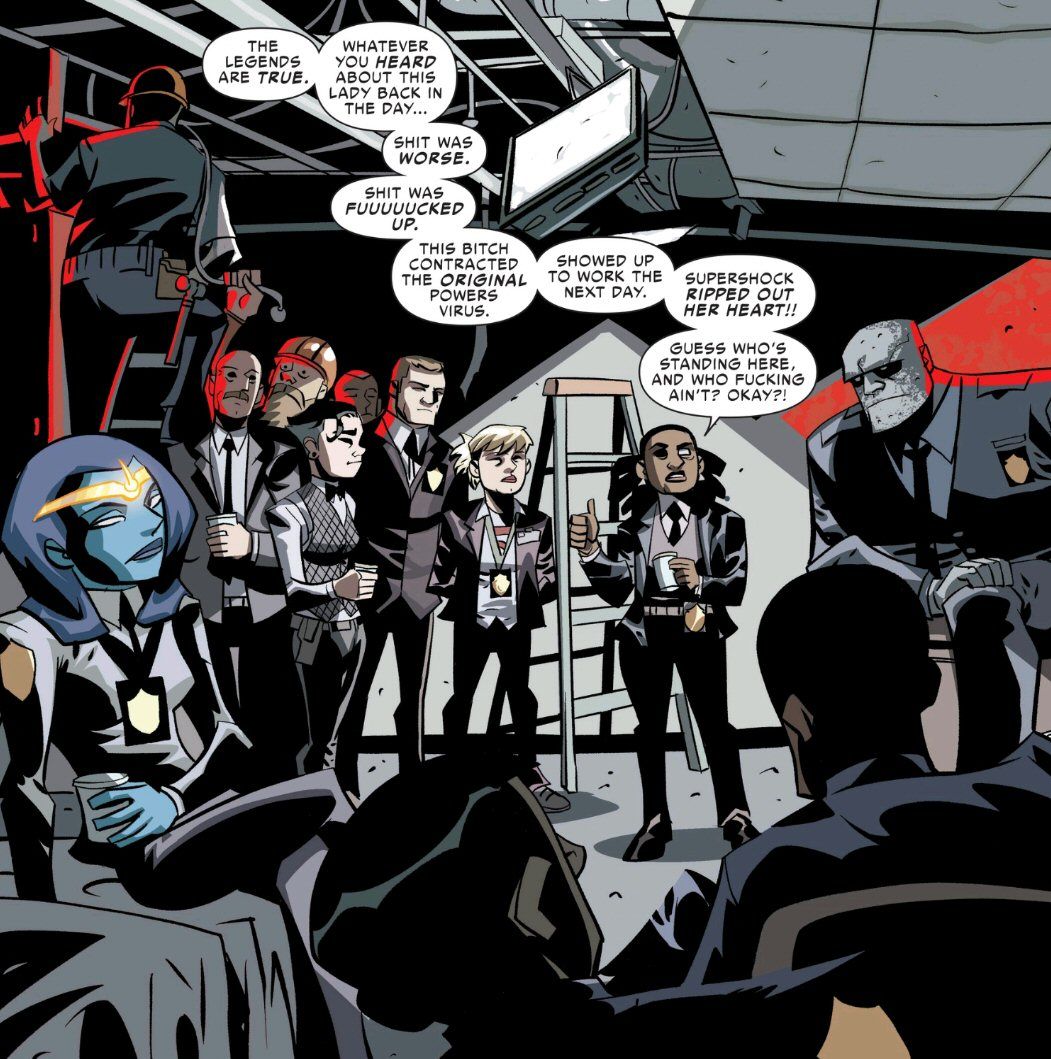
I know that has been a long overview, but I really do think that Pilgrim’s long history is pivotal to understanding the moral philosophy underpinning this series. In many ways, she had further to travel than Walker in reaching any form of virtue ethics.
As an aside, I notice there is a strong difference of opinion online as to the value of Pilgrim’s character. There are some who do not seem to like her and feel that she should not have been allowed to retain her job as a police detective throughout this series. Although I can grant that last point in terms of realism (it does seem a bit far-fetched), I actually think her character is a great avatar for the ethical themes at the heart of this story. And I know I’m not alone – Empire magazine rated Pilgrim the 24th greatest character in comics in 2016 (above Spawn, Deadpool, and Daredevil among others – although I would rank my Marvel favorite, Doctor Strange, a little higher).
Enki Sunrise
Enki Sunrise was the replacement detective partner for Walker when Pilgrim went missing during the powers virus arc of the second volume. Sunrise would continue to partner with Walker when Pilgrim left the force (third volume) and then worked with Pilgrim when Walker was subsequently out of the force (fourth volume). By the time of the jump-forward to the present day in the Powers: The Best Ever graphic novel (2020), Sunrise was the Captain of the Powers squad. She retains that position and role in the current ongoing Powers 25 Vol 1 (2025) series.
From Powers Vol 2, issue #25 (2007):
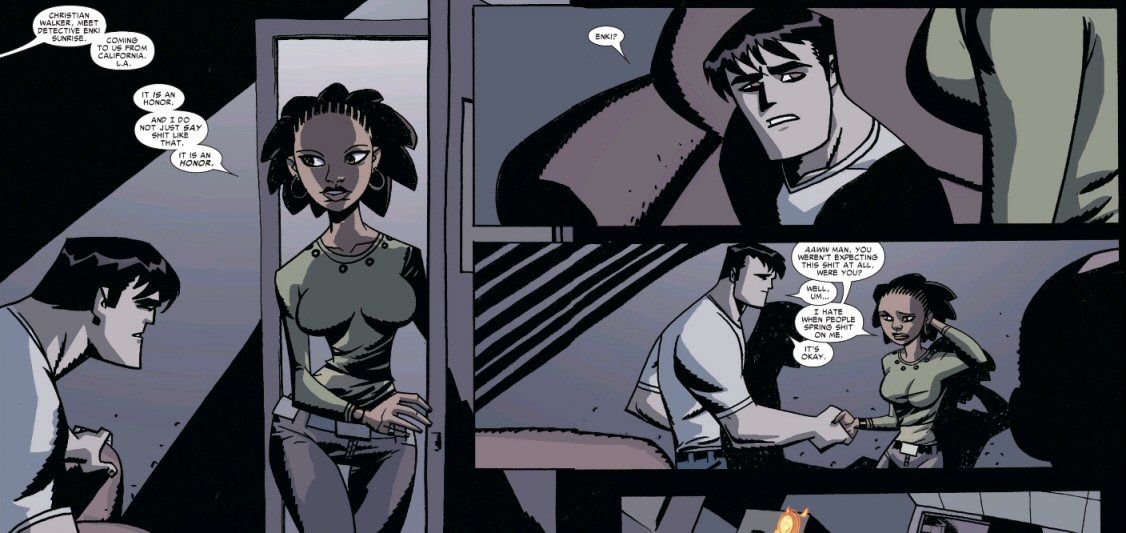
Sunrise is an interesting character – initially extremely deontological in her moral thinking. As you might recall from up above, by this time Walker was no longer primarily deontological in my view, and showing clear signs of consequentialism and virtue ethics. So, it made sense to challenge him with someone who was even more rigid and rule-following than he used to be.
This series also wastes no time in explaining Sunrise’s background, and why she is such a stickler for duty and rules. From the next issue, when the agent from Internal Affairs lays out the terms of her new appointment: collect dirt on Walker (and prove he is still a Powers so that he can be booted off the force) and amass evidence of Pilgrim’s suspected crimes. From Powers Vol 2, issue #26 (2007):
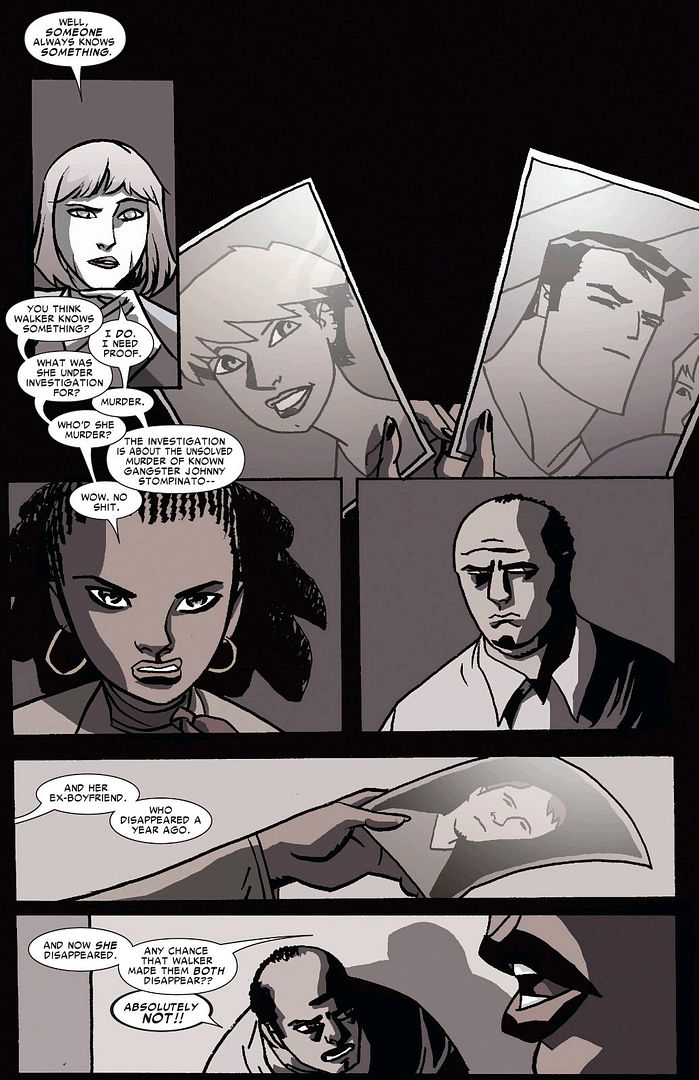
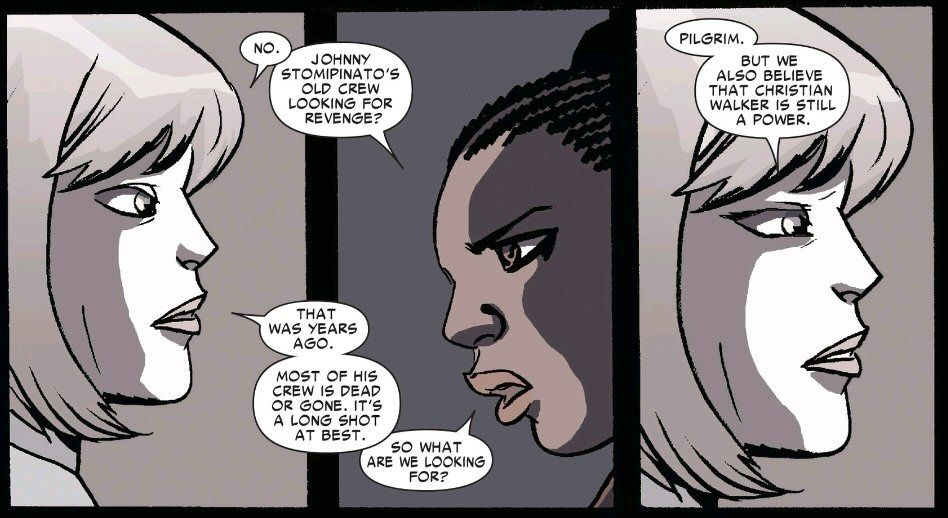
Typically, in police procedurals, cops refuse to work with the “rat squad” (as Internal Affairs is often known), for fear of being labelled a rat. Trust between partners is critical, especially when one’s life is on the line. But Sunrise sees it differently:
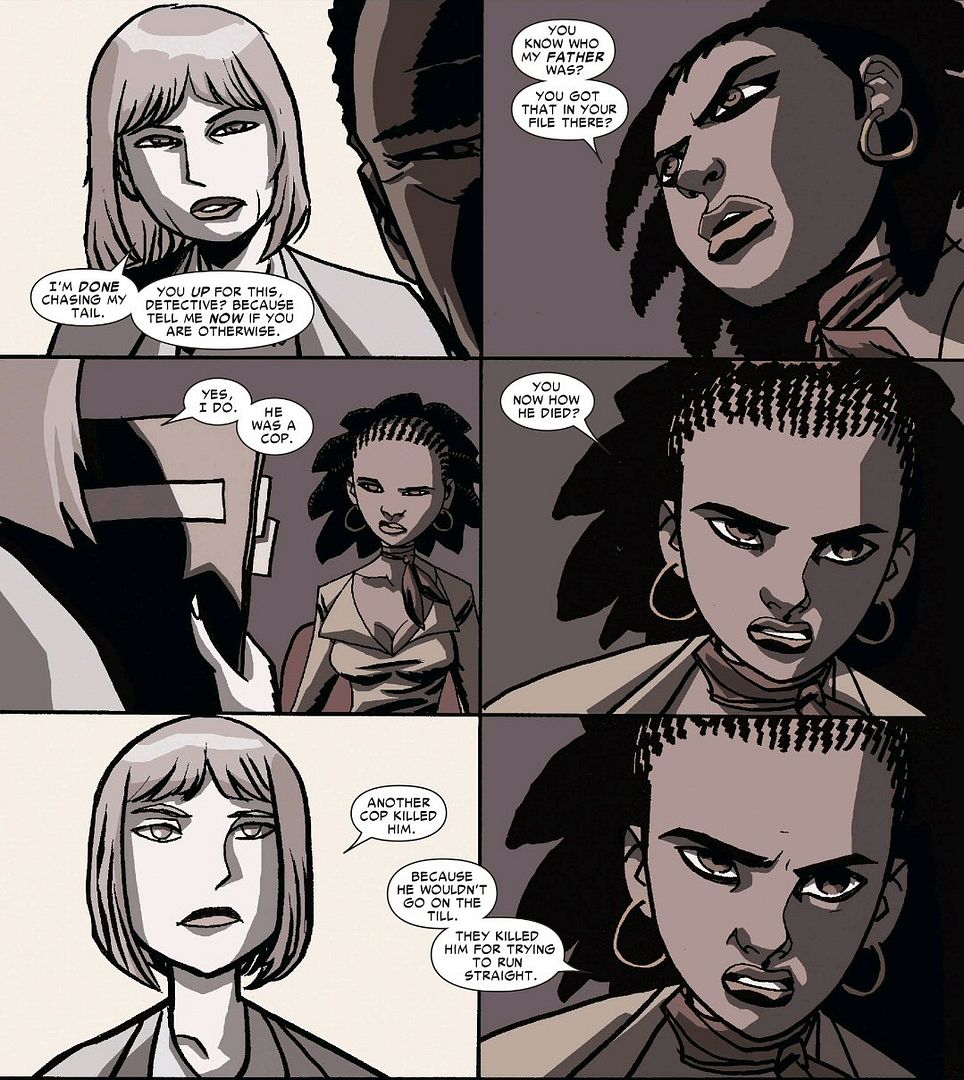
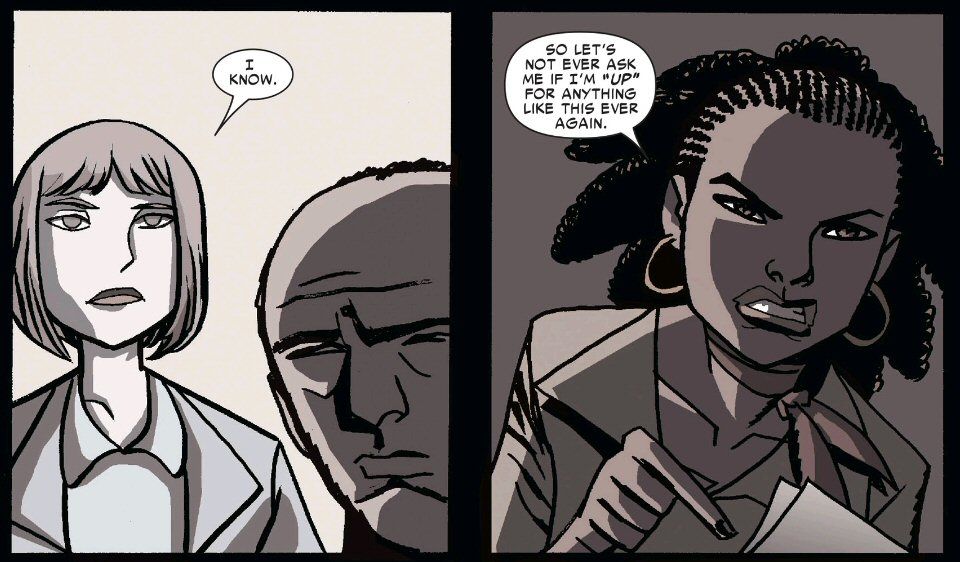
I like the lack of color in the panels above – everything is relatively monochromatic in these discussions, reflecting the “black and white thinking” that Sunrise’s deontology is inclined towards. This puts here at the complete opposite end of normative ethics spectrum from the consequentialist Pilgrim.
It isn’t long before Walker does something that Sunrise strenuously objects to – like when Triphammer is looking for his missing daughter, and Walker suspects she might be in their morgue. From Powers Vol 2, issue #27 (2007):
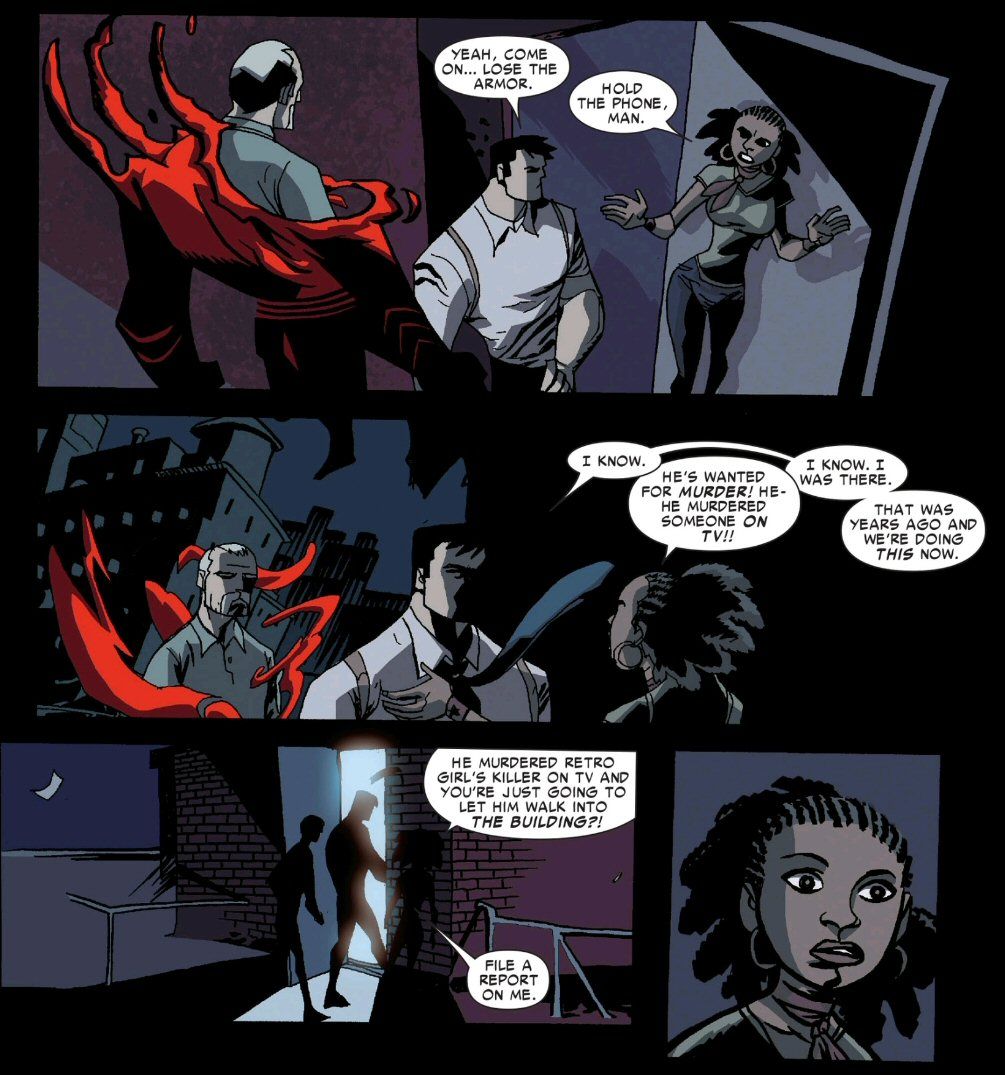
Eventually, Pilgrim is cured of the powers virus – with all suspected charges dropped (against the wishes of Internal Affairs). She also receives a hefty payout, to prevent her from suing the department for all the trauma she experienced in the performance of her duties. Of course, the very deontological Sunrise isn’t happy with that outcome either – as she explains in very moralizing terms. From Powers Vol 2, issue #30 (2008):
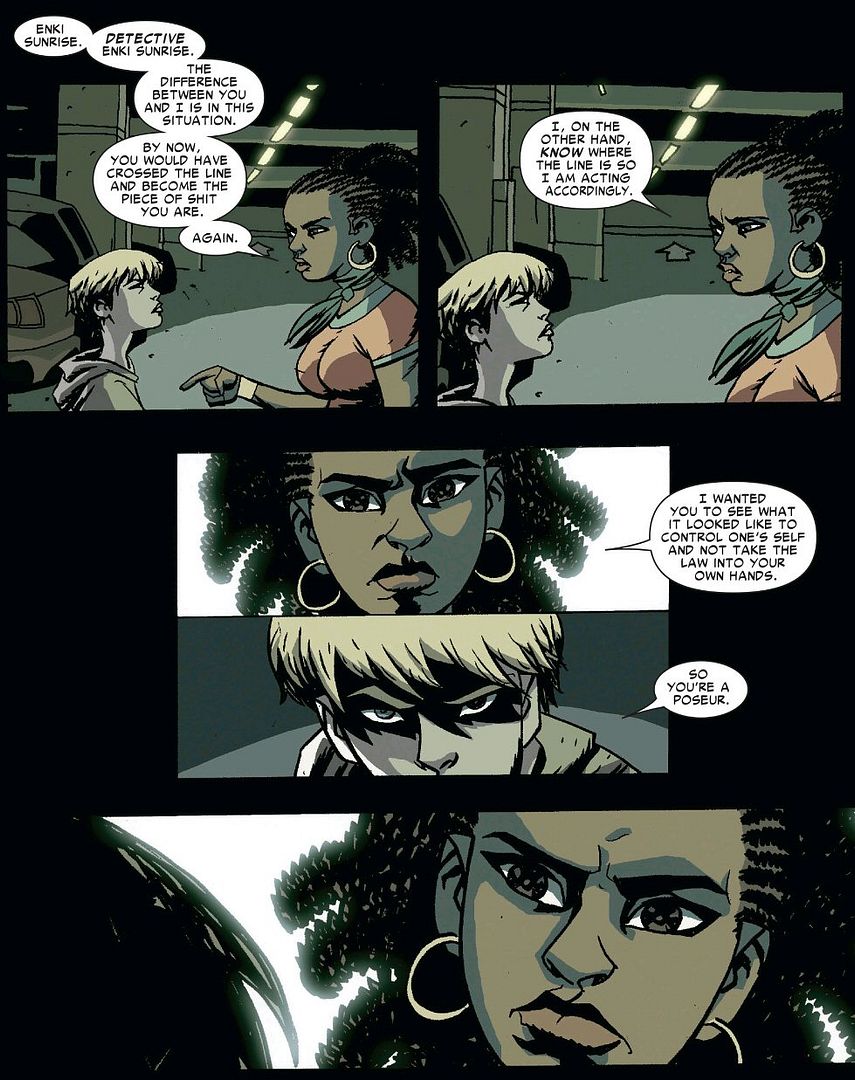
That’s an interesting way to put it!
The main form of deontology today is Kantian ethics, named after Immanuel Kant. He was all about creating a rational framework for moral duty that treats people as you would like them to treat others (and always treating people as ends onto themselves, and never as a means to an end). Those are the two common phrasings of his categorical imperative. Superman is a good example of Kantian ethics in the comics world – but it is relatively rare otherwise, as it is difficult to maintain absolute and universal rules in a morally-ambiguous world.
For example, lying is very much against the Kantian moral code – which puts Sunrise in a very conflicted position as the third volume begins. Note this scene from the first issue, where Sunrise (like Pilgrim before her) is taking unnecessary risks to bring down suspects, in an apparent effort to prove her value. From Powers Vol 3, issue #1 (2009):
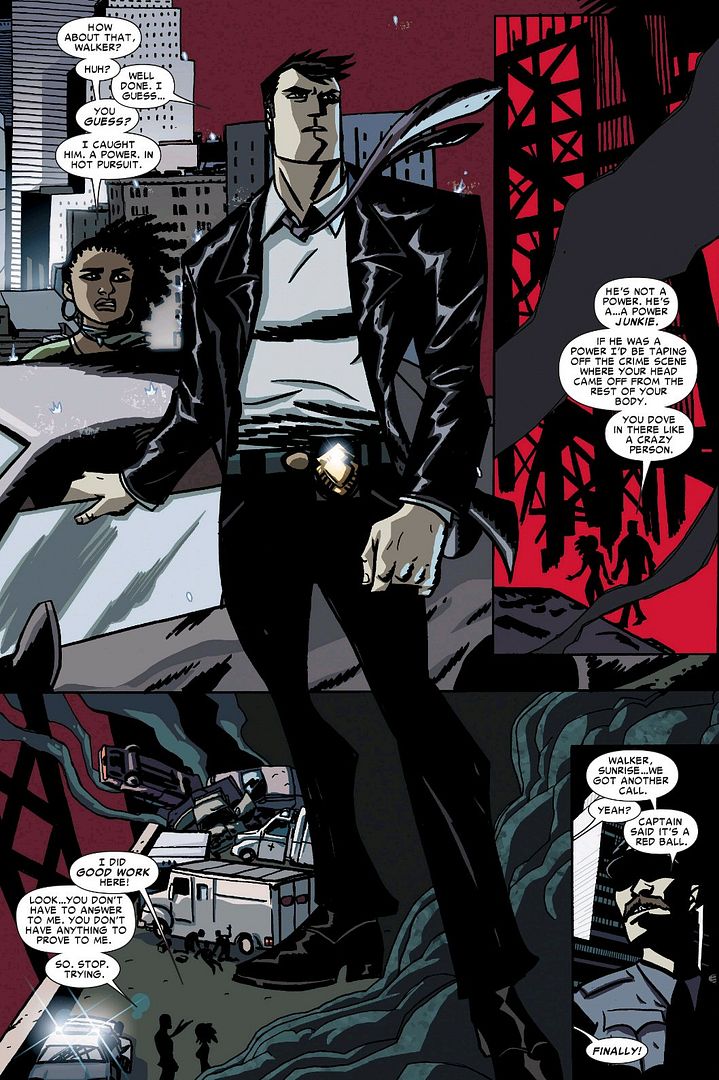
Walker’s advice seems to be quite accurate and appropriate. Regardless of how he may feel about Sunrise, he is still showing his classic virtue ethics. But the very moralistic Sunrise cannot let it go:
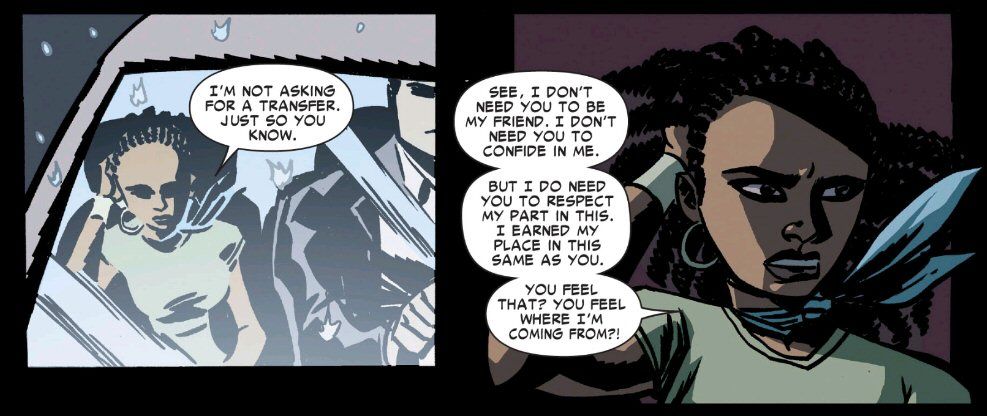
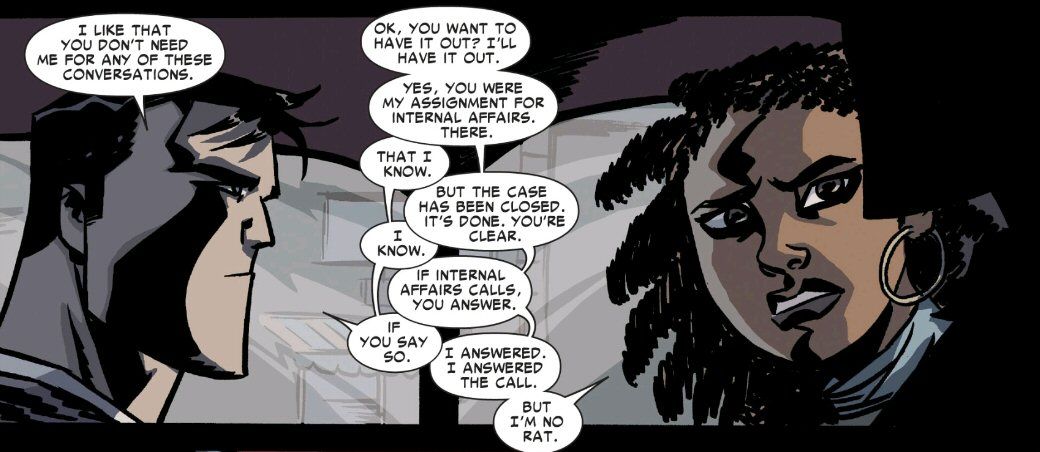
As it turns out, Internal Affairs is not done with Walker – and Sunrise is still investigating him and supplying them with information. You can see the ethical conundrum for Sunrise – her deontological moral sense causes her to support the investigation, but she also wants to maintain the sense that she is not a lying “rat”.
As an aside, Walker’s pithy comment above nicely highlights how his conversations with Sunrise are (at best) dialogical in their tone, unlike the dialectical ones he had with Pilgrim (see my earlier discussion above for the meaning of those terms). This is not surprising, given the moral inconsistency at the heart of Sunrise’s character – it is hard to have a dialectical conversation when you aren’t being honest with yourself. Instead, she keeps trying to argue her case (in vain):
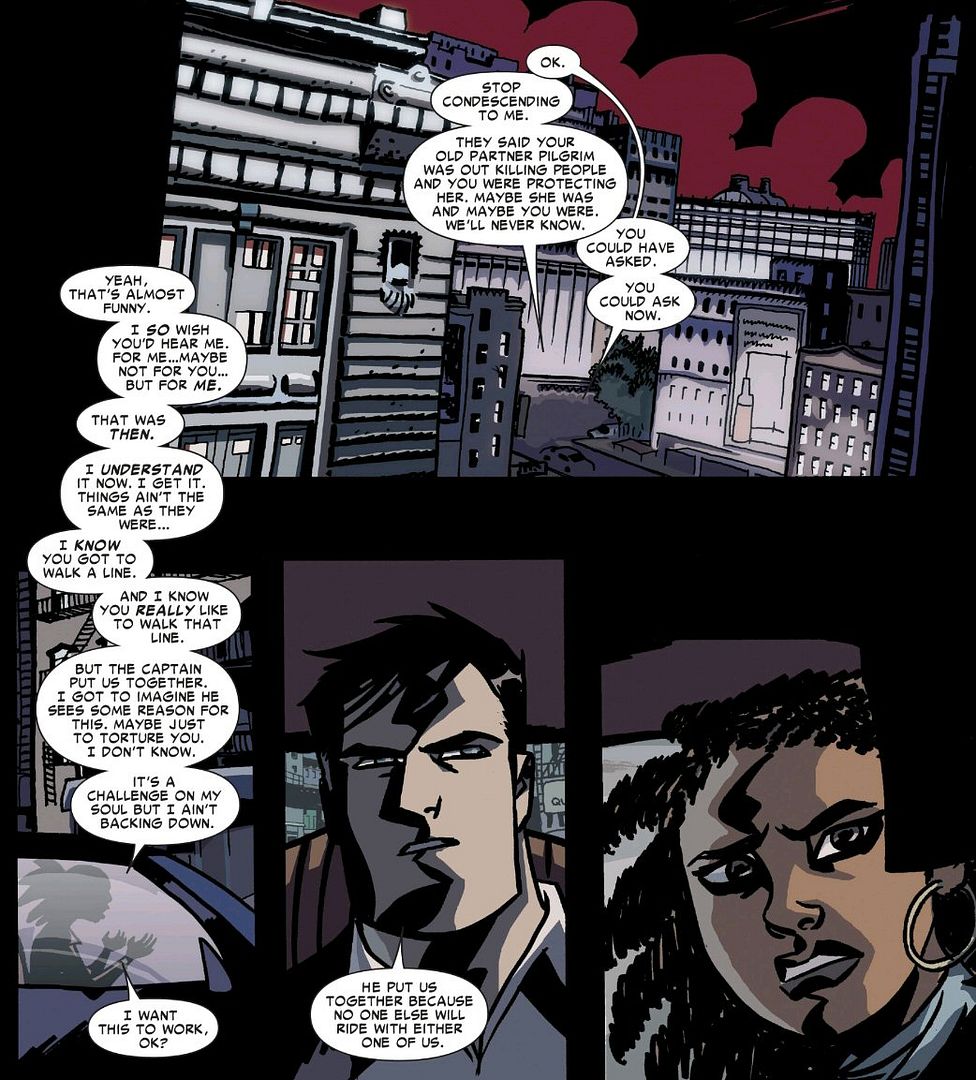
Ouch. Again, Walker is being factually accurate and honest here (although he later apologizes for saying it so bluntly to her). Despite her protests, we all know that the other cops will indeed see her as a “rat”.
But what I find interesting is her reasoning above – there must be “some reason” why their Captain (aka Bendis!) put them together as partners. She acknowledges that “it’s a challenge on my soul” working with him – again, because of her extremely deontological nature – but she wants to work it out. She may not realize it yet, but that’s going to require her to broaden her moral approach.
This volume does a great job providing more context for Sunrise’s moral character. See these home scenes, with her husband and nephew. Powers Vol 3, issue #5 (2010):
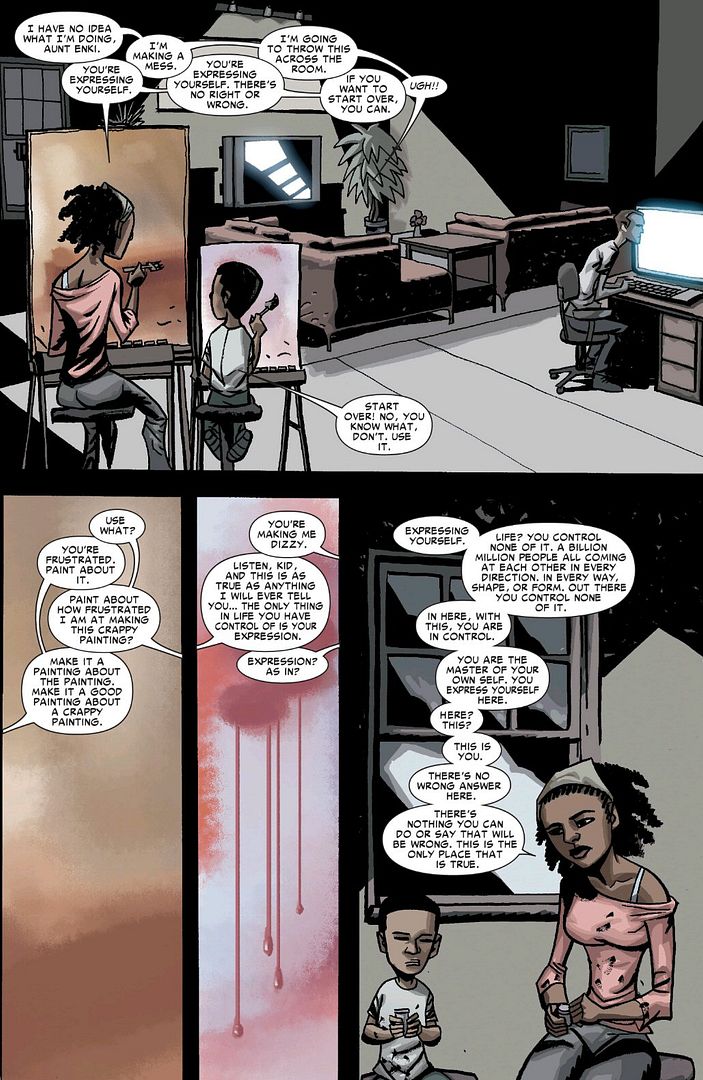
That’s actually very good advice from Sunrise. But it also helps show why she personally hews so closely to deontology – it gives her a feeling of control over herself, by following a rigid moral code.
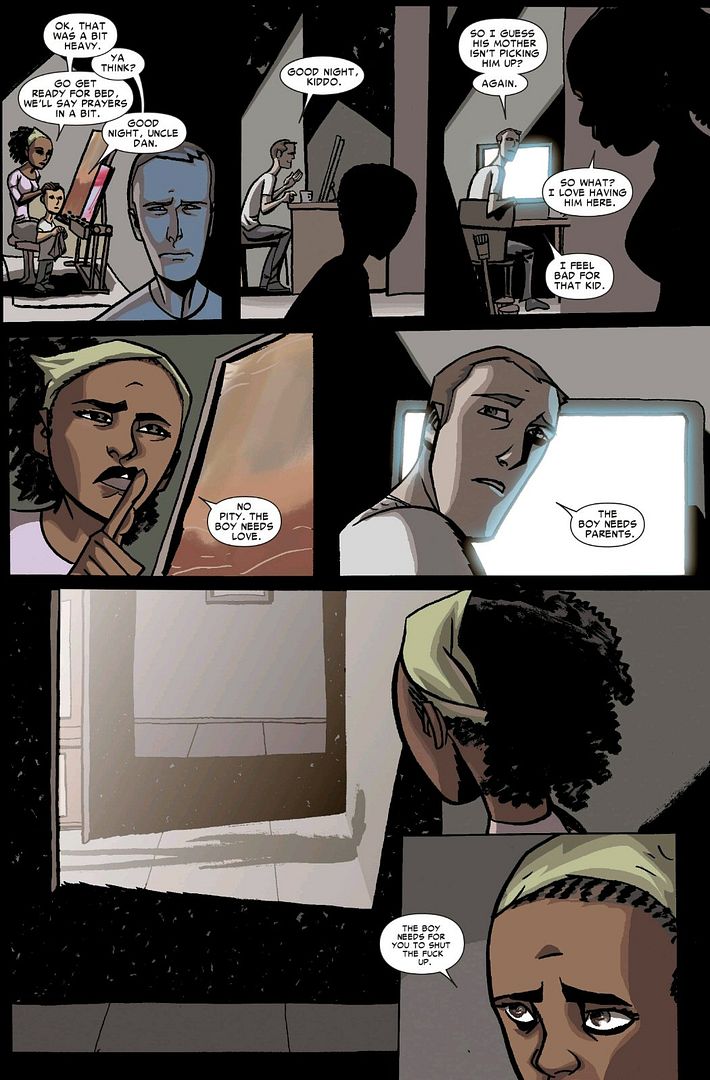
I don’t know what form of normative ethics her husband prefers, but it’s pretty clear they are not on the same page here. Note the “saying your prayers” line is significant too, as most major modern Western religions are heavily deontological in their precepts.
This disconnect between the spouses is made even clearer a few pages later:
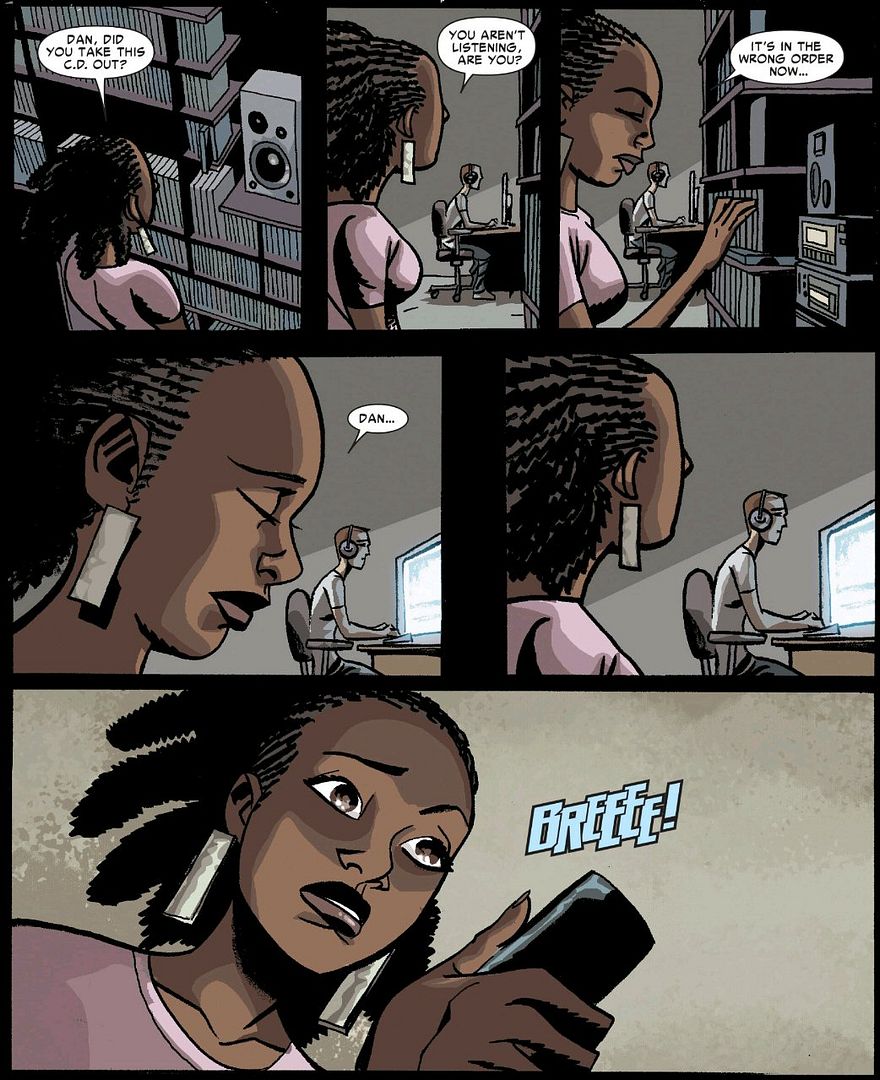
Again, I love how the CD arrangement further reflects her meticulous nature – everything has to be in its right place!
Meanwhile, that call reflects the other major sub-plot of this story arc: Walker’s fiancé had been getting visions of the future, and just decided to leave him. This sets him down his usual path of self-destructive heavy drinking:
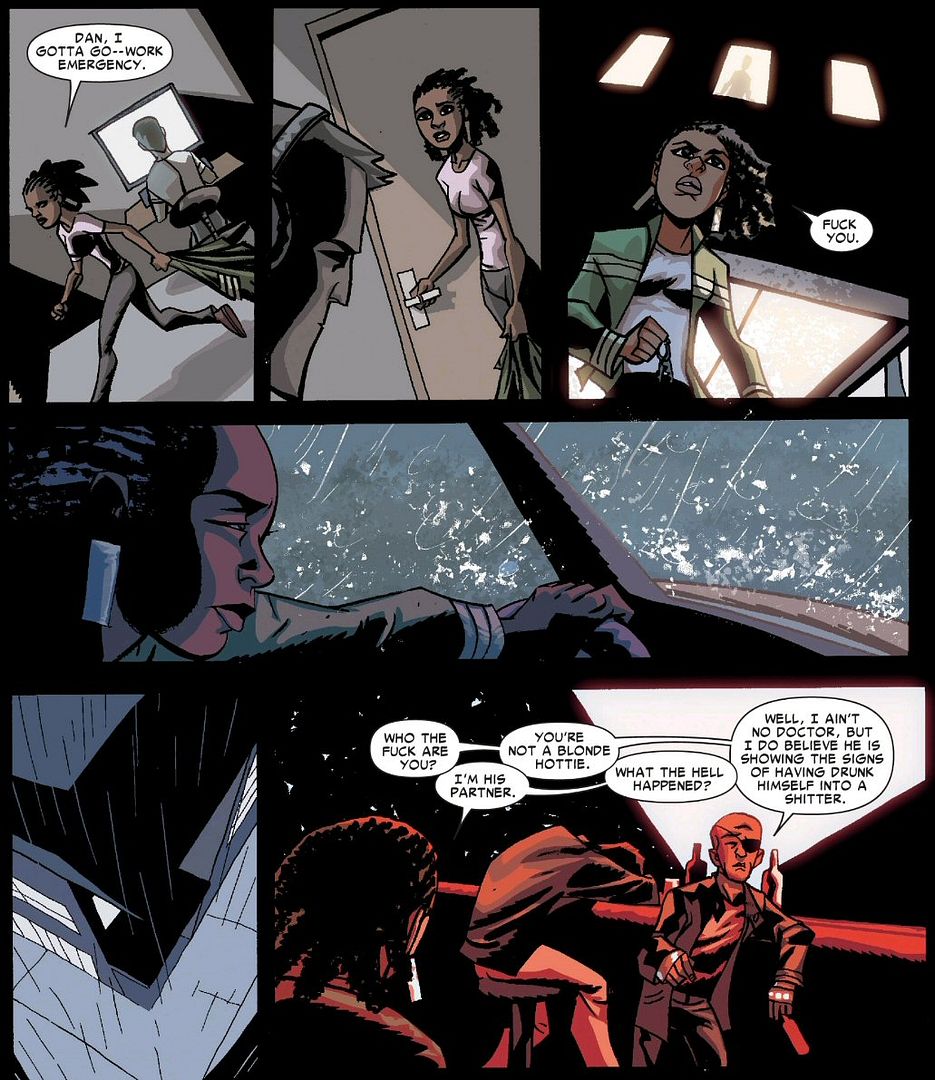
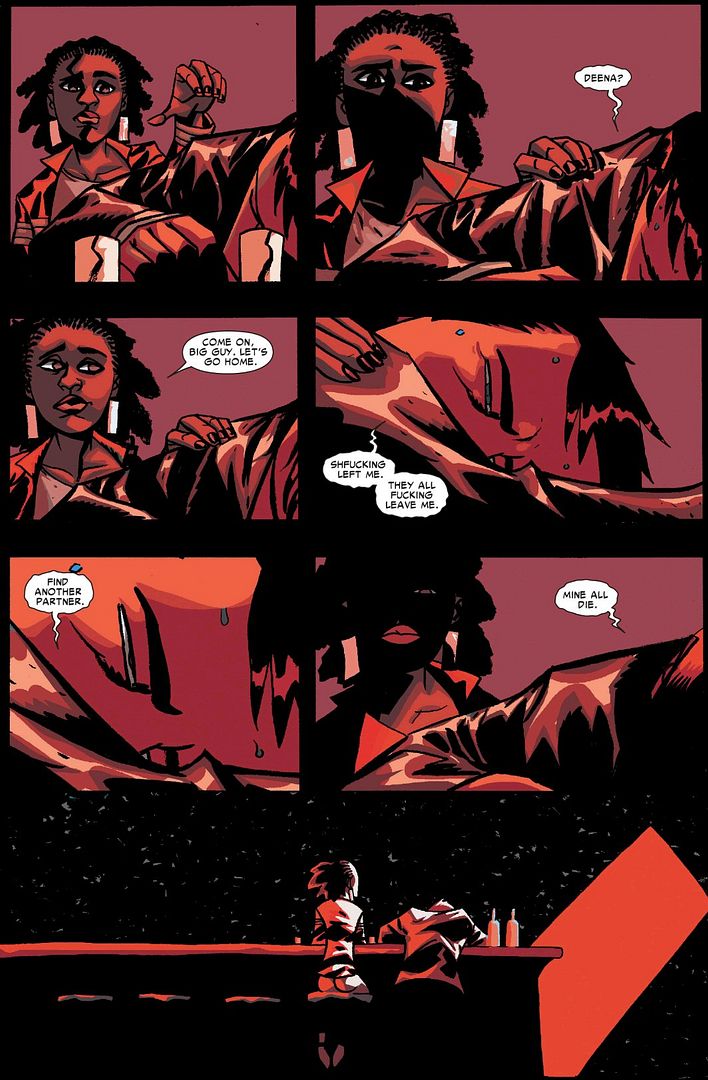
Of course, at his lowest, he calls out for his true partner – Pilgrim. But it is Sunrise that answers the call, and shows great sympathy for him. Going forward, Sunrise is even more conflicted in her ongoing surveillance. From Powers Vol 3, issue #6 (2012):

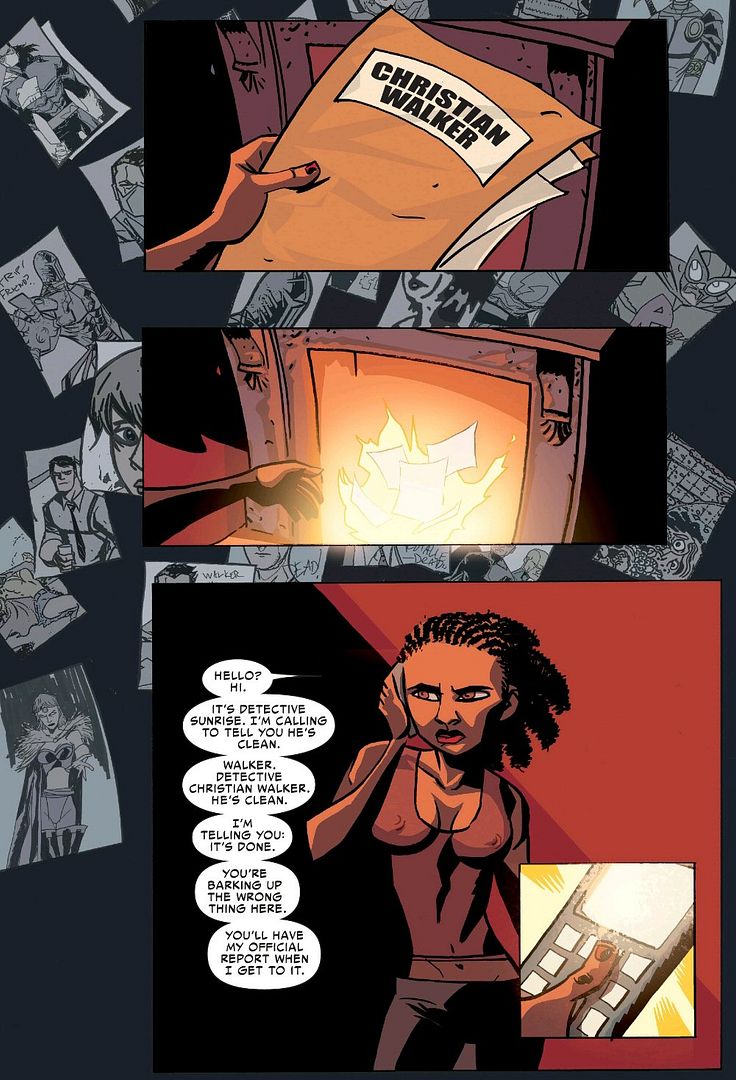
Sunrise comes close to throwing her Walker file into the fire after this scene but decides to keep pursuing her inquiry. Her clumsiness about it almost gets her found out a couple of times – and it is implied by the pauses and silences in various scenes that Walker suspects she is still working for Internal Affairs. And he wouldn’t be the only one. From Powers Vol 3, issue #8 (2012):
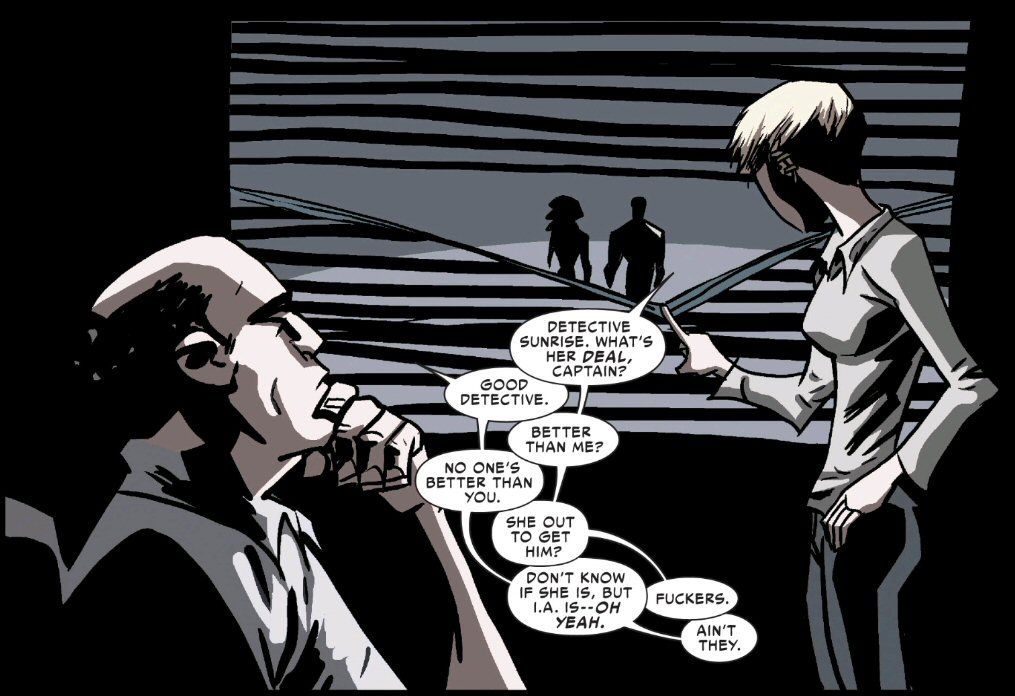
Eventually, we learn a little more about her nephew – it turns out that it wasn’t just her father that was a cop, so was her deceased brother. Powers Vol 3, issue #9 (2012):
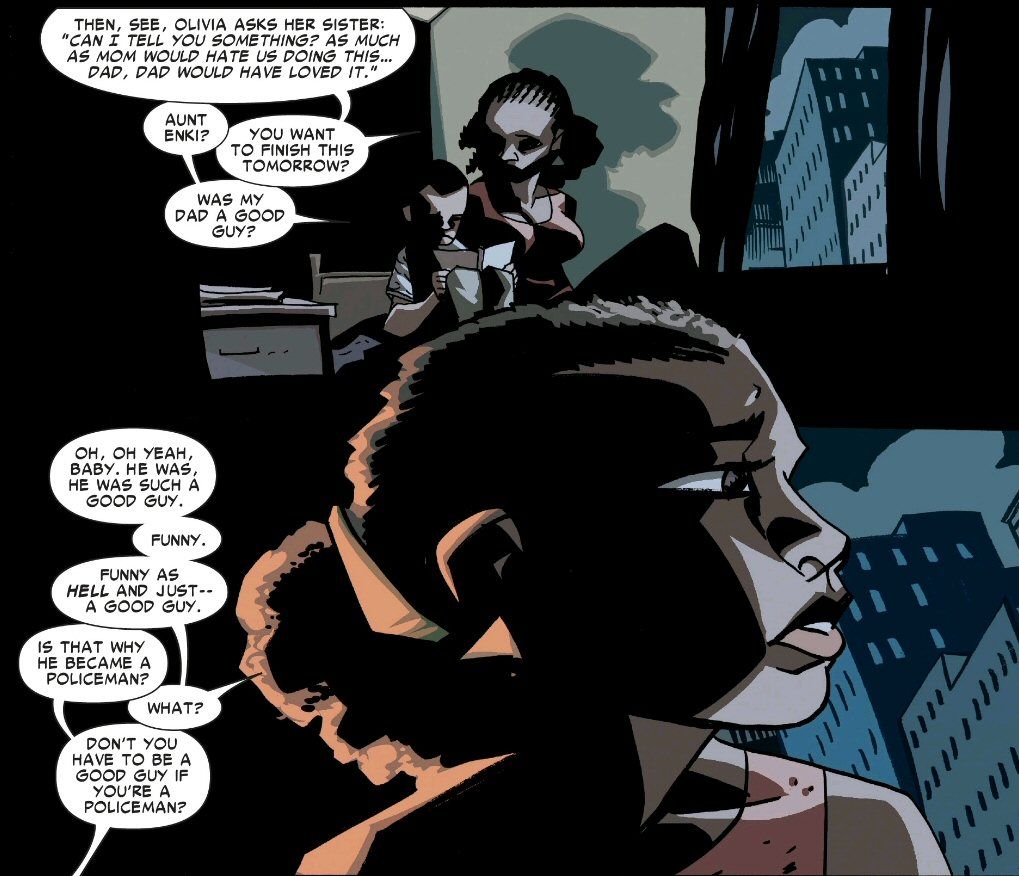
This familiar reminder causes her to follow Walker and spy on him – where she observes him meeting with Retro Girl, whom he has been secretly mentoring. Sunrise nearly gets herself caught snooping again – but this latest confirmation of his good character is enough for her to finally resolve to end her secret investigation:
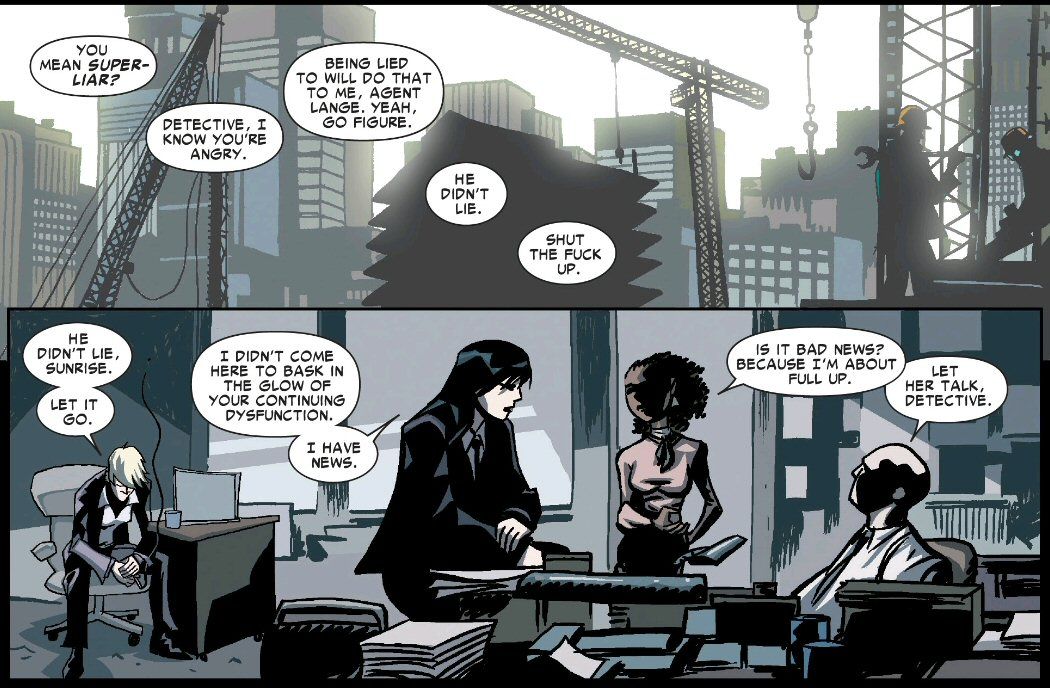
And that is why she reacts to badly when he soon reveals that he does indeed have powers. From Powers Vol 3, issue #11 (2012):
After Walker saves the world, he disappears for awhile. Sunrise hangs on to her anger at being “lied” to by Walker (when she in fact had been lying to him this whole time):
At this point, the Chicago Homicide Powers squad gets subsumed into the FBI (which is the premise of the next volume, Powers: Bureau Vol 1). But the Powers series’ core “power corrupts” theme comes back with a vengeance at the FBI – not surprisingly, things go very badly when Powers are put in charge. Eventually, Pilgrim is on the run, having unearthed evidence of the massive corruption of the bureau. And who is the only one she can turn to? From Powers: Bureau Vol 1, issue #12 (2014):
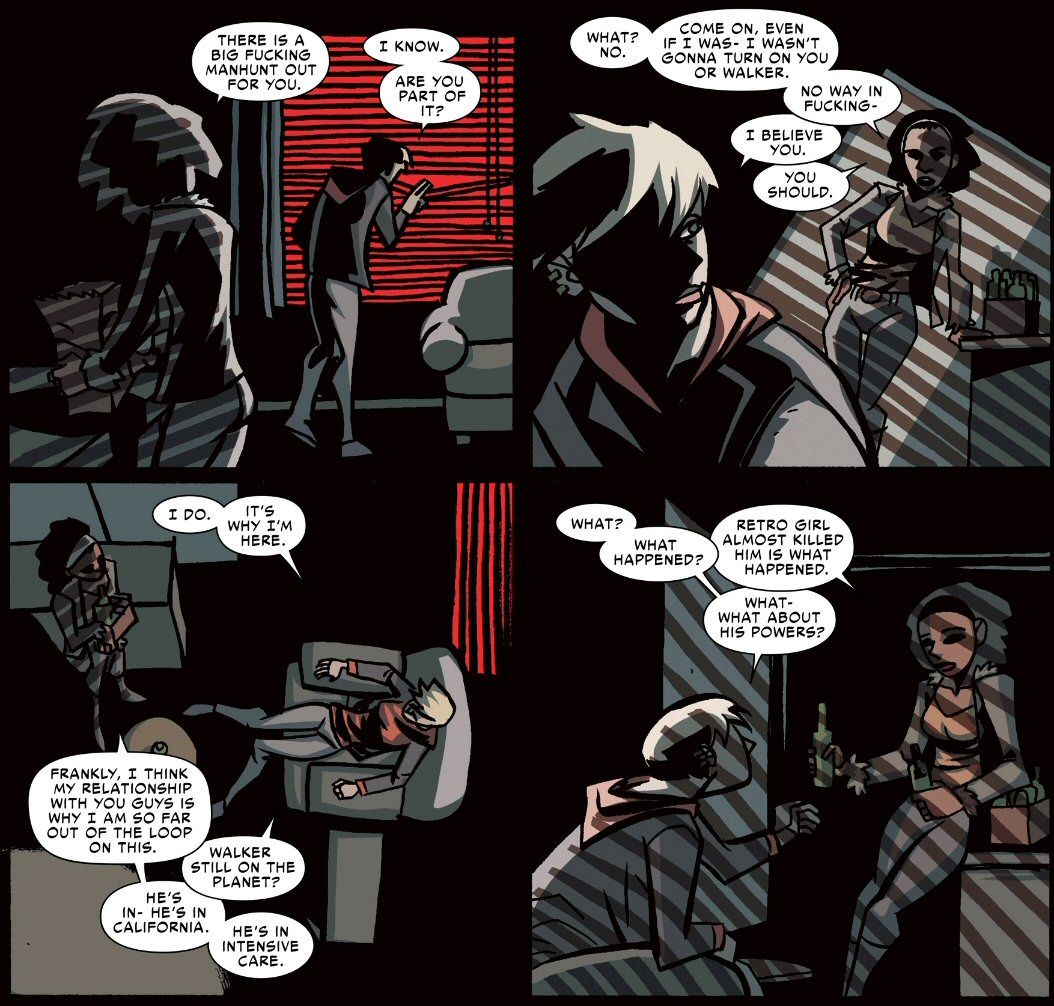
Walker is in a coma at this point, due to the Millenium Guard’s revocation of his powers – with “maximum prejudice” you might say (see my Retro Girl overview for more info).
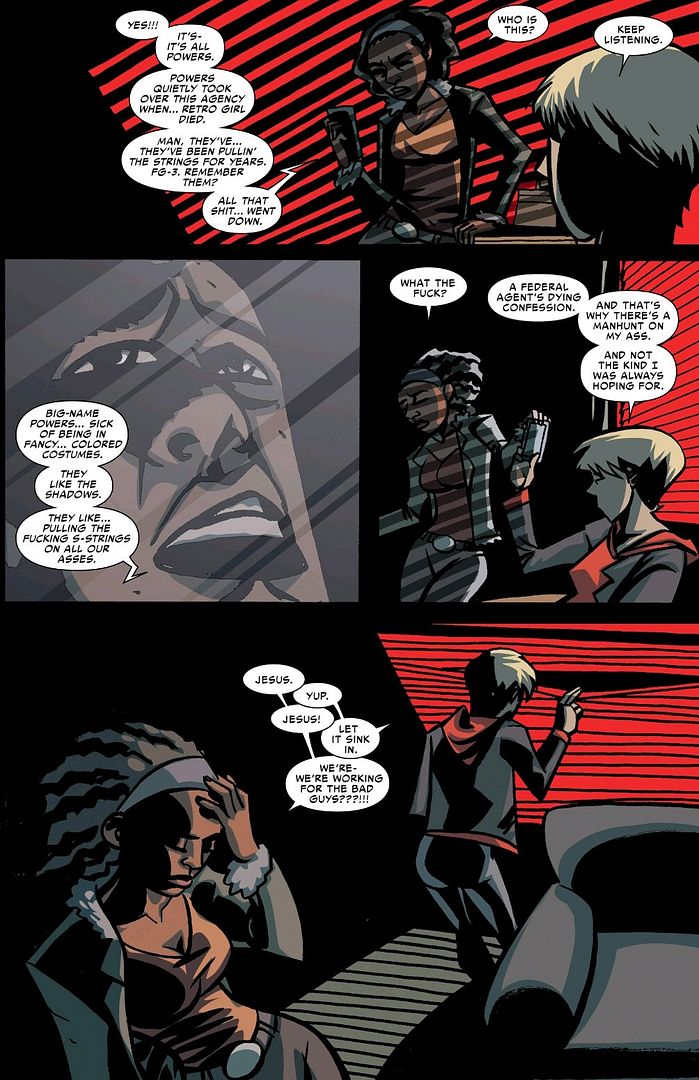
And there it is. Poor (formerly) deontological Sunrise – discovering that she is doing her duty and following the rules – all while working for the bad guys!
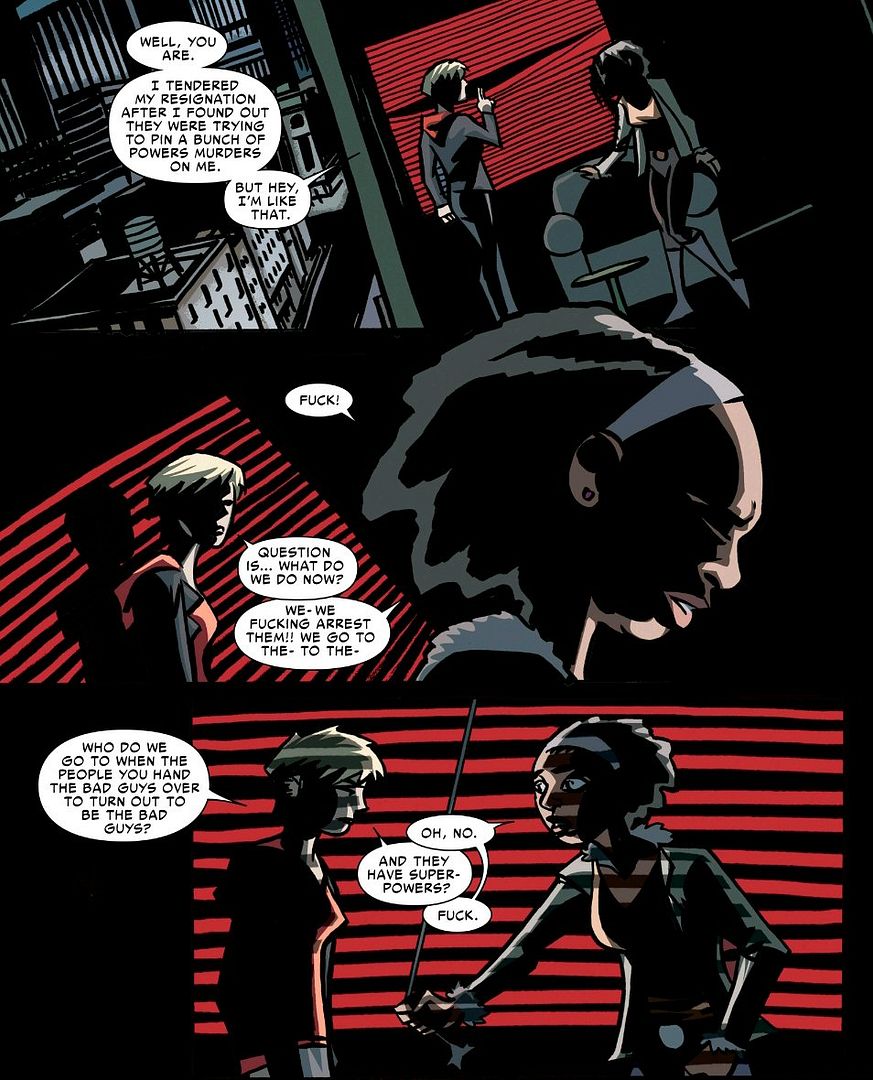
Indeed!
Not to worry, they figure it out. By the start of Powers Vol 4, Pilgrim and Sunrise are partners (with Captain Cross and the Chicago PD), while Walker has gone off again on another one of his drunken spirals. This one sees him get rolled by an anonymous sexual partner’s boyfriend, looking for Diamond paraphernalia to steal. Walker apparently gets his revenge on the pair – causing the woman to come to the police to file a complaint for a broken arm. Sunrise decides to take her statement … but note how the first thing she does is turn off the camera in the interview room. From Powers Vol 4, issue #4 (2015):
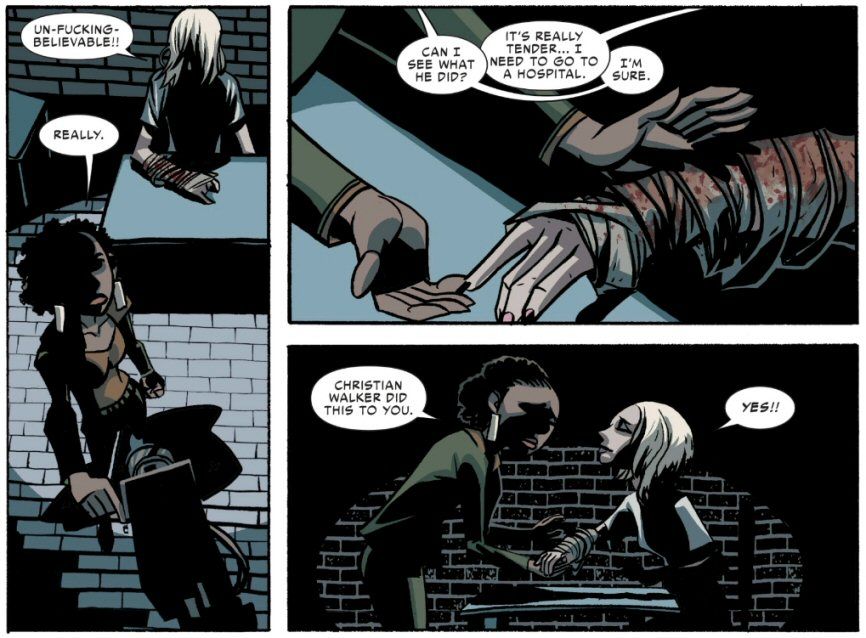
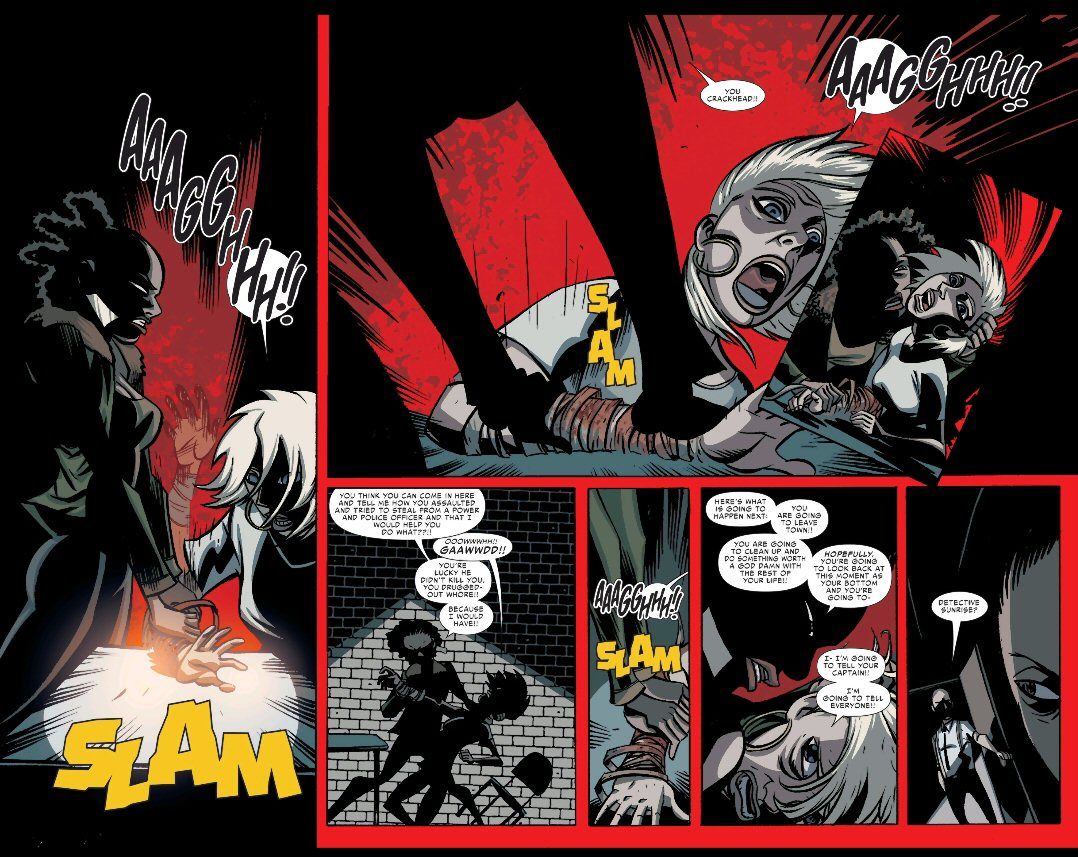
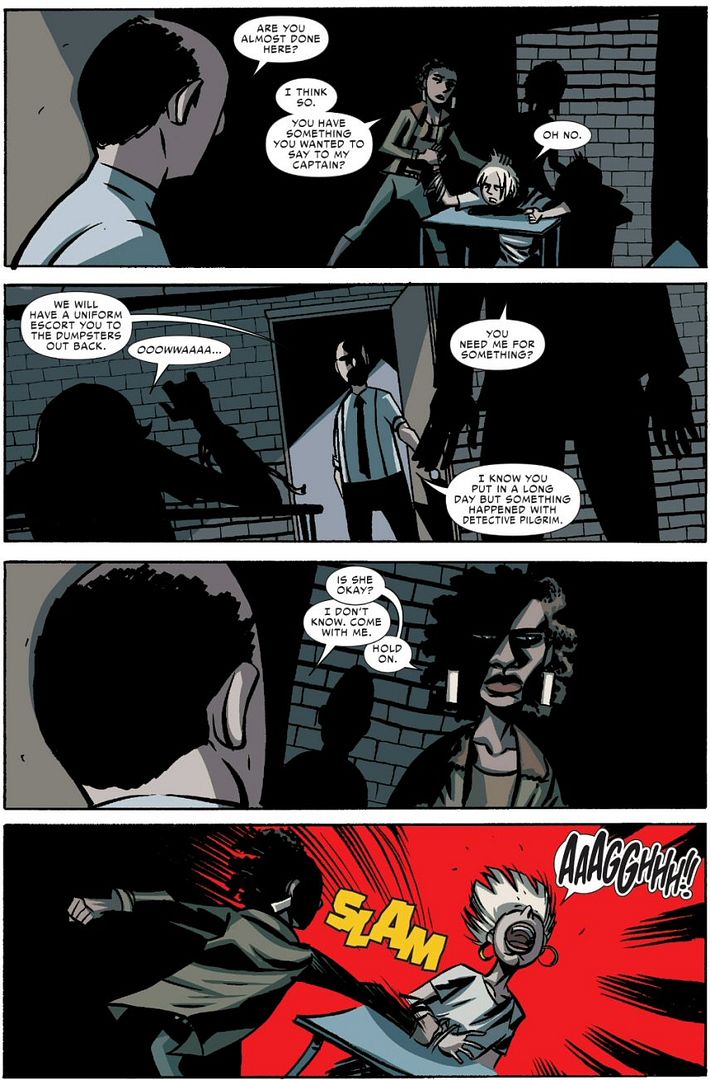
Wow, detective Sunrise has come a long way!
I love her discussion of this event with Walker later in the issue:
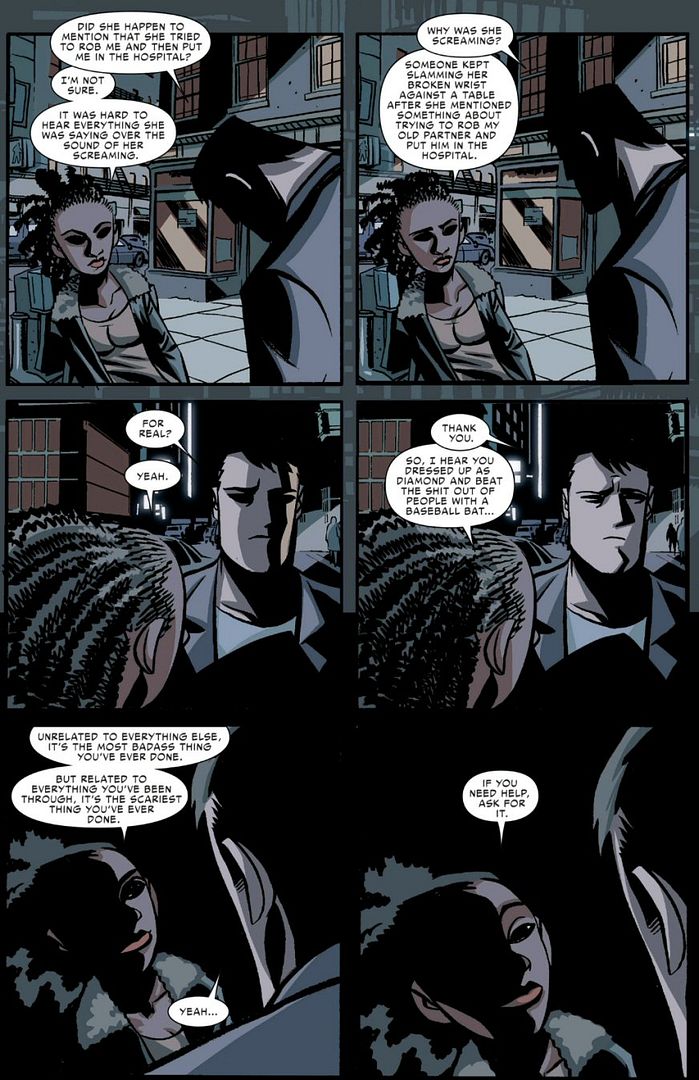
As entertaining as these scenes may be, it’s impossible to imagine the original Sunrise character from the second and third volumes acting this way. But her experiences over the Powers: Bureau volume and the fourth volume have clearly taken a toll on her, and she responds with fierce loyalty to her found family of fellow officers (Walker in particular). And there are signs of virtue ethics starting here as well, such as her reminding Walker that he should ask for help when he needs it (good advice!).
The subsequent years continued to take a toll on Sunrise, as we can see in the jump-forward in time of Powers: The Best Ever (2020). At this point, Captain Cross is gone (hopefully retired) and Sunrise has been promoted to Captain of the squad. She is less than thrilled to see Pilgrim again (not surprising, given the dark turn Pilgrim took at the end of the fourth volume).
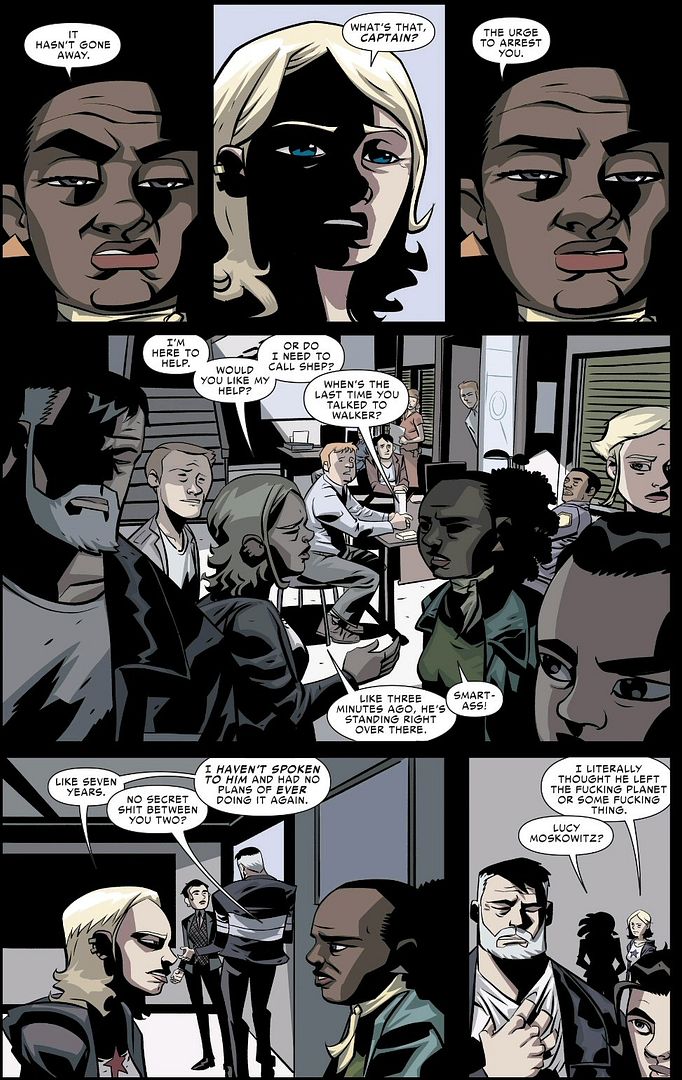
But she obviously still cares deeply for Walker:
What I particularly like about the ending to the graphic novel is how Sunrise comes around in terms of Pilgrim. I suspect the years have given her a chance to reconsider her own moral inconsistencies – which, from a virtue ethics perspective, would help you have compassion for others’ failings. Consider this extended sequence at the end (after Walker’s death and funeral):
As I mentioned in my Pilgrim overview, this is a surprising shift in perspective from the formerly deontological Captain Sunrise (Kant would be spinning in his grave!). Sunrise has always had a contentious relationship with Pilgrim, given how they initially represented extremes of opposing ethics. But she is willing to bend pretty far for the unique situation that is Pilgrim’s life experience: “That maybe the moral rules of the universe aren’t completely absolute — that they have to bend in extreme cases”. That is a great quote, and underscores what I feel is one of the key moral messages of this series.
But there is more to this offer:
This is good example of virtue ethics from Sunrise – offering Pilgrim a chance for redemption. And I like the karmic reference. For those who aren’t familiar, the philosophical aspects of Buddhism are another form of classic virtue ethics (which I describe in my FML comix post).
For a character who was created with such an extreme form of black-and-white deontological thinking initially (as a counterpoint to the extremely consequentialist Pilgrim), it’s nice to see them meet more in the middle. Which is the reoccurring theme of this series that I will discuss at the end.
Calista Secor (Retro Girl)
The very first story arc deals with the murder of the beloved Powers hero known as Retro Girl. But as we eventually learn, it turns out that Retro Girl is not a single person, but a reincarnated spirit that has taken different forms over the years. Many of these have known Christian over his long life – and while he doesn’t remember the previous versions, the reincarnated Retro Girls all seem to have some awareness of him.
That first issue also introduced us to Calista Secor – a young girl who was left abandoned in a case Walker was working on, and who develops a close bond with him when she is placed in his temporary custody. Eventually, Calista grows up to be the latest iteration of Retro Girl – something that was presaged at the end of the first story arc. From Powers Vol 1, issue #6 (2000):
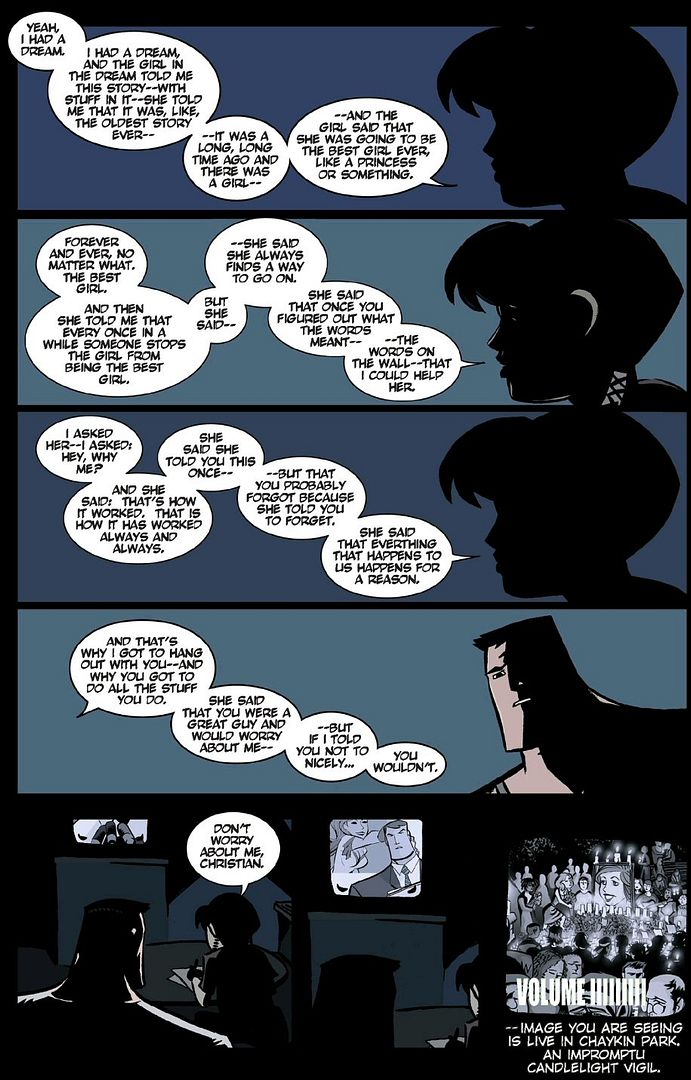
In adult form, Retro Girl is one of the most powerful powers (you can see her full powers list at the old powers fandom wiki). But Calista has a lot of growing up to do first, and first manifests as Retro Girl as a young teen in the second volume. She is heavily dependent on Walker for his guidance and mentoring – which he reluctantly takes on only because he doesn’t want to see her get hurt. From Powers Vol 2, issue #7 (2004):
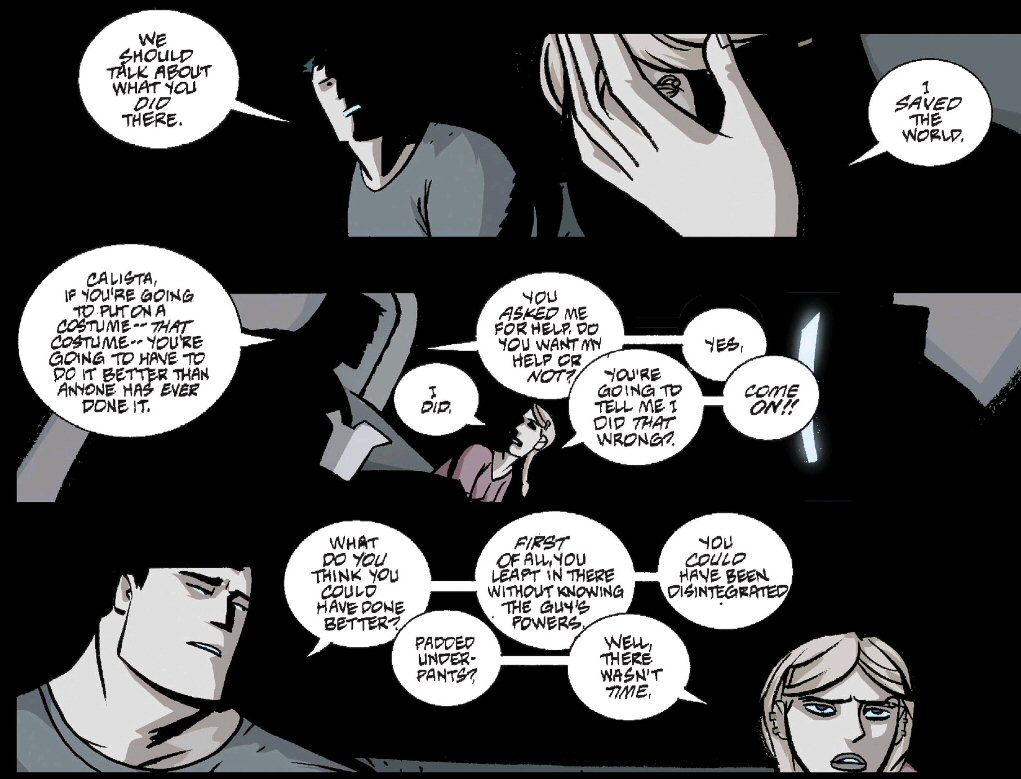
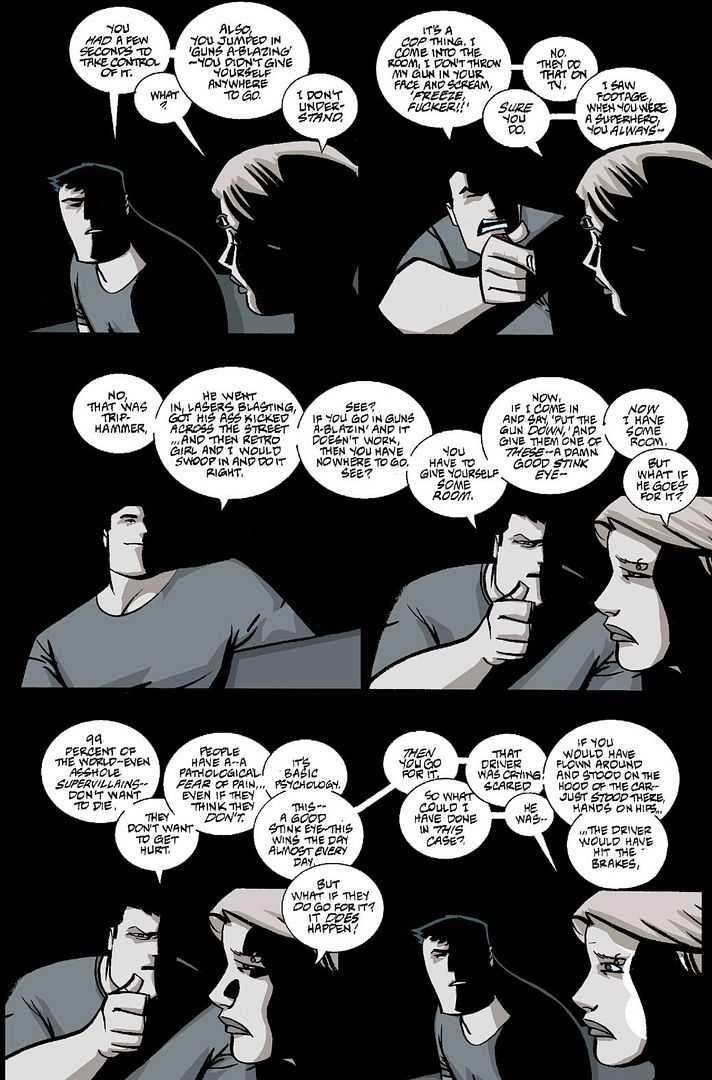
This advice has the ring of truth about it. Apparently, Bendis did ride-alongs with police as part of his research for this series, and this might be an example of that crime noir realism.
Calista keeps her identity secret (well, more or less) and many of the subsequent issues show Walker meeting with her in secret – and chastising her for taking too many risks. But she is also the one person he confides in when he gets powers given to him by the Millennium Guard. From Powers Vol 2, issue #17 (2006):
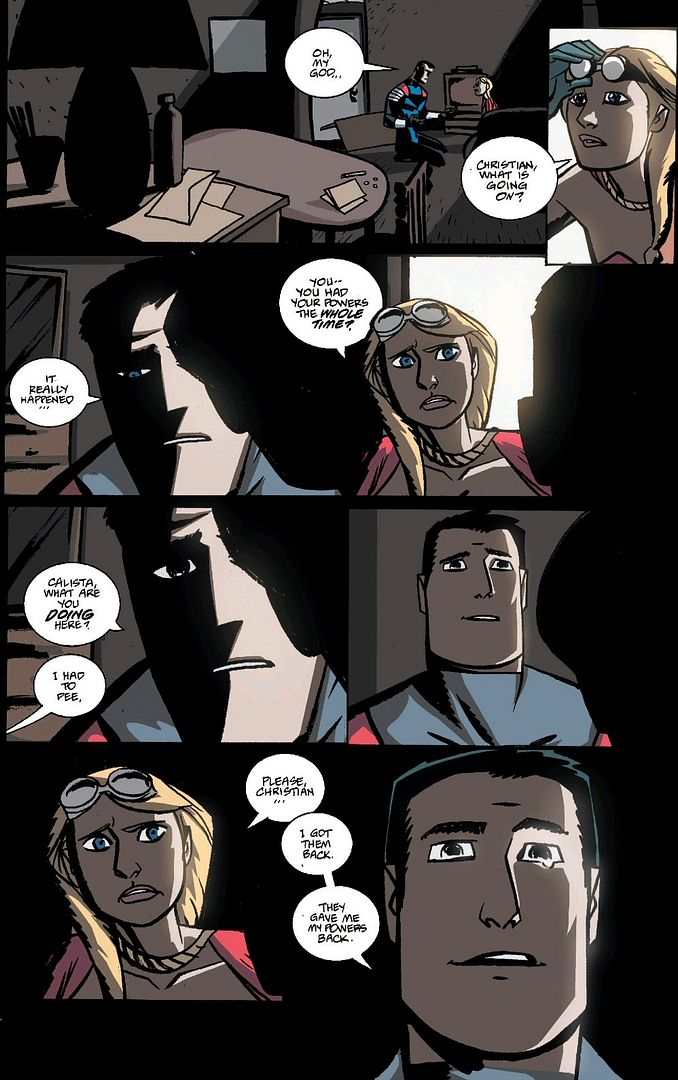
Calista’s character isn’t as well fleshed out as the series’ leads in Powers – likely because she is still very much in development and doesn’t have a lot of opportunities to lead story plots. While she does have a strong sense of duty from the beginning, it is clear that she is growing into a virtue ethics character over this series’ long run. I’ll describe an example of that down below, but I also see it clearly in the new ongoing Powers 25 Vol 1 series that I will write about later.
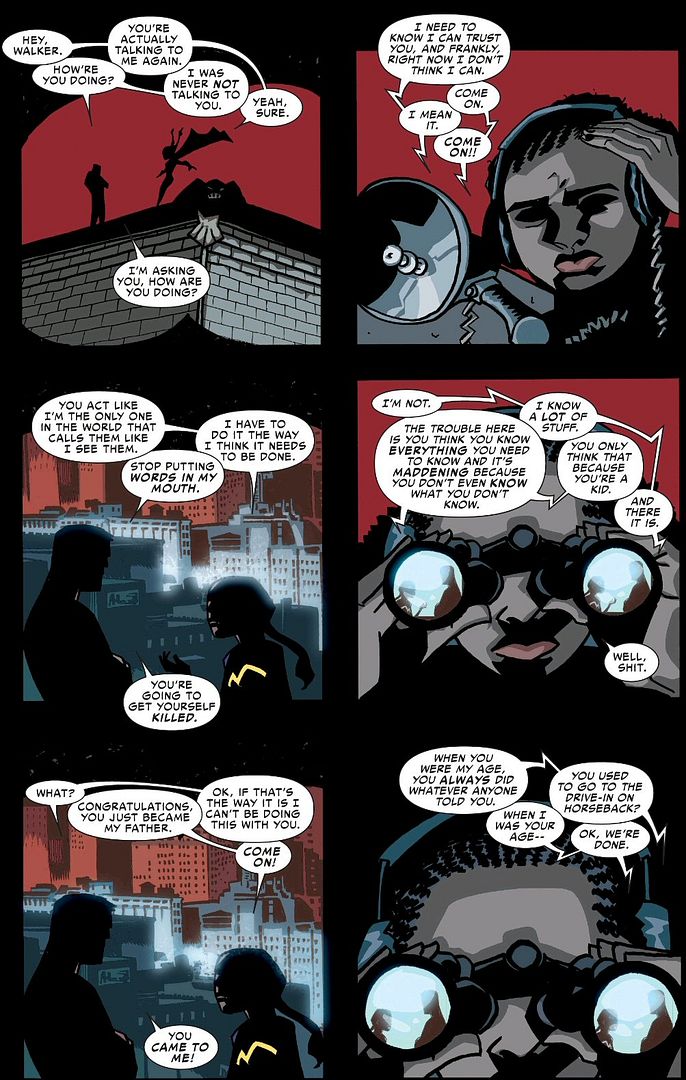
The character is a lot of fun when she does show up – I particularly like the sass she dishes out to Walker. Here’s an example from when Enki Sunrise was spying on Walker, from Powers Vol 3, issue #9 (2012):
But there are also quieter character beats – like this page from Powers Vol 3, issue #7 (2011):
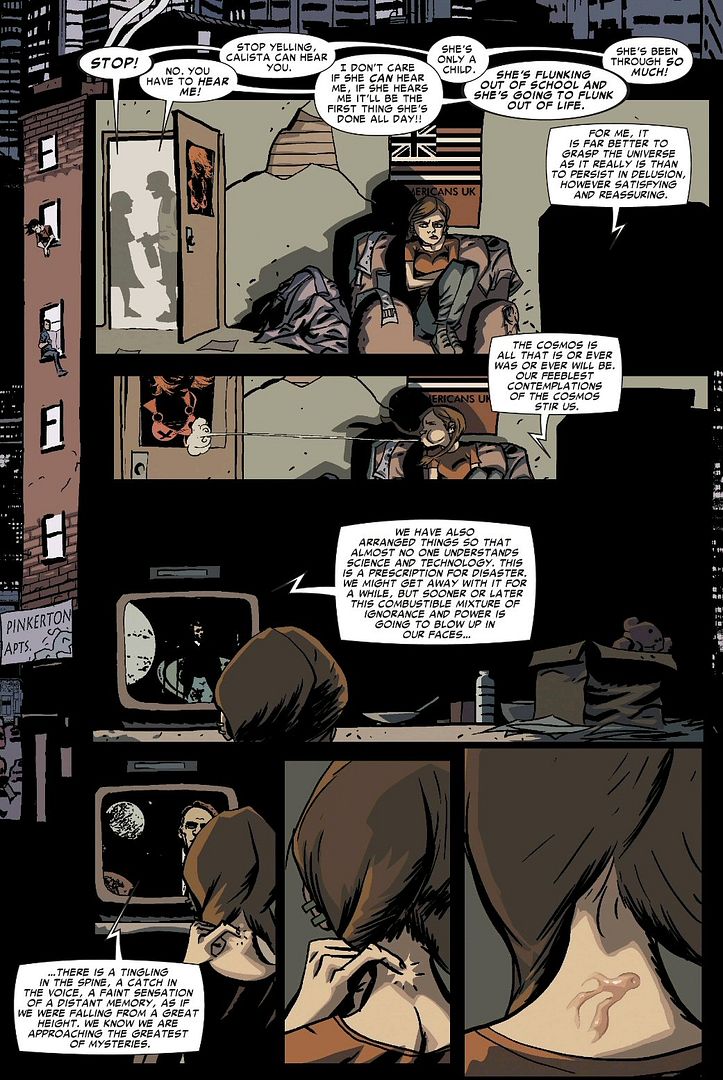
These panels remind us that while she is a Powers in her own right, she is still a foster child living in less-than-ideal circumstances (I like the use of her Powers breath above!). But I also love this page for the background – that’s Carl Sagan as the unnamed speaker on the TV set. And although he was a frequent TV commentator in the 1970s and 80s, that second passage is actually from his final book, The Demon-Haunted World: Science as a Candle in the Dark (1995). In that book, Sagan sought to explain the scientific method in lay language, to help encourage people to think critically and skeptically (he had a great section on cognitive biases).
Calista (aka Bendis) obviously has great tastes! 🙂 Sagan wrote and spoke about these themes a lot, and I strongly encourage everyone to read this classic – it remains extremely readable and relevant. Indeed, it was also extremely prescient for challenges we find ourselves in today, with the preceding paragraph to that passage above often quoted now:
I have a foreboding of an America in my children’s or grandchildren’s time — when the United States is a service and information economy; when nearly all the manufacturing industries have slipped away to other countries; when awesome technological powers are in the hands of a very few, and no one representing the public interest can even grasp the issues; when the people have lost the ability to set their own agendas or knowledgeably question those in authority; when, clutching our crystals and nervously consulting our horoscopes, our critical faculties in decline, unable to distinguish between what feels good and what’s true, we slide, almost without noticing, back into superstition and darkness.
- Carl Sagan, The Demon-Haunted World: Science as a Candle in the Dark, 1995
This scene is also an opportunity to lay the seed (so to the speak) for what’s itching Calista in her neck. That all comes to a head with the story arc where the Millennium Guard strips Walker of his powers in 2013-14 (as I discuss below).
But first, I like this scene between Triphammer and Calista, when all hell breaks at the end of the Gods story arc. From Powers Vol 3, issue #11 (2012):
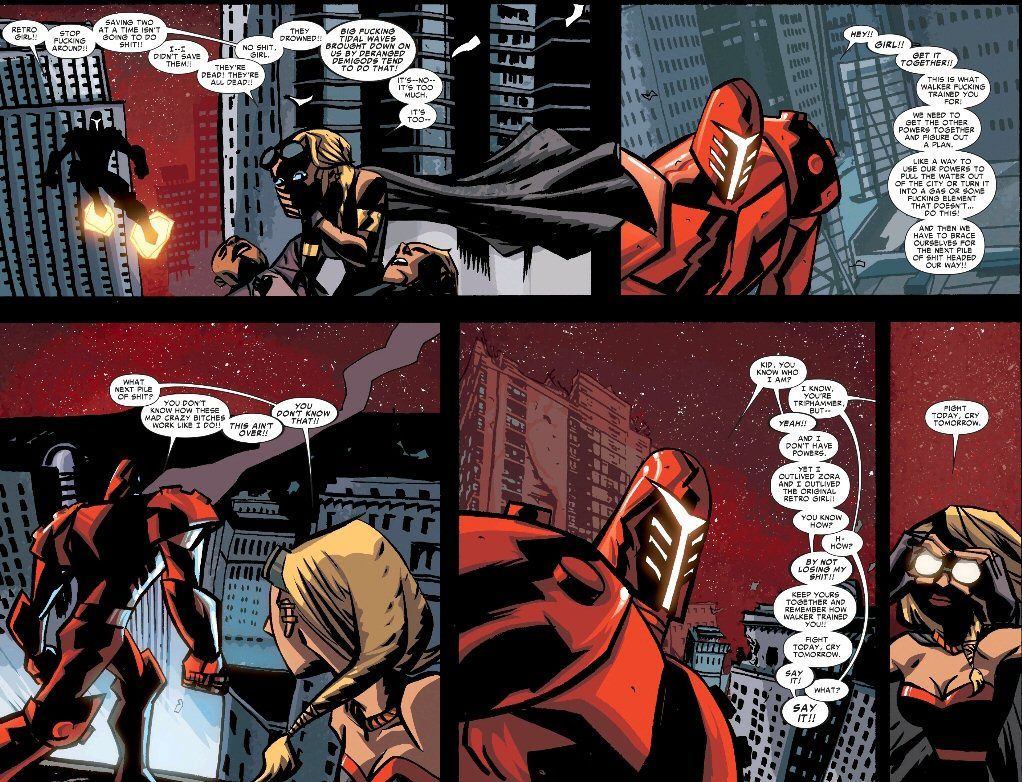
Triphammer is known to monitor situations world-wide (and keeps a close watch over his old friend Walker). So of course he knows about Calista’s training – and provides just the necessary impetus to get her back into fray. Walker himself does something similar a few pages later, once he joins the battle.
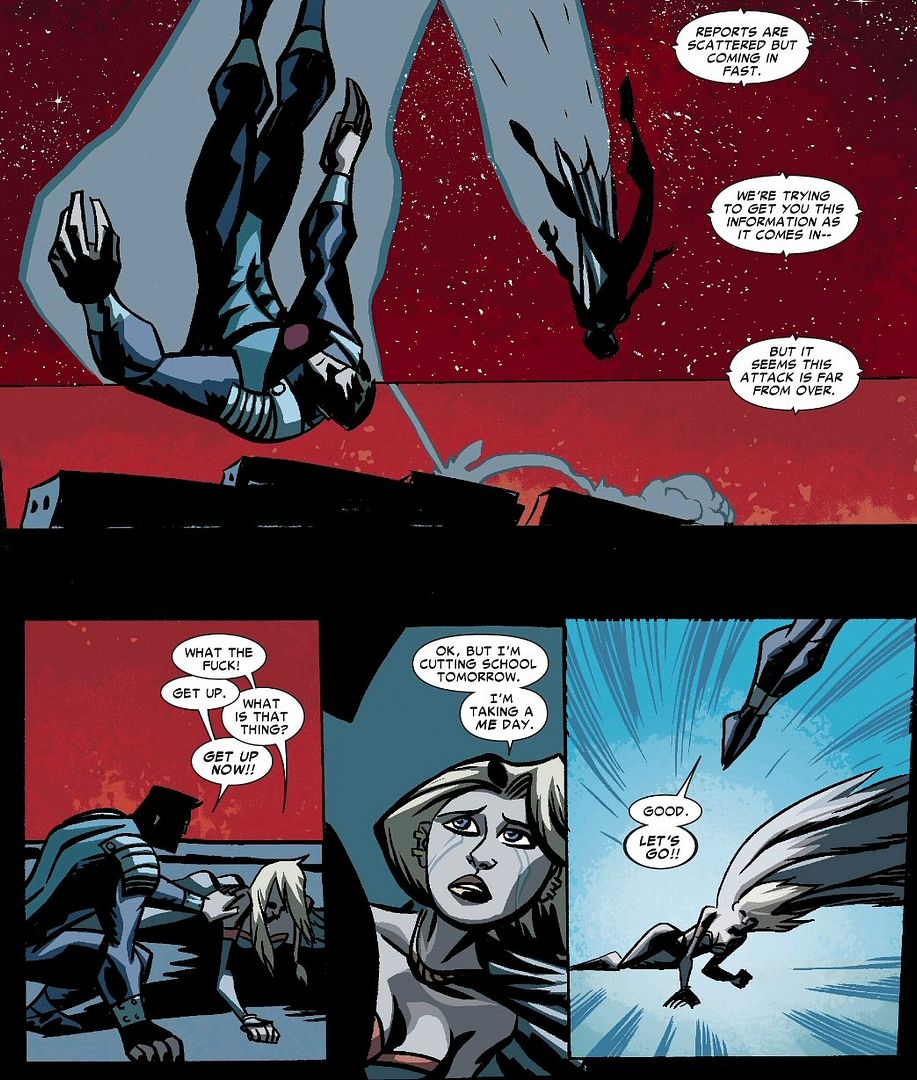
This is all part of Calista’s training in what it means to be a superhero – you are always get up, and you never give up.
Eventually, the Millennium Guard sets out to revoke Walker’s powers – and chooses to use Calista as their instrument. I’ll have more to say about the apparent ethics of this advanced civilization in my final comments. From Powers: Bureau Vol 1, issue #8 (2013):
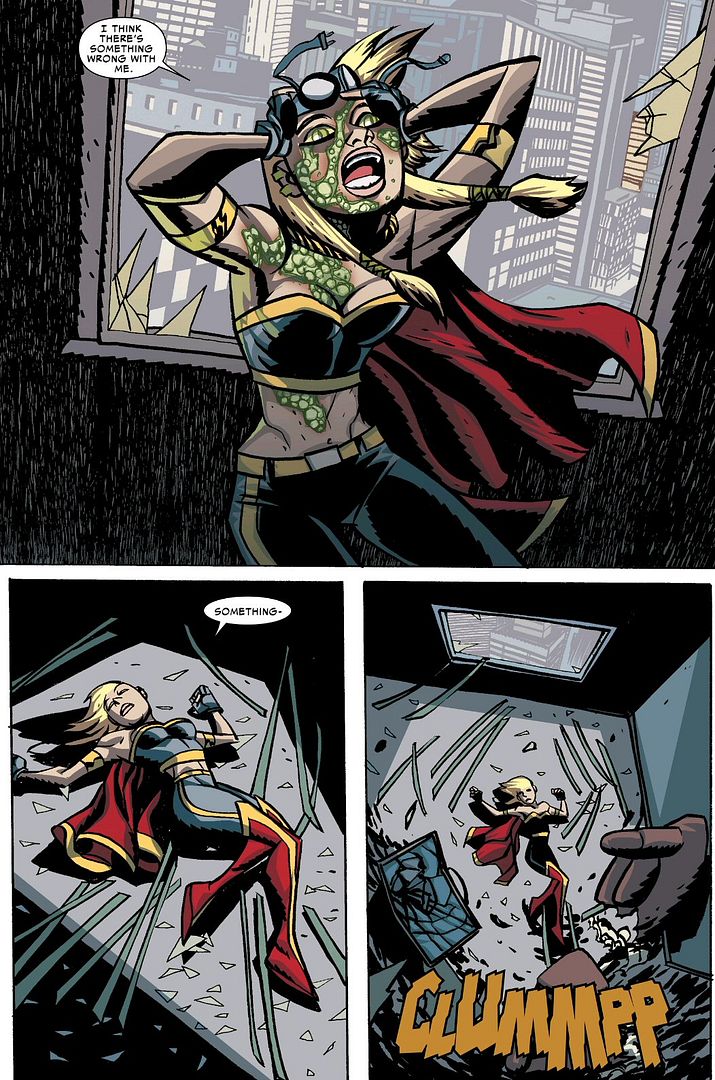
Once they assume full control of Calista, they send her after Walker. From Powers: Bureau Vol 1, issue #11 (2014):
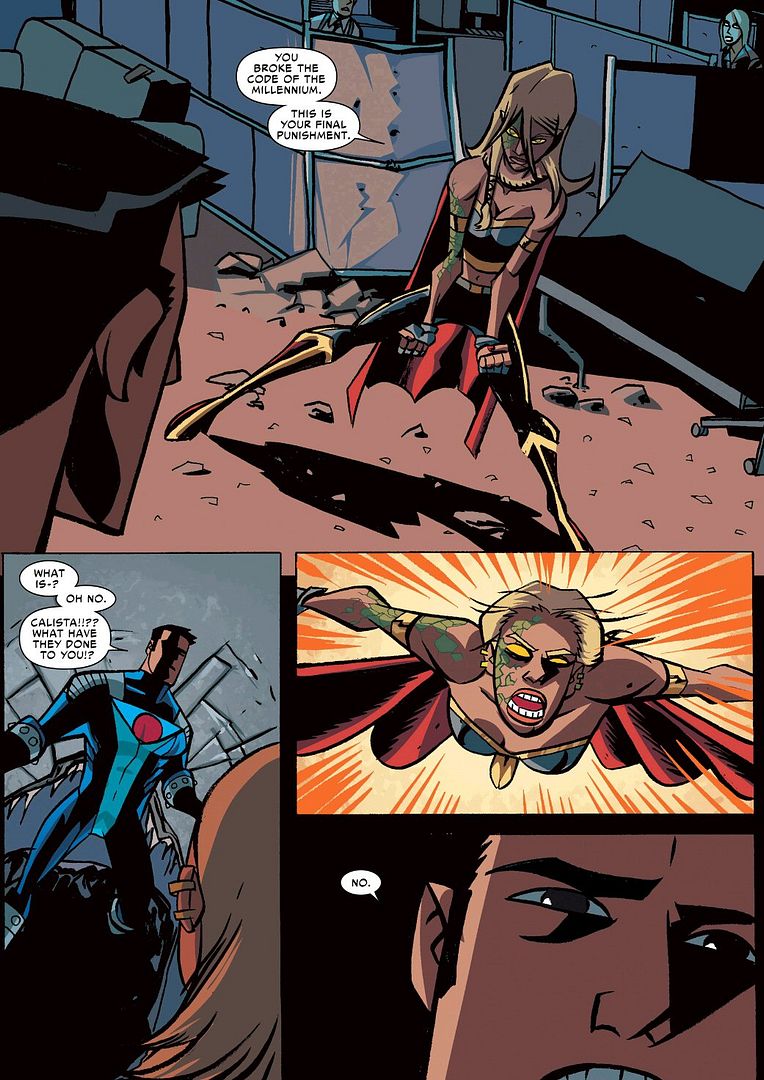
Just a few select panels of the extended fight scene:
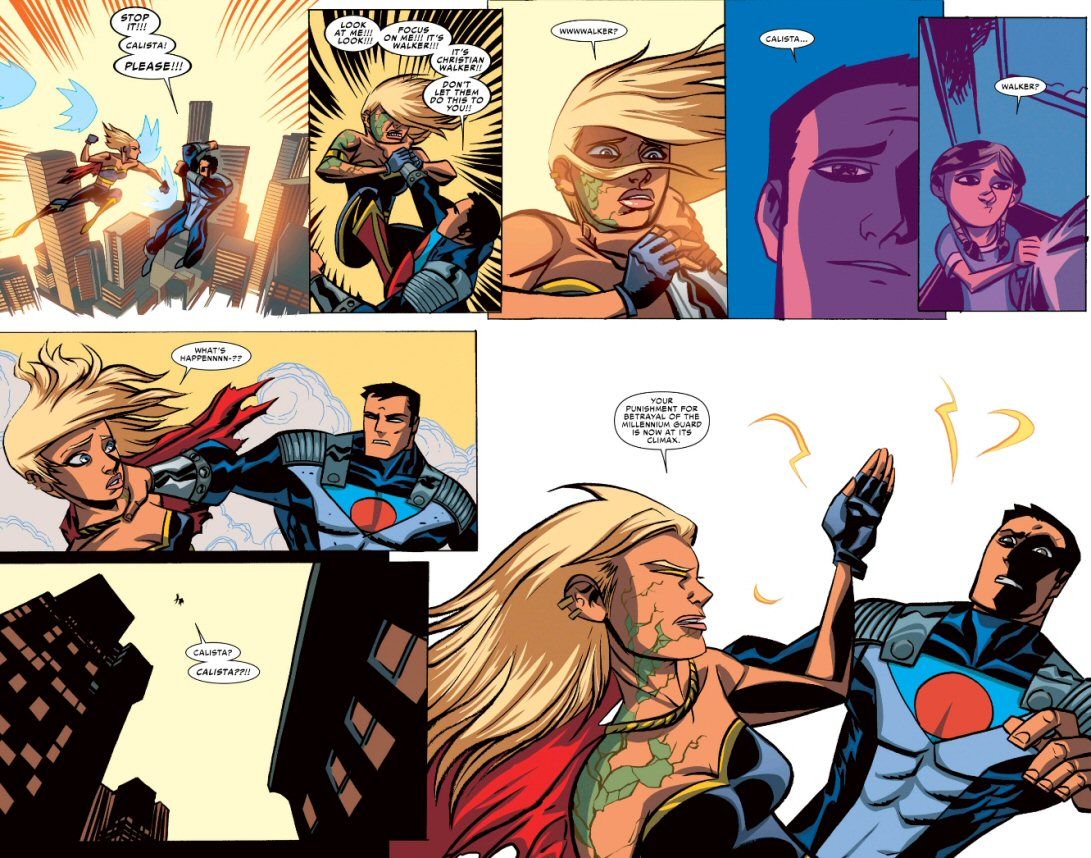
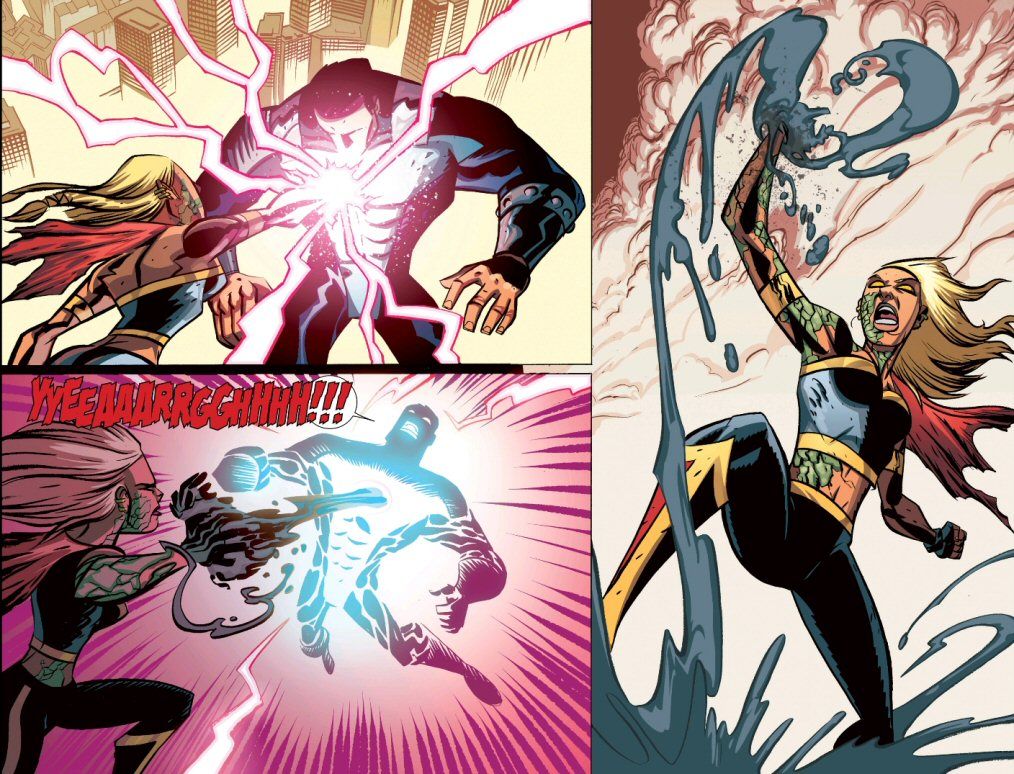
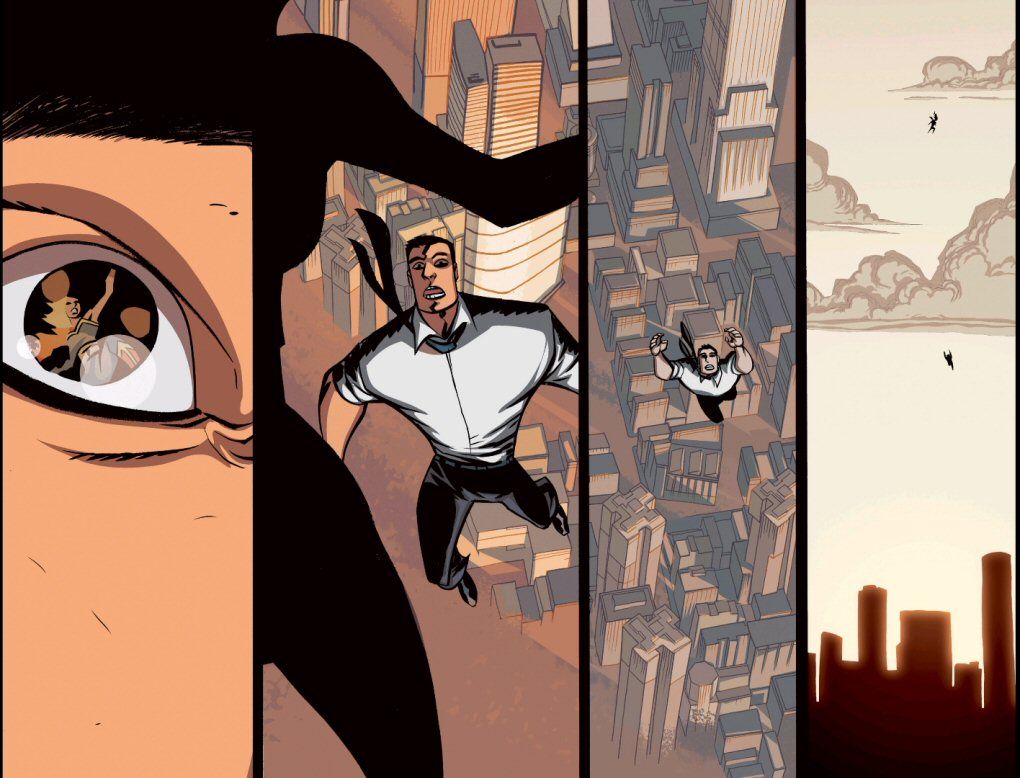
As an aside, I love the visuals of this battle. Oeming’s talent as an artist only grew over the course of this series, and you can see it in the structure and details of these beautiful panels.
With their mission accomplished, the Millennium Guard abandon Calista’s body, just in time for her to watch Walker plummet to his death at her hand. But not if she can help it!
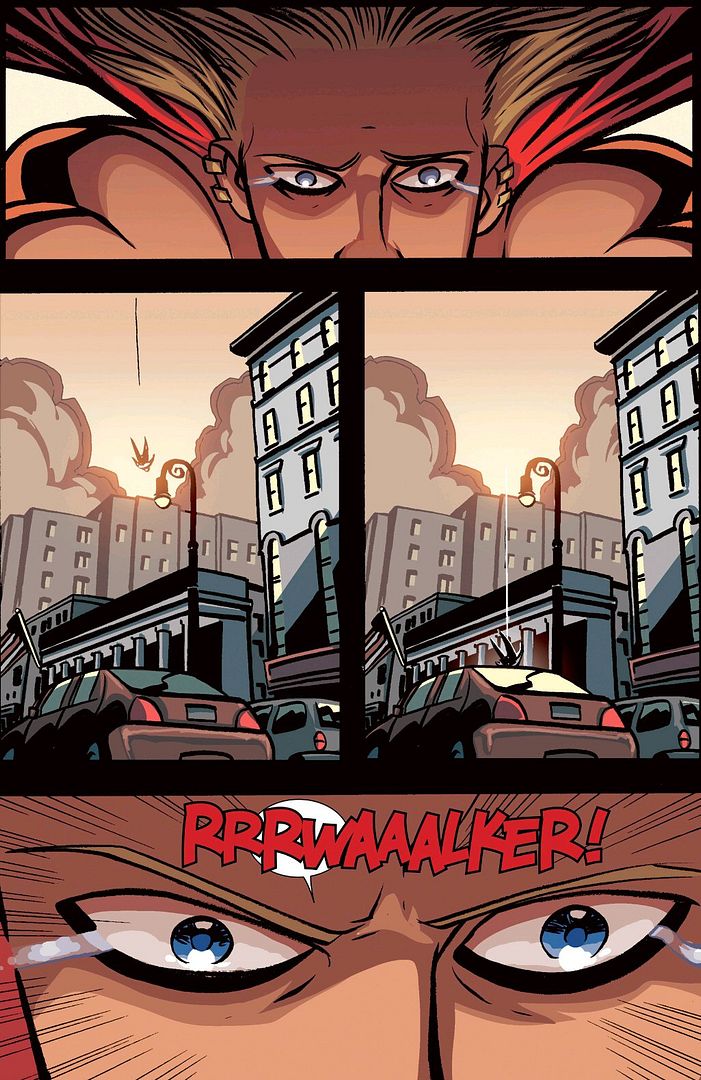
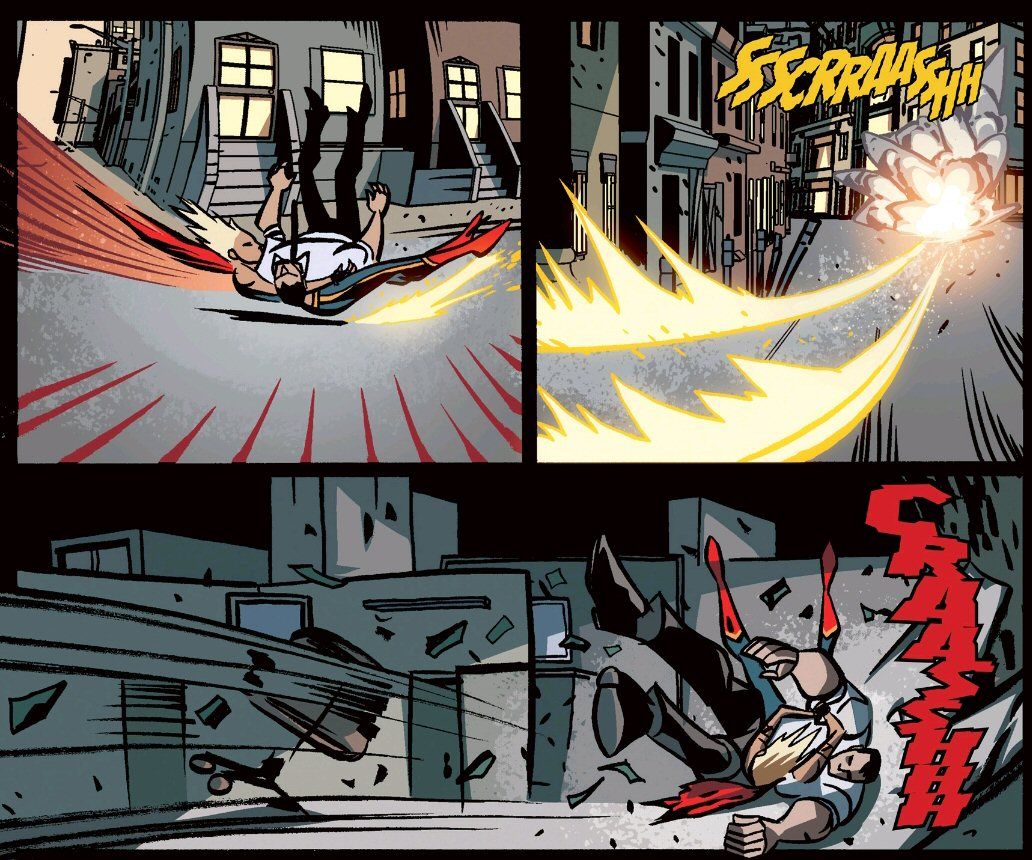
Despite being branded as a criminal, she does everything she can to save him (I particular love the scene where she flies off to steal an ambulance and lands it next to him).
But the ultimate proof of her virtuous nature comes in the jump-forward period of the Powers: The Best Ever (2020). Having been “off world” during the final Wolf attack, she was unable to save Walker. But she flies in unannounced at his funeral.
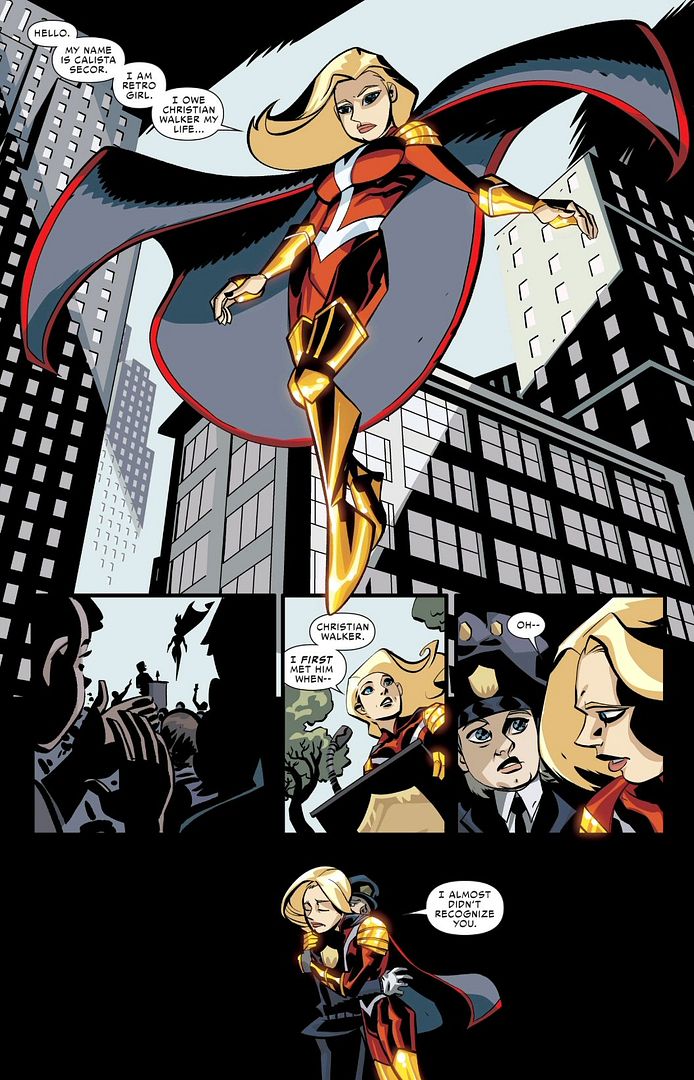
I love those last two panels. She certainly knows how to make an entrance, and is clearly prepared to give a speech. But she just as quickly pivots when she spots Pilgrim in the audience – and gives her a warm, caring hug (beautifully drawn, with the rest of world fading to black).
And note how smoothly and easily Calista takes control of the situation and says just what everyone needs to hear. She has come a long way from the frightened little girl in the first issue. How very self-possessed and solid she seems in that regard – like Walker, but even more articulate, as she describes the debt she owes to Walker and Pilgrim:
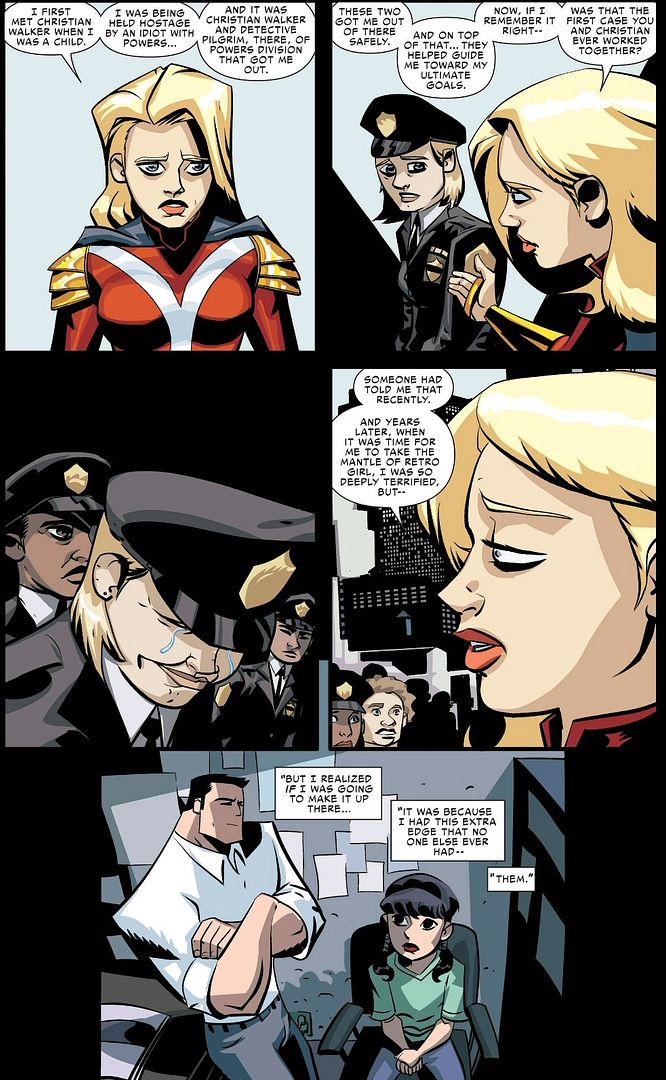
A key feature of classic virtue ethics is that in addition to developing a personal sense of eudaimonia, the strength of one’s character has a positive impact on all those around you. Note the emphasis below on being “your best self” (i.e., being better).
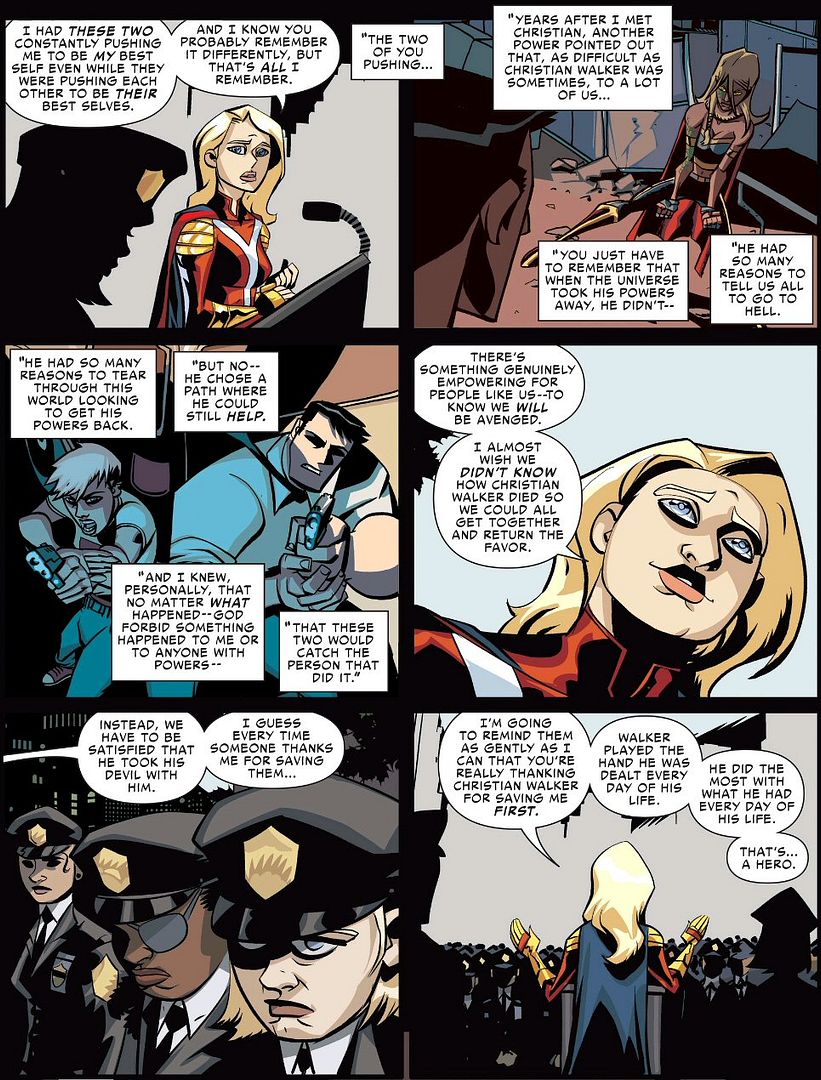
… and that’s virtue ethics.
This is a powerful restating of Walker‘s journey. As I previous noted, a sign of his virtue ethics is how he continued to step up as a detective once his original powers were gone. Yes, he had a strong sense of deontological duty in those days as well – but his care and concern for others (including young Calista) is a better example of how he tried to focus on being the best person he could be. That is the lesson I took from those early stories – and it is now clear that Calista did as well.
I hadn’t considered the idea that for a superhero there would also be comfort in knowing you would be avenged. I was amused to see the way that Bendis frames this as “empowering” … an interesting word choice in series literally named Powers, and figuratively exploring the corrupting effect of power! Just to be clear, vengeance is not exactly considered a virtue (although it can play a role in some deontological frameworks, including Kantian ethics).
The last word … for now
Alright, I know I’ve set a new record for length in this overview – but the 25-year run has covered a lot of ethical ground! And just considering one volume or character at a time is likely to lead to a misunderstanding of the series’ overall ethical themes.
The main characters in this series tend to start with fairly straightforward (and simple) normative ethics along the classical deontological-consequentialist continuum. As I have previously observed, a lot of early superhero comics were like that (and a lot of detective fiction as well). But the series has consistently moved to show greater virtue ethics development in all of the main characters, as I have detailed above.
But it is hardly a straight-line progression, and there is also a lot reversion-to-type over the series’ long run (especially for the series leads, Walker and Pilgrim). To me, this demonstrates both the strength and limitation of habitual practice in virtue ethics. Over time they show improvement, but their long-standing (and life-long) habits are hard to fully overcome – even with modern practice. Think of them as relapsing-remitting virtue ethicists!
Indeed, if you hadn’t read the conclusion of the Walker arc in Powers: The Best Ever (2020) or the opening issues of the Powers 25 series, you could easily (and I think mistakenly) conclude that Powers takes a skeptical view of ALL normative ethics, including virtue ethics. That would fit with the vibe of the early story arcs based on celebrity stories: belief systems built on unequal power are going to frustrate any clean application of traditional ethical theories. So no one gets to be the purely deontological hero, or the cleanly-logical consequentialist, or the stable moral virtue paragon in this imbalanced world (i.e., power effectively distorts every “ought to” normative ethics theory). Moreover, the series also seems to take aim at applied ethics, showing how the existing criminal justice system actually contributes to the corrupting effect of power in this situation.
But I would argue – and this series seems to support overall, given all the panels shown above from Powers: The Best Ever (2020) for each of the four main characters – that virtue ethics is the only one that holds out any hope in the long run. While hardly perfect, each of the characters show character growth over time (i.e., being better). And this specifically involves letting go of their power(s) and accepting human ethical norms, through self-reflection, self-restraint and self-development.
In my conversations with other comics enthusiasts, I’ve found that all have read and enjoyed Powers – but most had given up following it regularly at some point before The Best Ever in 2020. The often-stated reason is that they found it had gotten “repetitive”. Personally, I greatly enjoyed each successive volume and appreciated the creativity with each new character and story arc. Yes, I did find some of the Walker flashback stories a bit repetitive (e.g., the second world war hero era, the rat pack era, etc.). But a lot of the “repetition” is really to highlight Walker and Pilgrim’s repeated moral lapses. And so to me, that is less a bug and more a feature of this series. It is a way to show that these imperfect characters revert back to long-standing (bad) habits in times of major stress, but they continue to strive to be better – and practice better behaviors – over the long-run of the present time in the series.
I’m also very impressed with Powers 25 Vol 1 to date. Not only is virtue ethics clearly displayed in many of the characters, but the applied ethics of the criminal justice system (and broader societal themes of how unequal power should be addressed) are also coming up early. The way it is shaping up, I think this new series is a must-read for any dedicated Powers fan!
Postscript: What about about the Millenium Guard’s ethics?
There is one last point I would like to address: what exactly is the normative ethics of the Millennium Guard that provides Walker with his new cosmic powers? They present themselves as guardians and defenders of weaker beings and planets (like Earth). But their behavior doesn’t hold up well to ethical scrutiny.
Of course, it is always dodgy trying to apply human normative ethics standards to extra-terrestrials or god-like beings in the comics. By design, their perspectives and goals are kept inscrutable to us mere mortals. But their words and behavior can still be analyzed, and the creators usually have some sort of cogent and coherent motivation (even if not explicitly revealed).
I find this usually involves some form of consequentialism, given its rational basis (we often seem to imagine the future in very utilitarian terms), perhaps with a smattering of virtue ethics. Consider the eminently logical Vulcans of Star Trek, as channeled by Mr. Spock: “The needs of the many outweigh the needs of the few, or the one” (Star Trek II: The Wrath of Khan, 1982). Jeremy Bentham couldn’t have said it better himself! Or consider the twisted Eternal in Kieron Gillen‘s A.X.E.: Judgement Day event (whose moral reasoning I had great fun reverse-engineering in this conclusion post).
For the Millennium Guard, they came to Walker after the Earth’s last Protector died (in a case Walker was investigating). They explain that they want to protect “infant societies” like ours from destruction by more advanced ones (who could plunder us for resources or sport). They think Walker would make a good replacement given his history and qualities. From Powers Vol 2, issue #16 (2006):
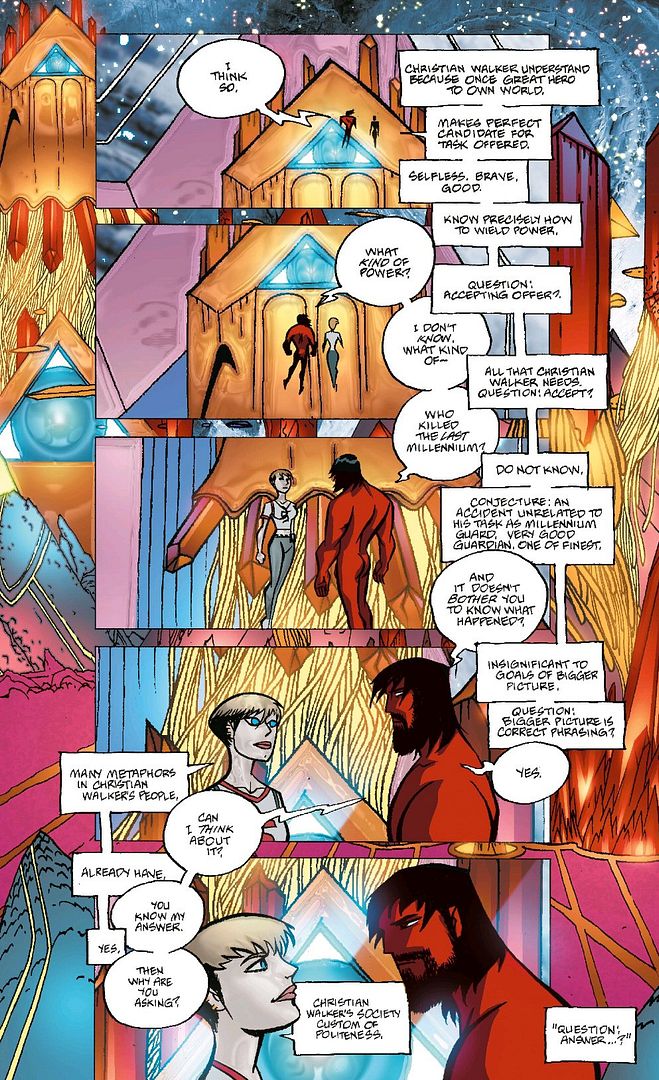
This suggested to me that they recognize and appreciate Walkers values and virtues. But their own subsequent behavior doesn’t support that for their own motivations.
Consider how they keep showing up to Walker in the form of two of his dead former lovers (the original Retro Girl and Zora) despite him repeatedly asking them not to (he complains it is “insensitive” to show up as his “dead friends”). And then their reasoning when they come to take back his powers – after he was pivotal in saving the Earth at the end of third volume. From Powers: Bureau Vol 1, issue #8 (2013):
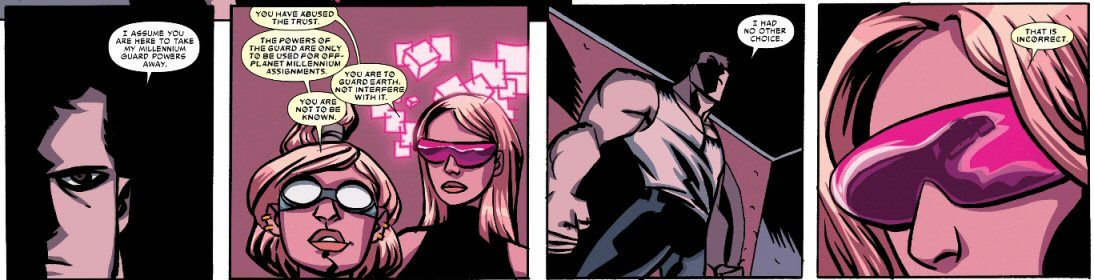
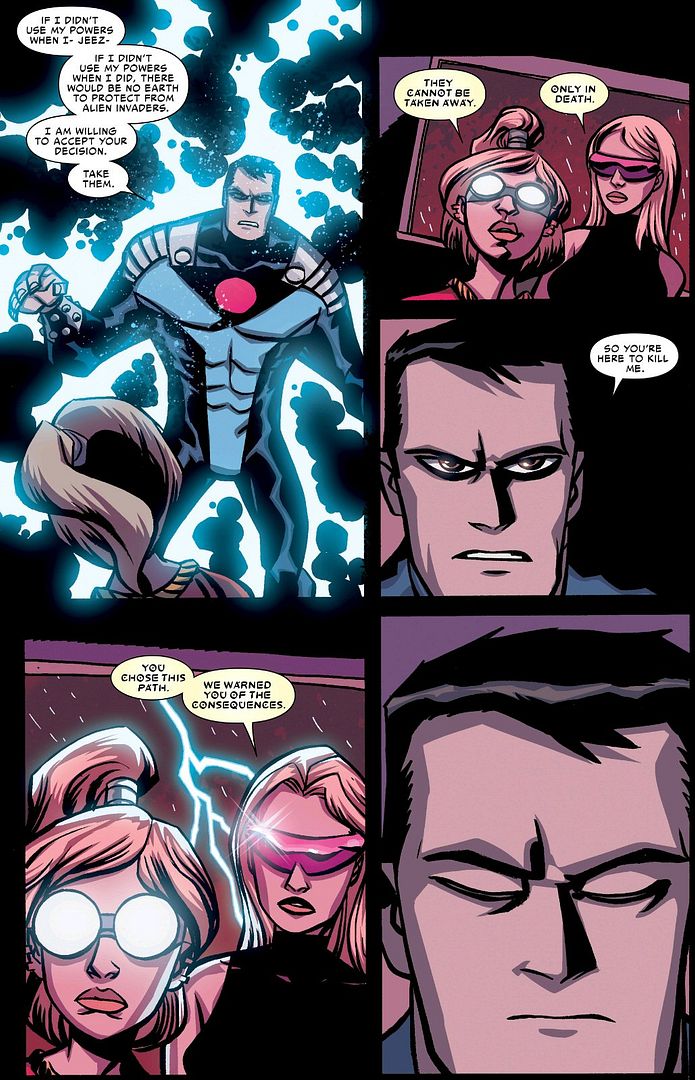
How very consequentialist of them! And I detect absolutely no sign of virtue ethics for these beings in what happens next. If you read through my Retro Girl (Calista Secor) overview above, you’ll note that she was showing signs of their infection/control four issues before Walker disobeyed their instructions and revealed his powers to the world. And what do they do when they choose to strip him of his powers? They take over Calista’s body and force her to do it against her will. She had never agreed to anything with them – and being used as their instrument would have likely caused catastrophic trauma both to Calista personally and the Retro Girl spirit if she hadn’t been able to save him in time.
But my favorite description of their morality is given by Walker himself, in the midst of the battle with the controlled Retro Girl. I think he sums up their apparent morality well. From Powers: Bureau Vol 1, issue #11 (2014):
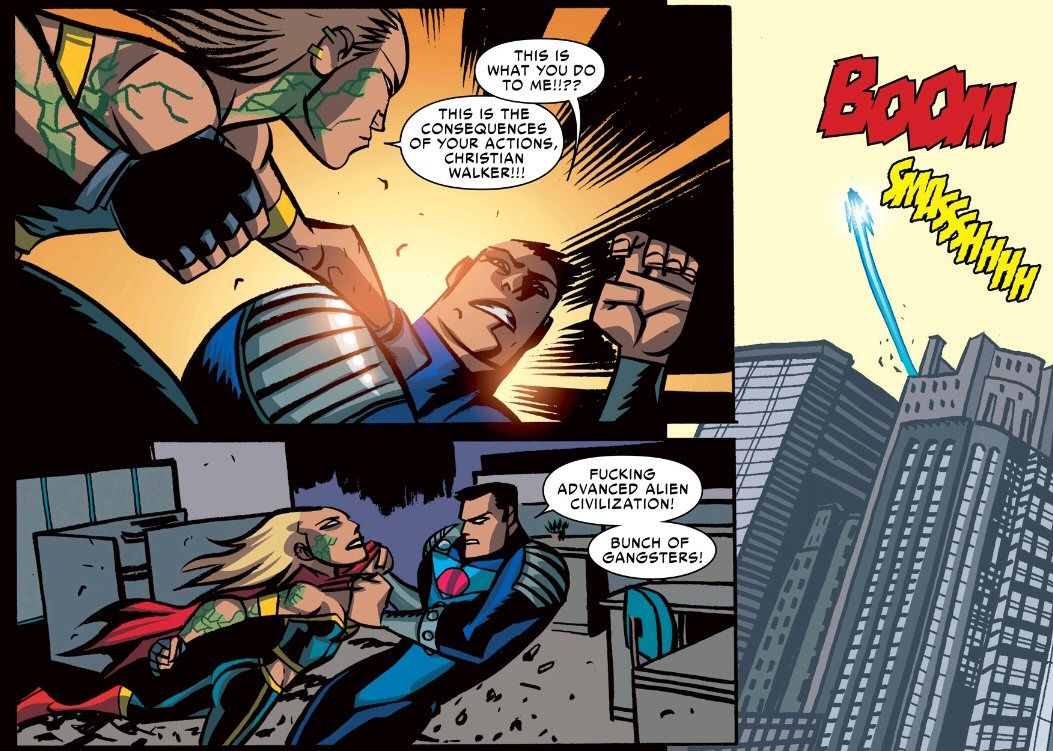
Well said! 🙂
See my Glossary post for a list of the key philosophical concepts and related links on this site.
Further Reading
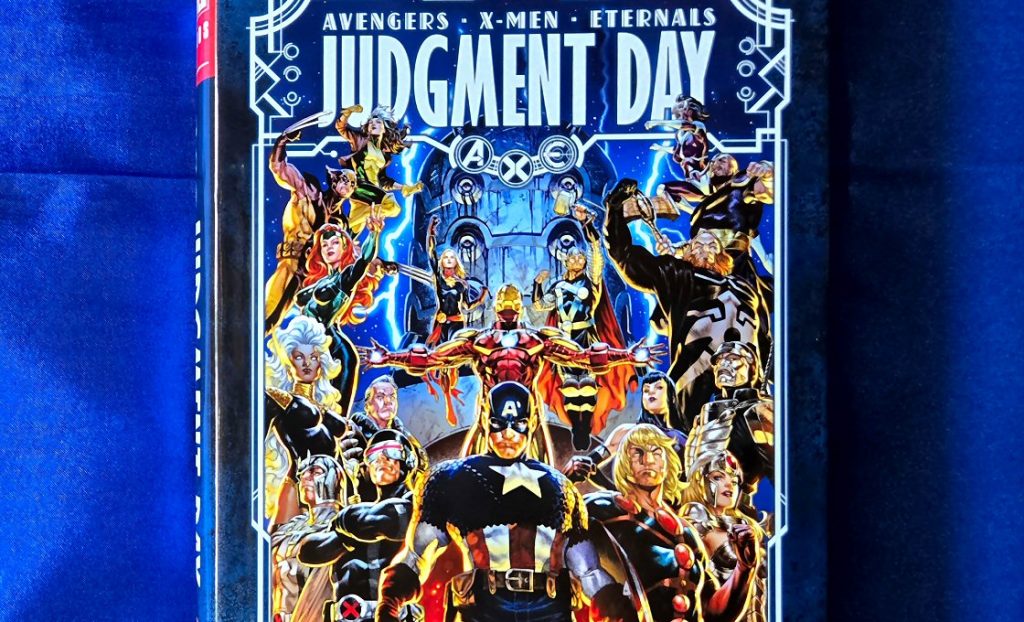
For more virtue ethics: A.X.E.: Judgment Day Conclusion

For more extreme powers: Superman

For more powers ethics: The Power Fantasy Introduction