
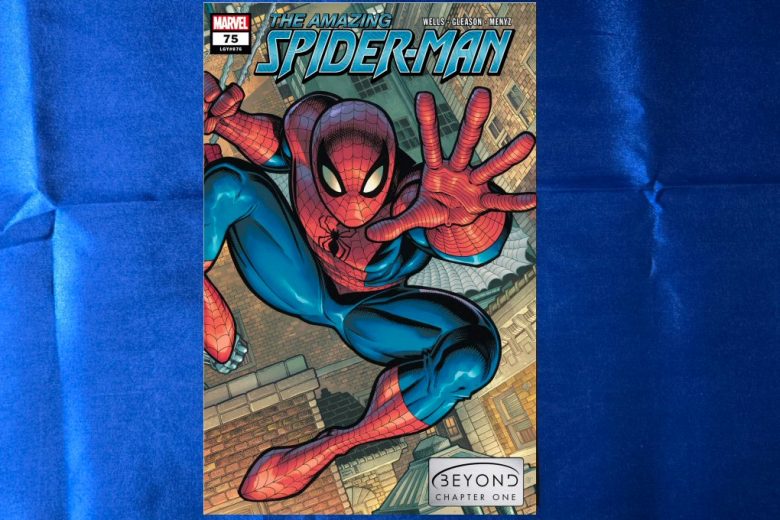
With great power comes great responsibility
- Spider-Man motto and catchphrase
As a character, Spider-Man presents a unique challenge in trying to discern a consistent normative ethics theory – he is the most popular Marvel superhero character of all time.
Why is that a problem? Because it means he has appeared in more stories – and been written by more authors – than any other character in the Marvel Universe. It would be impossible to have read or seen every Spidey story – and the complexity of perspectives brought to bear by all those creators is overwhelming.
To put it in perspective, let me contrast Spider-Man – who was created by Steve Ditko and Stan Lee in August 1962 (Amazing Fantasy #15) – with their subsequent creation of Doctor Strange (July 1963, Strange Tales #110). So, both have been around ~62 years.
However, in that time Doctor Strange went 25 years with no dedicated comic title, and another 6 years appearing in only an anthology title (featuring concurrent stories of other characters, lowering his air time further). During my time collecting him as a kid (early 1980s), Doctor Strange’s sole title was being published on average every other month (i.e., 81 issues of Vol 2 were published over 152 months – June 1974 to February 1987).
In contrast, back in the early 1980s, Spider-Man had three long-running concurrent monthly series (Amazing Spider-Man, Peter Parker The Spectacular Spider-Man, and Marvel-Team-Up), and a fourth one was soon added (Web of Spider-Man). At the time of this writing (when we again have no Doctor Strange title, although one is starting soon), Earth-616’s Peter Parker appears in one solo monthly title (Amazing Spider-Man), a shared monthly title with Mile Morales (Spectacular Spider-Men), with regular appearances in other three “spider-people” series; Miles’ solo title Miles Morales: Spider-Man, Gwen Stacy’s Spider-Gwen: The Ghost-Spider, and Spider-Boy. There are two monthly solo titles for multiversal variants of Peter Parker (Ultimate Spider-Man, Your Friendly Neighborhood Spider-Man), and a recently completed limited series (Spider-Man: Reign). Oh, and let’s not forget the recently concluded Chasm: Curse of Kaine mini-series featuring two Earth-616 Peter Parker clones fighting it out.
If you add all that up, and extrapolate across the decades – factoring in all the guest appearances in other stories – there is probably an order of magnitude difference between Spider-Man and Doctor Strange over the last 60+ years (i.e., 10 times as many Spidey stories). That is a lot to sort through looking for consistency!
If you google Spider-Man and each of various normative ethics theories, you will find plenty of commentary supporting every possible theory applied to the character (by drawing on various aspects of his character, or specific stories). Overall, it appears to me that the majority tend to favor a deontological framework for his actions. But I think that relative emphasis stems from a misunderstanding of his famous catchphrase quoted above, and what it means for the character’s core drive.
I will dispense with my usual attempt here to provide a comprehensive overview of his character’s evolution (see the Marvel Fandom site if you are curious), and focus in on what I think are the most salient moral stories.
If you would like to know more about the terms I’m using on this site, please follow the links throughout or check out my Ethics 101 page or Glossary post.
Character introduction
In the main Marvel comic Earth-616 Universe, the orphaned high school science student Peter Parker, living with his Uncle Ben and Aunt May, is bitten by a radioactive spider and develops the proportionate powers and abilities of a spider. This origin was later retconned with the suggestion that the dying spider choose to bestow upon Peter its mystical spider powers, effectively making Peter a “totem” that connected the animal and human realms (Amazing Spider-Man Vol 2, issues 30, 2001, by J. Michael Straczinski and John Romita Jr.). This mystical explanation persisted until the end of J.M.S.’ run, and is still referenced occasionally today as part of the “web of life” that connects all the “spider-people”.
Peter’s powers include superhuman strength, speed, agility, reflexes, stamina, and durability, along with enhanced regenerative abilities (i.e., he heals quickly). He also has two distinctive spider abilities – wall-crawling and a pre-cognitive “spider-sense” that warns him of impending danger, allowing his enhanced agility and reflexes to automatically save him before he is consciously aware of the threat. Peter has built a set of “web-shooters” for himself, of his own design, that project super-strong (yet disolvable) webbing that he uses to swing through the city, or immobilize opponents.
In his origin story, Peter’s initial selfishness indirectly leads to the death of his beloved guardian Uncle Ben. As a result, Peter takes it upon himself to become a costumed crime-fighting superhero. Note that as part of the Ultimate Marvel reboot in the early 2000s, Earth-1610 had an updated origin story, where high schooler Miles Morales was bitten by a spider injected with the OZ Serum, granting him powers similar to Peter’s. Miles is one of only two survivors of that Universe, and permanently relocated to Earth-616 some time ago. With adult Peter’s support and guidance, the teenage Miles simultaneously operates as Spider-Man on Earth-616. Miles is another great character, and I plan to profile his moral core in an upcoming post.
In terms of Peter Parker’s infamous catchphrase, it is worth noting that the phrase was not spoken by any character initially, but was rather from the narrator’s caption in the last panel of his first appearance in Amazing Fantasy Vol 1, issue #15 (written by Stan Lee). From a recent updated reprinting below:
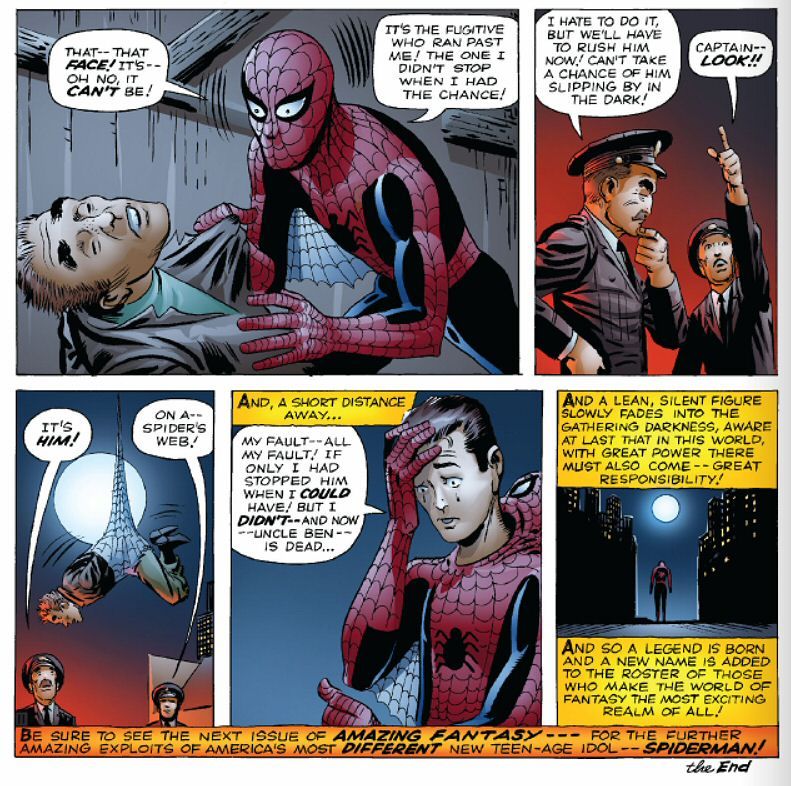
And a lean, silent figure slowly fades in the gathering darkness, aware at last that in this world, with great power there must also come — great responsibility!
The phrase would eventually come to be attributed directly to Peter’s Uncle Ben – but that didn’t actually happen in the comics until after my time collecting them (later 1980s). Since then, it has become a staple of his stories (both comic and film) that Uncle Ben installed that philosophy in young Peter – with Peter himself now explicitly using it to explain his actions, and to help mentor younger superheroes.
For an example of this (and an example of how many see the catchphrase as all encompassing), check out Brian Michael Bendis‘ 2012 AvX series. Here, Peter has been asked to train Hope Summers in all that he knows (final two pages of New Avengers Vol 2, issue #27, by Bendis and Mike Deodato):
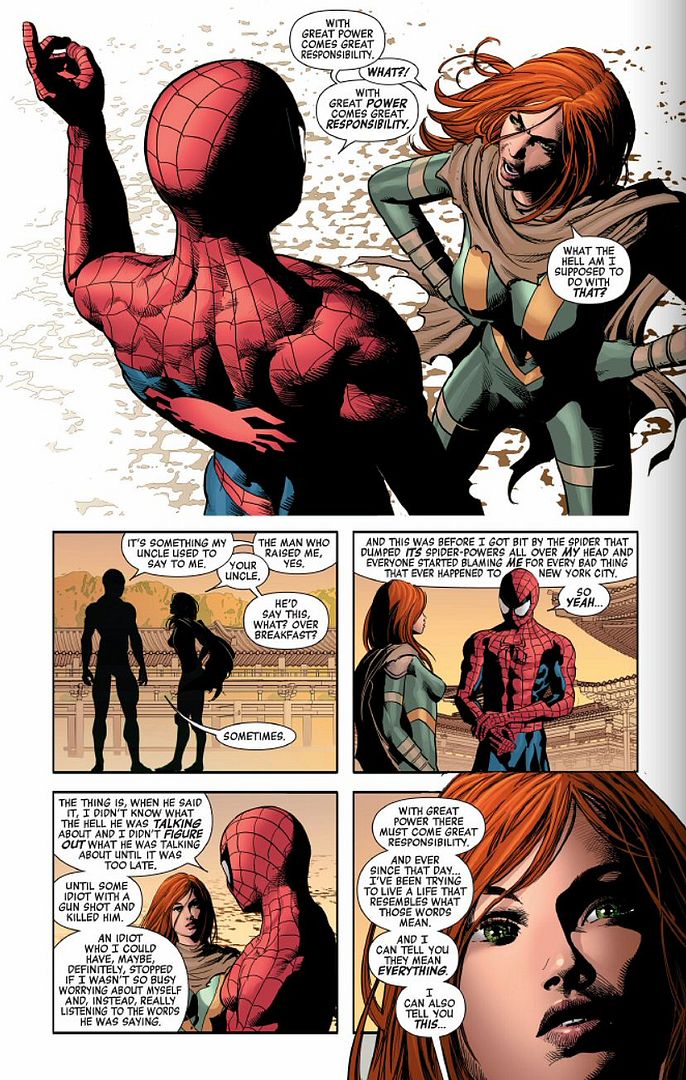

The obvious and key take-away from this oft-quoted catchphrase is that because of one’s abilities, one has a duty to help others. And that is very in keeping with deontological theories, such as Immanuel Kant‘s categorical imperative. Spider-Man also has a very strong no-kill policy, which can also to be seen as deontological (although, to be fair, most of the utilitarian and virtue ethics comic superheroes similarly have a prohibition against killing – just perhaps not as strongly articulated as Spider-Man’s).
There is also plenty of evidence to suggest Spider-Man has consequentialist tendencies too. Spider-Man frequently weighs and considers the possible outcomes of his actions – although perhaps it would be more accurate to say he worries about the potential negative consequences of his actions (a point I will come back to in a moment). He does seem to strive to maximize good in general – for example, by saving lives, protecting the innocent, and fighting crime. And he definitely seems to understand that his actions have consequences for others – especially those close to him. I think it is fair to say that he often acts to try and achieve the best overall outcome for everyone (i.e., utilitarianism).
As a result of the above, I suspect most people would consider Spider-Man to be primarily a deontologist with utilitarian leanings.
So why do I consider this an incomplete way of looking at Spider-Man’s moral core? Because there is another overwhelming core drive that he demonstrates – but one that isn’t spoken of or captured with a pithy catchphrase. Specifically, Spider-Man is always trying to be better. To be a better hero. To be a better friend. To be a better nephew. To be a better mentor. This focus – and the belief in change – gets to the heart of what it means to be a virtue ethicist, as proposed by Aristotle – constantly striving for opportunities to develop and practice virtues, to make the world a better place.
Peter certainly exhibits a number of classic virtues such as courage, justice, and compassion (but so do many of the superheroes). How Peter stands out is that is also remarkably empathetic – putting himself in the shoes of those he fights to a much greater extent than most other superheroes (who are often just following their deontological duty, or looking for utilitarian outcomes). He also demonstrates the virtue of temperance to a greater degree than most superheroes – denying his own personal pleasures for the sake of others, and demonstrating much greater humility (often in a self-deprecating, jokey way). He also demonstrates prudence – learning from his mistakes, and rapidly adjusting his tactics and approaches as situations change.
While I don’t deny his apparent deontological (and consequentialist) tendencies, I think this virtue ethics framing can better explain his underlying drive to be a hero. To me, this ultimately all stems from the horrible consequences of his initial failure to act virtuously (i.e., the death of his Uncle Ben). It is following this experience he first resolves to be better.
So why isn’t his virtue ethics nature more obvious to readers? There are a number of reasons why I think this is obscured across the comics – the first deals with some of Peter’s other characteristics (which I will explain below), and the last is a limitation of the comic medium (which I will explain at the end of this post).
Virtue ethics obscured
In terms of his personality, there is another trait that Peter demonstrates to a higher degree than just about any other superhero – he is extremely neurotic. And it is understandably hard to see neuroticism as a positive virtue (although it can have some limited benefits, like greater attention to detail and heightened awareness). But again, that is part of the point – Peter would like to be less neurotic, and often speaks in the stories of his desire to focus less on his perceived failings and just do better by everyone. His desire and personal commitment to change is so much more prevalent than in most other superheroes.
I should explain that I don’t mean neurotic in some psychoanalytical way. I am referring instead to the personality trait from the Big Five Factor Model of Personality. This is the only empirically-validated personality model, with neuroticism being one of the five scales (or in its less judgy form, also known as the emotional stability/instability scale). Neuroticism as a temperament trait has long been studied. People who score high on the neuroticism tend to be more emotionally reactive and vulnerable to stress, and frequently experience stronger negative emotions (e.g., anger, anxiety, or depression) to the same events than those who score lower. So this tracks with why his virtue ethics core is less obvious in Spidey stories.
As an aside, I think this personality trait also helps explain a lot of his enduring popularity too. In a way, Peter is among the most relatable of all the superheroes, suffering from this very human characteristic. He is also quite funny, in a quippy and self-deprecating sort of way (again, not inconsistent with neuroticism). It also helps explain some of his apparent consequentialism – Peter’s neuroticism contributes to his worrying about the outcomes of his actions, causing him to carefully weigh choices.
Most of the other superheroes seem far less emotionally reactive than Peter. This is another reason why I consider Peter something of the flip-side to Captain America; a character that would score very low on the neuroticism scale, is very steadfast and unchanging, and one that is more duty-focused (and thus deontological) while also maintaining some personal virtues.
Moreover, I think one of Spider-Man’s most distinctive and unique abilities among superheroes – his vaunted “spider-sense” – inadvertently contributes to his neuroticism. From the description on the Marvel animated Fandom Wiki:
Spider-Sense is one of Spider-Man’s most unique and prominent powers. Spider-Sense presents a psychological awareness of Spider-Man’s surroundings. It allows Spider-Man to detect danger before it happens and warns him of it in no time … Spider-Sense is precognitive in nature and Spider-Man always acts before realizing it.
It’s not hard to see how a hyper-awareness of what’s around you – and reacting before you were even aware of it consciously – could help make you pretty neurotic! Especially if it kept going off and you didn’t know why. There have been prominent story lines in recent years in both the main Peter Parker and Miles Morales’ Spider-Man titles where a malfunctioning/hypersensitive spider-sense proves debilitating for each of the characters. From Amazing Spider-Man Vol 5, issue#76 (by Zeb Wells and Patrick Gleason) where Peter has been poisoned by ionizing radiation that has permeated his body:
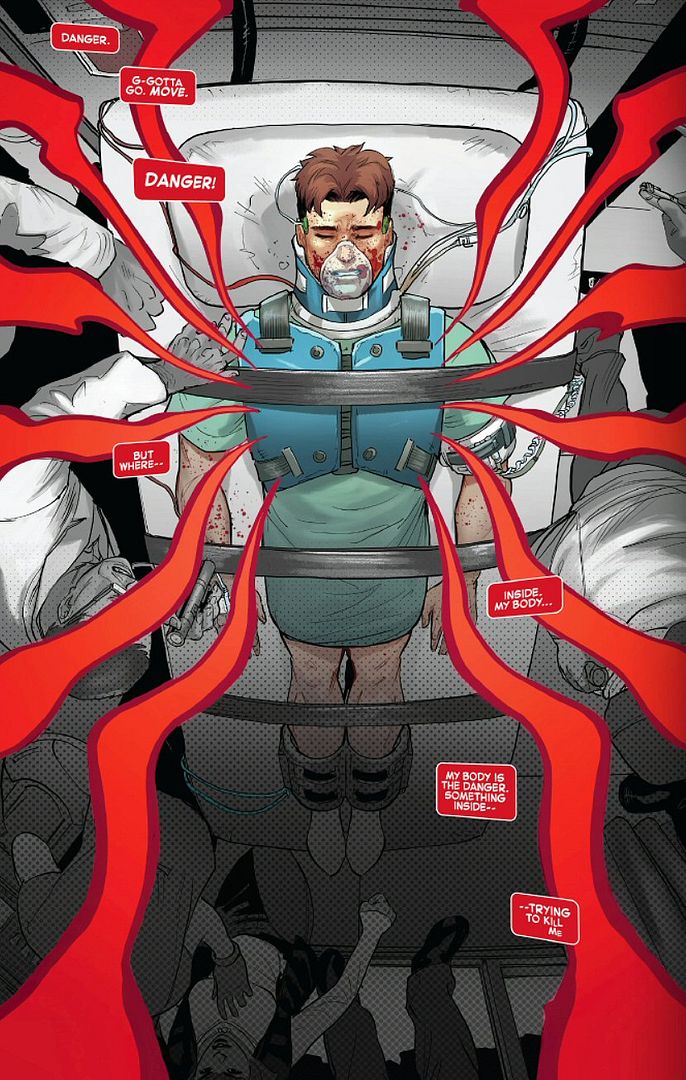
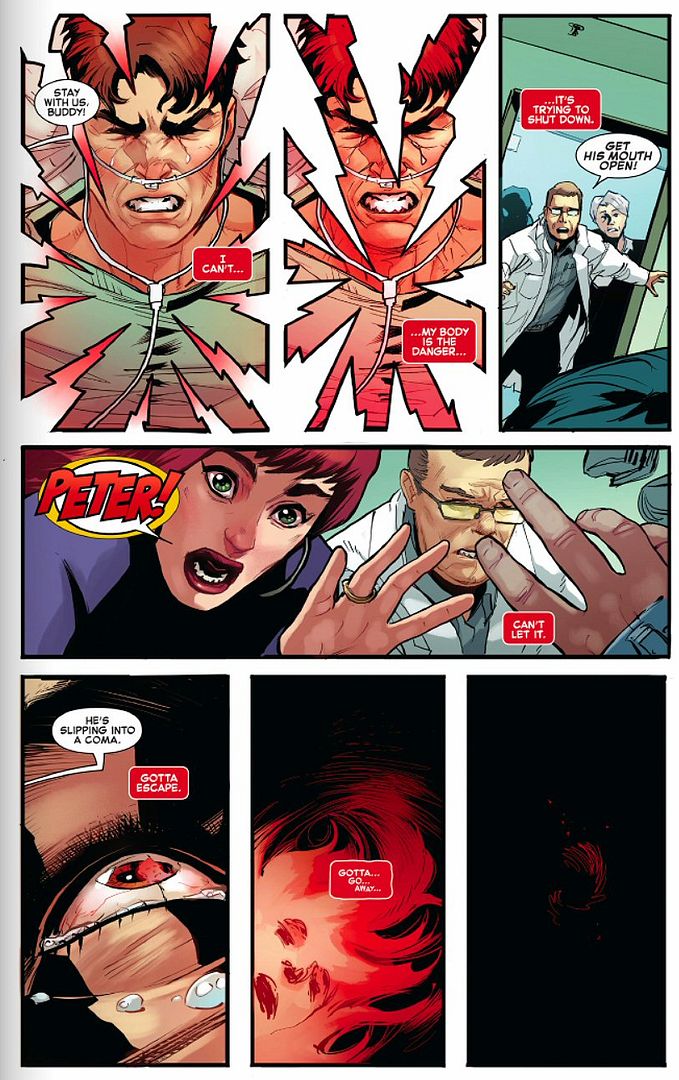
Peter is kept in a coma for the next several issues, as they search for a cure, and then suffers a long convalescence and recovery of his abilities.
The story line above comes at the beginning of an extended arc where Peter also has to deal with one his clones, Ben Reilly, taking over as Spider-Man (yes, you read that right – he has more than one clone to contend with at this point in time). Peter – quite selflessly and virtuously – is willing to share his superhero identity with Ben. The final run of Amazing Spider-Man Vol 5 (issues #75-93, 2021-2022) sees a lot of the action shift to Ben’s situation – where you are treated to an extended commentary on the nature of identity. In effort to make Ben more controllable, his evil corporate overloads increasingly play around with deleting his memories (copied from Peter as part of the original cloning). You get to see what effects this has on Ben’s moral drive – which eventually collapses as his identity craters. It is a thoughtful read, with repercussions that continue for the characters to the present time in the comics.
To wrap up this section, Peter didn’t make it back into action in costume until the end of issue #89, by Patrick Gleason and Mark Bagley (2022):
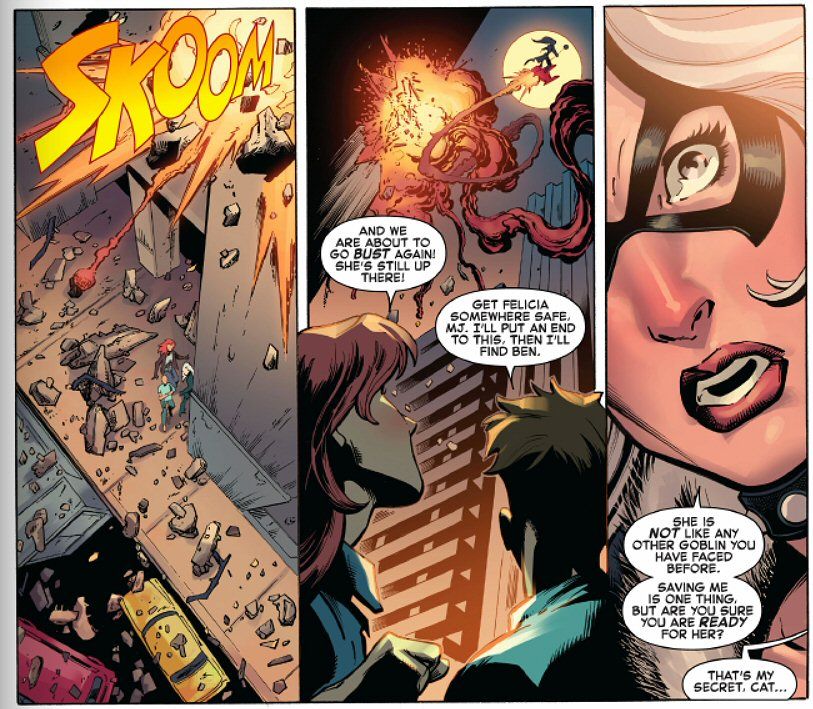
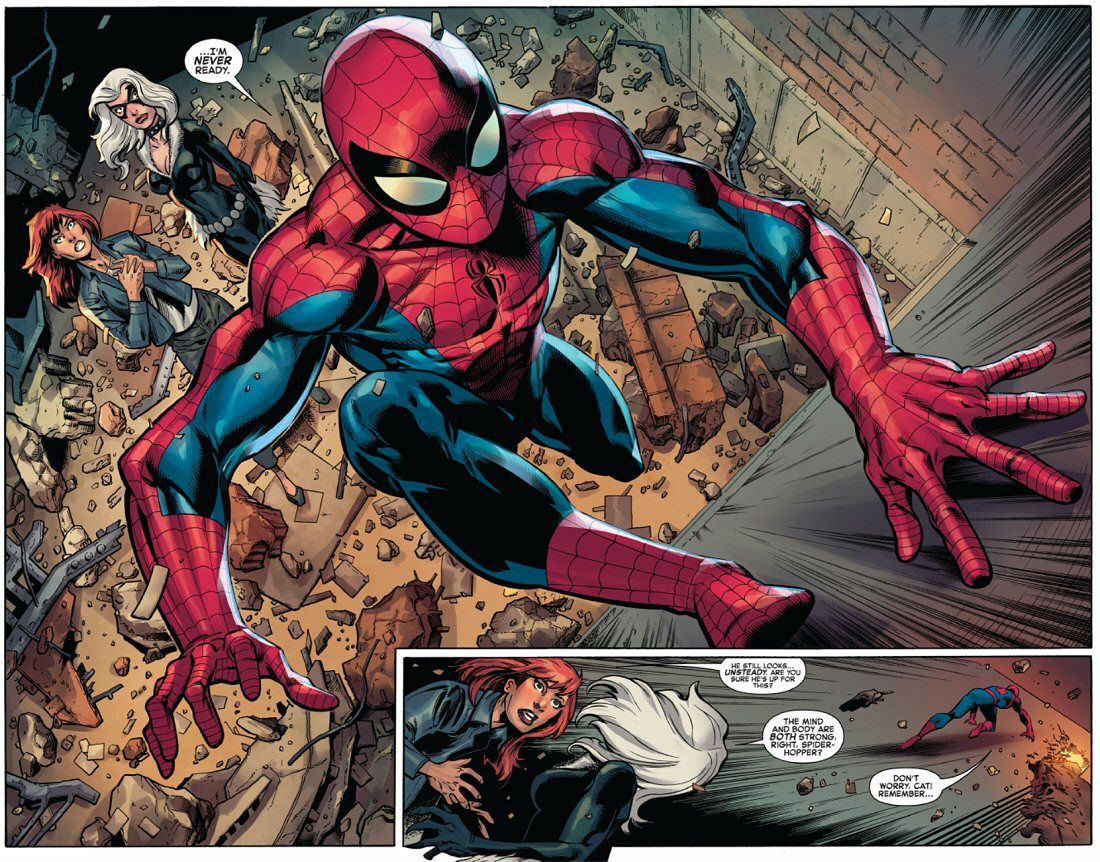
Yes, that two-page spread captures Peter well – he is never ready, but he never stops trying to do and be better.
I’ll come back to the final point at the end of this post as to why I think classic virtue ethics is not easy to see in comic books.
A.X.E.: Judgment Day
So, how does Peter fare in the AXE Judgment Day event, the major 2022 Marvel cross-over event created by Kieron Gillen, Valerio Schiti, and Marte Gracia? I have created an introductory post on this event, and plan to conclude it once I have finished profiling the ethics of the major heroes involved.
The premise is that a revived god-like being, a Celestial known as the Progenitor, is deciding the fate of the world by weighing the morality of every individual human being. Although some characters get a single panel or two in the main series, others get their own dedicated issue in their own title – as is the case for Peter. In Amazing Spider-Man Vol 6, issue #10 (by Zeb Wells and Nick Dragotta, 2022), the Progenitor appears to Peter as a silent witness in the form of his dead first love Gwen Stacy. Significantly, Gwen was killed by Norman Osborn – who Peter is currently in the process of helping rehabilitate. This is actually a really good example of his strong sense of empathy towards others:
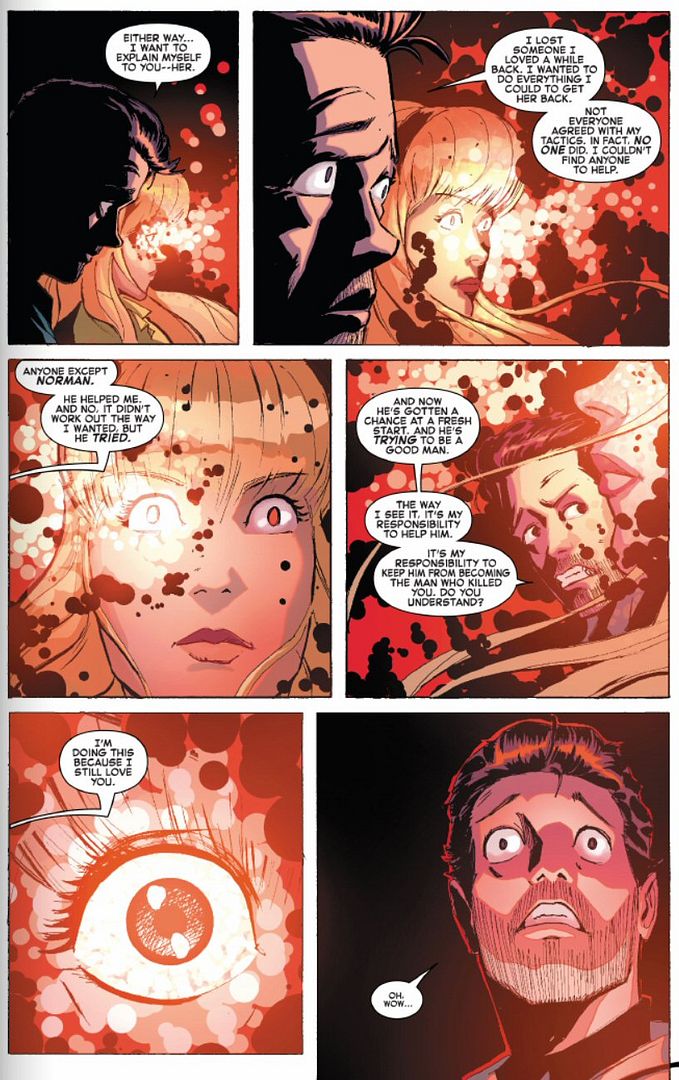
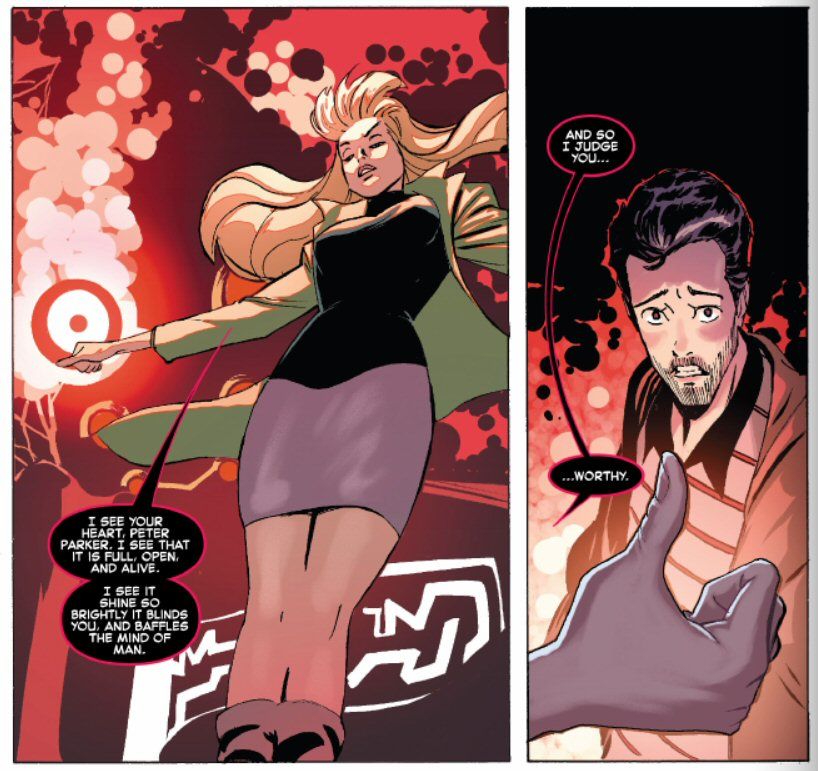
So it’s thumbs-up for Peter! But as with many of the other Judgment Day stories, the reasoning here is interesting: it is not his deontological sense of responsibility or duty that saves him – rather it is because of his big heart, his openness to life and love. And its an insightful comment that this heart shines so brightly that it not only blinds him (i.e., to the good he is), but it baffles others too (i.e., they can’t see it clearly either). I think that fits pretty well with my contention that Peter is really a (secret) virtue ethicist.
Marvel Cinematic (MCU)
I’ve enjoyed all the various Spider-Man films over the years, but find that the current iteration (played by Tom Holland) is the best fit for the original Spider-Man of my youth – and the best example of my primary virtue ethics thesis for the character.
The first outing for Holland was the 2016 Captain America Civil War movie. As I explain on my Captain America ethics page, this is a particularly good opportunity to explore the deontological-utilitarian divide between Cap and Iron Man. In his review of this Civil War film, American philosophy professor Mark D. White makes the observation that Peter Parker’s Spider-Man is the “avatar of virtue ethics” for this story. He is stuck in the middle, watching his two idols fighting it out, while trying to be the best hero he can be.
This ethos persists over all the subsequent Holland outings – culminating in what I see as the best example of his Spidey’s character in 2021’s No Way Home. This film does a very clever (and entertaining) job of integrating all three Spider-Man actors. It was also, not surprisingly, the highest grossing Spider-Man film yet. This film strongly fits my virtue ethics interpretation for Holland’s Peter Parker, given its core premise. That is, having inadvertently pulled all the major villains from the previous films (who exist in different Universes from the core MCU), the central conceit of this film is what should one do with them all? The MCU’s Peter insists on trying to help make the Multiversal villains better, rather then just sending them back home to their imminent deaths (as our very utilitarian MCU Doctor Strange intends to do). This is core to a virtue ethicist – trying to help other people improve themselves, as well as yourself. The film is well worth a watch.
Interestingly, the personal outcomes for Holland’s Spider-Man in this movie are not good (as usual for Spidey, it seems). Again, I will come back to this point at the end.
Current ethical framework: V/d


I find Peter Parker’s character is most closely (and consistently) aligned primarily with virtue ethics. I would argue that his core underlying motivations stem from applying virtues like courage, justice, empathy, compassion, temperance, prudence, and a deep sense of personal responsibility. Over the course of the stories, he strives to become a better person and to help others (indeed, he frequently mentors younger superheroes). While there are certainly some deontological (and consequentialist) aspects to his behavior, I believe the relative emphasis is on developing his virtuous character.
When you combine that with his infamous deontological catchphrase, I think a V/d on my superhero description system is most appropriate.
Again, the purpose of this site is not to provide a definitive normative ethics framework for each character – that is impossible, given all the creative hands each character has passed through. My goal on these background pages is to provide a sufficient overview of the main ethical drives for the character over time. This is to help prepare for upcoming posts where I will examine specific comic stories in more detail, to show how they illustrate key normative ethics theories.
The last word
The wrap-up story arc for the current volume of Amazing Spider-Man, known as “The 8 Deaths of Spider-Man”, is written alternately by Joe Kelly and Justina Ireland (Amazing Spider-Man Vol 6, issues #61-70, 2024-2025). In these stories, Peter has been given a magical upgrade and been tasked by Earth’s new Sorcerer Supreme Doctor Doom (it’s a long story) to save the earth from the god Cyttorak and his scions. Apparently, this is something Doctor Strange used to do annually, but Doom is big on outsourcing unpleasant duties. And since this one involves having to die repeatedly (through increasingly gruesome deaths) and then be revived (remembering it all), you can see why Doom decide to give the gig to Peter.
Peter’s sense of self (and that big heart mentioned previously) is horribly abused by one of these experiences – having to participate in observing endless numbers of deaths of others (issue #65). So much so that even the scion responsible feels bad for him – and reaches out to former foe Doctor Strange to discuss in the subsequent issue. From the latest issue (issue #66), by Ireland and Andrea Broccardo:
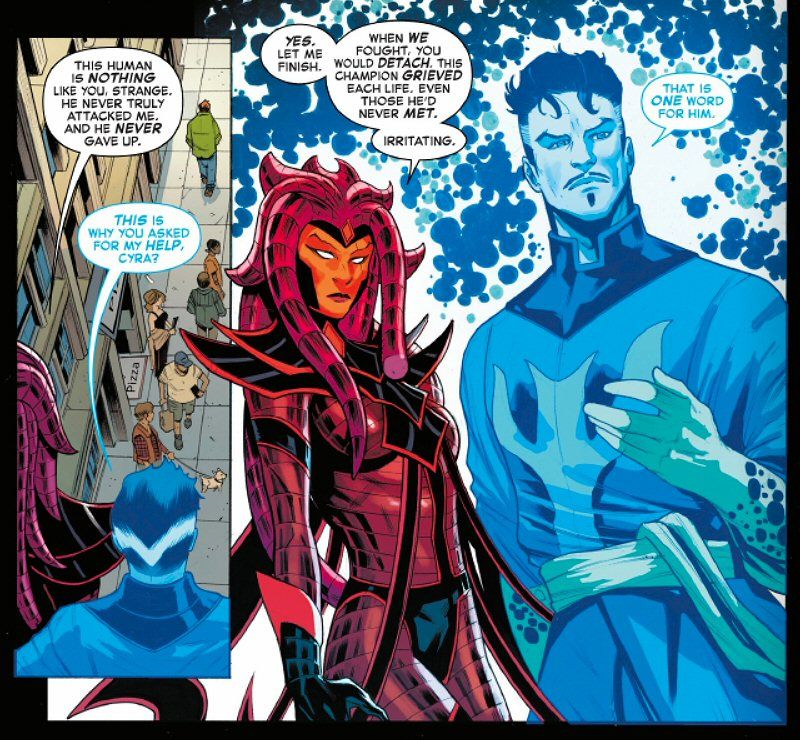
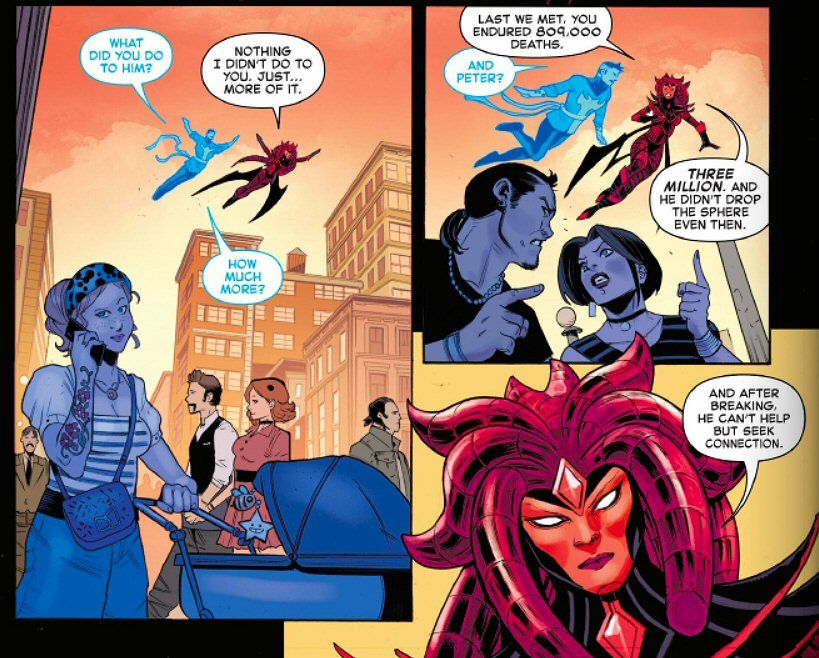
This has the effect of creating an existential crisis for Peter – and I will have a future post dedicated to how this story line nicely illustrates the philosophical difference between absurdism and existentialism (UPDATE: see my 8 Deaths of Spider-Man for a discussion). But in the context of this overview, I think this crisis also speaks directly to the virtue ethics core of Peter. Namely, if nothing he ever does actually matters – if doing and being better doesn’t matter – then why keep trying? That is not a question a deontologist would ask, as it is simply one’s duty to carry on.
It also argues against a core consequentialist interpretation for Peter. As Cyra explains above, Strange simply detached from the deaths he was forced to witness, on the previous times he served as Earth’s champion. Strange is among the most rational and utilitarian (consequentialist) of Marvel heroes, and is always focused on achieving the best outcomes. But Peter can’t do that, as his virtuous nature requires him to feel – to empathize – with the suffering of others.
As an aside, I’ve always loved seeing the interactions between Peter and Doctor Strange. It is clear over many stories that Strange has a lot of sympathy for Peter, and in his own (very utilitarian) way, has served as something of a mentor. But I would argue that Peter’s virtue ethics core has had a positive impact on Strange too, just as it has for the very deontological Captain America. In any case, I’m looking forward to seeing how this crisis gets resolved for Peter in upcoming issues.
And now I will come to my final point about why I think Peter’s classic virtue ethics nature is not obvious in the comics – it is a failure of the comic medium itself.
It is a fundamental trope of comic books that the hero must suffer. Despite all the good they do, they inevitably must continue to experience personal hardships. Reading both Spider-Man and Daredevil as a kid, I saw them both as being (unfairly) tortured by feelings of guilt and inadequacy, despite all their good works. It often felt like these two heroes could never catch a break. This is a key underlying ethos of comics – and one that helps you relate to the heroes. Again, at least in my youth, comic books were largely directed at young teens (and teens often experience a lot of angst and feelings of powerlessness and of being misunderstood).
Today, I see this as an understandable challenge for those with strong deontological tendencies – the weight of responsibility and duty can be crushing. This tracks for Daredevil as a character, who has this normative ethics perspective in spades (along with a heavy measure of Catholic guilt).
But Peter’s Spider-Man is a different matter. One of benefits of virtue ethics, in my mind, is that however hard it may be to constantly try and exercise virtue, the effort yields its own rewards. Classically, virtue ethics is supposed to lead to eudaimonia – a state of generalized well-being or flourishing. It means living a fulfilling and meaningful life, by having cultivated virtuous character.
And this is the crux of the issue – Peter can never catch a break, and always seems to have more grief and abuse piled on him regardless of how much good he does or how good he is. This is completely unrealistic to the ultimate goal and experience of real-life virtue ethicists. And so, it doesn’t seem like Peter is a virtue ethicist, because nothing ever goes his way in the comics.
I understand that it doesn’t make for as interesting stories if Peter’s life were to get (deservedly) better over time. But this just shows the relative limitation of the comic medium for accurately presenting classic virtue ethics compared to consequentialism and deontology. The exception to that is modern care ethics, which is having a moment among modern comic writers. But classic Aristotelian virtue ethics, or its Catholic comparable, Aquinas virtue ethics – both of which could be applied to Peter – are not well conveyed in superhero comic stories that require constant suffering of the hero.
For a greater discussion of the ethics behind this story arc, including a great issue by Derek Landy, check out my dedicated 8 Deaths of Spider-Man post.
See my Glossary post for a list of the key philosophical concepts and related links on this site.
Further Reading
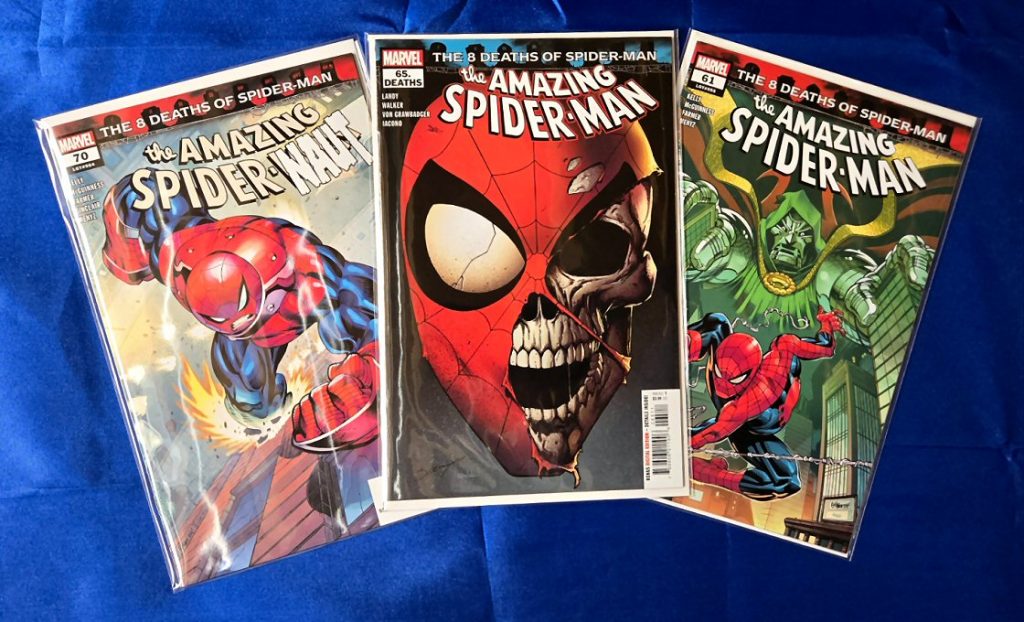
For more Spider-Man: 8 Deaths of Spider-Man
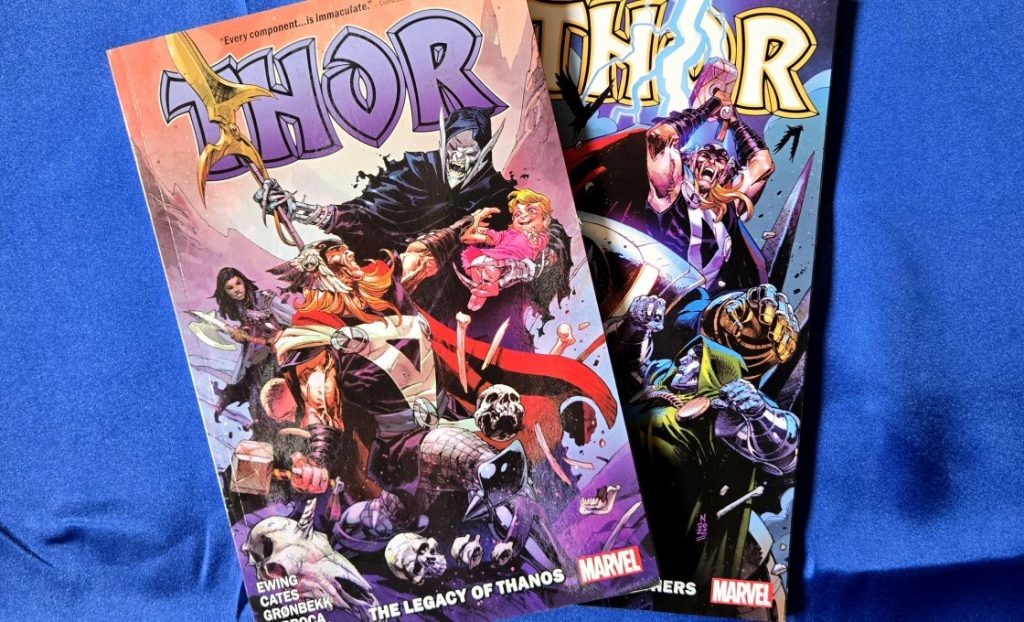
For more virtue ethics: Thor
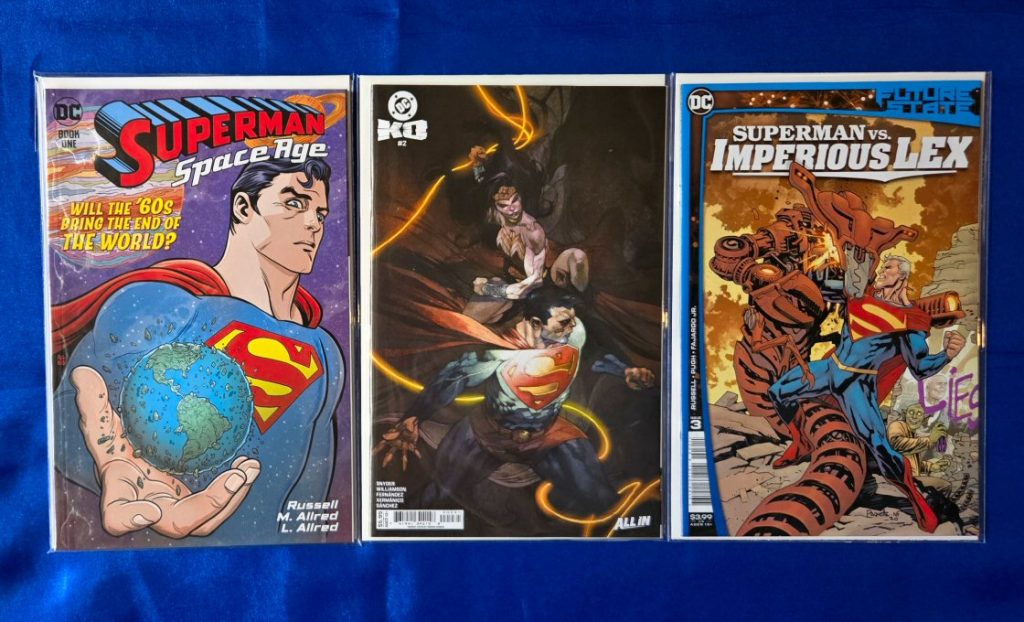
For more virtue ethics: Superman
This is another interesting one, I like the focus on character/virtue ethics. Still waiting on that Thor profile, is it coming soon?
By the way, are you going to address the issue of whether or not “character” even exists, from a neuroscience/psychology perspective? I have found your other commentaries on the neuroscience behind these ethics philosophies interesting, but I haven’t seen anything about that. I may have missed it. Do you have a master list of all the philosophical concepts?
Yes, sorry for the delay on Thor – I got distracted with absurdism/existentalism through the Vision (after finding Tom King’s excellent series) and 8 Deaths of Spider-Man. I am planning to get back to the Asgardians next, starting with Valkyrie and then Thor.
You raise a good point about the neuroscience of character and virtue. This is really a question of whether or not we have stable character traits over time (sometimes referred to as temperament, but it’s really personality traits). In general terms, a lot of personality traits that social scientists and psychologists thought were stable over life turn out not to be as stable. But that is not really a problem for ethics – you would expect them to change with time. The point is these changes are not random, but dependent on person’s circumstances and previous beliefs. There is a minority view out there that virtues don’t exist at all and that situations and contexts alone dictate behavior – but that’s really only true for instinctive reactions. The issue is of course not settled (and likely never will be), but there is increasing research evidence for the existence of persistent character traits. I can discuss this a bit further when I finally make up that Thor page.
And yes, I recently had the same revelation about the difficulty of tracking down posts on the basis of philosophical topics. I’ve created a master Glossary post where I update where to find things, organized alphabetically by philosophical context. I’ll start adding a link to it at the bottom of my posts from now on.
Good, thanks. But wouldn’t it make more sense to start with Thor? The Jane Foster valkyrie is a spin-off from the Thor comics after all.
Yes, I realized that as well as I started to collect material for her story – I need to explain Thor’s (and Mjolnir’s) sense of virtue ethics first, before I can explain Jane’s. Thor will be up next.
I’ve really enjoyed the site and have been taking my time getting to this one. As someone who grew up reading Spider-Man in the ’80s (right around the same time the author previously mentioned collecting Doctor Strange), this analysis touches on something I always felt but couldn’t quite put my finger about why Peter Parker resonated with me more than other heroes.
The virtue ethics argument is compelling, especially the point about Peter constantly trying to be better. That’s so true – he’s never satisfied with where he is, always pushing himself to improve as a hero, friend, etc. Compared that to someone like Superman who seems to have it all figured out from day one. Peter’s growth feels more human, more relatable.
What really strikes me is the neurotic personality analysis. Man, that explains so much about why Spider-Man stories work! You are right that Peter is probably the most emotionally reactive superhero out there. He’s always second-guessing himself, worrying about consequences, making jokes to deflect his anxiety. As a middle-aged guy who’s dealt with my own share of overthinking and self-doubt, I can relate.
The spider-sense connection to his neuroticism is brilliant – I never thought about how having a warning system constantly going off would mess with your head. No wonder the guy can’t catch a break mentally.
All that said – and I don’t mean this harshly – but with 60+ years of stories, how do we know this virtue ethics reading isn’t selective cherry-picking? You acknowledge this challenge but then seem to dismiss it quickly. What about all those stories where Peter acts purely from duty?
I guess that is the thing that bothers me a bit on this one: you seem to dismiss the deontological reading pretty quickly. “With great power comes great responsibility” feels pretty duty-based to me, even if it first originated as narration. And Peter’s no-kill rule, his commitment to protecting innocents regardless of personal cost – that feels like moral duty, not just character development.
Maybe the most honest reading is that Peter embodies multiple ethical frameworks at different times, which actually makes him more human and complex? As you point out, real people don’t operate from just one ethical system – we shift between duty, consequences, and character depending on the situation. So maybe this just makes Peter more “real”?
But I’ll admit, after reading this, I’m leaning more toward the virtue ethics interpretation. It explains why Peter Parker has stayed relevant for so long while other “perfect” heroes feel dated. He’s not perfect – he’s trying to be better, and that’s something we can all relate to.
That duty interpretation is perfectly reasonable. And I agree with you – a lot of the stories (especially the earlier ones) focus on the deontological side of the character. It does seem fairly obvious, especially with the catchphrase. That is also why I included that good example from the Bendis era.
But my goal here is to consider the overall longer arc of the character – which I see as very much bending to virtue ethics. But since I presume the duty side was fairly clear, I didn’t spend much time describing it. I expected the virtue argument would be new for most readers, so I spent more time justifying why I thought it was the primary ethics framework for the character at the present time. I realize now that intent may not have been clear – and so, I’m glad you’ve emphasized just how strong the deontological aspects are.
I also make no claim as to the completeness of my survey of the stories – I have only read so many series, and mainly ones that skewed more to recent years. I’m just trying to accurately reflect what I perceive (although I warrant that bias is hard to avoid!). But any conscious “cherry picking” was just provide good illustrative panels from the stories that had an impact on me. At the end of the day, it’s hard to be aware of one’s own selection or attention biases, but I’ve tried to fair in how I’ve synthesized and summarized the pattern I’ve observed.
As to whether Peter’s use of multiple ethical theories makes him more “real”, that would depend if those multiple theories were apparent within individual stories (or series). It doesn’t work if he’s deontological with one writer, then virtue ethics with another, then consequetialist – that is just inconsistent writing. But a skilled writer can definitely bring out multiple aspects (or conflicts) within his decision-making in their own stories. That would certainly help make him seem more real. This is where his neuroticism helps humanize him – along with its symptoms, like his wise-cracking, as you observed. We can identify with him, without it being explicitly spelled out for us.
Right, of course – that makes a lot of sense.
Interesting point you made about how comics require heroes to suffer for dramatic purposes. But couldn’t this constant struggle actually BE the virtue ethics in action? Maybe Peter’s virtue isn’t rewarded with traditional “happiness” but with the knowledge that he’s doing right?
Also, for the MCU comparison: the Tom Holland films are great, but isn’t the MCU version kind of “artificially” virtuous? He’s got Tony Stark’s tech, the Avengers’ support system, his loved ones know and support him as Spider-Man – he doesn’t face the same solo struggles that define the comic Peter. Does that change the ethics equation for you?
And thanks for writing me back!
That’s an interesting idea, that Peter’s awareness of the good he does is his virtue ethics “reward” (rather than happiness). I can kinda see it … except, Peter seems to repeatedly doubt the good he does (or rather, repeatedly lose awareness of it). It’s very much a recurrent theme that others have to remind him of all of the good he does. So his awareness seems pretty incomplete, and doesn’t really seem to grow with time. Again, I could see that argument making sense in real-life, for a real person – it’s perhaps a more realistic version of eudaimonia for the modern world. But Peter (as depicted in the comics) doesn’t seem to reach a place of true/consistent awareness. And so, I would say no in this case.
As for the MCU (Holland) films, I don’t see how those advantageous diminish that Peter’s striving for virtue. The current MCU Peter was certainly better off than the comic Peter in many ways (as you point out), but that doesn’t give him an automatic virtue bonus. Just because he was starting from a better place doesn’t make his struggles to practice virtue are any less significant or meaningful.
Found this off a google search, what a great read. I always figured it was an editorial diktat that kept Peter down.
Ha, well, I suppose that might be the simplest explanation! 🙂
I’ve been enjoying the current Joe Kelly run (with Peter off-world). Norman Osborn masquerading as him and asking the question “What would Peter do?” is probably the greatest testament to his virtue.